
NEW
Font size
 Worksheets
Terrestrial Animals Review
Total questions: 37
Worksheet time: 19mins

What is the only free-living class of flatworms? These flatworms are mostly marine, some freshwater, and a few are terrestrial; marine forms are very colorful.
mantle
trochophore
head-foot region
visceral mass
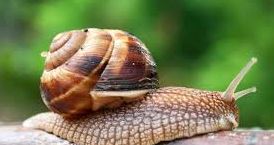
What Mollusk group includes snails, slugs, nudibranchs, abalone?
What is the space between the mantle and the foot of a mollusk?
Chordata

Which part is labeled I? This structure is responsible for pumping blood throughout the annelids body.
aortic arches
setae
crop
clitellum

Which part is labeled N? This digestive structure is responsible for storing food
crop
gizzard
clitellum
setae

Which part is labeled K? This digestive structure is responsible for grinding food.
crop
gizzard
brain
stomach

What does letter D represent? These structures are feeding appendages and give chelicerates their name; they act as fangs in spiders.
spinnerets
What does letter G represent? This structure houses the digestive, respiratory, and reproductive organs of arthropods.
tail
What does letter C and E represent? These leg-like structures are used by spiders and daddy long legs to hold food; they form scorpion pincers.
Annelids that have the ability to seek out warm-blooded prey; either fluid-feeders/blood suckers or eat small invertebrates
leeches
marine polychaetes
earthworms
tube worms
What structure in an amphibian is responsible for pulling air into the lungs and pushing air out of the lungs?
diaphragm
movement of limbs
back of mouth
movement shoulder & pelvic girdles
What term describes respiration that occurs across skin? This is a very important type of respiration for amphibians.
double circulatory system
pulmonary circuit
cutaneous respiration
single circulatory system
Transparent scale covering each eye of a snake
spectacle
cloaca
nictitating membrane
Jacobson's organ
What body system does a turtle's shell belong to?
skeletal
integumentary
protective
circulatory
Mobile skull with movable joints in the palate and across the roof of a snake's mouth? Allows snakes to eat relatively large prey items. Also seen in lizards and birds, but their skulls are not as mobile.
kinetic skull
plastron
spectacle
mandible
Pit-like sense organ in the roof of a snake's mouth; removes scent molecules from the tongue and transmits information to the brain
spectacle
plastron
Jacobson's organ
pit organ

What turtle structure is represented by letter D? This structure on the belly side of turtles. The term means "breastplate."
plastron
carapace
vertebrae
ribs

What structure is represented by letter F?
fang
discharge orifice
glottis
nostril
What structure is represented by letter A?
pit organ
venom duct
venom gland
nostril
What turtle structure is represented by letter C? This structure forms the hard, dorsal shield of many animals.
plastron
carapace
vertebrae
ribs
Specialized feathers on the wings and tail of a bird that extend away from the body and are used in flight
contour feathers
flight feathers
down feathers
filoplume feathers
Soft feathers close to a bird's body that act as insulation
powder-down feathers
flight feathers
down feathers
filoplume feathers
Large, bony projection on a bird's sternum; provides attachment for flight muscles
keel
toe locking mechanism
tendons
keratin
Structures that extend outward from the lungs into the abdomen and long bones; stores fresh air; helps in temperature regulations; aids in buoyancy
air sacs
keel
proventriculus
syrinx
Which of the following is not an example of a flightless bird?
penguin
cassowary
kiwi
ostrich
Hollow sheaths of keratin around bone; these structures are never shed, they do not branch, they grow continuously
true horns
antlers
giraffe horns
tusks
Branched structures that are composed of bone when mature and are shed annually after mating season
true horns
antlers
giraffe horns
tusks
Specialized sweat glands that produce milk to feed to young mammals
sweat glands
sebacious glands
mammary glands
scent glands
Mammalian voice box
larynx
syrinx
pharynx
trachea
Large muscle that separates the chest and abdominal cavities; moves air in and out of lungs
diaphragm
larynx
trachea
pharynx
Feed on a diet of mostly plant matter
herbivore
carnivore
insectivore
omnivore
Feed on a diet of mostly other animals
herbivore
carnivore
insectivore
omnivore
Feed on a diet of both plants and animals
herbivore
carnivore
insectivore
omnivore
Long, cone-shaped teeth for piercing flesh
incisors
canines
molars
pre-molars
Teeth that have multiple cusps (edges) for shearing, slicing, crushing, grinding; do not fall out (adult teeth only)
incisors
canines
molars
pre-molars

