
 Worksheets
Financial Accounting Assignment
Total questions: 110
Worksheet time: 1hrs 17mins
______ is the discount given to the customers for prompt payment of their accounts
Discount allowed
Trade discount
Discount received
Legal tender
_______ is the discount received from suppliers for prompt payment of our accounts
Discount allowed
Discount received
Sales
Creditor
_____ is an extracted book of an account
Balance sheet
Bank reconciliation
Trial balance
Petty cash book
In trial balance all these are credited except (a) (b)
(c) (d)
Capital
Sales
Purchases
Creditors
All the following are reasons for disagreement between cash book and bank statement except
Standing order
Bank Errors
Bank charges
Overdraft
All the following are reasons why trial balance may not balance except
Error of posting
Errors in addition
Wrong figures in the ledger
Error of omission
_____ is a part of the profit distributable to shareholders of an organization
Premium
Dividend
Shares
Profit
_______ occurs when a creditor is authorized to ask payment from the customer’s bank
Discount
Standing order
Direct debit
Dishonoured cheque
The balance of the adjusted cash book is used in preparing ______
Trading account
Bank statement
Bank reconciliation statement
Trial balance
Trial balance is used to prepare _____
Control account
Bank statement
Cash book
Trading, profit and loss account
In petty cash book the credit side is for
Creditors
Debtors
Analysis columns
Payment
The debit side of petty cash book is for
Bank
Receipts
Debtors
Creditors
______ is the book of original or prime entry which is used for recording small disbursement or expenses (a) (b) (c) (d)
Cash book
Petty cash book
Trial balance
Bank statement
Liabilities of the petty cashier can never _____ the imprest amount
Exceed
Equal
Less to
Reach
Cash discount is classified into ______
4
3
2
1
Accounting equation can be expressed as
A= C + L
C= L –A
A= C – L
L= A+C
Which of the following is an asset?
Creditor
Loan
Cash in hand
Capital
What is liability when asset is N4000, and capital is N2000?
N6000
N1000
N20000
N2000
Bank statement is prepared by _____
Bank
Account holder
Cashier
Manager
All the following are added to balance as per bank statement except
Standing order
Bank charges
Uncredited cheque
Dividend
Motor van, building, furniture are examples of _____
Liabilities
Capital
Assets
Equity
______ is a book that combines cash, bank and discount accounts into a single book
Bank statement
Three column cash book
Petty cash book
Trial balance
______ is the properties or resources of a business organization
Assets
Capital
Long term
Liability
______ is the statement of the position of the business which shows the assets of a business and the sources of those assets
Balance sheet
Capital
Assets
Liabilities
Which of this column is not included in trial balance?
Folio
Particulars
Debit side
Credit side
All expenses must be recorded in _____ side of trial balance
Debit
Credit
Particular
Ledger
All the following are branches of accounting except
Balance sheet accounting
Cost accounting
Management accounting
Financial accounting
_____ are accounts in which income and expenditure are recorded
(a) (b) (c) (d)
Real account
Cost account
Nominal account
Personal account
All the following are examples of personal account except
Equipment
Creditor
Debtor
All of the above
Which of the following is not a source document?
Money
Invoice
Receipt
Credit note
Financial records keeping were believed to have begun at about _____ years BC
4000
150
400
2400
All the following are users of accounting information except
Shareholders
Management
Government
Debtors
_____ is the process of allocating the cost of the natural resources to the units removed
Appreciation
Depreciation
Depletion
Amortization
All the following are non manufacturing cost except
Selling expenses
Direct expenses
Distribution expenses
Administration expenses
Where there is no agreement, the partners are to share their profit
Equally
2:3
5%
50% each
______ is a document drawn up by the partners, which contains the rules and regulations guiding the business
Partnership
Account
Document
Deed of partnership
All the following are features of partnership account except
Balance sheet
Appropriation account
Current account
Debtors account
Which of the following is an evidence of payment
Invoice
Cheque
Receipt
Delivery note
The total cash and credit sales during a period is called
Turnover
Sales
Cost of goods sold
Carriage Inward
_____ is the cost of transportation charged on goods purchased
(a)
Carriage Outwards
Carriage Inwards
Returns Outwards
Returns Inwards
Stock of goods is divided into _______
3
10
4
2
Returns inwards is also known as ______
Purchases returns
Sales Returns
Carriage Inward
Carriage Outward
Purchases returns is also known as _______
Sales returns
Return outwards
Returns inwards
Discount allowed
Accrued income is added to ____ and it is treated as an ____
Income, asset
Income, liability
Income, expense
Expenses, asset
Prepaid expense is deducted from _____ and it is treated as ____
Asset, Liability
Income, asset
Expenses, asset
Expenses, income
The purpose of trading account is to ascertain ______
Gross profit
Gross loss
Gross profit/loss
Net profit/loss
The balance of trading account is transferred to _____
Balance sheet
Profit and loss account
Debtors account
Sales account
______ and _______ are the two methods of preparing trading, profit and loss account
Vertical and horizontal
Vertical and parallel
T and vertical
T and horizontal
_____ are goods or cash withdrawn by the owner of a business at interval for his own use
Contra entries
Capital
Income
Drawing
All the following accounts follow the principle of double entry except
Trading account
Balance sheet
Cash book
Sales account
_____ is the excess of the purchase consideration over the net value of assets
cash
goodwill
purchase consideration
capital reserve
A ______ is an artificial person which is recognized in law as a separate legal entity
partner
lawyer
company
corporation
The document that contains the regulation which governs the internal management of the company’s affairs is
memorandum of association
prospectus
articles of association
certificate of incorporation
The originator of Double Entry System
Lucas Pacioli
Marshall
Pikles
Batliboi
Establishment expenses of a new machine will be debited in ............. account
Expenses
Machine
Profit & Loss
None of the above
On sales of Rs. 1500 to A at 5% trade discount, the sales account will be -
Debited by Rs. 1425
Credited by Rs. 1425
Credited by Rs. 1500
Debited by Rs. 1575
The loss on sale of furniture is debited to ........... account
Profit and loss
Furniture
Depriciation
Trading
If Outstanding salary is given in trail balance with the date of commencement of financial year, it is shown in ........
Trading A/c
Profit & Loss A/c
Assets
Liabilities
If opening stock is Rs. 50,000, purchase is Rs. 4,20,000 and closing stock is Rs. 30,000, then what is the cost of goods sold-
Rs. 4,40,000
Rs. 4,70,000
Rs. 4,00,000
Rs. 5,00,000

Which financial statement displays the revenues and expenses of a company for a period of time?
INCOME STATEMENT
BALANCE SHEET
CASH FLOW STATEMENT
STATEMENT OF STOCKHOLDER’S EQU

What is the main purpose of financial accounting?
ORGANIZE FINANCIAL INFORMATION
PROVIDE USEFUL, FINANCIAL INFORMATION TO OUTSIDERS
KEEP TRACK OF COMPANY EXPENSES
MINIMIZE COMPANY TAXES

Which of these is not included as a separate item in the basic accounting equation?
ASSETS
REVENUES
LIABILITIES
STOCKHOLDER’S EQUITY

Which financial statement uses the expanded accounting equation?
INCOME STATEMENT
BALANCE SHEET
CASH FLOW STATEMENT
STATEMENT OF STOCKHOLDER’S EQUITY

The accrual basis of accounting records revenues when they are:
COLLECTED
EARNED
CONTRACTED
READILY AVAILABLE FOR USE

The account format that displays debits, credits, balances, and headings.
GENERAL JOURNAL
GENERAL LEDGER
T-ACCOUNT
LEDGER ACCOUNT

Which account is not a liability account?
ACCOUNTS PAYABLE
ACCRUED EXPENSES
CASH
NOTES PAYABLE

Which account increases equity?
EXPENSES
WITHDRAWALS
TREASURY STOCK
REVENUES
Accounting involves which of the following activities?
Recording transactions and summarizing financial data
Conducting market research and advertising
Managing human resources and personnel
Manufacturing products and providing services
What is the primary difference between bookkeeping and accounting?
Bookkeeping focuses on recording transactions, while accounting involves financial analysis and decision-making.
Bookkeeping is used for internal purposes, while accounting is primarily for external stakeholders.
Bookkeeping is a subset of accounting, and the terms are often used interchangeably.
Bookkeeping is only concerned with tax compliance, while accounting encompasses all financial activities
Which of the following best describes bookkeeping?
The interpretation of financial data
The preparation of tax returns
The systematic recording of financial transactions
The analysis of financial statements
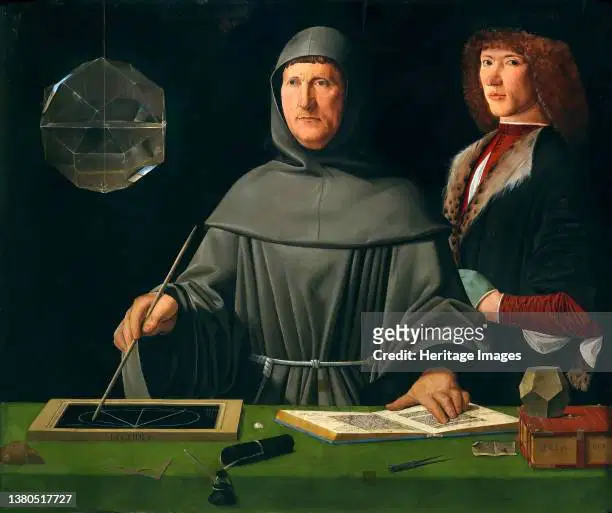
Which Italian mathematician and Franciscan friar is often referred to as the "Father of Accounting" for his contributions to double-entry bookkeeping in the 15th century?
Niccolò Machiavelli
Luca Pacioli
Galileo Galilei
Leonardo da Vinci

Who is often referred to as the "Father of Nigerian Accountancy" and is recognized as a pioneering figure in the accounting profession in Nigeria?
Ngozi Okonjo-Iweala
Olusegun Obasanjo
Akintola Williams
Aliko Dangote

The recognized accounting body in Nigeria is
ACCA
IPSAS
CIPM
ICAN
The branches of Accounting are the following except
Tax accounting
Financial accounting
Cost accounting
Management accounting
Which option gives report on financial status of a firm?
Income & Expenditure Account
Balance Sheet
Cash Flow Statement
Profit & Loss Account
Land is a _____ asset
Fixed Asset
Current Asset
Intangible Asset
Fictitious asset
Which is a business liability?
Creditors
Cash
Building
Machinery
In straight line method of providing depreciation, depreciation amount
Remains constant
Increases every year
Decreases every year
None of the options
What is the correct order to prepare financial statements in?
Make end of period adjustments --> income statement --> statement of owners equity --> Balance sheet
balance sheet --> make end of period adjustments --> income statement --> statement of owner's equity
income statement --> owners equity --> balance sheet --> make period adjustments
make adjusting entries--> balance sheet --> statement of owners equity --> net income
the balance sheet discloses the financial position of a business
for a given period
at a specific point of time
on a certain fixed date
all of the above
which of the following is current asset
land and building
machinery
cash
furniture
where did trial balance originate
italy
india
russia
america
a list of assets,liabilities and owners equity of a business enterprise as of a specific date is
income statement
cash flow statement
balance sheet
profit and loss account
capital + liability =
total assets
losses
current asset
fixed asset
the ------ records daily transactions of a business in the order in which they occur
journal
ledger
account
trial balance
an account is a summary of ---- at one place relating to a particular head
all transactions
some transactions
journal
none
Copyrights, Patents and Trademarks are,
A) Current assets
B) Fixed assets
C) Intangible assets
D) Investments
The debts which are to be repaid within a short period (a year or less) are referred to as,
A) Current Liabilities
B) Fixed liabilities
C) Contingent liabilities
D) All the above
Rules for Real Account is
Debit what comes in Credit what goes out
Debit all Expenses and Lossess credit all incomes and gains
Debit the receiver credit the giver
None of the above
The accounts that records expenses, gains and losses are
(A) Personal accounts
(B) Real accounts
(C) Nominal accounts
(D) None of the above
Which of the following is a Real A/c?
a) Building A/c
b) Capital A/c
c) Shyam A/c
d) Rent A/c
The Process of entering all transaction from the Journal to Ledger is called
Posting
Entry
Accounting
None of the above
The Capital of the Company is called...............
Debenture Capital
Preference Capital
Share Capital
Others
Control account is set up in the ________.
Subsidiary Ledger
General Journal
General Ledger
Cash Book
What is the main purpose of preparing Control Accounts?
To simplify the procedure of recording Debtors and Creditors Ledger.
To ensure that the bookkeeper has recorded all the transactions correctly in Cash Book.
To enable General Ledger to be completed more speedily.
To improve the accuracy of recording individual debtors and creditors accounts
The balance of the Debtors Control Account did not agree with the balances in the Debtors Ledger. Which of the following statements are true?
I Sales Journal had been overstated.
II Goods returned from a customer had not been recorded in the books.
III A dishonoured cheque from a customer had not been recorded in the books.
IV A contra entry had been entered in the Debtors Ledger only.
I, II
I, IV
II, III
III, IV
How should the amount of bad debts written off be recorded in Sales Ledger Control Account?
Debited to the account
Credited to the account
Carried down in the account
Debited and credited to the account
The following information related to a firm :
Balance as at 1 January 2013 :
Debtors RM 50,000; Allowance For Doubtful Debts RM 5,000
The following are the balances extracted from the books of the firm for the year 2013:
Credit Sales RM 100,000; Cash Sales RM 80,000; Receipts from credit customers RM 75,000; Bad Debts written off RM 2,000.
What is the balance of the firm’s Debtors Control Account as at 31 December 2013?
RM 43,000
RM 68,000
RM 73,000
RM 153.000
The following shows the information of a company for the year ended 31 Dec 2014:
Debtors Control Account, 1 Jan 2014 RM 4,410
Allowance For Doubtful Debts, 1 Jan 2014 RM 200
Increase in Allowance For Doubtful Debts RM 20
Discounts Allowed RM 120
Bad Debts Written Off RM 150
Sales (including cash sales of RM 5,600) RM 9,200
Receipts from debtors RM 3,240
What is the balance of the Debtors Control Account on 31 Dec 2014?
RM 4,480
RM 4,500
RM 9,880
RM 10,100
How do you record an overpayment refunded by suppliers in Purchases Ledger Control Account?
The account is debited.
The account is credited.
The account is debited with double amount.
The account is credited with double amount.

What would appear in a Purchases Ledger Control account?
returns outward
cash purchases
refund to credit customer
discounts allowed

Which would not appear in a sales ledger control account?
returns inwards
cash sales
customer's cheque dishonoured
Irrecoverable debts

Which would not appear in a purchases ledger control account?
payments to suppliers
Cash purchases
interest charged by suppliers
discount received
Which of the following is another term for creditors control account?
purchases account
payables account
debtors control account
purchases ledger control account
Which of the following is another term for debtors control account?
Receivable account
Sales account
Sales ledger control account
Creditor control account
Offset by contra is recorded by:
A debit in the Purchases Ledger control and a credit in the Sales Ledger control accounts.
A debit and a credit respectively in the account of the particular customer appearing in the Sales Ledger and in the Purchase Ledger
A debit in the Sales Ledger Control and a credit in the Purchase Ledger Control accounts
A combinations of entries in (a) above as well as in (d) below
How do we calculate Total Assets?
Fixed Assets - Current Liabilities
Current Assets / Current Liabilities
Fixed Assets + Current Assets
Fixed Assets - Current Assets
Whcih of the following consist of only assets?
Car, Bank Loan, Computer
Creditor, Debtors, Cash at Bank
Debtors. Cash at bank, Building
Cash in hand, cash at bank, creditors
Select the item which is not a component of a balance sheet.
Fixed Assets
Current Assets
Current Liabilities
Expenses
Calculate the total assets?
Current Assets - $100.00
Fixed Assets - $200
Current Liabilities -$300
Capital - $100
300
400
500
200

