
 Worksheets
A&P lab prac 2
Total questions: 88
Worksheet time: 51mins

What is #9
(a)

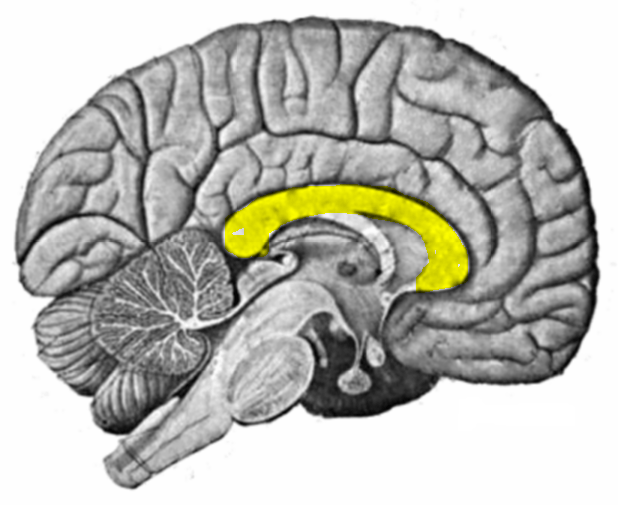
What is the highlighted area?
(a)

What lobe is #1
(a)

What is labeled at #8
(a)

What is labeled #3
(a)

What is labeled at #2
(a)

The diagram above represents
Cupula
Ampulla
Utricle
Saccule

What is the highlighted area?
(a)

What Lobe is at #2
(a)

Which area is labeled #4
(a)

Which are is labeled #1
(a)


What is the area of #6
(a)


What is #13?
tympanic membrane
Anvil
Hammer
Cochlea

pupil
A
C
D
F
Retina
A
B
D
F

What is #2?
Auditory meatus
Pinna
Hammer
Anvil
Which picture shows the olfactory region of the cerebrum?


smooth muscle structures to which the lens is attached; structure #8
ciliary body
iris
conjunctiva
pupil

What part contains the ceruminous glands (which secrete cerumen/ear wax)?
4
7
8
9
Vitreous humor
A
C
D
F
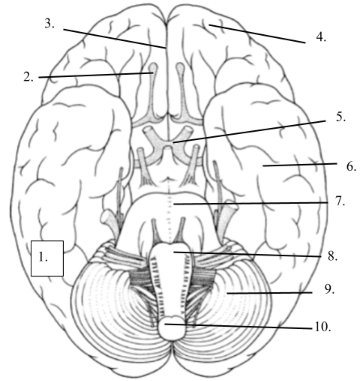
What is the best label for #2?
Sagittal fissure
Occipital lobe
Frontal lobe
Olfactory nerve / Olfactory bulb
What is the best label for #5?
Optic nerve
Occipital lobe
Frontal lobe
Olfactory nerve / Olfactory bulb
What is the best label for #10?
Cerebellum
Pons
Spinal cord
Medulla oblongata


the YELLOW section is the (a) lobe.


Which lobe?
Frontal
Parietal
Temporal
Occipital


Hippocampus
Thalamus
Amygdala
Corpus Callosum



The master gland, secretes hormones into your bloodstream and can affect other glands.
thyroid
pituitary
pineal
parathyroid


This feature commects the left eye to the right brain and vice-versa. Aids in binocular and stereoscopic vision.
medulla
optic chiasma
olfactory bulbs
fornix

Brings senosry and motor information to and from the cerebellum.
pons
arbor vitae
arabellum
cerebrum

This controls communication between different parts of the brain and other sensory information like hearing, taste, and balance.
hypothalamus
pons
optic chiasma
thalamos


What is this?
Anvil
Hammer
Stirrup
Cochlea
Ear drum

What part is #1?
Pinna
Ear Canal
Ear Drum
Oval Window

This area is vital for the processing of information for the five Fs: fever, feeding, fighting, fatigue, and fornication. Produces oxytocin and
medulla
corpus callosum
hypothalamus
pituitary


What is this?
Anvil
Hammer
Stirrup
Cochlea
Ear drum

What is this?
Cochlea
Pinna
Hearing Nerve
Stirrup
Ear drum


What is this?
Hearing Nerve
Cochlea
Pinna
Stirrup
Hammer

What is this part of the brain is colored green
third ventricle
corpus collosum
fornix
fourth ventricle
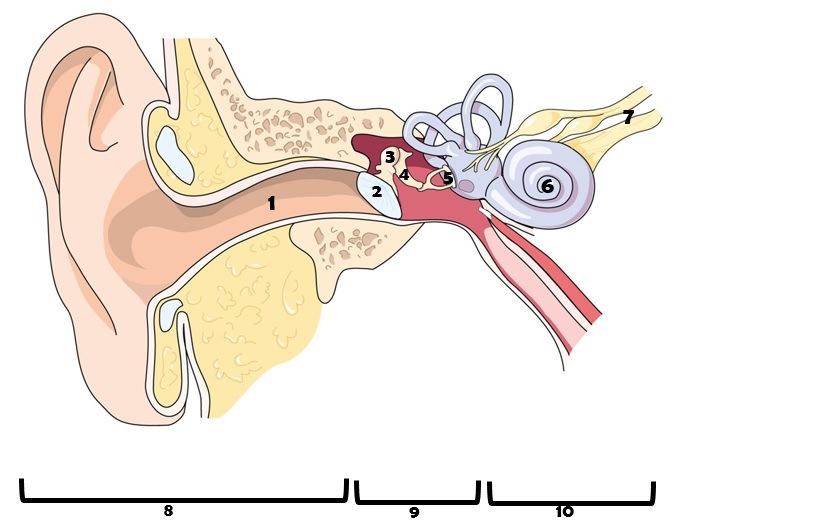
Which number is the labeled as the stirrup in the diagram?
3
4
5
6
7


What structure is #6 pointing to?
Central Canal
Ventral Root
Anterior Median Fissure
Dorsal Root Ganglion

What is labeled G?
(a)

Label the Neuron-What space does the letter "G"
represent?
Axon Terminal
Node of Ranvier
Nucleus
Myelin Sheath

What is labeled E?
(a)

What is labeled D?
(a)

What is the pink line pointing to?
ventral root
dorsal root ganglion
lateral horn
spinal nerve

What is the area labeled A?
(a)

What is area labeled J?
(a)

What is the name of the "Horse's Tail" in area #4
(a)
What is the best label for #7?
Optic nerve
Pons
Temporal lobe
Olfactory nerve / Olfactory bulb

(a)

(a)

(a)

(a)

(a)

(a)

(a)

(a)

Name the circled region
Midbrain
Pons
Cerebral Peduncle
Medulla Oblongata

Name the circled section
Superior Colliculi
Pons
Pyramids
Inferior Colliculli

Name the circled section
Pyramids
Cerebral Peduncle
Midbrain
Superior Colliculi
Name the circled region
(a)

The ______________ is the largest part of the brain
Cerebrum
Cerebellum
Amygdala
Hippocampus
Prefrontal Cortex

A
superior rectos
superior oblique
inferior rectus
inferior oblique
medial rectus
F
superior rectos
lateral rectus
inferior rectus
inferior oblique
medial rectus
E
superior rectos
lateral rectus
inferior rectus
inferior oblique
medial rectus
D
superior rectos
lateral rectus
inferior rectus
inferior oblique
medial rectus
C
superior rectos
superior oblique
inferior rectus
inferior oblique
medial rectus

Find the red arrow. What is the name of this middle-ear structure?
Eardrum
Incus
Stapes
Malleus
Ear Canal

Find the red arrow. What is the name of this middle-ear structure?
Stapes
Malleus
Ear Canal
Semi-Circular Canals
Incus

