Wayground logo

Free Printable Worksheets

Font size

S
M
L
XL
Worksheets

Plants Unit Test Review

Total questions: 51

Worksheet time: 29mins

Name
Class
Date
1.
Small grains that contain a plant's male reproductive cells.
a)
stamen
b)
pollen
c)
anther
d)
stigma
2.
The stalks in a flower that produce the male reproductive cells
a)
pistil
b)
stamen
c)
filament
d)
stigma
3.
Small leaf-like structures forming an outer circle at the base of a flower.
a)
petals
b)
sepal
c)
anthers
d)
dicots
4.
The part of the flower on which the pollen grains land.
a)
pistil
b)
stamen
c)
style
d)
stigma
5.
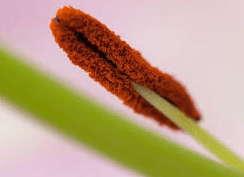
The part of a flower that produces the male reproductive cells.
a)
anther
b)
style
c)
stigma
d)
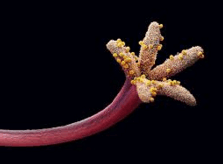
filament
6.
Brightly colored parts of flowers that attract insects.
a)
petals
b)
pistils
c)
stamen
d)
filaments
7.
The stalk connecting the ovaries and stigmas.
a)
filament
b)
pistil
c)
style
d)
anther
8.
They enclose the egg cells inside the ovaries.
a)
ovules
b)
anther
c)
seeds
d)
angiosperms
9.
The transfer of pollen, containing the sperm cells, to the female part of the flower. 
a)
seed disperal
b)
pollination 
c)
germination
d)
fertilization
10.
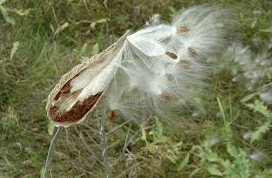
All of the following are examples of seed disbursement except:
a)
wind
b)
volcanic eruptions
c)
physical movement (rolling)
d)
animals feces
11.
Which of the following is NOT a function of the stem of a plant?
a)
Hold the leaves toward the sun
b)
Hold the petals up for pollinators
c)
Provide a way for xylem to transport food
d)
Support the plant 
12.
Which of the following statements best describes xylem's function in the plant?
a)
transpports water and minerals up from the roots to the rest of the plant
b)
transports food down from the leaves to the rest of the plant
c)
transports water and minerals down from the roots to the rest of the plant
d)
transports food up from the leaves to the rest of the plant
13.
Which of the following statements best describes phloem's function in the plant?
a)
transpports water and minerals up from the roots to the rest of the plant
b)
transports food down from the leaves to the rest of the plant
c)
transports water and minerals down from the roots to the rest of the plant
d)
transports food up from the leaves to the rest of the plant
14.
Type of root
a)
fibrous root
b)
taproot
15.
What is this?
a)
Xylem
b)
Phloem
16.
Xylem and Phloem are both __.
a)
Transpiration
b)
Absorption
c)
Photosynthesis
d)
Vascular tissue
17.
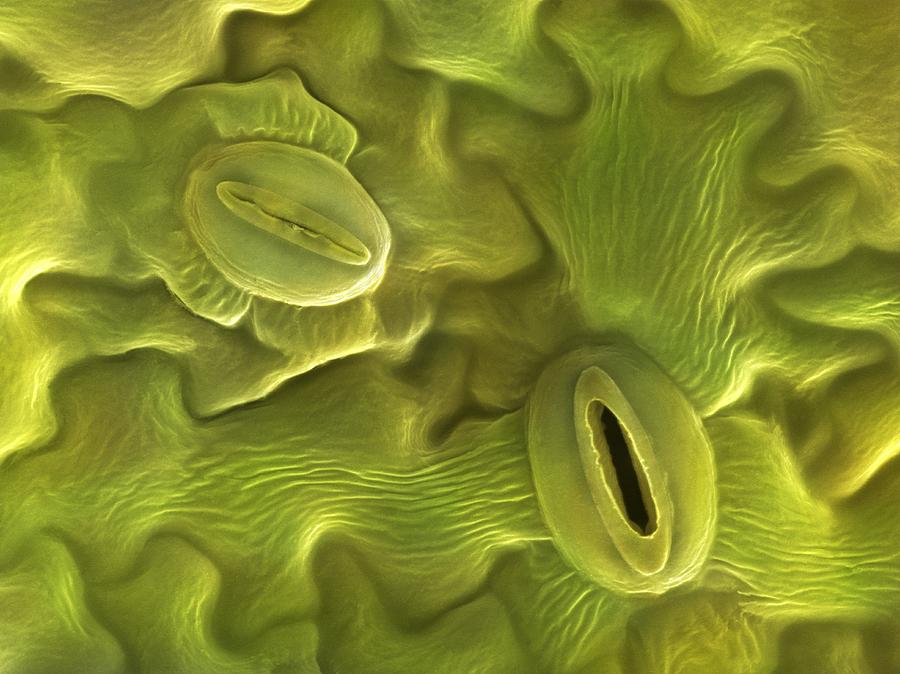
Opening that allows gas exchange
a)
Stomata
b)
Leaves
c)
Roots
d)
Vascular tissue
18.
Water exits the leaf through the __.
a)
Stomata
b)
Flower
c)
Roots
d)
Phloem
19.
___ opens and closes the stomata.
a)
Guard cells
b)
Xylem
c)
Roots
d)
Phloem
20.
The part of the plant that makes food.
a)
stem
b)
leaves
c)
roots
d)
flower
21.
Which structure of the plant absorbs water and nutrients from the soil?

a)
stem
b)
leaves
c)
roots
d)
flowers
22.
Type of root
a)
fibrous root 
b)
taproot
23.
The male part of the flower is known as the _____.
a)
stamen
b)
pistil
c)
ovary
d)
petal
24.
The female part of the flower is known as the ____.
a)
stamen
b)
anther
c)
filament
d)
pistil
25.
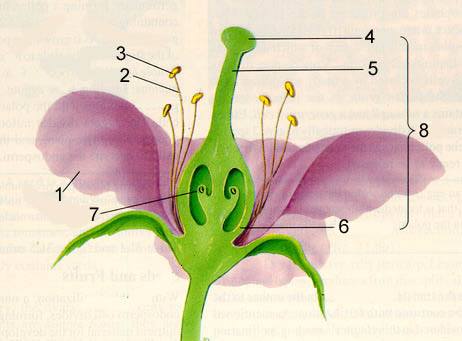
What is #3 pointing to?
a)
stigma
b)
filament
c)
ovary
d)
anther
26.
What is #4 pointing to?
a)
anther
b)
style
c)
stigma
d)
ovary
27.
What is #6 pointing to?
a)
stigma
b)
style
c)
ovary
d)
petal
28.
A plant is a ?
a)
Heterotrophic, multicellular, eukaryote
b)
Autotrophic, unicellular, eukaryote
c)
Autotrophic, multicellular, eukaryote
d)
Heterotrophic, unicellular, prokaryote
29.

Angiosperms (flowering plants) produce both a seed and a ______________ to nourish the seed.

a)

nut

b)

spore

c)

fruit

d)

cone

30.

Which is NOT a category of plants

a)

Ferns

b)

Angiosperms

c)

Mosses

d)

Bryosperms

e)

Gymnosperms

31.

Four important steps plants went through were: (IN ORDER)

a)

seeds, vascular tissues, flowers, movement to land

b)

movement to land, vascular tissues, seeds, flowers

c)

flowers, movement to land, vascular tissues, seeds

d)

vascular tissues, seeds, movement to land, flowers

32.

Plant cell walls are made of

a)

petidoglycan

b)

cellulose

c)

chitin

d)

pollen

33.

What chemical is located in the chloroplast of plants that gives them the green pigment?

a)

angiosperm

b)

chlorophyll

c)

mesophyll

d)

pharnyx

34.

What substance is made through photosynthesis and is food for the plant?

a)

chlorophyll

b)

chloroplast

c)

glucose

d)

dextrose

35.

Which types of plants produce asexually with spores?

a)

mosses & gymnosperms

b)

mosses & angiosperms

c)

angiosperms & gymnosperms

d)

mosses & ferns

36.

The waxy waterproof layer on the leaves and some stems of plants is called the _________________.

a)

root

b)

stomata

c)

petal

d)

cuticle

37.

Growth of plant towards light

a)

gravitropism

b)

phototropism

c)

thigmotropism

38.

Growth of plant in response to touch

a)

gravitropism

b)

phototropism

c)

thigmotropism

39.

Growth of plant towards or away from gravity

a)

gravitropism

b)

phototropism

c)

thigmotropism

40.

Roots have ________________ gravitropism wheras stems and leaves have __________________ gravitropism.

a)

positive, negative

b)

negative, positive

c)

no, upward

d)

downward, no

41.

The growth hormone that is used to speed up the ripening of fruits for export is

a)

giberellin.

b)

ethylene.

c)

cytokinin.

d)

auxin.

42.

Auxins are responsible for _____________ of a plant

a)

Colour change

b)

Watering

c)

Phototropism

d)

Growth

43.

What is the phenomenon that is affecting the growth of the bean shoot

a)

gravitrophism

b)

phototropism

c)

thigmotrophism

d)

rapid movement

44.

Stimulates cell division

a)

abscisic acid

b)

auxin

c)

cytokinins

d)

gibberellin

e)

ethylene

45.
____ are plants that produce naked, or not covered, seeds.
a)
Nonvascular
b)
Vascular
c)
Gymnosperms
d)
Angiosperms
46.
The two groups of seed plants are....
a)
angiosperms and gymnosperms
b)
vascular and nonvascular
c)
spores and seeds
d)
short and tall
47.
This is a ____ plant.
a)
gymnosperm
b)
angiosperm
c)
vascular
d)
nonvascular
48.
Seedless plants reproduce with ___.
a)
spores
b)
seeds
c)
binary fission
d)
flowers
49.
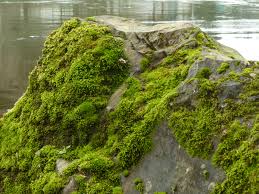
Which of the following is NOT true of mosses, liverworts, and hornworts?
a)
They are non-vascular
b)
They have roots, stems, and leaves
c)
They grow in moist places
d)
They are small and low-growing
50.
Which of the following groups of plants lacks the vascular tissues xylem and phloem?
a)
Bryophytes
b)
Pteridophytes
c)
Gymnosperms
d)
Angiosperms
51.
Which two groups of plants depend on water for reproduction?
a)
Bryophytes and Angiosperms
b)
Pteridophytes and Gymnosperms
c)

Bryophytes and Primitive Nonvascular Plants

d)
Angiosperms and Gymnosperms