wayground logo

Free Printable Worksheets

NEW

Font size

S
M
L
XL
Worksheets

Patalasanlahi Review V (Biology and Chemistry)

Total questions: 61

Worksheet time: 31mins

Name
Class
Date
1.

Chemical used to test starch

a)

Potassium hydroxide

b)

Iodine

c)

Sodium hydroxide

2.

Which of the chambers has the highest pressure?

a)

Right verticle

b)

Left atrium

c)

Left verticle

3.

Which blood vessel carries the deoxygenated blood to the right atrium?

a)

Vena cava

b)

Pulmonary vein

c)

Pulmonary artery

d)

All of them

4.

Which blood vessels carries oxygenated blood from the heart to the whole body?

a)

Vena cava

b)

Aorta

c)

Pulmonary vein

5.

What happen when the ventricles of the heart contract?

a)

The semilunar valve close

b)

The semilunar valve open

c)

The atrioventricular valve open

6.

Which valve action results from an increase in pressure in the atrial of the heart?

a)

The opening of the semilunar valve

b)

The closing of the atrioventricular valve

c)

The opening of the atrioventricular valve

7.

Where does the sino-atrial node, which generates the electrical impulses that coordinate heart-muscle contracted is located in?

a)

Left atrium

b)

Right atrium

c)

Septum

8.

Right atrium and ventricle are separated from the left atrium and ventricle by______________

a)

AV node

b)

SA node

c)

Septum

9.

Where do aorta pump oxygenated blood?

a)

Lungs

b)

Whole body

c)

Brain

10.

What is the function of SA node?

a)

Spread impulse to both atrium

b)

Generate electrical impulse

c)

Spread impulse to AV node

11.

How long does impulse delayed at AV node

a)

0.01s

b)

0.1s

c)

1.0s

d)

0.001s

12.
What phase of mitosis is shown in the picture?
a)
Prophase
b)
Anaphase
c)
Telophase
d)
Metaphase
13.
Chromatid pairs line up in the middle of the cell.
a)
Metaphase
b)
Telophase
c)
Anaphase
d)
Interphase
14.
What phase of mitosis is shown in the picture?
a)
Prophase
b)
Anaphase
c)
Telophase
d)
Metaphase
15.
A new organism is produced from one parent organism.
a)
Sexual Reproduction
b)
Asexual Reproduction
16.
Mitosis is a type of ________________ reproduction.
a)
Sexual
b)
Asexual
17.
What phase of mitosis is shown in the picture?
a)
Prophase
b)
Anaphase
c)
Telophase
d)
Metaphase
18.
Chromatid pairs separate and move to opposite ends of the cell
a)
Metaphase
b)
Telophase
c)
Interphase
d)
Anaphase
19.
Chromosomes duplicate, the cell grows and develops
a)
Metaphase
b)
Telophase
c)
Interphase
d)
Anaphase
20.
What phase of mitosis is shown in the picture?
a)
Prophase
b)
Anaphase
c)
Telophase
d)
Metaphase
21.
Results of cell division or mitosis include all of the following EXCEPT?
a)
growth
b)
repair damaged cells
c)
replace damaged cells
d)
dead cells
22.
Chromatid pairs can be seen, spindle fibers form and nuclear membrane disappears
a)
Metaphase
b)
Telophase
c)
Anaphase
d)
Prophase
23.
Two new nuclei form and the cytoplasm splits
a)
Metaphase 
b)
Telophase
c)
Anaphase
d)
Prophase
24.
How many chromosomes does a human cell have?
a)
42
b)
46
c)
24
d)
64
25.
Which of the following lists, in order, the phases of mitosis?
a)
interphase, metaphase, anaphase, telophase
b)
prophase, metaphase, anaphase, telophase
c)
prophase, metaphase, anaphase, interphase
d)
prophase, anaphase, metaphase, telophase
26.
How many daughter cells are produced in mitosis?
a)
1
b)
2
c)
4
d)
6
27.
Which process produces alpha particles?
a)
Alpha decay
b)
Beta decay
c)
Gamma decay
d)
Nuclear fusion
28.
Which process produces beta particles?
a)
Alpha decay
b)
Beta decay
c)
Gamma decay
d)
Nuclear fusion
29.
Which process involves the joining of small nuclei?
a)
Beta decay
b)
Alpha decay
c)
Nuclear fission
d)
Nuclear fusion
30.
Which process involves the splitting of large nuclei?
a)
Beta decay
b)
Alpha decay
c)
Nuclear fission
d)
Nuclear fusion
31.
The time taken for half of an amount of radioactive atoms to decay.
a)
Nuclear fusion
b)
Full-life
c)
Dead time
d)
Half-life
32.
Scientist involved with discovery of radioactivity.
a)
Albert Einstein
b)
Ernest Rutherford
c)
Marie Curie
d)
Isaac Newton
33.
The nuclear process occurring at a nuclear power plant.
a)
Nuclear fusion
b)
Nuclear fission
c)
Combustion
d)
Multiplication
34.
Arrange in order of increasing ability to penetrate matter.
a)
Beta, gamma, alpha
b)
Alpha, gamma, beta
c)
Gamma, beta, alpha
d)
Alpha, beta, gamma
35.
Complete the sentence: As time passes the level of radiation produced by a radioactive material...
a)
Decreases
b)
Increases
c)
Remains constant
36.
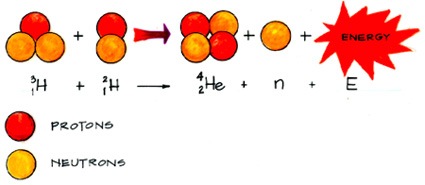
Classify this process.
a)
Nuclear fission
b)
Nuclear fusion
c)
Alpha decay
d)
Beta decay
37.

When NaOH solution is added to Zinc Nitrate solution

a)

Chalky White ppt formed

b)

Gelatinous White ppt formed

c)

Dirty Green ppt formed

d)

Reddish-brown ppt formed

38.

Identify the Hydroxide soluble in NaOH solution

a)

Calcium Hydroxide

b)

Copper Hydroxide

c)

Ferric Hydroxide

d)

Zinc Hydroxide

39.

Identify the compound formed when Copper Hydroxide reacts with Ammonium Hydroxide

a)

Tetraamminecopper( II ) Hydroxide

b)

Copper Nitrate

c)

Copper Hydrogen Carbonate

d)

Copper Nitride

40.

Identify the compound soluble in water

a)

Zinc Hydroxide

b)

Sodium Zincate

c)

Lead Hydroxide

d)

Lead Sulphate

41.

The ppt formed when Calcium Nitrate reacts with Sodium Hydroxide Solution

a)

Calcium Hydroxide

b)

Calcium Sulphate

c)

Calcium Chloride

d)

Calcium Oxide

42.

The metal ion which can produce a coloured ion

a)

Ferric

b)

Lead

c)

Zinc

d)

Calcium

43.

The Hydroxides which are soluble in NaOH solution

a)

Ferrous & Copper

b)

Ferric & Zinc

c)

Zinc & Lead

d)

Copper & Lead

44.

The salt solution which cannot produce any ppt when treated with Ammonium Hydroxide Solution

a)

Copper Nitrate

b)

Lead Nitrate

c)

Zinc Nitrate

d)

Calcium Nitrate

45.

The salts formed when Zinc Nitrate reacts with Sodium Hydroxide

a)

Zinc Oxide & Sodium Zincate

b)

Zinc Hydroxide & Sodium Zincate

c)

Zinc Carbonate & Zinc Hydroxide

d)

Zinc Oxide & Zinc Hydroxide

46.

The compound formed when Zinc Hydroxide reacts with excess Ammonium Hydroxide

a)

Ammonium Carbonate

b)

Zinc Oxide

c)

TetraamineZinc(II) Hydroxide

d)

Sodium Zincate

47.
Define Reactants
a)
the building block of matter
b)
a description of a reaction
c)
the substances produced in a reaction
d)
the starting substances in a chemical reaction
48.
Which is a sign of a chemical reaction?
a)
chemical properties change
b)
a gas forms
c)
a solid forms
d)
physical properties change
49.
Explain why subscripts cannot change when balancing a chemical equation
a)
Gives the amount of atoms
b)
You can change subscripts
c)
The identity of a substance changes
d)
None of the above
50.
Define products
a)
The substance produced in a chemical reaction
b)
Another word for ions
c)
A description of a reaction
d)
Process in which atoms bond together
51.
Which of these are signs that a chemical reaction has occurred?
a)
Change in color 
b)
Release of light
c)
Change in odor
d)
All are correct
52.
What is a chemical reaction?
a)
produces or yields
b)
an attraction between atoms
c)
a process in which one or more substances rearrange to form a new one
d)
state that the identity stays the same before and after 
53.
A chemical equation is a description of a reaction using symbols
a)
TRUE
b)
FALSE
54.
Atoms separate, rearrange, and new bonds form in a chemical reaction
a)
FALSE
b)
TRUE
55.
The arrow in a chemical equation separates two or more reactants 
a)
FALSE
b)
TRUE
56.
What is a coefficient?
a)
Number of protons of that substance in a reaction
b)
Number of electrons of that substance in the reaction
c)
Number of units of that substance in the reaction
d)
Number of metallic bonds
57.
How many hydrogen atoms are in 2 molecules of water (2H2O)?
a)
2
b)
3
c)
10
d)
4
58.
The law of conservation of mass states that the total mass of  the reactants and the products before and after in a chemical reaction will not be the same
a)
TRUE
b)
FALSE
59.
A physical change produces new substances
a)
FALSE 
b)
TRUE
60.
Which of these is NOT a step in balancing a chemical equation
a)
Add or change subscripts
b)
Add coefficients 
c)
Write the unbalanced equation 
d)
Count atoms of each element in the reactants and in the products
61.
What is the correct form to balance this equation:
H2 + O2 --> H2O
a)
4H2 + O2 --> H2O
b)
2H2 + O2 --> 2H2O
c)
2H2 + 2O2 --> 4H2O
d)
5H2 + 2O2 --> 10H2O