Wayground logo

Free Printable Worksheets

Font size

S
M
L
XL
Worksheets

Types & Properties of Waves

Total questions: 35

Worksheet time: 18mins

Name
Class
Date
1.

What type of wave is this?

a)

Electromagnetic

b)

Mechanical

c)

Both Electromagnetic and Mechanical

2.

What type of wave is this?

a)

Electromagnetic

b)

Mechancial

c)

Both Electromagnetic and Mechanical

3.

What type of wave is sound?

a)

Electromagnetic

b)

Mechanical

c)

Both Electromagnetic and Mechanical

4.

Which type of wave can travel through a medium and a vacuum?

a)

Electromagnetic

b)

Mechanical

c)

Electromagnetic and Mechanical

5.

Which type of wave has to have a medium in order to travel?

a)

Electromagnetic

b)

Mechanical

c)

Both Electromagnetic and Mechanical

6.

Which type of wave is an ocean wave?

a)

Electromagnetic

b)

Mechanical

7.

What type of wave is an X ray?

a)

Electromagnetic

b)

Mechanical

8.

What type of wave is light?

a)

Electromagnetic

b)

Mechanical

9.

What type of wave is this?

a)

Transverse

b)

Longitudinal

10.

Which type of wave has to have a medium in order to travel?

a)

Electromagnetic

b)

Mechanical

11.

How would you describe the movement of matter in a longitudinal wave?

a)

perpendicular to direction of energy

b)

parallel to the direction of energy

c)

In zigzags

d)

Linear

12.
What do we call a material through which waves can travel? It can be a solid, liquid, or gas.
a)
Medium
b)
Vacuum
c)
Vibrations
d)
Amplitude
13.
A wave transfers:
a)
matter
b)
water
c)
energy
d)
particles
14.

How would you describe the movement of matter in a transverse wave?

a)

perpendicular to direction of energy

b)

parallel to the direction of energy

c)

In zigzags

d)

Linear

15.
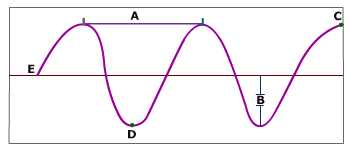
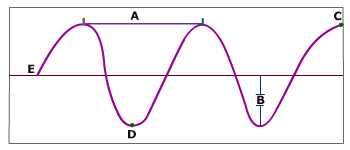
Which letter represents wavelength?
a)
A
b)
B
c)
C
d)
D
16.
Which letter represents the wave crest?
a)
A
b)
B
c)
C
d)
D
17.
Which letter represents the wave trough?
a)
A
b)
B
c)
C
d)
D
18.
Which letter represents amplitude?
a)
A
b)
B
c)
C
d)
D
19.
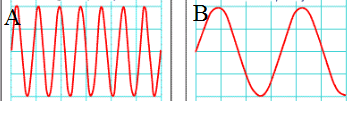
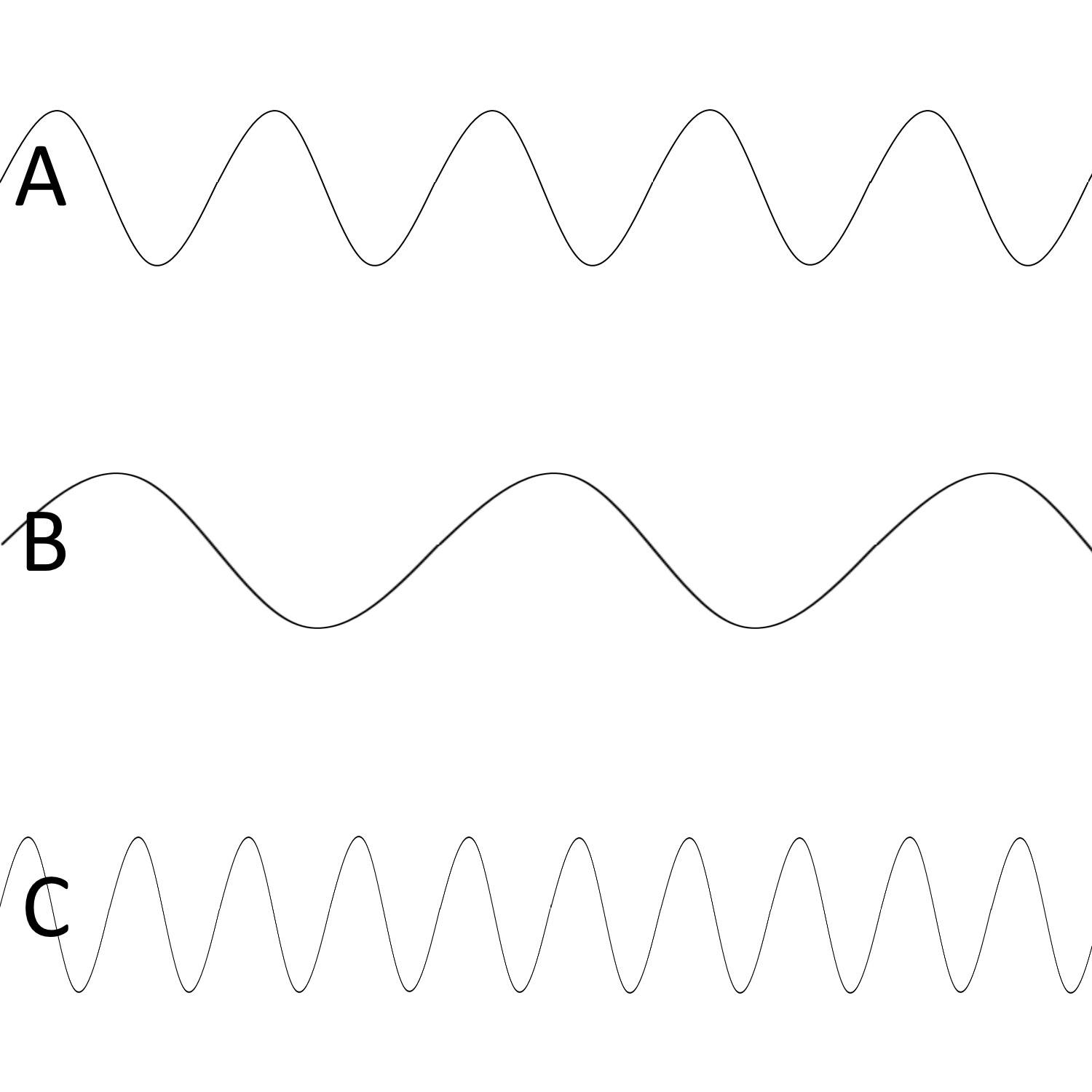
Which wave has a greater frequency?
a)
A
b)
B
20.
What is another name for wave height?
a)
Frequency
b)
Amplitude
c)
Wavelength
d)
Origin
21.
What is measured from crest to crest or trough to trough?
a)
Frequency
b)
Amplitude
c)
Wavelength
d)
Origin
22.
If a wave has a greater frequency, what happens to the wavelength?
a)
increases
b)
decreases
c)
stays the same
23.
If a wave has a greater frequency, what happens to number of waves per second?
a)
increases
b)
decreases
c)
stays the same
24.

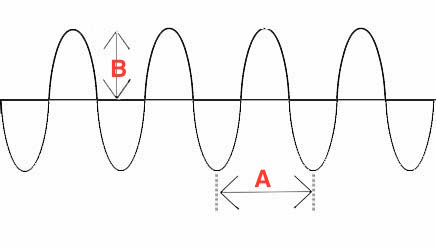
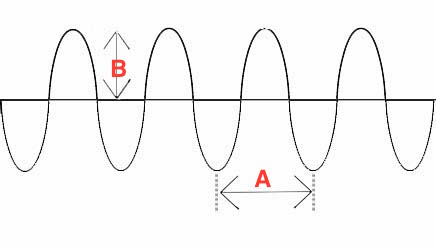
What property of this wave is represented by the letter "A"

a)

amplitude

b)

crest

c)

trough

d)

wavelength

25.
What property of the wave is represented by the letter "B"?
a)
amplitude
b)
crest
c)
trough
d)
wavelength
26.
The highest point on a wave is:
a)
the crest
b)
the trough
c)
the top
d)
the coast 
27.
The lowest point on a wave is the:
a)
Amplitude
b)
Crest
c)
Trough
d)
Wavelength
28.
The number of wavelengths that pass a point each per second is:
a)
frequency
b)
period
c)
longitudinal 
d)
transverse wave 
29.
Which wave has the largest wavelength?
a)
A
b)
B
c)
C
d)
None (same wavelength)
30.
regular disturbances that carry energy through matter or space
a)
crest
b)
energy
c)
wave
d)
trough
31.
What part of the wave is a compression? 
a)
A
b)
B
32.

What part of the wave is a refraction? 

a)
A
b)
B
33.
Which wave has the most energy?
a)
top wave
b)
bottom wave
34.

What is the amplitude of this wave?

a)

3

b)

-3

c)

6

d)

4

35.

What is the wavelength of this wave?

a)

3

b)

10

c)

4

d)

8