

Wayground logo

Free Printable Worksheets

Font size

S
M
L
XL
Worksheets

Energy

Total questions: 50

Worksheet time: 2hrs 44mins

Name
Class
Date
1.

What is energy?

a)

moving energy

b)

stored energy

c)

renewable energy

d)

The ability to do work.

2.

What is potential energy?

a)

moving energy

b)

stored energy

c)

renewable energy

d)

non renewable energy

3.

What is kinetic energy?

a)

moving energy

b)

potential energy

c)

stored energy

d)

renewable energy

4.

What is given off from energy?

a)

water

b)

heat

c)

smoke

d)

ash

5.

Which of these things is an example of potential energy?

a)

a car motor

b)

firewood

c)

Roller Coaster

d)

a fan

6.

At what point does the biker have the greatest Kinetic Energy?

a)

Point A

b)

Point B

c)

Point C

d)

Point D

7.

At what point does the biker have the greatest Potential Energy?

a)

Point A

b)

Point B

c)

Point C

d)

Point D

8.

At what point does Potential Energy transform into Kinetic Energy?

a)

Point A

b)

Point B

c)

Point C

d)

Point D

9.

Which Apple has the greatest Gravitational Potential Energy?

a)

Apple A

b)

Apple B

c)

Apple C

d)

Apple D

10.
According to the Law of Conservation of Energy, energy cannot be _________ or ____________. 
a)
destroyed, destroyed
b)
created, saved
c)
created, destroyed
d)
lost, found
11.
Can you create energy?
a)
Yes
b)
No
12.

Which number shows kinetic energy at its maximum?

a)

three

b)

two

c)

four

d)

five

13.

Which of the following statements about a skier skiing down a steep slope is true?

a)

His kinetic energy decreases and his potential energy increases

b)

His potential energy decreases and his kinetic energy increases

c)

His chemical energy increases

d)

Both his potential and kinetic energy increases

14.

Potential energy depends on ______ and _______.

a)

height, mass

b)

weight, mass

c)

speed, mass

d)

height, speed

15.

Kinetic energy depends on_________ and _________.

a)

speed and mass

b)

speed and height

c)

height and mass

d)

energy and height

16.

Energy that transforms from potential to kinetic is neither_____ nor _______.

a)

created, force

b)

created, destroyed

c)

force,motion

d)

destroyed, law of conservation of energy

17.

Which of the following is NOT an example of potential energy?

a)

A diver on the edge of a diving board

b)

A parachute falling to the ground

c)

A pencil sitting on a desk

d)

A car parked in the parking lot of a mall

18.
What kind of energy is in a rock at the edge of a cliff?
a)
Potential
b)
Kinetic
c)
Both potential and kinetic energy
d)
none of the above
19.
Energy can be _____________ or changed from one type to another.
a)
destroyed
b)
transferred
c)
created
d)
ignored
20.

When you eat fruits and vegetables, chemical bonds are releasing stored energy, this is...

a)

a. thermal energy

b)

b. sound energy

c)

c. electrical energy

d)

d. chemical energy

21.
When is the potential energy the greatest in a roller coaster?
a)
a. at the bottom of the first hill
b)
b. at the top of the first hill
c)
c. at the top of the second hill
d)
d. at the bottom of the second hill
22.
Any time an energy conversion takes place, some of the original energy is converted to which one of the following?
a)
a. sound energy
b)
b. potential energy
c)
c. light energy
d)
d. thermal energy
23.
After an energy conversion, you end up with the same total amount of energy as the original amount of potential energy. Which of the following laws explains this rule?
a)
a. law of energy changes
b)
b. law of conservation of energy
c)
c. law of power and energy
d)
d. law of potential energy
24.

The ability to do work

a)

A. chemical energy

b)

B. Friction

c)

C. electrical energy

d)

D. Energy

25.
a.  Energy stored in the nucleus of an atom.
a)
A. Sound Energy
b)
B. Potential Energy
c)
C. Nuclear Energy
d)
D. Thermal energy
26.
The energy of moving electrons
a)
A. Energy
b)
B. Energy Conversion
c)
C. Chemical Energy
d)
D. Electrical Energy
27.
Where is the potential energy the greatest?
a)
A
b)
B
c)
C
d)
D
28.
Energy from light waves.
a)
Radiant Energy 
b)
Chemical Energy 
c)
Nuclear Energy 
d)
Radiation 
29.

A student is holding the end of a pendulum. The student releases the pendulum. What energy transfers are taking place?

a)

potential energy is transferred to kinetic energy

b)

chemical energy to thermal energy

c)

mechanical energy to chemical energy

d)

kinetic energy is tranferred to potential energy
30.
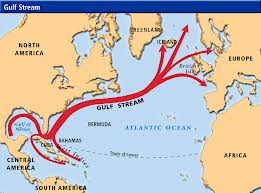
The Gulf Stream is a current that brings warm ocean water from the south to the north.
a)
conduction
b)
convection
c)
radiation
31.
Walking on the warm sand sand with your bare feet.
a)
conduction
b)
convection
c)
radiation
32.
Which direction will the heat flow while this person holds a hot cup of tea?
a)
from the cup to her hand
b)
from her hand to the cup
c)
no heat is transferred
33.
Which direction will the heat flow while this ice cap melts?
a)
there is no heat transfer
b)
from the icecap to the water
c)
from the water to the icecap
34.
In this experiment, the WARM red dye and the COLD blue dye was placed in the water at the same time. The warm red dye rose to the top while the cold blue dye sank to the bottom.
a)
conduction
b)
convection
c)
radiation
35.
Heat transfers from an area of ____temperature to an area of ___ temperature.
a)
high to low
b)
low to high
c)
high to high
36.
High temperature is connected to:
a)
Low kinetic energy.
b)
High kinetic energy.
c)
Zero net energy.
d)
Equal kinetic energies.
37.
What is thermodynamics?
a)
movement of heat
b)
it's magic
c)
measurement of heat
d)
none of them
38.
Energy due to motion is ____________ energy. 
a)
Potential 
b)
Energy
c)
Kinetic
d)
Friction
39.

The transfer of energy through molecules in direct contact is ...

a)

Heat

b)

Conduction

c)

Convection

d)

Radiation

40.
The flow of energy that occurs when a warm liquid or gas rises ..
a)
Heat
b)
Conduction
c)
Convection
d)
Radiation
41.
The transfer of energy by electromagnetic waves.
a)
Heat
b)
Conduction
c)
Convection
d)
Radiation
42.

As you touch a hot stove the heat transfers -

a)

from your hand to the stove by conduction.

b)

from the stove to your hand by conduction.

c)

from your hand to the stove by radiation.

d)

from the stove to your hand by radiation.

43.

Which sentence explains why a cold metal spoon placed in a pot of boiling water becomes hot?

a)

Thermal energy is transferred from the spoon to the water by conduction

b)

Thermal energy is transferred from the water to the spoon by conduction.

c)

Thermal energy in the water is transformed into kinetic energy in the spoon by convection.

d)

Thermal energy in the spoon is transformed into kinetic energy in the water by convection.

44.
In a lava lamp, the warm part rises and the cool part sinks.  This is an example of 
a)
heat computation
b)
convection
c)
conduction
d)
radiation
45.
_________________ are observed in liquids and gases (air).
a)
convection currents
b)
radiation waves
c)
thermal conductivity
d)
conductors
46.
The movement of thermal energy from a region of _________________ temperature to a region of _____________________ temperature is called heat.
a)
higher, lower
b)
cooler, warmer
c)
lower, higher
d)
medium, medium
47.
Which example below is an example of convection?
a)
Standing on a hot metal bridge
b)
The attic is warmer than the basement
c)
The Sun heating the Earth
d)
Touching hot sand with your feet
48.
Which example below is an example of radiation?
a)
Standing on a hot metal bridge
b)
The attic is warmer than the basement
c)
The Sun heating the Earth
d)
Touching hot sand with your feet
49.
True or false: Heat moves from the cooler object to a warmer object
a)
True
b)
False
50.
What is the difference between heat and temperature?    
a)
a.  Temperature measures the motion of molecules, and heat is the energy of that motion
b)
b.  Temperature is measured by a thermometer, and heat is measured by a barometer
c)
c.  Heat is measured in calories, and temperature is measured in joules
d)
d.  Heat is caused by the sun, and temperature is caused by conditions in the atmosphere
