Wayground logo

Free Printable Worksheets

Font size

S
M
L
XL
Worksheets

Genetics Review

Total questions: 55

Worksheet time: 3hrs 9mins

Name
Class
Date
1.
The cells produced via meiosis are called:
a)
sex cells
b)
somatic cells
c)
body cells
d)
skin cells
2.
What is it called when a sperm and egg meet?
a)
meiosis
b)
fertilization
c)
cell division
d)
mitosis
3.
Meiosis makes sperm and egg cells. In humans, sperm and egg cells each have _____ chromosomes. Therefore a fertilized human egg cell (sperm and egg cell combined) would create a cell with _____ chromosomes.
a)
23, 46
b)
46, 23
c)
2, 4
d)
50, 100
4.
What kind of cells are made in MEIOSIS?
a)
Haploid Gametes
b)
Diploid Somatic Cells
c)
Skin Cells
d)
Liver Cells
5.
If a somatic cell in a butterfly contains 24 chromosomes, a butterfly egg would contain
a)
3
b)
6
c)
12
d)
24
6.
Crossing over helps promote 
a)
male genotype
b)
genetic variation
c)
DNA replication
d)
mitosis
7.
A male shark has 40 chromosomes in each of its sex cells. How many would be present in its body cells?
a)
20
b)
40
c)
80
d)
160
8.
What is another reason we need meiosis?
a)
So the offspring has genes from both parents
b)
So the offspring has genes from one parent
c)
So the offspring has genes from neither parents
d)
So the offspring makes its own genes
9.
A human zygote should have _____ chromosomes inside.
a)
46
b)
23
c)
92
d)
64
10.
Human eggs and sperm are _____, and each has ____ chromosomes.
a)
diploid, 23
b)
diploid, 46
c)
haploid, 23
d)
haploid, 46
11.

Segments of chromosomes that contain coded information for an organisms trait

a)

cells

b)

genes

c)

alleles

d)

genotypes

12.

The outward expression, or appearance, of a genetic trait is its

a)

allele

b)

pedigree

c)

phenotype

d)

inheritance

13.

The designation Rr for a pea plant's peas shows that the plant is

a)

purple

b)

a hybrid

c)

heterozygous

d)

a true breeding plant

14.

A model that is used to show possible outcomes of cross breeding is a

a)

ratio

b)

coin toss

c)

pedigree

d)

Punnett square

15.
Aa, DD, bB, yy are all examples of
a)
genotypes
b)
phenotypes
16.
AA and Aa always show up as
a)
dominant
b)
recessive
17.
Which of the following genotypes is homozygous dominant?
a)
A
b)
Aa
c)
AA
d)
aa
18.
Which of the following genotypes is heterozygous?
a)
Bb
b)
BB
c)
bb
d)
B
19.
What you see, or the physical appearance.
a)
Genotype
b)
Phenotype
c)
Homozygous
d)
Heterozygous
20.
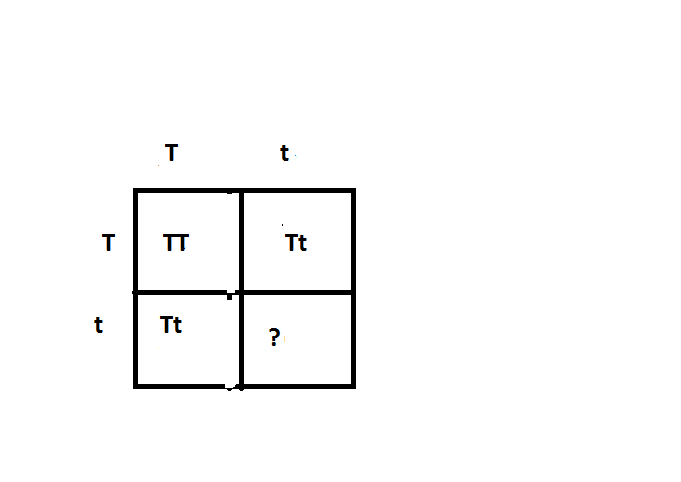
T - tall and t = short
In the punnett square below, what belongs in the missing square
a)
tt
b)
Tt
c)
Bb
d)
TT
21.
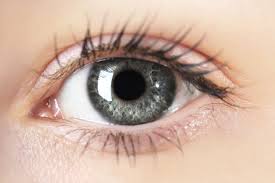
B = brown eyes
b = blue eyes
What is true about these two brothers that have brown eyes?
One has genotype BB the other Bb.
a)
they have same phenotype and genotype
b)
they have different genotypes and phenotypes
c)
they have same phenotype but different genotypes
d)
they have same genotype but different phenotypes
22.
Which of the following is a phenotype?
a)
Aa
b)
red hair
c)
heterozygous
d)
DNA
23.
Which of the following is homozygous dominant?
a)
Yy
b)
Y
c)
yy
d)
YY
24.
Which of the following is homozygous recessive?
a)
Tt
b)
tt
c)
TT
d)
T
25.
What gender has an X and a Y chromosome?
a)
male
b)
female
c)
transgender 
d)
all of the above
26.
Heredity is the passing of traits from _____________________ to _____________________
a)
predators to prey
b)
water to rain
c)
parents to offspring
d)
fungi to protists
27.
___________________________ is the study of how traits are passed on, or inherited.
a)
dominant traits
b)
ratio
c)
phenotype
d)
genetics
28.
Bunny A’s fur is all brown, while his brother and sisters are half brown and half white. The bunnies’ father is all brown, and the mother bunny is half brown and half white. Which best describes why Bunny A has brown fur?
a)
The bunny inherited a brown fur characteristic from each parent. 
b)
The bunny inherited a white fur characteristic from each parent. 
c)
The bunny rejected the white characteristics from its mother.
d)
The bunny rejected the brown characteristics from its father.
29.
Which characteristic would a child not inherit from one or both of its parents?
a)
freckles
b)
hair style
c)
eye color
d)
dimples
30.
How many boxes would say BB?
a)
1
b)
2
c)
4
d)
0
31.
T - tall and t = short
In the punnett square below, what belongs in the missing square
a)
tt
b)
Tt
c)
Bb
d)
TT
32.
G = green, g = yellow
The genotype for a yellow plant is...
a)
GG
b)
Gg
c)
gg
d)
all of the choices result in yellow
33.
What allele combination should go in the missing box?
a)
AA
b)
Aa
c)
aa
d)
none of these
34.
If B = brown hair and b = blonde hair, what is the probability of brown hair?
a)
25%
b)
50%
c)
0%
d)
75%
35.
In a certain species of rabbits, black coat color is dominant over brown coat color. What is the probability of producing a rabbit with brown coat color from two rabbits that are both heterozygous for black coat color?
a)
0%
b)
25%
c)
75%
d)
100%
36.
Tay-Sachs disease is a lethal, autosomal recessive genetic disorder. If both parents are heterozygous carriers of the disease, what are the chances of them having a child who is also a heterozygous carrier for Tay-Sachs?
a)
0%
b)
25%
c)
50%
d)
75%
37.
In certain species of plants, purple flowers (P) are dominant to white flowers (p). If two heterozygous plants are crossed, what will be the phenotype of the offspring?
a)
100% purple flowers
b)
100% white flowers
c)
75% white flowers, 25% purple flowers
d)
25% white flowers, 75% purple flowers
38.

What is the dominant trait here?

a)

Bb

b)

Recessive eyes

c)

Blue eyes

d)

Brown eyes

39.
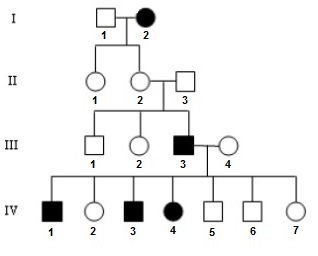
How many generations are shown in this pedigree?
a)
1
b)
2
c)
3
d)
4
40.
What does a filled in square represent?
a)
Not affected Female
b)
Not affected Male
c)
Affected Male
d)
Affected Female
41.
How many kids did the mother and father from the first generation have?
a)
2
b)
4
c)
5
d)
6
42.
This pedigree represents the inheritance of hemophilia in this family. How many of the females have the hemophilia trait?
a)
8
b)
5
c)
2
d)
3
43.
What do half colored symbols represent?
a)
The individual is a carrier (heterozygous).
b)
The individual expresses the trait.
c)
The individual has both recessive alleles.
d)
The individual has both dominant alleles.
44.
What does an open circle represent?
a)
Not Affected Male
b)
Not Affected Female
c)
Affected Male
d)
Affected Female
45.
Is this trait (the shaded individuals) dominant or recessive?
a)
dominant
b)
recessive
46.
In the second generation-how many people are carriers of the trait?
a)
2
b)
3
c)
5
d)
6
47.
How many people in this whole pedigree have the trait/disease?
a)
2
b)
3
c)
4
d)
6
48.
How many females are in this pedigree?
a)
3
b)
4
c)
6
d)
7
49.
What is this?
a)
Pedigree
b)
Karyotype
c)
Venn diagram
d)
Punnett Square
50.

In this pedigree, which gender can be carriers of colorblindness and not have it?

a)

Just males

b)

Just females

c)

Both genders

51.
Give the genotype for person II-1, for this autosomal trait.
a)
GG
b)
Gg
c)
gg
d)
we cannot be 100% sure of the genotype
52.
If a trait SKIPS a generation, it is an indication that the trait is....
a)
dominant
b)
recessive
c)
incompletely dominant
d)
co-dominant
53.

Objective #13

This is a pedigree that follows blue eyes which is a recessive trait. What is the genotype of the father (square) in generation 1?

a)

Aa

b)

AA

c)

aa

d)

A?

54.
How are individuals III-2 and II-4 related?
a)
Cousins
b)
Dad and Daughter
c)
Uncle and Niece
d)
Grandpa and Granddaughter
55.

Huntington's Disease is a dominant trait.

What is the correct genotype for individual I-2?

a)

HH

b)

Hh

c)

hh

d)

H?