wayground logo

Free Printable Worksheets

NEW

Font size

S
M
L
XL
Worksheets

Science Revision

Total questions: 54

Worksheet time: 1hrs 15mins

Name
Class
Date
1.
Air is a compound.
a)
True
b)
False
2.
Composition of compounds can be separated.
a)
True
b)
False
3.
Compounds are made up of two or more atoms physically combined.
a)
True
b)
False
4.
The properties of the elements that make up a compound are usually very similar to the compound itself.
a)
True
b)
False
5.
How many elements are represented in the compound?
Na2CO3
a)
1
b)
2
c)
3
d)
4
6.
Which of the following is not a compound?
a)
HCl
b)
Cl
c)
NaCl
d)
CO2
7.
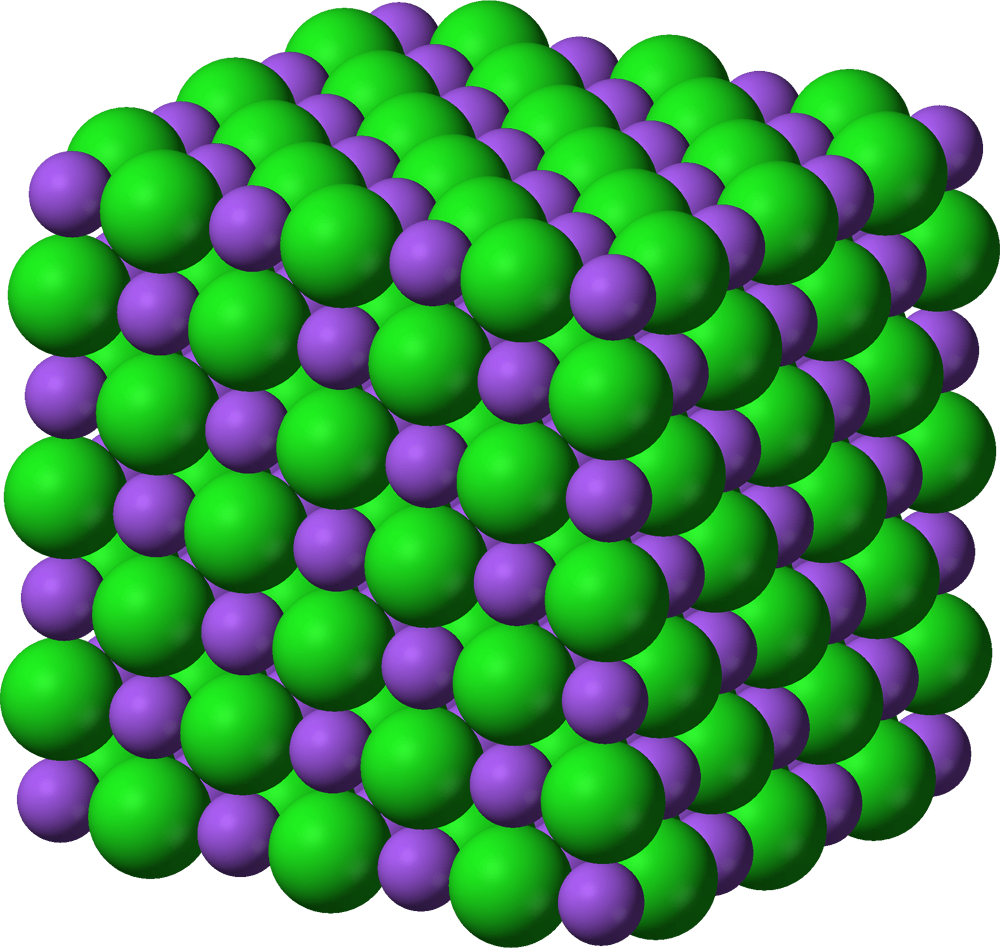
Does this picture show a compound?
a)
No
b)
Yes
8.
Which of the substances below is a compound?
a)
ink
b)
air
c)
oxygen
d)
salt
9.
Can compounds be found in the periodic table?
a)
Yes
b)
No
10.
How many carbon atom/s are present in the compounds CaCO3?
a)
1
b)
2
c)
3
d)
4
11.
What type of respiration requires oxygen?
a)
Aerobic
b)
Anaerobic
12.
What is the transfer of heat by movement of liquids or gases?
a)
Radiation
b)
Convection
c)
Conduction
d)
Heat
13.
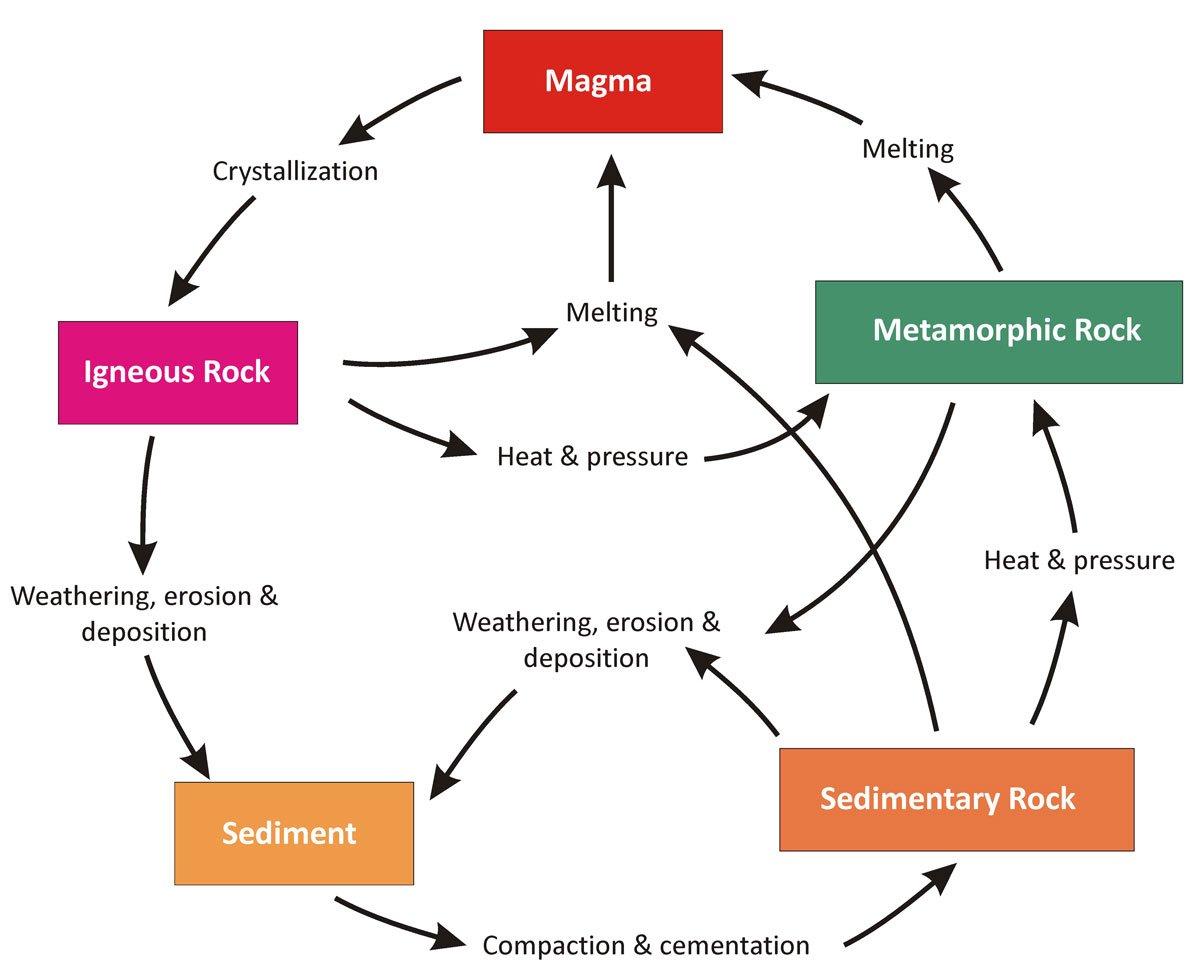
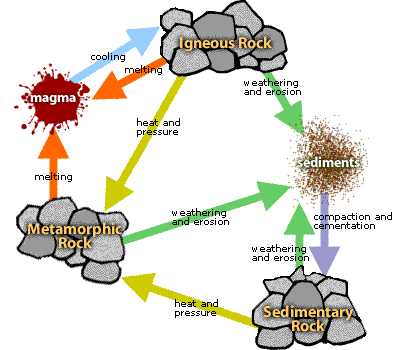
Formed by heat and pressure
a)
Sedimentary
b)
Metamorphic
c)
Extrusive Igneous
d)
Intrusive Igneous
14.
Formed by cooling & solidification of lava
a)
Sedimentary
b)
Metamorphic
c)
Extrusive Igneous
d)
Intrusive Igneous
15.
Formed by cooling & solidification of magma
a)
Sedimentary
b)
Metamorphic
c)
Extrusive Igneous
d)
Intrusive Igneous
16.
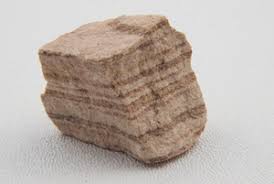
Formed by compacting & cementing of sediments
a)
Sedimentary
b)
Metamorphic
c)
Extrusive Igneous
d)
Intrusive Igneous
17.
Formed by weathering & erosion
a)
magma
b)
sediments
c)
sedimentary rock
d)
intrusive igneous
18.
Formed by melting
a)
magma
b)
sediments
c)
sedimentary rock
d)
intrusive igneous
19.
Has large crystals because of slow cooling
a)
sedimentary rock
b)
metamorphic rock
c)
intrusive igneous rock
d)
extrusive igneous rock
20.
Has small or no crystals because of rapid cooling
a)
sedimentary
b)
metamorphic
c)
extrusive igneous
d)
intrusive igneous
21.
Has wavy bands.
a)
sedimentary rock
b)
metamorphic rock
c)
extrusive igneous rock
d)
intrusive igneous rock
22.
Contains fossils. 
a)
sedimentary rocks
b)
metamorphic rocks
c)
extrusive igneous rocks
d)
intrusive igneous rocks
23.

Sound travels fastest in...

a)

solids

b)

liquids

c)

gases

d)

air

24.

Which of these provides the best explanation for why the pencil appears broken?

a)

The pencil absorbs the light rays that hit it.

b)

Water reflects light rays away from the pencil.

c)

Light rays are bent by the water in the glass.

d)

The surface of the water reflects the light rays.

25.

Which of these provides the best explanation for why the pencil appears broken?

a)

The pencil absorbs the light rays that hit it.

b)

Water reflects light rays away from the pencil.

c)

Light rays are bent by the water in the glass.

d)

The surface of the water reflects the light rays.

26.

Caleb is sitting near the window on a sunny day. When he closes the curtain, the room becomes darker. What property of the curtain allows it to make the room darker?

a)

The curtain absorbs light.

b)

The curtain is brightly colored.

c)

The curtain folds easily.

d)

The curtain is rectangular shape.

27.

Light travels in straight lines until reflected by another object. Which illustration best shows the light being reflected?

a)
b)
c)
d)
28.

Which of the following is the best example of an object transmitting light?

a)

A black sweater in the sun.

b)

A clean window in the sun.

c)

A curved mirror in the sun.

d)

A long shadow in the sun.

29.

Which object refracted the laser beam?

a)

Silver locket

b)

Picture frame

c)

Glass marble

d)

Notebook

30.

Which of the following is demonstrated when light bounces off of mirrors or shiny surfaces?

a)

Scattering

b)

Refraction

c)

Absorption

d)

Reflection

31.
How does light travel
a)
It curves around corners
b)
Really slow
c)
In a straight line
d)
In circles
32.

A concave lens has an inward curved shape. It refracts light outward from the lens. They light rays spread apart as they exit the lens. Which represents a concave lens and what type of image appear through a concave lens?

a)

Image A / small, upright image

b)

Image B / small, upright image

c)

Image A / small, inverted image

d)

Image B / small, inverted image

33.
Law of reflection state that - The angle of incidence is .................. to the angle of reflection.
a)
equal
b)
double
c)
half
34.

Energy from visible light travels in...

a)

Transverse waves

b)

Longitudinal waves

35.
A _________________ is a visual examination of the colon.
a)
colectomy
b)
colonoscopy
c)
colostomy
d)
EGD
36.
______________ means the presence or formation of gallstones.
a)
cholecystectomy
b)
colostomy
c)
cholelithiasis
d)
colonoscopy
37.
Pain in the mouth is _______________
a)
stomatology
b)
stomatoplasty
c)
stomatitis
d)
stomatalgia
38.
Surgical repair of the mouth.
a)
stomatology
b)
stomatoplasty
c)
stomatalgia
d)
stomatitis
39.
The hereditary development of fewer teeth than normal is called_____________________.
a)
neodontia
b)
millidontia
c)
oligodontia
d)
multidontia
40.
________________ refers to the number, type and arrangement of teeth in the dental arch.
a)
dentition
b)
dentometer
c)
dentric
d)
orthodontic
41.
First section of the small intestine
a)
Duodenum
b)
ileium
c)
jejunum
d)
rectum
42.
a disease marked by destruction of the liver.
a)
ascites
b)
bulimia
c)
anorexia
d)
cirrhosis
43.
The last section of the large intestine
a)
cecum 
b)
rectum
c)
sigmoid
d)
ileum
44.
The portion of the large intestine located between the descending colon and the rectum.
a)
sigmoid
b)
ileum
c)
cecum
d)
duodenum
45.
Produces insulin and enzymes to help digest food
a)
liver
b)
pancreas
c)
gallbladder
d)
esophagus
46.
Stores bile
a)
pancreas
b)
liver
c)
stomach 
d)
gallbladder
47.
Tube that carries swallowed food to the stomach
a)
esophagus
b)
liver
c)
pancreas
d)
rectum
48.
Produces bile
a)
gallbladder
b)
stomach
c)
liver
d)
small intestine
49.
A disorder marked by inflammation of the digestive tract
a)
ascites
b)
chron's disease
c)
anorexia
d)
bulimia
50.
Inflammation of the pancreas is:
a)
Pancreatitis
b)
hepatitis
c)
appendicitis
d)
hernia
51.
Surgical removal of the appendix
a)
hernioplasty
b)
appendicitis
c)
appendectomy
d)
hysterectomy
52.
An eating disorder marked by recurrent episodes of binge eating and self induced vomiting and/or diarrhea
a)
anorexia nervosa
b)
bulemia
c)
cirrhosis
d)
ascites
53.
A disease marked by an accumulation of serous fluids in the peritoneal cavity.
a)
cirrhosis
b)
bulimia
c)
chron's disease
d)
ascites
54.
The protrusion of an anatomical structure through the wall that normally contains it.
a)
hernia
b)
appendicitis
c)
hepatitis
d)
belly button