

wayground logo

Free Printable Worksheets

Font size

S
M
L
XL
Worksheets

Unit 7: War Review

Total questions: 89

Worksheet time: 1hrs 26mins

Name
Class
Date
1.

Confederates attacked the fort, the Union surrendered, first shots of the Civil War.

a)

Bull Run/ Manassas 1

b)

Antietam

c)

Appomattox Court House

d)

Ft. Sumter

2.

Bloodiest battle of the Civil War. Turned the tide of the war in favor of the Union. Northernmost battle in the civil war.

a)

Antietam

b)

Gettysburg

c)

Bullrun

d)

Vicksburg

3.

Led by Ulysses S. Grant. They blockaded the Mississippi River and split the confederate troops into smaller groups giving them a greater chance of victory.

a)

Vicksburg

b)

Gettysburg

c)

Bull Run

d)

Antietam

4.

The Northern plan to win the war was called

a)

Secret Order 191

b)

The Anaconda Plan

c)

The Hartford Convention

5.

Lincoln made a famous speech after this battle.

a)

Battle of Gettysburg

b)

Battle of Antietam

c)

Battle of Vicksburg

d)

Sherman's March to the Sea

6.

How did Jefferson Davis and Abraham Lincoln disagree on the nature of the federal union?

a)

Davis believed the states should replace the Constitution with new Articles of Confederation while Lincoln disagreed.

b)

Davis believed slavery should be extended through the United States while Lincoln wanted slavery limited to the South

c)

Davis believed sovereign states had the right to legally leave the Union, while Lincoln opposed the claim.

d)

Davis believed agricultural and industrial regions could not remain in the same Union while Lincoln believed the South needed to industrialize.

7.

Fill in the blanks:_______surrendered at _________ to end the Civil War

a)

Lincoln/Gettysburg

b)

Grant/Appomattox Courthouse

c)

Lee/Appomattox Courthouse

d)

Lee/Antietam

8.

What was total war?

a)

Everyone in the world was involved in the war.

b)

Women fought in the war too

c)

The final way to end a war

d)

To destroy everything- animals, people, children, houses and the people’s will to fight.

9.

The Emancipation Proclamation

a)

made slavery legal

b)

began slavery

c)

ended slavery in the Confederate states

d)

ended slavery only in the North

10.

Who wrote the Emancipation Proclamation?

a)

Abraham Lincoln

b)

Andrew Jackson

c)

Benjamin Franklin

d)

Ulysses S. Grant

11.

Who won the Civil War?

a)

The Union

b)

The Confederacy

c)

Mexico

d)

Europe

12.

Which side fought for slavery during the Civil War?

a)

Confederacy

b)

Union

c)

French

d)

British

13.
The North first entered the war to 
a)
prevent slavery
b)
to crush the Union
c)
to steal money from banks
d)
to keep the Union together
14.
The name given to the northern army. 
a)
Confederates
b)
Americans
c)
Military
d)
Union
15.
The name given to the southern army.
a)
Confederates
b)
Union
c)
Americans
d)
Military
16.
This was the president of the Confederate States.
a)
Abraham Lincoln
b)
Ulysses S. Grant
c)
Robert E. Lee
d)
Jefferson Davis
17.
This was the President of the Union.
a)
Jefferson Davis
b)
Robert E. Lee
c)
Ulysses S Grant
d)
Abraham Lincoln
18.
This battle was the turning point in the war.
a)
Battle of Bull Run
b)
Battle of Antietam
c)
Battle of Gettysburg
d)
Battle of Appomattox Courthouse
19.
This is where the Civil War Ended
a)
Yorktown
b)
Richmond
c)
Gettysburg
d)
Appomattox Courthouse
20.
What was the purpose of the Union Blockade?
a)
To cut off Southern trade.
b)
To keep the Confederate navy in port.
c)
To frighten Confederate civilians.
d)
To keep slaves from escaping.
21.
Who was the Commander of the Confederate Army?
a)
Davis
b)
Grant
c)
Jackson
d)
Lee
22.
Who was the Commander of Union Army?
a)
Davis
b)
Grant
c)
Jackson
d)
Lee
23.

The "Anaconda Plan" was the Union strategy for victory that had the goal of -----

a)

killing the Confederates until they surrendered

b)

leaving snakes in their marching path, hoping they'll be bitten & poisoned

c)

cutting off supplies and forcing Confederates to surrender

d)

backing the Confederate Army into the Gulf of Mexico

24.
The two major causes of the Civil War were slavery and.....
a)
states' rights
b)
cotton
c)
tariffs 
d)
factories 
25.
Which side felt their states' rights had been violated?
a)
North 
b)
South
26.
What was Abraham Lincoln's main goal?
a)
to free the slaves
b)
to preserve the Union
c)
to write Emancipation Proclamation
d)
to preserve the states' rights of the South
27.

What does "secede" mean?

a)

leave or withdraw

b)

to join

c)

to accomplish something

d)

to gain a new state

28.

The significance of the Union victory at Vicksburg was--

a)

all Confederate supply routes across the Mississippi river were occupied by the Union

b)

Mississippi would now have to rejoin the Union

c)

New Orleans would be blockaded by the Union Army

d)

south can no longer trade with europe

29.
Which slaves were freed by the Emancipation Proclamation?
a)
Northern slaves
b)
Southern slaves
c)
Slaves in the border states
d)
All the slaves
30.
What was the major goal of the Confederacy at the onset of the Civil War?
a)
To overthrow the government and set up a monarchy
b)
To become independent
c)
To spread slavery to the North
d)
To eliminate slavery in the border states
31.
Which of the following was a Union advantage during the Civil War?
a)
heavy military support fr Great Britain
b)
more experienced generals
c)
Southern Nationalism
d)
more soldiers and factories
32.
Less than a week after the end of the Civil War, Lincoln was shot in the head by ____________________.
a)
Lee Harvey Oswald
b)
John Wilkes Booth
c)
Mark David Chapman
d)
Sirhan Sirhan
33.
In which theater did the assassination of Abraham Lincoln take place?
a)
Ford's Theater
b)
Kennedy Center Performing Arts Theater
c)
Strathmore Theater
d)
Warner Theater
34.
Early revolutionary battle where 1,000 British troops died and realized the American Colonists were tougher than they though.
a)
Battle of Bunker Hill
b)
Lexington and Concord
c)
Battle of Saratoga
d)
Battle of Yorktown
35.
This type of American Colonist was in support of the British parliament.
a)
Patriot
b)
Loyalist
c)
Yes man
d)
Neutral
36.
The Second Continental Congress addressed the steps to the colonies governing themselves and the creation of what military group?
a)
Colonial militias
b)
Marines
c)
Continental Army
d)
Navy
37.
This type of colonist was ready for rebellion and the fight for independence.
a)
Loyalist
b)
Patriot
c)
Neutral
d)
British 
38.
Arguably the first "battle" of the Revolutionary War occurred when the Massachusetts Minutemen fired on British troops at -
a)
Boston
b)
Philidelphia
c)
Saratoga
d)
Lexington and Concord
39.
In 1774 delegates from all the colonies except Georgia met to discuss the problems the colonies were having with England. This was called ____________. 
a)
Boston Tea Party
b)
First Continental Congress
c)
Parliament
d)
None of the answers 
40.
A year after the First Continental Congress, representatives met in Philadelphia again. What did they discuss? 
a)
becoming an independent nation
b)
breaking away from England
c)
writing a document that declared the colonies Independent 
d)
All of the answers 
41.
The Declaration of Independence was a way for the colonists to respond to the tyranny and abuse of power by King George III. 
a)
True
b)
False
42.
The American Troops defeated the British in New York during the  _____________ in the fall of 1777. 
a)
Boston Massacre
b)
Battle of Lexington
c)
Battle of Saratoga
d)
None of the answers 
43.
In 1781, the Continental Army defeated the British troops for the final time at Yorktown, Virginia. What British leader surrendered to General George Washington? 
a)
King George III
b)
Lord Cornwallis
c)
Benedict Arnold
d)
None of the answers 
44.
These were colonists who could prepare to fight in a very short period of time.
a)
Redcoats
b)
Lobster backs
c)
Minutemen
d)
Loyalists
45.
The British Navy used this to keep goods from reaching the Patriots by sea.
a)
Blockade
b)
Stamp Act
c)
Tuna Water
d)
Minutement
46.
Bunker Hill
a)
Patriots held off the British until they ran out of ammunition
b)
George Washington led his troops across the Delaware river to attack
c)
Was the final major battle of the Revolution
d)
Winter encampment where soldiers suffered from cold, hunger, and disease
47.
Trenton
a)
Kept the British from splitting New England from the other colonies
b)
Winter encampment where soldiers suffered from cold, hunger, and disease
c)
George Washington led his troops across the Delaware river to attack
d)
A.  Was the final major battle of the Revolution
48.
Valley Forge
a)
Was the final major battle of the Revolution
b)
Kept the British from splitting New England from the other colonies
c)
Winter encampment where soldiers suffered from cold, hunger, and disease
d)
Patriots held off the British until they ran out of ammunition
49.
Saratoga
a)
Kept the British from splitting New England from the other colonies
b)
Was the final major battle of the Revolution
c)
Winter encampment where soldiers suffered from cold, hunger, and disease
d)
The Green Mountain boys attacked and got cannons needed by the Continental Army
50.
Treaty of Paris
a)
said kings were nonsense
b)
Was the final major battle of the Revolution
c)
Decided the outcome of the fight between Khan and Pippin
d)
The agreement ending the Revolution
51.
Yorktown
a)
Winter encampment where soldiers suffered from cold, hunger, and disease
b)
Was the final major battle of the Revolution
c)
George Washington led his troops across the Delaware river to attack
d)
Patriots held off the British until they ran out of ammunition
52.

All the events listed below occurred during?

a)

the era of westward expansion

b)

the Era of Good Feelings

c)

the Revolutionary era

d)

the Jacksonian era

53.

What was one result of the Treaty of Paris of 1783?

a)

Great Britain recognized the United States as an independent country.

b)

Competing Seminole and Spanish claims in West Florida were resolved.

c)

The British navy agreed to stop pressing American sailors into service.

d)

British territory in eastern Canada was ceded to France.

54.

Why is the Battle of Saratoga considered a turning point in the Revolutionary War?

a)

The British victory extended the fighting for another year.

b)

The American defeat led many soldiers to desert the Continental Army.

c)

The British defeat marked the beginning of a steady decline in British military superiority.

d)

The American victory convinced France to ally with the United States.
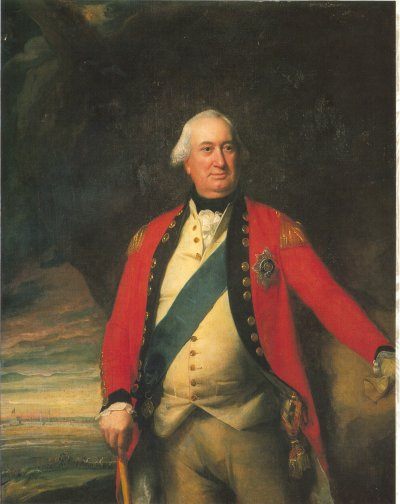
55.
Soldiers froze here because of the harsh winter
a)
Paris
b)
Valley Forge
c)
Rio Grande Valley 
d)
Yorktown 
56.
Who was the opponent at Valley Forge?
a)
Winter, starvation, disease
b)
British
c)
French
d)
Indians
57.
General Cornwallis surrenders to General Washington during this battle 
a)
Yorktown
b)
Lexington and Concord
c)
Saratoga
d)
Bunker Hill
58.
Why was the Battle of Yorktown significant (important)?
a)
It demonstrate how smart the Continental Army was
b)
It showed that Washington could lead his troops well
c)
The last battle of the War of Independence
d)
It was the battle that made King George loose his mind
59.
When Washington crossed the icy Delaware River, where was he planning to attack?
a)
Trenton & Princeton
b)
King's Mountain
c)
Saratoga & Valley Forge
d)
Bunker Hill 
60.
What amendment abolished slavery?
a)
13th
b)
14th
c)
15th
d)
16th
61.
The 14th Amendment of the United States Constitution...
a)
Gave African Americans citizenship
b)
Gave African Americans the right to vote
c)
Freed the slaves
d)
Gave landowners the right to sharecrop
62.
The 15th Amendment of the United States Constitution...
a)
Gave African Americans the right to own businesses
b)
Freed the Slaves
c)
Gave African Americans the right to vote
d)
Forced African Americans back into slavery
63.
Which of the following was not a goal of Reconstruction?
a)
Reunite the North and the South
b)
Rebuild the South
c)
Develop the system of sharecropping
d)
Determine what to do with African Americans
64.
Who assassinated President Abraham Lincoln?
a)
Nathan Bedford Forrest
b)
John Wilkes Booth
c)
Henry Clay
d)
John Breckinridge
65.
Which of the following was not a part of the Freedman's Bureau?
a)
Helped reconnecting slaves with their families
b)
Helped create African American Colleges
c)
Helped feed slaves
d)
Forced African Americans to become sharecroppers
66.
What group in Congress felt that Lincoln's plan was too lenient?
a)
Deciduous Democrats
b)
Radical Republicans
c)
Wistful Whigs
d)
Fancy Federalists
67.
Laws passed by southern states soon after the Compromise of 1877.  These laws legalized segregation whites and blacks to use separate facilities. 
a)
Jim Crow Laws
b)
Black Codes
c)
Freedman's Bureau
d)
Reconstruction
68.
The process of rebuilding the South after the Civil War. 
a)
Reconstruction
b)
Freedman's Bureau
c)
Black Codes
d)
Jim Crow Laws
69.
The organization put in place after the Civil War to provide food, clothing, health care and education in the South was known as:
a)
The Civil Rights Committee
b)
The Freedmen's Bureau
c)
The Welfare Committee
d)
The Salvation Army
70.
All of the following resulted from the end of Reconstruction EXCEPT:
a)
Ku Klux Klan is founded
b)
Jim Crow laws were passed to segregate blacks from whites and place other limits on their rights. 
c)
Sharecropping becomes the dominant economy in the South
d)
Blacks continued to enjoy increased freedoms and equality
71.
Which three Amendments where designed to ensure equality for the slaves?
a)
17th,18th,19th
b)
13th,14th,15th
c)
13th,14th,16th
d)
8th,9th,10th
72.
In 1866, a group formed in the South to fight against the rising influence of African Americans in the South. Members of this group often turned to violence and intimidation, What was the name of this controversial group?
a)
Sons of the Confederacy
b)
Neo-Nazis
c)
Ku Klux Klan
d)
Black Separatists
73.
During Reconstruction, most former Confederate states
a)
were placed under military rule for a time
b)
were readmitted into the Union, but only after promising to end slavery within 10 years
c)
given full representation in Congress without issue
d)
supported the immediate end of slavery throughout the U.S.
74.
Northerners who migrated to the mostly destroyed post-war south to make large profits and/or help freedmen were known as
a)
Scalawags
b)
Ku Klux Klan
c)
Carpetbaggers
d)
Sharecroppers
75.

Presidential Reconstruction following the American Civil War can BEST be described as

a)

a plan to fix the damage to the White House caused by the Civil War.

b)

a desire to rebuild the southern states quickly to help control the economy.

c)

a desire to rebuild the country quickly and without ill feelings following the war.

d)

a desire to punish those southerners responsible for causing and/or prolonging the war.

76.

Which is the BEST description of the southern economy during Reconstruction?

a)

The southern economy was stabilized because of trade relationships with Great Britain and France.

b)

The southern economy was still based on agriculture and cotton, but now depended on sharecropping rather than slave labor

c)

The southern economy was transformed from being based on agriculture to being completely dependent on industry and manufacturing.

d)

The southern economy was completely restored by 1866 and was actually more productive and profitable than the pre- Civil War economy.

77.

Who would have most likely NOT supported the Freedmen's Bureau?

a)

An abolitionist

b)

a carpetbagger

c)

a former slave owner

d)

a northern business owner

78.
In 1865, the Thirteenth Amendment was the first amendment added to the United States Constitution after the Civil War. As a result of this amendment. 
a)
women obtained the right to vote
b)
free speech was protected
c)
alcohol was not to be made or sold
d)
slavery was abolished
79.
During Reconstruction many southern states created new laws. Why did many people in the north consider these Jim Crow Laws unjust? 
a)
They made sharecropping illegal.
b)
They kept women from voting
c)
They limited the rights of African Americans in the south.
d)
They gave African Americans in the south too much freedom
80.
After the Civil War, the slaves had been freed and many of the large plantations were destroyed. Many of the freedmen that had worked on the plantations were now out of work. Many turned to sharecropping. Which of the following BEST describes sharecropping? 
a)
Sharecroppers had to share the equipment used on the farms
b)
Sharecroppers had little money so they had to buy small plots of land
c)
Sharecroppers had to share their crops with other sharecroppers
d)
Sharecroppers had to give farm owners part of their crop for using the land
81.
The following statements below are referring to what event in American history?
● period that followed the Civil War
● states brought back into the Union
● country rebuilt 
a)
revolution
b)
Reconstruction
c)
rebuilding
d)
desegregation
82.
What was segregation?
a)
equal treatment for all people
b)
the forced separation of races
c)
a farmer shares part of his crop to pay for land
d)
the period of time after the Civil War
83.
Why did sharecroppers remain poor?
a)
The South flooded during Reconstrucion
b)
They owed money to the landowners, never getting out of debt
c)
The sun never shone on crops
d)
Animals ate all the crops
84.

The election of __________ finally provided African Americans in the south with proof of the enforcement of the 15th Amendment.

a)

Hiram Rhodes Revels

b)

Dred Scott

c)

Ulysses S. Grant

d)

Frederick Douglass

85.

-African Americans in the South had to find a job

-African Americans could not own weapons

-African American children were not allowed to attend school


Which of the following information would be best to complete the diagram above?

a)

Provisions of the Missouri Compromise

b)

Effect of the Reconstruction Amendments

c)

Causes of the United States Civil War

d)

Impact of the passage of Black Codes

86.

Reconstruction lasted from ______ to _______.

a)

1861-1865

b)

1867-1877

c)

1941-1945

d)

1765-1783

87.

the KKK wanted...

a)

social control over African Americans

b)

to help freed slaves

c)

to end segregation

d)

spread terror to all Americans

88.

Which answer best describes Johnson's plan for readmission?

a)

southern states could be readmitted if they ratified the 13th amendment

b)

10% of the population had to swear an oath to the Confederacy

c)

Johnson did not want the South to come back to the Union

d)

majority of voters had to promise to never own slaves again

89.

What was the opinion of Congress concerning the two presidential plans for reconstruction?

a)

The presidential plans were too easy on the South

b)

The presidential plans were fair on the South

c)

the presidential plans were providing too many freedoms to freed men

d)

the presidential plans were to hard on the South
