
NEW
Font size
 Worksheets
Unit 6: Change Over Time Practice Quiz
Total questions: 36
Worksheet time: 18mins

Which moth will have a better chance of surviving on a dark tree environment
Dark Moth
Light Moth
Orange Moth
No Moth will survive
Which moth will have a better chance of surviving on a lighter tree environment
Dark Moth
Light Moth
Orange Moth
No Moth will survive
If an organism can survive in it's environment, it will
Reproduce
Die
Change
become extinct
Was once used to digest tough and hard foods that humans used to eat, is now considered vestigial because the human diet has changed
Little Toe
Appendix
Goosebumps
Wisdom Teeth
Was once used to chew tough and hard foods that humans used to eat, is now considered vestigial because humans eat softer foods
Little Toe
Appendix
Goosebumps
Wisdom Teeth
Was once used for balancing humans upright but is now considered vestigial because humans wear shoes which provide them with a flat surface to walk on.
Little Toe
Appendix
Goosebumps
Wisdom Teeth
Was once used to kickstart muscles to generate heat for the body and is now considered vestigial because humans wear clothing to warm up
Muscles that move ears
Appendix
Goosebumps
Wisdom Teeth
Was once used to listen for potential threat or predators but is now considered vestigial because we are no longer a prey species
Little Toe
Muscles that move ears
Goosebumps
Wisdom Teeth
A trait that helps an organism survive and reproduce is called a
adaptation
mutation
variation
selection
Physical differences between members of the same species is called
Variation
Mutations
Selection
Competition
The gradual change in species over time is called
Migration
Evolution
Mutation
Variation
Darwin concluded that organisms on the Galapagos Islands.....
had changed over time.
had remained the same.
were the result of selective breeding.
had no variations.
How does natural selection lead to evolution?
stronger offspring kill weaker members of the species
overproduction provides food for stronger members of the species
environmental changes kill weaker members of the species
beneficial traits accumulate among surviving members of the species and are passed on to the next generation
What did Charles Darwin infer about organisms in South America and the Galapagos Islands?
The Galapagos organisms looked more like organisms from Africa.
The Galapagos organisms were completely unrelated to the organisms found on mainland South America.
The Galapagos organisms were virtually identical to the organisms found on mainland South America.
The Galapagos organism looked similar to the mainland South America organisms but they had become different species.
Which term refers to the process by which individuals that are better adapted to their environment are more likely to survive and reproduce?
competition
overproduction
natural variation
natural selection
Similar structures in different organisms are called...
Vestigal Strutures
Homologous Structures
Radioactive Carbon Dating
Heterozygous Structures

What can we learn from embryonic development?
Life evolved from a common ancestor
Life evolved from a different ancestor
Organisms are not related
Organisms have the exact same DNA
A Phylogenetic tree or Cladogram is
a diagram showing how scientists think organisms are related
a drawing that shows where different animals live in a tree
a species of tree that is not closely related to other tree species
a diagram that compares similar body structures
________ dating can be used to determine which of two fossils is younger or which is older, but not what their actual ages are.
Radioactive Carbon
Sedimentary
Relative
Evolutionary

What are fossils?
footprints or burrows of small animals that live today
molds and casts of organism that live today
the preserved remains or traces of organisms that lived in the past
drawings of ancient animals and other organisms
Which term refers to a species that no longer has any living members?
Fossilized
Extinct
Petrified
molded
According to the law of superposition, older rocks are found
On top of younger rocks
Below the younger rocks
On the surface of the ground
Rocks are not found at all
Scientists analyze _______ elements to determine the age of a fossil
Metamorphic
Igneous
Heavy metal
Radioactive
When species fight for resources like food, mates, and space; it is known as competition.
True
False
Variation among organisms is caused by
Mutations
Environment
Adaptation
Evolution
Producing more offspring than necessary in hopes that not all will die is known as...
Competition
Natural Selection
Overproduction
Variation
True or False: Scientists have identified remains early ancestors of whales and know that they once walked on land
True
False

Which trait identifies the major difference between a hippo and a blue whale
Loss of external hind legs
Underwater nursing
Living in seawater
carnivorous diet
Which of the following animals does not have tail flukes
Blue Whale
Killer whale
Ambulocetus
Dorudon
Humans and Chimpanzee's share 98.8% of their DNA. From this, we can then conclude that Humans evolved from Chimpanzees and share common ancestry
True
False

What ancient human ancestor was the MOST closely related to HUMANS (H. sapiens)
Chimp
H. neaderthalensis
H. erectus
A. afarensis
What ancient human ancestor was the MOST closely related to the CHIMP?
H. sapiens
H. neaderthalensis
H. erectus
A. afarensis
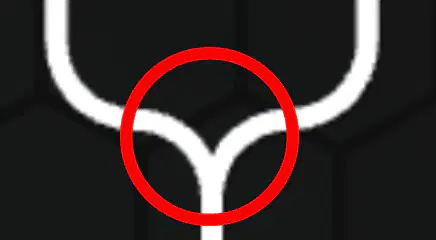
What is speciation?
When one species changes into another because of mutations
When a group of animals or plants splits into two different species over time
When an animal gets better at surviving but stays the same species
When one species disappears, and a new one takes its place
Which is an example of a speciation event?
A group of birds moves to a new island and, over time, becomes a new species
A cheetah gets faster at running to catch its food
A fish swims in deeper water to find food
A wolf’s fur changes color in the winter and summer
True or False: According to radioactive dating and the geological timeline, geologists estimate the earth to be approximately 4.5 BILLION YEARS OLD!
True
False

What makes the seaweed different from all the other plants on this tree?
It has leaves
It’s a vegetable
It is a photosynthetic autotroph
It uses spores to reproduce

