wayground logo

Free Printable Worksheets

Font size

S
M
L
XL
Worksheets

CA-1 Space 2nd

Total questions: 34

Worksheet time: 34mins

Name
Class
Date
1.

The closest star to the Earth.

a)

Sun

b)

Andromeda

c)

Venus

d)

siriu

2.
The rotation of Earth on its axis causes the pattern of _____.
a)
night and day
b)
constellations
c)
Earth's seasons
d)
the phases of the moon
3.
What is a saying to remember the order of the planets?
a)
my very excellent mother just served us nachos
b)
my very excellent mother just served us no pizza
c)
In a galaxy far, far, away
d)
my excellent mother gave us spam
4.

What causes Earth's seasons?

a)

the tilt of Earth's axis as we revolve

b)

Earth's rotation

c)

the revolution of the Moon around the earth

d)

Earth's distance from the Sun

5.
To "revolve" means to _________________
a)
rotate
b)
spin
c)
move
d)
orbit
6.
At position A, which hemisphere would have summer?
a)
Northern hemisphere
b)
Southern hemisphere
7.
__________holds all of the planets in orbit around the sun.
a)
Force
b)
Motion
c)
Weight
d)
Gravity
8.

What causes the moon's phases

a)

How long the day is

b)

The amount of sunlight reflected onto the moon from the sun that can be viewed from Earth

c)

The tilt of Earth

d)

how fast the moon is moving

9.
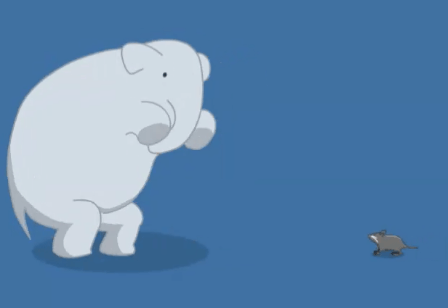
Objects with GREATER mass have a ______ force of gravity.
a)
STRONGER
b)
NOT TO STRONG
10.
Which is the largest object in our solar system?
a)
Sun
b)
Jupiter
c)
Earth
d)
Pluto
11.

How does tides form?

a)

by the earth going around the sun

b)

gravity from the earth going around the moon

c)

gravity from the earth going around the sun

d)

gravity from the moon going around the earth

12.

Which of the following is an accurate model of how the Sun, Earth, and Moon move?

a)

Sun and moon revolve around Earth

b)

Earth and moon revolve around Sun

c)

Earth revolves around the Sun and the moon revolves around Earth

d)

Earth and sun revolve around moon

13.
What celestial body is at the center of our solar system?
a)
Earth
b)
Moon
c)
Milky Way
d)
Sun
14.
Which of the following explains the revolution of a planet?
a)
The Earth revolves around the sun once per day.
b)
The Earth revolves around the sun once per year.
c)
The moon revolves around the sun once per day.
d)
The Earth rotates on it's axis once per day.
15.
Complete the following statement: The farther away two planets are the _______ the gravitational force between them.
a)
more
b)
same
c)
dosen't matter
d)
less
16.
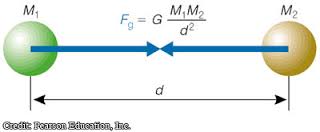
Two factors effecting the magnitude of the force of gravity between 2 objects are...
a)
mass and distance 
b)
mass and matter
c)
distance and weight 
d)
weight and mass
17.
How long does it take from one full moon to the next full moon?
a)
About one day.
b)
About one year
c)
About one season
d)
About one month.
18.

Their are trillions of stars in our galaxy. Why do we see different constellations certain times of the year?

a)

We only see the stars that are further from us.

b)

The stars we see are bigger.

c)

The stars we see are smaller.

d)

We only see the stars that our rotation and revolution allow us to see based on our location.

19.

The model shows a

a)

solar eclipse

b)

lunar eclipse

20.
A solar eclipse only happens during a ________ moon.
a)
New
b)
Cresent
c)
Gibbous
d)
Full
21.
The line up for a solar eclipse is: 
a)
Sun-Earth-Moon
b)
Earth-Sun-Moon
c)
Sun-Moon-Earth
d)
Earth-Moon-Mars
22.

Two examples you could give someone to explain why the sun appears so bright are

a)

Band instruments blending together when being played.

b)

A small picture looking larger further away.

c)

A police siren sounding louder when its closer to you compared to further away.

d)

A flashlight appears brighter the closer you are.

23.
A lunar eclipse occurs when the line up is this:
a)
Sun -Earth-Moon
b)
Moon, Sun, Earth
c)
Earth-Sun-Moon
d)
Sun-Moon-Earth
24.

What is the correct order from largest to smallest?

a)

galaxy, solar system, universe, planet, sun

b)

planet, sun, solar system, galaxy, universe

c)

universe, galaxy, solar system, sun, planet

d)

solar system ,sun, galaxy, universe, planet

25.

When Earth moves into the moon’s shadow, a solar eclipse takes place. Which phase represents the appearance of the moon during a solar eclipse?

a)

full moon

b)

new moon

c)

third quarter

d)

waning gibbous

26.
What makes the moon shine at night?
a)
The moon reflects the light from the Earth.
b)
The moon provides its own light.
c)
The moon reflects the light from the sun.
d)
The moon burns like a star.
27.

The sun is a star. Why does it look brighter than other stars?

a)

It's larger than other stars.

b)

It's hotter than other stars.

c)

It's closer than other stars.

d)

It's smaller than other stars.

28.
What would happen to your weight if you traveled to a planet that was more massive than Earth? 
a)
Your weight would stay the same 
b)
Your weight would increase 
c)
Your weight would decrease 
29.

The model shows a

a)

solar eclipse

b)

lunar eclipse

30.
The phase of the moon that occurs between the sun and Earth
a)
Full moon
b)
Waxing crescent
c)
Waning Crescent
d)
New Moon
31.
What is an example of one Earth day?
a)
The Earth moves away from the sun.
b)
The Earth rotates once on its axis.
c)
The Earth revolves once on its axis.
d)
The Earth moves closer to the sun.
32.

If an object has more _______, it will have more gravitational force.

a)

mass

b)

distance

33.
The Earth and the rest of our solar system are located in what galaxy? 
a)
Milky Way
b)
Snickers
c)
Andromeda
d)
Star Wars
34.
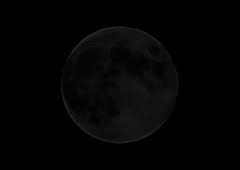
Name the moon phase
a)
First Quarter
b)
Last Quarter
c)
New Moon
d)
Full Moon