
 Worksheets
Marine Science: Fish
Total questions: 80
Worksheet time: 1hrs 20mins

Found in creatures that are similar to the earliest fish, which feature of fish evolved first?
bony skeleton
jaws
backbone
dorsal nerve cord
Which fish has a bony skeleton?
lamprey
great white shark
stingray
bullhead catfish
How do biologists get genetic information from fish?
population tagging
blood samples
fin clips
captive breeding
Which of these is not a class of fish?
Agnatha/Jawless
Condrichthyes/Cartilaginous
Osteichthyes/Bony
Osteonthyes/Boneless
This is the organ where gas exchange occurs in fish.
Gills
Lungs
Heart
Operculum
What class of fish are sharks classified in?
Jawless
Cartilaginous
Bony
Boneless
Sharks are classified into the same class as which other fish?
Dolphins
Rays and Skates
Trout and Bass
Whales
In fish, what is the name of the fluid-filled canal that detects movement and vibrations in water?
Lateral Line
Vertical Line
Horizontal Line
Lateral Spine
What is the name of the internal structure that controls a fish's depth in the water?
Liver
Air Pocket
Lung Bladder
Swim Bladder
Which of these is the common example for agnatha/jawless fish?
Sharks, Skates, and Rays
Lamprey and Hagfish
Flounder and Tuna
Seahorses
Which of these is the largest class of fish?
Jawless
Cartilaginous
Bony
Bonless
Most fish utilize this type of reproduction/fertilization.
External Fertilization
Internal Fertilization
Regeneration
Cloning Fertilization
The tail fin of a fish is also known as the __________ fin.
Pectoral
Pelvic
Dorsal
Caudal
Which of the following is not controlled by the fins of the fish?
Balance
Steering
Swimming
Breathing
The fish class osteichthyes is unique because the fish classified into this group have a(n) _________________.
Skeleton
Brain
Exoskeleton
Jaw
Which of the following is not a species of shark?
White
Bull
Mako
Moray
Which of these is the main difference between rays and skates?
Rays have a stinging spine on their tails.
Skates have a stinging spine on their tails.
Rays are nocturnal.
Skates only eat crabs.

The structure labeled #5 is the
dorsal fin.
gill filament.
operculum.
lateral line.

The structure labeled #9 is called the
pectoral fin.
operculum.
pelvic fin.
jaw.
This part of the fish may be classified as Caudal, Pectoral or Dorsal.
swim bladder
lateral line
gills
fins

This fish has which kind of mouth?
Superior
Terminal
Inferior

Gills allow fish to:
take water from the air
take oxygen from water
climb trees
Which type of fish is the most primitive?
Jawless
Cartilaginous
Bony
Fresh water
Lampreys and hagfish lack
teeth
heads
mouths
jaws
Cartilage is different from bone because
It's more flexible
It's lighter
Both answers are correct
The lobes of the caudal fin in most sharks are:
Of equal size
The top lobe is bigger than the bottom
The bottom lobe is bigger than the top
Where are shark jaws located to allow for a very streamlined form?
Dorsally
Ventrally
Anteriorly
Posteriorly
These cartilaginous fish live on the bottom, lack a stinging spine and lay eggs
Sting rays
Electric rays
Manta rays
Skates
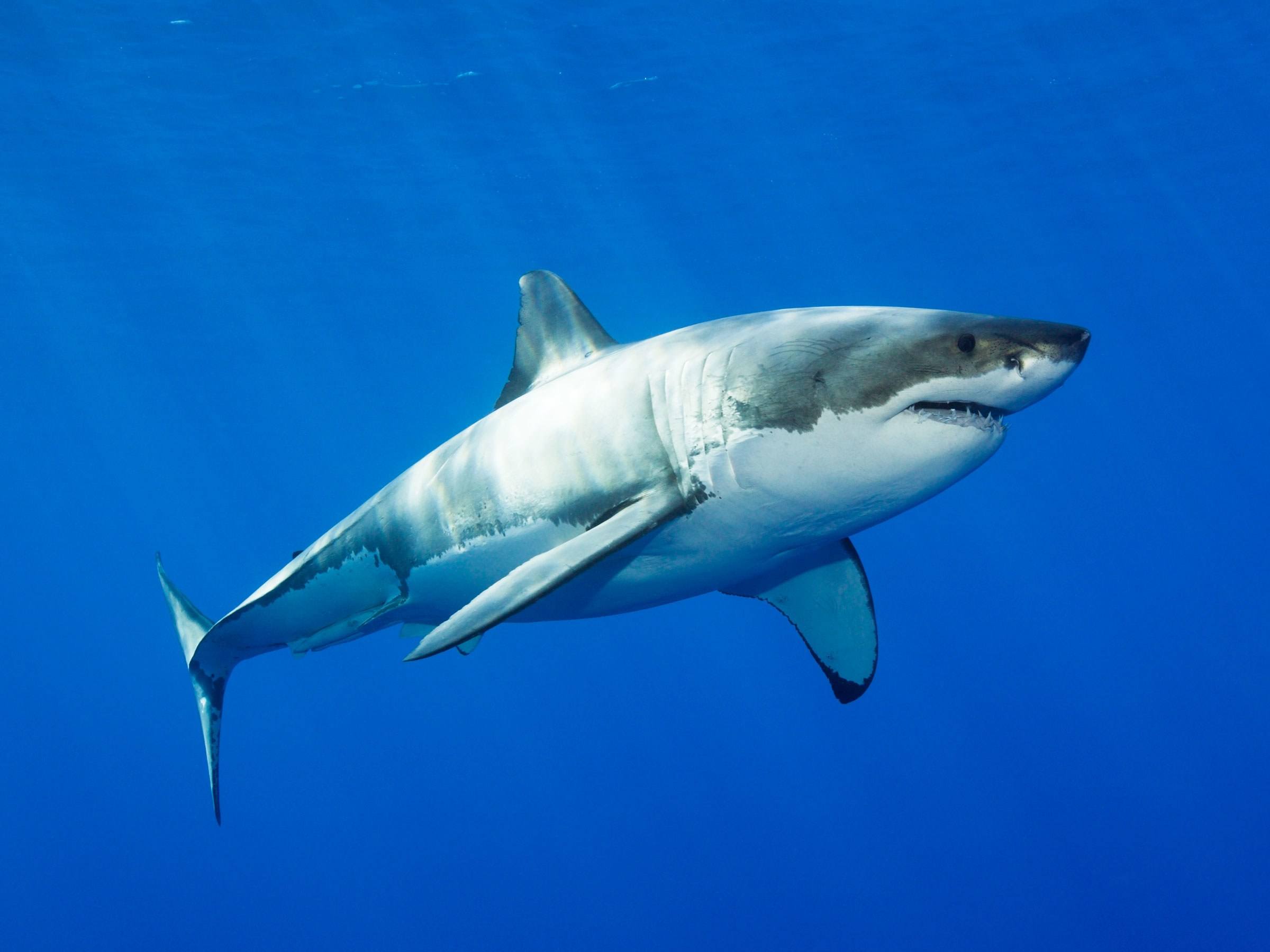
In what CLASS does this species belong?
Porifera
Chondrichtyes
Osteichtyes
Lateral Line


The tail of a fish is also called its
Caudal fin
lateral line
eyes
dorsal fin
Fish belong to the phylum
Porifera
Vertebrata
Mollusca
Chordata
SELECT TWO: The two organs that allow fish to sense vibrations and bioelectric fields in the water are _________ and ___________
Ampullae of lorenzini
Spiracles
Lateral line
Operculum
All fish have the following except...
Scales
Fins
Lungs
Gills
What is the biggest difference between rays and skates?
Tail length
Ability to generate electric charge
Reproductive strategies
Geographical distribution
Sharks must continue swimming to breathe due to lack of what structure?
Siphon
Lungs
Swim bladder
Operculum
________ protect the fish's body
Fins
Gills
Operculum
Scales
Swim bladder
________ pump water over the gills
Fins
Gills
Operculum
Scales
Swim bladder
Which class of fish has a bony skeleton?
Chondrichthyes
Osteichthyes
Both
Which class of fish has no maternal care after young are born?
Chondrichthyes
Osteichthyes
Both
Which class of fish has cycloid, ctenoid or ganoid scales?
Chondrichthyes
Osteichthyes
Both

Because the bodies of freshwater fish contain more ions than the surrounding water, they
excrete concentrated urine.
need to take in salts from the environment.
tend to take in water through osmosis.
both (b) and (c).

A goldfish propels itself forward with its
caudal fin.
pelvic fins.
pectoral fins.
dorsal fins.

#3 is the ______ fin
dorsal
lateral
anterior
bottom

Fish that give birth to live young are
oviparous
viviparous
Which of the following bony fish do NOT have a swim bladder?
Guppies
Mollies
Catfish
Clownfish
Organisms with both male and female reproductive organs are referred to as:
Hermaphrodites
Copulites
Live-Bearers
Spawn
When male and female fish release their sperm and egg into the water to be fertilized this is referred to as:
Copulation
Spawning
Internal Fertilization
Courtship
When male and female fish release their sperm and egg into the water to be fertilized this is referred to as:
Copulation
Spawning
Internal Fertilization
Courtship
Behaviors associated with trying to attract a mate are referred to as:
Gestation
Courtship
Fertilization
Copulation
Bony Fish that perform copulation reproduce by:
Internal Fertilization
External Fertilization
Spawning
Hermaphroditism

What kind of fish / sea creature is it?
Stingray
shark
sailfish
puffer fish
Which of the following is NOT a cartilaginous fish?
Ray
Eel
Shark
Fish are warm-blooded.
true
false
An animal that can not control its internal body temperature very well is a (an)
endotherm
epitherm
ectotherm
hemitherm
How does a ray differ from a lamprey?
a ray has jaws
a ray has a backbone
a ray has gills
a ray aquatic
Which of the below is a parasitic jawless fish?
Lamprey
Hagfish
Sea squirt
Lancelet
Why do hagfish produce slime?
To trap prey
To create shelters
For protection when attacked
To fight rivals & claim territory
Which of these cartilaginous is least related to the others
Sharks
Rays
Skates
Chimearas
Where is a sharks caudal fin?
The top
The bottom
The front
The rear
What does the ampullae of lorenzini do?
Senses water movement
Detects Blood
Senses electrical impulses
Detects temperature chages

Which of these is not a difference between a ray and a skate?
Skates are very small
Skates cannot sting
Skates have fins on their tail
Skates' pelvic fins have 2 lobes instead of 1
Fish that spend their lives in the ocean and migrate to fresh water to breed are
Anadromous
Catadromous
Viviparous
Haline
What does the fish class name "Agnatha" mean?
Jawless
Cartilage fish
Bony Fish
Toothy

True or False.... A dolphin is a fish.
False
True
Transparent, eyelid-like membrane that covers the eye of sharks
nictitating membrane
monocular vision
ampullae of Lorinzini
spiral valve
In order to maintain water homeostasis, marine fish must use their kidneys to
conserve water and expell salt.
conserve salt and expell water.
become exactly isotonic with the sea water.
revert to being hypotonic.

This fish has which kind of mouth?
Superior
Terminal
Inferior
Fish olfactory sacs help fish
Balance
See
Smell
Detect electric impulses

