

wayground logo

Free Printable Worksheets

Font size

S
M
L
XL
Worksheets

SSUSH 6-10 EOC REVIEW

Total questions: 114

Worksheet time: 1hrs 22mins

Name
Class
Date
1.
In the Missouri Compromise, what state was allowed to enter as a slave state?
a)
Missouri
b)
Maine
c)
Kentucky
d)
Ohio
2.
In the Missouri Compromise, what state was allowed to enter as a free state?
a)
Missouri
b)
Maine
c)
Kentucky
d)
Alabama
3.
The Missouri Compromise is also known as?
a)
The Compromise of 1820
b)
The Equality Compromise
c)
The Henry Clay Compromise
d)
The Great Compromise
4.
The Missouri Compromise Line determined the status of slavery in future states.  North of the line slavery was ___________ or banned, South of the line slavery was _________.
a)
permitted, prohibited
b)
prohibited, permitted or allowed
c)
sometimes prohibited, never allowed
d)
cheap, expensive
5.
Who came up with the idea of the Missouri Compromise?  
a)
James Monroe
b)
George Washington
c)
Thomas Jefferson
d)
Henry Clay
6.
What war allowed the U.S to acquire new western land including present day New Mexico, Nevada, Arizona, and Utah?
a)
War of 1850
b)
WW2
c)
Mexican American War
d)
Cold War
7.
What controversial Law required U.S citizens to return runaway slaves back to their owner?
a)
Slave codes 
b)
Fugitive Slave Act
c)
Underground railroad 
d)
Slaves Law of 1852
8.
What event directly caused the Mexican- American War?
a)
Illegal Immigration
b)
The annexation of Texas
c)
Embargos
d)
Border disputes
9.
What was the Gadsden Purchase a compromise of?
a)
Treaty of Paris
b)
 Treaty of Texas
c)
 Treaty of Mexico
d)
Treaty of Guatalupe Hidalgo
10.
What is the name given to the belief that the United States had the right and duty to expand across the North American continent?
a)
Manifest destiny 
b)
 Monroe Doctrine 
c)
 Great Awakening 
d)
Louisiana Purchase
11.
What territory first allowed the United States to reach the Pacific Ocean?
a)
Texas Annexation
b)
Oregon Treay
c)
Louisiana Purchase
d)
Gadsden Purchase
12.
What caused the huge population expansion in California between 1848 and  1852
a)
Gold was  found 
b)
Fresh water was found
c)
War with Native-Americans 
d)
farmers moved there to grow their crops 
13.

Which of the following words means that a person places the interests of a small area over the interests of the entire country?

a)

Sectionalism

b)

Nationalism

c)

Popular Sovereignty

d)

Secession

14.

The Compromise of 1850...

a)

allowed California to enter as a free state.

b)

gave all of the land taken from Mexico to Texas.

c)

banned slavery in Texas

d)

ended the Fugitive Slave law.

15.

An abolitionist supported which of the following causes?

a)

outlawing alcohol

b)

limiting slavery to southern states

c)

ending slavery

d)

ending women's suffrage

16.

In the Dred Scott decision, the Supreme Court...

a)

avoided controversy by ruling that Dred Scott had no right to sue in federal court.

b)

ruled that slaves could sue in federal court only if their masters allowed them to do so.

c)

ruled that Congress could not prohibit slavery in the territories because slaves were private property.

d)

ruled that a slave that had been transported to a free state or territory was a free citizen of the Untied States.

17.

Kansas earned this nickname as a result of the violence that broke out over disagreements for the expansion of slavery.

a)

Pottowatomie massacre

b)

The Jayhawk State

c)

Bleeding Kansas

d)

The mob state

18.
This woman wrote Uncle Tom's Cabin which described some of the atrocities of slavery in the South.
a)
Harriet Beecher Stowe
b)
Sandra Day O'Connor
c)
Gwynneth Marie Tasker
d)
Madeline Jane Farnham
19.

Economy of the North

a)

Plantation agriculture, slavery

b)

Manufacturing and Industry

c)

Farming and Mining

20.

Economy of the South

a)

Plantation agriculture, slavery

b)

Manufacturing and Industry

c)

Farming and Mining

21.

What was popular sovereignty?

a)

Allowed states in the north to vote for slavery

b)

Allowed states in the south to abolish slavery

c)

Allowed territories in the west to vote whether they wanted slavery or not

22.

What was the Kansas-Nebraska Act?

a)

Kansas and Nebraska are allowed to vote for statehood

b)

Kansas and Nebraska are granted a local assembly

c)

Kansas and Nebraska can decide whether to be free or slave territories

23.
Where did John Brown attack in hopes of beginning a slave revolt?
a)
Gettysburg
b)
Harpers Ferry
c)
Vicksburg
d)
Pottawatomie Creek
24.
The name given to the northern army. 
a)
Confederates
b)
Americans
c)
Military
d)
Union
25.
Even though these were states where slavery was legal, they did not secede and join the Confederate states.
a)
Western States
b)
State of Confusion
c)
Border States
d)
Southern States
26.
More factories, population, and a better navy were
a)
Confederate advantages
b)
Union advantages
c)
reasons for a Confederate victory
d)
causes of the Battle of Gettysburg
27.
Better officers, defending their own homes, and not having to go on the attack were
a)
Union advantages
b)
reasons the Union won the battle of Antietam
c)
Confederate advantages
d)
reasons that the Confederacy won at Ft. Pillow
28.
The Civil War began when Confederate forces launched an attack at which location?
a)
Fort Sumter
b)
Fort Williams
c)
Fort Pillow
d)
Fort Apache
29.
What was Lincoln's main goal throughout the Civil War?
a)
to abolish slavery
b)
to end British control of the Western territories
c)
to make a profit selling war supplies
d)
to preserve the Union
30.
The Union wanted to control the Mississippi River so that
a)
it could control the movement of trade and goods
b)
it was a natural division to “split the South”
c)
it was an easier invasion route to the South than by land
d)
all of the above
31.
The Confederates were fighting a(n)
a)
offensive war
b)
defensive war
32.

Southerners were upset when Lincoln was elected president because:

a)

they believed he might one day end slavery, which would threaten their way of life

b)

they wanted a president who would support the abolition of slavery

c)

he wanted northern states to secede from the Union

d)

he had a plan to raise taxes

33.

After the fall of this city, the Union controlled all of the Mississippi River.

a)

New Orleans

b)

Saint Louis

c)

Vicksburg

d)

Shiloh

34.
The capitol of the Confederate States, it was a goal of the Union to capture this city.
a)
Vicksburg
b)
Atlanta
c)
Richmond
d)
Charleston
35.
Originally in command of Union forces in the West, this man was put in overall command of all Union forces in 1864.
a)
Scott
b)
Meade
c)
Grant
d)
Lee
36.
Commander of the Confederate Army of Virginia.
a)
Stonewall Jackson
b)
Joe Johnston
c)
Robert E. Lee
d)
Jeb Stuart
37.
This document freed slaves in the states in rebellion on January 1st, 1863.
a)
13th Amendment
b)
Declaration of Freedom
c)
Emancipation Proclamation
d)
Bill of Rights
38.
The bloodiest single day battle in the East.
a)
Gettysburg
b)
Petersburg
c)
Antietam
d)
Fredericksburg
39.
After taking over for Grant, this general's goal was to capture Atlanta then move to the coast to capture Savannah.
a)
Hood
b)
Sherman
c)
Custer
d)
Hooker
40.
Site of the surrender of Confederates under Robert E. Lee to General Grant in April 1865.
a)
Manassas
b)
Yorktown
c)
Gettysburg
d)
Appomattox
41.
An actor, he was the man who assassinated Lincoln.
a)
John Wilkes Booth
b)
Lee Harvey Oswald
c)
Charles Guiteau
d)
Leon Czolgosz
42.
After Lincoln's assassination, this man became president.
a)
Millard Fillmore
b)
Andrew Johnson
c)
Ulysses S. Grant
d)
William Seward
43.

The Underground Railroad was

a)

A version of the modern day subway

b)

A highway for automobiles

c)

A system of telegraph lines used to send information to President Lincoln about the Civil War

d)

A secret system of routes used to help runaway slaves escape to the North

44.

Who was the Confederate President?

a)

Robert E. Lee

b)

Charles Sumner

c)

Abraham Lincoln

d)

Jefferson Davis

45.

What technology did Lincoln use during the Civil War?

a)

Railroads

b)

Amputations

c)

IronClads

d)

Telegraph

46.

What was so significant about Sherman’s March to the Sea?

a)

This was the first time the army had marched to the coast

b)

The fighting shifted to targeting civilians

c)

Sherman worked to help the South rebuild

d)

This was the first time the army used hot air balloons for spying.

47.

Define Reconstruction

a)

Rebuilding the North

b)

Rebuilding the South

c)

Rebuilding a home

d)

Rebuilding Port Huron High School

48.

The Congressional Plan for Reconstruction included all of the following EXCEPT:

a)

Passing the 14th and 15th Amendments

b)

Separating the South into 5 military districts

c)

Passing a new state constitution

d)

Restricting African Americans’ ability to vote

49.

Which plan for Reconstruction went the easiest on the former Confederates?

a)

Lincoln's Plan

b)

Congress' Plan

c)

Johnson's Plan

d)

None of these plans went easy on the South

50.

What did the 13th Amendment do?

a)

Nothing

b)

Gave African Americans the right to vote

c)

Gave African Americans' citizenship

d)

Freed the slaves

51.

What did the 14th Amendment do?

a)

Nothing

b)

Gave African Americans the right to vote

c)

Gave African Americans' citizenship

d)

Freed the slaves

52.

What did the 15th Amendment do?

a)

Nothing

b)

Gave African Americans the right to vote

c)

Gave African Americans' citizenship

d)

Freed the slaves

53.

How did the South attempt to compensate for its disadvantages?

a)

Southern military leaders devised the Anaconda Plan to end the war quickly.

b)

Confederate troops remained within their own territory at all times.

c)

Southern leaders approached foreign governments for aid

d)

The South quickly began building factories and railroad lines.

54.

Sectional differences developed in the United States largely because

a)

the Federal Government adopted a policy of neutrality

b)

economic conditions and interests in each region varied

c)

only northerners were represented at the Constitutional Convention

d)

early Presidents favored urban areas over rural areas

55.

What was the most important advantage the North had during the Civil War

a)

unified popular support for the war effort

b)

superior military leadership

c)

economic aid from Great Britain and France

d)

more human resources and war materials

56.

The Battles of Gettysburg and Vicksburg were

a)

Northern victories that caused the surrender of Lee's army.

b)

Southern victories that convinced foreign countries to support the South.

c)

Northern victories that marked the turning point of the Civil War.

d)

Southern victories that secured the South's control of the Mississippi River.

57.

General Sherman captured Atlanta because

a)

Attacking it ended the war.

b)

Striking quickly at night would capture many men.

c)

He wanted to lure the Confederates out by and destroy them.

d)

t was the last industrial city in the South.

58.

This was the first major battle of the Civil War

a)

Trenton

b)

Midway

c)

Bull Run

d)

Cold Harbor

59.

This invention allowed the North to get a lot more men and materials to the front

a)

Carts

b)

Canals

c)

Shipping

d)

Railroads

60.

Which hate group terrorized the south intimidating African American Voters

a)

KKK

b)

Nazi's

c)

Radical Republican

d)

Populists

61.

Former Union General who would become president

a)

Andrew Johnson

b)

Ulysses S. Grant

c)

John Wilkes Booth

d)

Abraham Lincoln

62.

People who paid their rent with crops were called

a)

Sharefarmers

b)

Sharecroppers

c)

Tenant farmers

d)

Slaves

63.

Name for laws that kept African Americans in conditions similar to slavery

a)

Jim Crow Rules

b)

Black Codes

c)

KKK Act

d)

None of the above

64.

How can you summarize Lincolns plan for reconstruction

a)

Punishing the south

b)

Rebuilding the north

c)

Easy to rejoin the Union

d)

Easy to rejoin the confederacy

65.

Whose reconstruction plan called for Military control of the south?

a)

Lincolns

b)

Wade-Davis

c)

Johnsons

d)

Radical Republicans

66.

Why is Lincolns plan called the 10% plan?

a)

Required states to free 10% of their slaves in order to rejoin the Union

b)

Required 10% of a state to swear an oath to the Union before rejoining the Union

c)

10% of farmland would go to former slaves

d)

States had to repay 10% of their war debts before rejoining the Union

67.

If your Grandfather could not vote then neither could you. This is an example of what?

a)

Poll tax

b)

Literacy test

c)

Grandfather clauses

d)

None of the above

68.

The compromise of 1877 saw whom become president?

a)

Lincoln

b)

Hayes

c)

Johnson

d)

Grant

69.

In the South churches became the center of communities. Select all of the correct functions they provided

a)

Unofficial Courts

b)

Schools

c)

Social events

d)

Food banks

70.

What event ended reconstruction

a)

Election of 1876

b)

Compromise of 1877

c)

Lincolns assassination

d)

Grant taking office

71.
Laws passed by southern states soon after the Compromise of 1877.  These laws legalized segregation whites and blacks to use separate facilities. 
a)
Jim Crow Laws
b)
Black Codes
c)
Freedman's Bureau
d)
Reconstruction
72.
The process of rebuilding the South after the Civil War. 
a)
Reconstruction
b)
Freedman's Bureau
c)
Black Codes
d)
Jim Crow Laws
73.
The organization put in place after the Civil War to provide food, clothing, health care and education in the South was known as:
a)
The Civil Rights Committee
b)
The Freedmen's Bureau
c)
The Welfare Committee
d)
The Salvation Army
74.
During Reconstruction, most former Confederate states
a)
were placed under military rule for a time
b)
were readmitted into the Union, but only after promising to end slavery within 10 years
c)
given full representation in Congress without issue
d)
supported the immediate end of slavery throughout the U.S.
75.
Southern states created the Black Codes to do what?
a)
limit African Americans rights
b)
expand Confederate rights
c)
give women voting rights
d)
jail Carpetbaggers
76.
What disagreement primarily led Hamilton and Jefferson to create the first two political parties?
a)
How to pay back the war debt
b)
The war between England and France
c)
The powers of the federal and state governments
d)
The impact of government on the environment
77.
What was one of the effects of the Louisiana Purchase in 1803?
a)
It forced us to buy land from England
b)
It doubled the size of the United States.
c)
We fought a war with France for Louisiana
78.
How did the Louisiana Purchase of 1803 change Americans?
a)
It provided an opportunity for Americans to settle in the new land.
b)
It encouraged immigrants to work in factories.
c)
Many African-Americans moved to the North.
d)
James Madison declared war on Britain.
79.

A protective tariff is...

a)

A tax on imported goods that helps American factories.

b)

A tax on exported goods.

c)

Refusing to trade with other countries.

d)

A country blocking our trade with their ships.

80.
Who made this statement:
"Steer clear of permanent alliances and have little connection with the foreign world."

a)
Thomas Jefferson
b)
James Madison
c)
James Monroe
d)
George Washington
81.
The Sedition Act created penalties for people who...
a)
Bought arms
b)
Immigrated to the United States
c)
Criticized the government of the United States
82.
The Supreme Court Case, Marbury V. Madison, led to the establishment of which precedent?
a)
States' Rights
b)
Federalism
c)
Judicial Review
d)
Presidents serve two terms
83.
Judicial Review...
a)
Allows the Supreme Court to see if laws are Constitutional.
b)
Lets the President control the military.
c)
Lets the states make marriage laws.
d)
Allows the legislative branch to draft laws.
84.
Which principle is Judicial Review an example of?
a)
Federalism
b)
Popular Sovereignty
c)
Checks and Balances
d)
Republicanism
85.
Which events preceded and caused the War of 1812?
a)
The King of England insulted the President
b)
The impressment of sailors
c)
We fought over tea and biscuits
86.
What did the Monroe Doctrine warn the Europeans not to do?
a)
Not to colonize in the Western Hemisphere
b)
Not to trade in the Western Hemisphere
c)
Not to ally with the Western Hemisphere
d)
Not to make peace with the Western Hemisphere
87.
What did President Monroe protect?
a)
North and South America
b)
The United States only!
c)
Africa
d)
The Eastern Hemisphere
88.
What was the major obstacle Washington faced in his first years as President?
a)
War with Spain
b)
A crippling war debt
c)
The South wished to expand slavery
d)
Indians had invaded New England
89.
What event allowed to Washington to prove the federal government could enforce its laws and taxes?
a)
Shay's Rebellion
b)
Whiskey Rebellion
c)
Embargo Act
d)
XYZ Affair
90.
What political party believed in federal government power, a loose interpretation of the Constitution, an industrial society, and power for the elite only?
a)
Democratic-Republican
b)
Federalist
91.
What political party believed in states' rights, a strict interpretation of the Constitution, an agrarian society, and political power for all?
a)
Democratic-Republican
b)
Federalist
92.

Which of the following correctly completes this activity?

a)

Jackson annexes land west of the Mississippi River

b)

Jackson ignores a supreme court ruling

c)

Jackson introduces a bill to Congress

d)

Jackson vetoes an act passed by Congress
93.

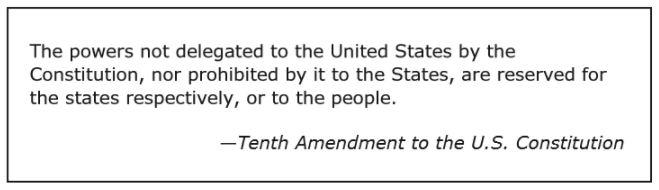
Conflicting interpretations of this amendment led to the --

a)

Bank War

b)

Nullification Crisis

c)

Corrupt Bargain

d)

XYZ Affair

94.

Why was Jackson determined to shut down the National Bank?

a)

he was trying to help the economy

b)

his supporters were pressuring him

c)

the bank kept passing tariffs

d)

he believed it was too powerful and unconstitutional
95.

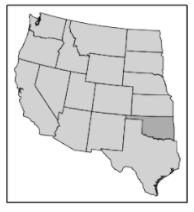
Indian Territory was established for the Indians who had been removed from their homelands. It is now known as the state of --

a)

Texas

b)

Oklahoma

c)

Kansas

d)

New Mexico

96.

Jackson's practice of rewarding political supporters with government jobs became known as

a)

patronage

b)

Jacksonian democracy.

c)

mudslinging.

d)

a corrupt bargain.

97.

What was the forced relocation of the Cherokee from Georgia to Oklahoma?

a)

Nullification Crisis

b)

Tail of Tears

c)

Increased Suffrage

d)

Goodbye Native Americans

98.
Passed in 1830, this authorized the removal of Native Americans who lived east of the Mississippi River to lands in the West.
a)
Indian Removal Act
b)
Worcester v. Georgia
c)
Bureau of Indian Affairs
d)
Trail of Tears
99.

One way suffrage expanded during the Jackson presidency was by-

a)

recognizing a woman's right to vote

b)

permitting free African Americans to vote

c)

eliminating property qualifications for voting

d)

extending citizenship to American Indian tribes

100.

How did President Jackson respond to the Supreme Court decision to protect the rights and land of the Cherokee?

a)

He ignored the decision

b)

He obeyed the decision after a delay

c)

He asked states to implement his decision

d)

He called for the impeachment of court justices

101.
The nullification crisis occurred when
a)
the Supreme Court declared the tariff laws null and void.
b)
Congress refused Jackson's request to repeal the tariff laws.
c)
South Carolina threatened to secede if the tariff laws were enforced.
d)
Jackson threatened to make South Carolina leave the Union by force.
102.

Andrew Jackson was seen as a national hero after defeating the British at what battle?

a)

Battle of New Orleans

b)

Battle of Yorktown

c)

Battle of Little Big Horn

d)

Battle of Saratoga

103.

In _____v. _____, the Supreme Court ruled that Georgia had no right to remove the Cherokee and that the Cherokee legally owned the land.

a)

Miranda v. Arizona

b)

Worcester v. Georgia

c)

The U.S. v. Nixon

d)

Marbury v. Madison

104.

Which two women were mainly responsible for organizing the Seneca Falls Convention?

a)

Lucretia Mott and Elizabeth Cady Stanton

b)

Elizabeth Cady Stanton and Susan B. Anthony

c)

Susan B. Anthony and Harriet Beecher Stowe

d)

Harriet Beecher Stowe and Lucretia Mott

105.
The Supreme Court ruled that the U.S. should protect the Cherokee and their lands in 
a)
Kentucky
b)
Tennessee
c)
Georgia
d)
Kansas
106.

What southern leader became Jackson's enemy during tariff issue?

a)

Henry Clay

b)

John C. Calhoun

c)

N. Biddle

d)

John Q. Adams

107.

Who authored the American System?

a)

Clay

b)

Pinckney

c)

Monroe

d)

Madison

108.
Who was the famous abolitionist who published the Liberator?
a)
Harriet Tubman
b)
Frederick Douglass 
c)
William Lloyd Garrison
d)
Harriet Beecher Stowe
109.

Who was the ex-slave who wrote the North Star newspaper and worked for rights for African Americans to better their lives?

a)

Fredrick Douglass

b)

Harriet Tubman

c)

Elizabeth Cady Stanton

d)

William Lloyd Garrison

110.

Completion of the Erie Canal in 1825 encouraged the growth of the Midwest because it

a)

linked the Great Lakes to the Atlantic Coast

b)

helped force the removal of British forts in the Northwest Territory

c)

stimulated development of cotton production in the Ohio River valley

d)

increased trade with Asia

111.

The temperance movement was the first movement to eliminate which of the following:

a)

alcohol consumption

b)

slavery

c)

lack of public education

d)

maltreatment of mentally ill

e)

the right to suffrage for women

112.

Which of the following reformers felt it was necessary for all children to have public education and made it mandatory in the United States?

a)

Lucretia Mott

b)

Elizabeth Cady Stanton

c)

Horace Mann

d)

Dorthea Dix

e)

William Lloyd Garrison

113.
Which of the following developments was most important in the revitalizaiton of slavery in the 1800's?
a)
The availability of lands to the West
b)
Increased trade with Europe
c)
Eli Whitney's cotton giv
d)
Shortage of workers due to immigration laws.
114.
What was the impact of Nat Turner's revolt on African American in the antebellum South?
a)
Strengthened the resolve of African Americans to fight for slavery
b)
strengthened the resolve of Southern whites to defend slavery
c)
strengthened the resolve of abolitionists to fight against slavery
d)
strengthened the resolve of women to fight for women's rights
