NEW
Font size
 Worksheets
I UG-Biochemistry-CIA 2
Total questions: 50
Worksheet time: 25mins
One acetyl CoA yield how many ATPs
10
1
11
12
When molecules are being built by chemical reactions is called
Anabolism
Catabolism
Fermentation
Respiration
When molecules are being broken down in a chemical reaction is called
Anabolism
Catabolism
Fermentation
Respiration
Energy from food comes as
ATP
ADP
AMP
None of these
The totality of an organism's chemical reactions is called
Catabolism
Anabolism
Metabolism
Respiration
In Eukaryotic cells, where Beta oxidation occurs?
Adipocyl membranes
The golgi apparatus
The mitochondrial matrix
The cytoplasm of liver cells
Beta- oxidation of fatty acid gives the products
Acyl CoA
Acetyl CoA
Both a and b
None of these
One NADH2 produces how many ATP?
2
3
2.5
3.5
Which of the following is needed in saponification?
Strong acid
Strong base
Weak base
Weak acid
The degree of unsaturation of lipid can be measured by
Acid number
Iodine value
Saponification number
Reichert-Meissel number
Cabolism reaction __________ energy
Absorb
Delay
Remove
Release
Anabolic reaction is an
Endothermic reaction
Exothermic reaction
Both a and b
None of these
Beta-oxidation is an example for
Anabolism
Catabolism
Fermentation
Respiration
Why do water molecules attract each other?
Their shape
Polarity
Electron pair attraction
Molecular structure
1. How many atoms does a water molecule contain?
2
3
4
5
The oxygen atom in addition to forming bonds with hydrogen atoms, also carries two pairs of electrons
positive electrons
molecules
Polarity
unshared electrons
The plus end of Hydrogen atom associates with the minus end of oxygen atom . These attractions are an example of
Oxygen bonds
Hydrogen bonds
Covalent bonds
solvent bonds
The unequal sharing of electrons in which centre of positive charge and centre of negative charge are not the same
Dipole
polar
configuration
bond
Which of the following is the best reason why the water molecule has a bent shape?
The bonded electrons attract each other, drawing the hydrogens together.
The bonded electrons are smaller than the unbonded ones.
The unbonded electrons take up space in a way that makes the water molecule the most stable.
The unbonded electrons do not exist in pairs.
.Which of the following is not a property of water?
Hydrogen bonds exist only in the solid state.
It can dissolve ionic and polar molecules.
It has a high surface tension
The solid state is less dense than the liquid state
Oxygen can dissolve in water because:
polar water molecules induce a temporary dipole in oxygen molecules
oxygen gas is made of polar molecules
water is a bipolar molecule
both water and oxygen gas are small molecules, so there is sufficient space for one to dissolve in the other
Water’s unique properties arise because of its ability to form strong:
covalent bonds
dipole bonds
hydrogen bonds
ionic bonds
Which of the following is not a property of water?
Hydrogen bonds exist only in the solid state
It can dissolve ionic and polar molecules.
It has a high surface tension.
The solid state is less dense than the liquid state.
The tendency for water molecules to form weak bonds and stick to each other is called
Cohesion
Adhesion
Capillary action
Surface tension
Hydrogen bonds are strong and require a lot of energy to break
True
False
Enzyme that catalyses the transfer of functional group of atoms from one molecule to another. This enzyme is
Isomerases
Transferases
Oxidoreductase
Lyases
These enzymes bring about oxidation and reduction reactions .
reductases
dehydrogenases
oxidases
oxidoreductases
It forms bonds by addition of the water component.
hydrolases
helicase
ligase
isomerases
Enzymes are an example of
Lipids
Carbohydrate
Protein
Nucleic Acid

Informosomes are composed of
mRNA and Proteins
rRNA and proteins
tRNA and Proteins
DNA and proteins
How many hydrogen bonds between A and T
1
2
3
4
Renaturation process is also called as
Annealing process
Replication
Denaturation
Unwinding process

Ribose sugar is part of...
Thymine
DNA
RNA
Adenine
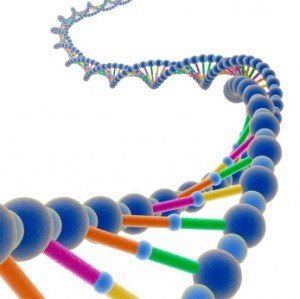
Which of the following is TRUE about the DNA molecule?
is shaped like a double helix
contains 3 types of bases
contains no sugar
only found in plants and animals