
Font size
 Worksheets
Organelles
Total questions: 52
Worksheet time: 31mins
The ____ ____ regulates what enters and leaves the cell.
Golgi apparatus
rough ER
a cell that lacks a nucleus and other membrane bound organelles
a cell that lacks a nucleus and other membrane bound organelles
synthesize ATP (energy)
modify, packages and transport proteins and lipids from ERs
store water and molecules
to make lipids and detoxifies
What is the function of the Golgi apparatus?
synthesize ATP (energy)
modify, packages and transport proteins and lipids from ERs
store water and molecules
to make lipids and detoxifies
Site of protein synthesis
Golgi apparatus
ribosomes
mitochondria
nucleolus
Site of photosynthesis
mitochondria
central vacuole
ribosomes
chloroplast
Site of ribosome synthesis
nucleus
nucleolus
Golgi apparatus
lysosomes
Digests polymers to monomers with hydrolytic enzymes
lysosomes
vesicles
Rough ER
mitochondria
Three things found in a plant cell and not animal cell
centrioles, lysosomes and flagella
cell wall, chloroplast and central vacuole
mitochondria, chloroplast and vacuoles
plasmodesmata, cytoskeleton, and ribosomes
Site of cellular respiration
chloroplast
mitochondria
Golgi apparatus
nucleus
Synthesizes lipids and detoxifies
rough ER
lysosomes
smooth ER
centrioles
Protects and maintains shape of a plant cell
cell membrane
cell wall
nuclear membrane
plasmodesmata
Cells that have no nucleus and no membrane-bound organelles are known as
prokaryotic
eukaryotic
Which kind of cell is prokaryotic, may or may not have a cell wall, and has no membrane bound organelles?
Animal
Bacteria
Fungi
Plant
Nucleolus:
Stores DNA and controls the activities of the cell
Synthesizes ribosomes
Synthesizes proteins
Stores water and other biomolecules

Mitochondria: breakdown glucose for ATP (energy)
Chloroplast: converts sunlight into glucose (sugars)
Vacuole: Stores H2O, salt, molecules

The two kinds of cells are Prokaryotes and Eukaryotes. How are they different?
Prokaryotes have a nucleus
Eukaryotes have a nucleus
There is no difference
Only eukaryotes have DNA

Label B
cell membrane
ribosome
lysosome
mitochondria

Involved in protein synthesis (check all that apply)
Smooth ER
Rough ER
Ribosome
Golgi Body
Contains the genetic material to control protein synthesis
Cytosol
Nucleus
Smooth ER
Rough ER
(a) is a cylindrical organelle in animal cells that is involved in cell division.
cell with no membrane bound structures and no
nucleus
Eukaryote
Prokaryote
Plant
Animal

This organelle encloses and supports cells in plants
cell membrane
nucleus
cell wall
mitochondria

Organelle that links amino acids together to make proteins
centriole

Layered stack of flat membrane-enclosed spaces containing process, packages, and transport proteins or lipids

Fluid filled sac for storage of materials; stores water and molecules

Bean-shaped organelle that supplies ATP (energy) to the cell and has its own ribosomes and DNA

Convert solar energy into chemical energy; contains chlorophyll and is where photosynthesis occurs

Gives support and shape to plants, algae, fungi and some bacteria

Organelle that contains hydrolytic enzymes and helps with the immune system and breaks down dead or damaged cell parts
Both prokaryote and eukaryotes have a cell membrane
True
False
Only eukaryotes have a membrane
Only prokaryotes have a membrane
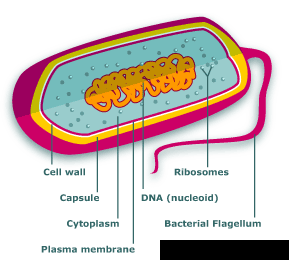
Which type of cell? It has DNA, Ribosomes, Cell Membrane, but No Nucleus

This organelle helps organize cell division and creates microtubules.
Mitochondria
Centriole
Lysosome
Vacuole

Makes and stores lipids (fats). Also breaks down toxins.
Rough ER
Smooth ER
Golgi Apparatus
Vacuoles

Main function is to produce and assemble ribosomes.
Nucleus
Vacuole
Nucleolus
Mitochondria


PROKARYOTIC cells do NOT have
membrane bound organelles
cell membrane
DNA
ribosomes

Prokaryotic cells are usually _______ and do not contain a ______
Multicellular, Nucleus
Unicellular, Nucleus

Prokaryotic cells do NOT have membrane bound organelles or ______________________________.
cytoplasm
a nucleus
ribosomes
DNA
Select the correct Cell: This cell is considered complex since it contains a well-defined nucleus and membrane-bound organelles. Animals, Plants, Fungi, and Protists are considered this type of cell.

Match the organelle to its description.
Proteins are synthesized on these small structures
Ribosomes
Controls all activity in the cell and stores DNA
Nucleus
Fluid that fills the cell and
keeps the organelles in place
Cytoplasm
Create ATP (energy) through cell respiration
Mitochondrian
Selectively permeable outer lining surrounding EVERY cell
Cell Membrane

Match the following biological terms with their definitions.
Cell
Basic unit of all forms of life
Nucleus
Control center of a cell
Prokaryote
Unicellular organism without a nucleus
Eukaryote
Organism whose cells contain a nucleus

A
Cell Membrane
B
Cell Wall
E
Nucleus
J
Chloroplast
L
Central Vacuole
Which structure is a Golgi body?
All cells have four things in common identify them in the correct spot.
This is a plant cell. Select the two organelles that make plant cells different than animal cells.

Match the following
Stores water
Vacuole
Produces glucose through photosynthesis
Chloroplast
Releases energy
Mitochondria
Controls what enters and leaves
Cell membrane
Stores genetic material
(DNA)
Nucleus
POINT AT THE PLANT CELL

