wayground logo

Free Printable Worksheets

Font size

S
M
L
XL
Worksheets

Unit 2 Cell Cycle, Meiosis & Differentiation 2023

Total questions: 64

Worksheet time: 32mins

Name
Class
Date
1.
During which phase of the cell cycle does the cell spend the most time?
a)
Mitosis
b)
Cytokinesis
c)
Interphase
2.
During which part of the cell cycle does the cell divide?
a)
Interphase
b)
Mitosis
c)
S phase
3.
During which part of the cell cycle is DNA copied?
a)
Mitosis
b)
Cytokinesis
c)
S phase
4.
During which parts of the cell cycle does the cell grow?
a)
G1 and G2
b)
G1 and S
c)
M phase and cytokinesis
5.
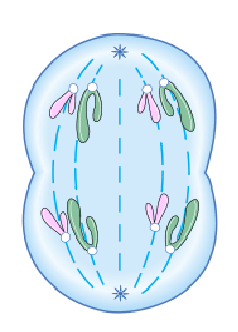
Which phase of mitosis is shown in the picture?
a)
Interphase
b)
Metaphase
c)
Telophase
6.
Which phase of mitosis is shown in the picture?
a)
Prophase
b)
Telophase
c)
Metaphase
7.
What is shown in the picture?
a)
Mitosis
b)
Interphase
c)
Cytokinesis
8.
What is the purpose of the cell cycle?
a)
To create new daughter cells
b)
To prevent cancer from developing
c)
To help the body fight viruses and bacteria
9.

Uncontrolled cell division which usually leads to tumors and disease is called:

a)

Metaphase

b)

Cytokinesis

c)

Cancer

d)

Diabetes

10.

The correct sequence of mitosis:

a)

metaphase, anaphase, telophase, prophase

b)

prophase, metaphase, anaphase, telophase

c)

prophase, anaphase, metaphase, telophase

d)

telophase, metaphase, prophase, anaphase

11.

Having only one copy of each chromsome

a)

haploid

b)

diploid

c)

triploid

d)

octoploid

12.

After mitosis the number of chromosomes in the newly created cells will be:

a)

Half the number of the original cell

b)

The same number as the original cell

c)

Twice as much as the original cell

13.

The division of the cytoplasm is called?

a)

anaphase

b)

mitosis

c)

cytokineses

d)

G0

14.
Why would it be important to replicate DNA before a cell divides in mitosis or meiosis?
a)
In order for genetic information to be transferred into daughter cells.
b)
In order for the cell to be able to increase in size.
c)
In order for the DNA to be contained in the nucleus.
d)
In order for the cell to re-order the DNA sequencing in the new cells.
15.
In mitosis, the two resulting cells are
a)
different from the starting cell and identical to each other.
b)
different from the starting cell and different from each other.
c)
identical to the starting cell and different from each other.
d)
identical to the starting cell and identical to each other.
16.
In what organelle is the genetic material found inside?
 
a)
Endoplasmic Reticulum
b)
Golgi Complex
c)
Nucleolus
d)
Nucleus
17.

When you start with 1 cell, at the end of mitosis, how many identical cells will you have?

a)

1

b)

2

c)

3

d)

4

18.
What is the cell cycle?
a)
The gradual development of something, especially from a simple to a more complex form.
b)
The study of heredity and the variation of inherited characteristics.
c)
The branch of biology that deals with the relations of organisms to one another and to their physical surroundings.
d)
The series of events that take place in a cell leading to its division and duplication of its DNA to produce two daughter cells.
19.
Which of these lists presents the stages of the cell cycle in the correct order?
a)
interphase, mitosis, cytokinesis
b)
cytokinesis, mitosis, interphase
c)
mitosis, interphase, cytokinesis
d)
interphase, cytokinesis, mitosis
20.

What phase am I?

a)

Interphase

b)

Prophase

c)

Metaphase

d)

Anaphase

e)

Telophase

21.
Fruit fly body cells have 8 chromosomes. After mitosis, you would expect a resulting fruit fly daughter cell to have -
a)
16 chromosomes.
b)
46 chromosomes.
c)
8 chromosomes.
d)
4 chromosomes.
22.
In which type of cells will mitosis occur?
a)
egg cells
b)
sperm cells
c)
jail cells
d)
Body cells except the sperm and egg cells
23.
This picture shows which process? 
a)
mitosis
b)
meiosis
c)
the cell cycle
24.

Diagram shows four stages of mitosis.

Which of these is the right order?

a)

P,Q,R,S

b)

P,S,Q,R

c)

Q,P,S,R

d)

S,R,P,Q

25.

Diagram shows the human fertilization process.

How many chromosomes are there in P and Q ?

a)

P:23 , Q:23

b)

P:23 , Q:46

c)

P:46 , Q:23

d)

P:46 , Q:46

26.

How is meiosis related to sexual reproduction?

a)

Meiosis allows the offspring produced during sexual reproduction to grow and develop.

b)

Meiosis joins together the sex cells during sexual reproduction to produce new offspring.

c)

Meiosis produces the sex cells that join to form new offspring during sexual reproduction.

d)

Meiosis produces the body cells that join to form new offspring during sexual reproduction.

27.

How many chromosomes does a human cell have if each parent contributes 23 chromosomes?

a)

42

b)

46

c)

24

d)

64

28.
What does DNA stand for?
a)
DeNatured Acid
b)
DomiNant Acid
c)
DeoxyriboNucleic Acid
d)
DiriboNucleic Acid
29.
Which of the following is the correct acronym for the stages of the cell cycle?
a)
IPMATC
b)
MPIATC
c)
CAPMIT
d)
IMATCP
30.
The checkpoints that regulate the cell cycle can fail when ____ becomes damaged.
a)
DNA 
b)
Cell Membrane
c)
Mitochondria
d)
Ribosomes
31.

Type of tumor that remains at original site and is not cancerous

a)
Benign
b)
Malignant
c)
Metastaasis
d)
checkpoint
32.

Cancer tumor that has the ability to spread 

a)
somatic
b)
benign
c)
malignant
d)
diploid
33.
When cancer spreads to other areas of the body, it is said to have
a)
metastisized
b)
benigned
c)
tumored
d)
localized
34.
Any substance that is known to cause cancer is called a
a)
carcinogen
b)
nicolyte
c)
pathogen
d)
retrovirus
35.

These are examples of:

  • chemicals in cigarette smoke
  • radiation
  • nitrates in processed foods
  • artificial sweeter
  • Heavy metals such as mercury and lead
a)

Carcinogens

b)

Predispositions

c)

Mutations

d)

Tumors

36.

These are examples of:


  • Surgery
  • Chemotherapy
  • Radiation
a)

Treatments for Cancer

b)

Mutations

c)

Examples of Asexual Reproduction

d)

Types of Tumors

37.

Stem cells are ____________________.

a)

cells that grow uncontrollably

b)

undifferentiated cells that can turn into other types of cells

c)

the first cells of a new living organism (fertilized egg)

d)

specialized cells that do one job

38.
Stem cells can be obtained from _________.
a)
embryos
b)
some adult tissues
c)
umbilical cord blood
d)
all of the above
39.

Why is the use of embryonic stem cells controversial?

a)

The embryos are destroyed in the process of extracting the stem cells.

b)

People consider their use as destroying a life.

c)

They are taken from little kids, which is painful.

d)

They are put into a different person.

40.
Which of the following is NOT a source for stem cells?
a)
umbilical cord blood 
b)
early embryos 
c)
sperm and eggs 
d)
certain adult tissues 
41.
What process best explains how muscle cells and nerve cells can develop from the same fertilized egg?
a)
genetic engineering
b)
survival of the fittest
c)
differentiation
d)
selective breeding
42.
Which best explains why muscle cells are different from blood cells?
a)
Muscle cells are produced by the brain, but blood cells are produced by the heart. 
b)
Different genes are activated in muscle cells than in blood cells. 
c)
Muscles cells experience different environmental influences than blood cells. 
d)
A mutation occurs during the development of muscle cells but not in blood cells. 
43.
What is the difference between embryonic stem cells and adult stem cells?
a)
Embryonic stem cells can differentiate into more cell types than adult stem cells
b)
Adult stem cells are pluripotent, just like embryonic stem cells
c)
Adult stem cells can differentiate into more cell types than embryonic stem cells
d)
Adult stem cells grow bigger than embryonic stem cells
44.
How do stem cells know what type of cells to differentiate into?
a)
The nucleus has instructions to turn some genes on and some genes off.
b)
Signals from chemicals in the organism or from the environment determine which genes will be turned on and off.
c)
Genes turn on and off randomly.
d)
The cell has unique DNA that determines what the cell will become.
45.

Which of these is true of meiosis? Click ALL that apply.

a)

There are four cells at the end

b)

The end cells are identical to the parent cell

c)

The chromosomes will have swapped chunks

d)

The end cells have half as much DNA as the parent

46.

All human have _________ chromosomes

a)

23

b)

46

c)

Diploid

d)

Haploid

47.

Squirrels have 40 chromosomes in its diploid cells. How many chromosomes will you find in their egg cells

a)

40

b)

23

c)

20

d)

Not enough information to answer the question

48.

A haploid cell from a male camel has 35 chromosomes. What type of cell is this? Choose all that apply

a)

Sperm

b)

Egg

c)

Heart Cell

d)

Muscle Cell

49.
A dog has 78 chromosomes in its body cells.  What is the diploid number?
a)
78
b)
39
c)
1
d)
100
50.

Check all that apply.

Reproductive cells are _______.

a)

haploid

b)

gametes

c)

somatic

d)

identical

e)

diverse

51.

What process creates reproductive cells used in sexual production?

a)

meiosis

b)

mitosis

c)

cellular respiration

d)

photosynthesis

52.

During meiosis, nonsister chromatids of a homolgous pair exchange DNA. This is called _____________.

a)

crossing over

b)

trading places

c)

criss cross apple sauce

d)

breaking places

53.

A zygote is formed by ___________ of a male and female gamete.

a)

fertilization

b)

division

c)

reduction

d)

addition

54.
Meiosis makes sperm and egg cells. In humans, sperm and egg cells each have _____ chromosomes. Therefore a fertilized human egg cell (sperm and egg cell combined) would create a cell with _____ chromosomes.
a)
23, 46
b)
46, 23
c)
2, 4
d)
50, 100
55.
Which process and type of resulting cells are represented?
a)
mitosis, gametes
b)
mitosis, body cells
c)
meiosis, gametes
d)
meiosis, body cells
56.
What is another reason we need meiosis?
a)
So the offspring has genes from both parents
b)
So the offspring has genes from one parent
c)
So the offspring has genes from neither parents
d)
So the offspring makes its own genes
57.

When a cell becomes differentiated, it produces ________ specific to its function by turning on and off genes.

a)

Stem cells

b)

Proteins

c)

Characteristics

d)

Genes

58.

When the liver is damaged, what cells undergo mitosis to repair it?

a)

Skin Cells

b)

White Blood Cells

c)

Neurons

d)

Adipocytes

e)

Liver Cells

59.

One of the characteristics of life is that all living things have a limited lifespan. If fact, most cells can only divide about 50 times before they die. This pre-programmed cell death is called ....

a)

meiosis.

b)

apoptosis.

c)

mutation.

d)

mitosis.

60.

Why do muscle cells and neurons have such different structures?

a)

They have a different function in the body.

b)

They originated from different stem cells.

c)

They have a different portion of their DNA activated.

d)

They arose at a different stage of development.

61.

What is a karyotype

a)

DNA wrapped around proteins and condensed and packaged

b)

An image showing the chromosomes in a cell

c)

A form of karaoke using only science songs

d)

A drawing of human genes

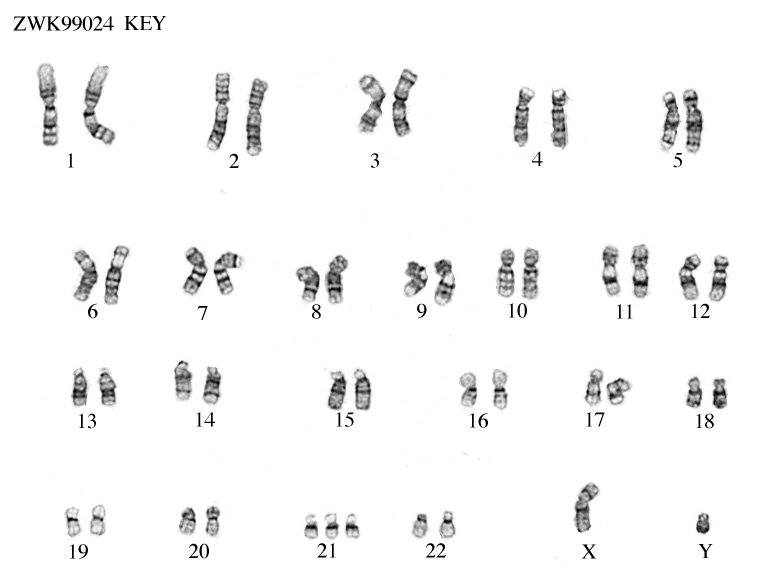
62.

What is the mutation in this persons chromosomes?

a)

There is only one X

b)

7 is shaped like a hockey stick

c)

There's an extra 21

d)

1 is too curved

63.

Why do cells go through the cell cycle?

a)

growth

b)

repair

c)

asexual reproduction

d)

All of the above

64.

Body cells are also known as

a)

somatic cells

b)

gametes

c)

haploid cells

d)

sex cells