Wayground logo

Free Printable Worksheets

Font size

S
M
L
XL
Worksheets

structure of atoms

Total questions: 50

Worksheet time: 28mins

Name
Class
Date
1.

Which of these has a negative charge?

a)

Proton

b)

Neutron

c)

Electron

d)

Oatmeal

2.

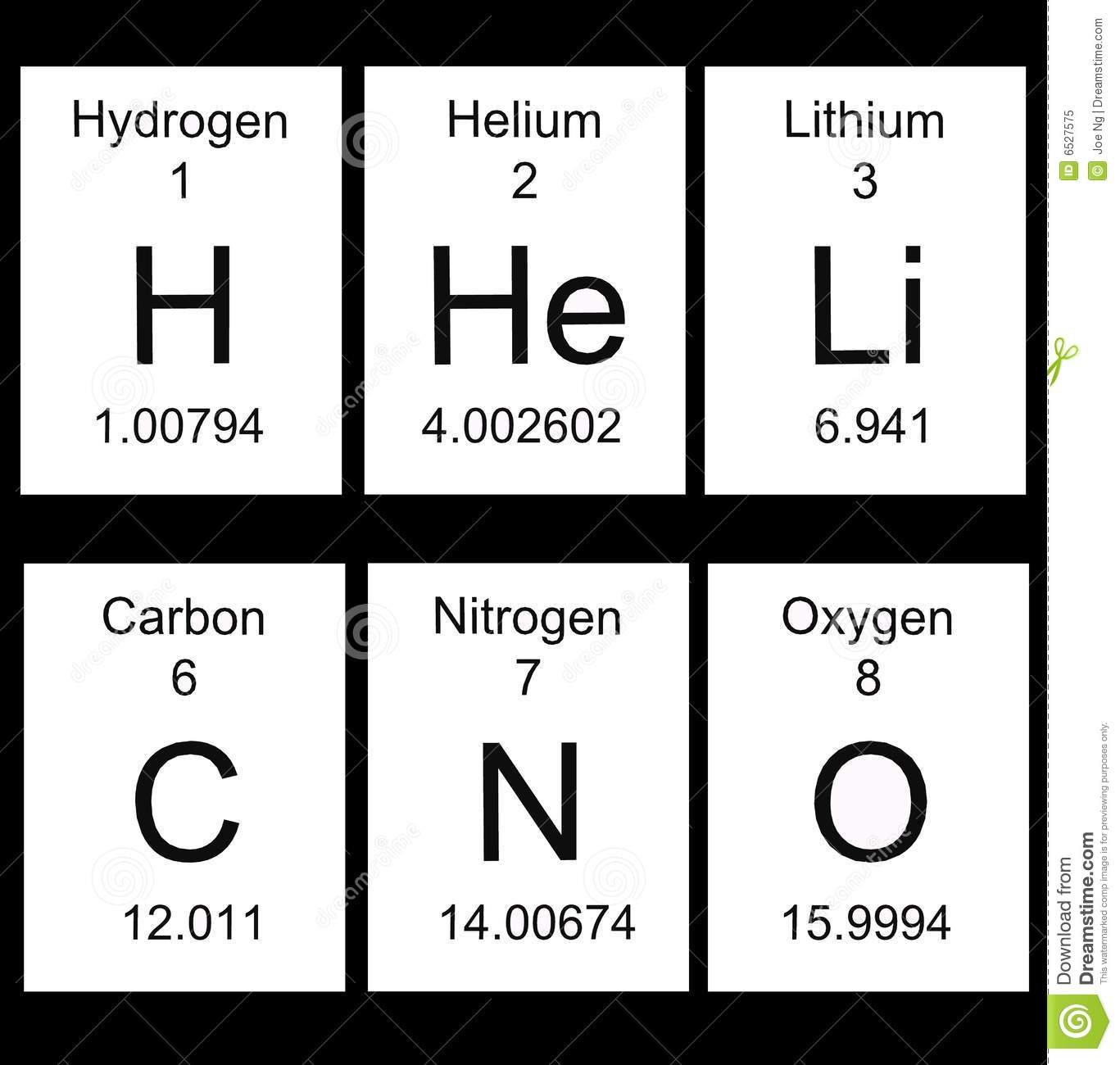
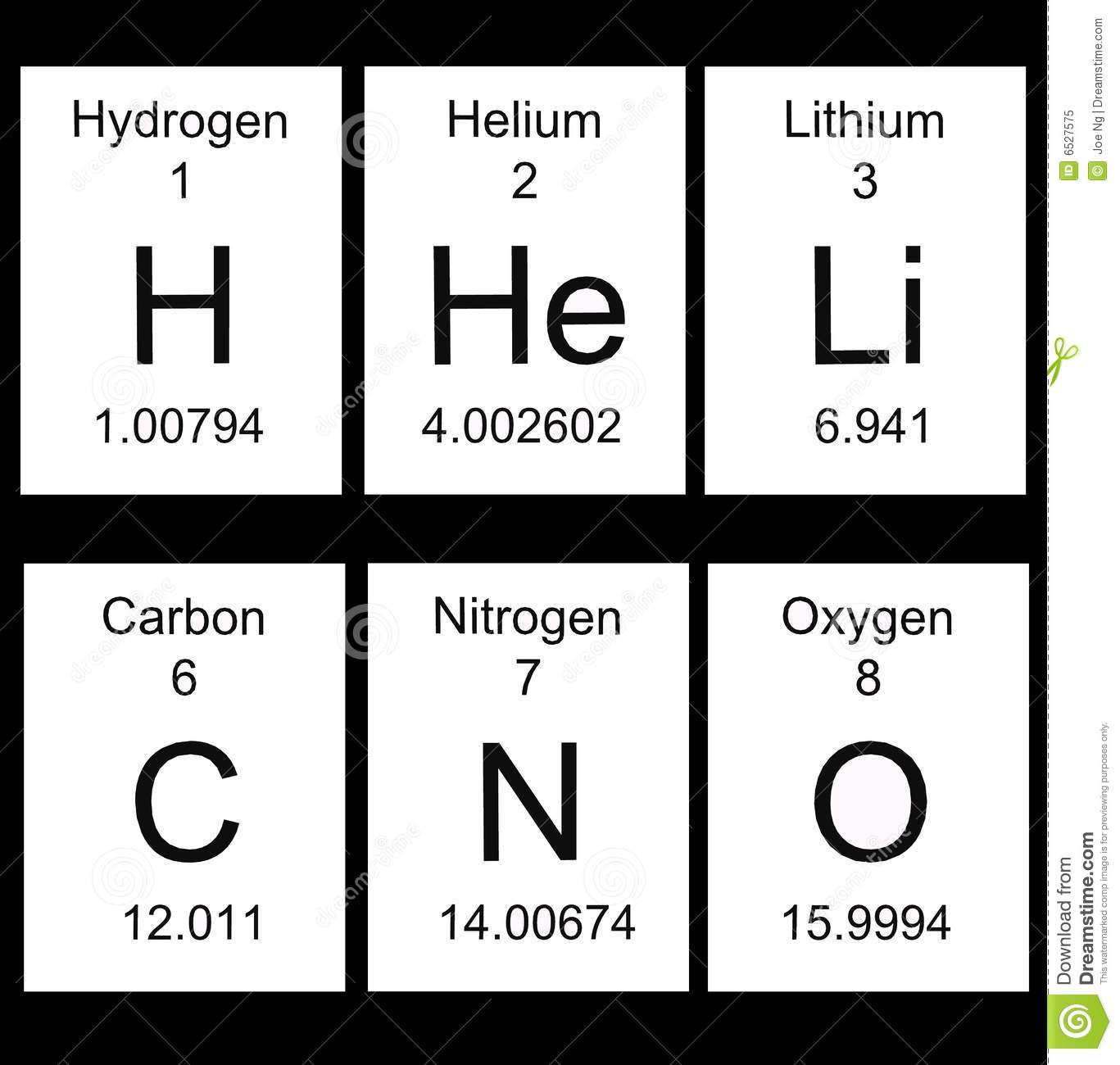
Select which things are made up of atoms:

a)

Orange juice

b)

A desk

c)

You and me

d)

Grass

3.

This particle determines which element it is.

a)

Protons

b)

Neutrons

c)

Electrons

d)

Mrs. Wagner

4.
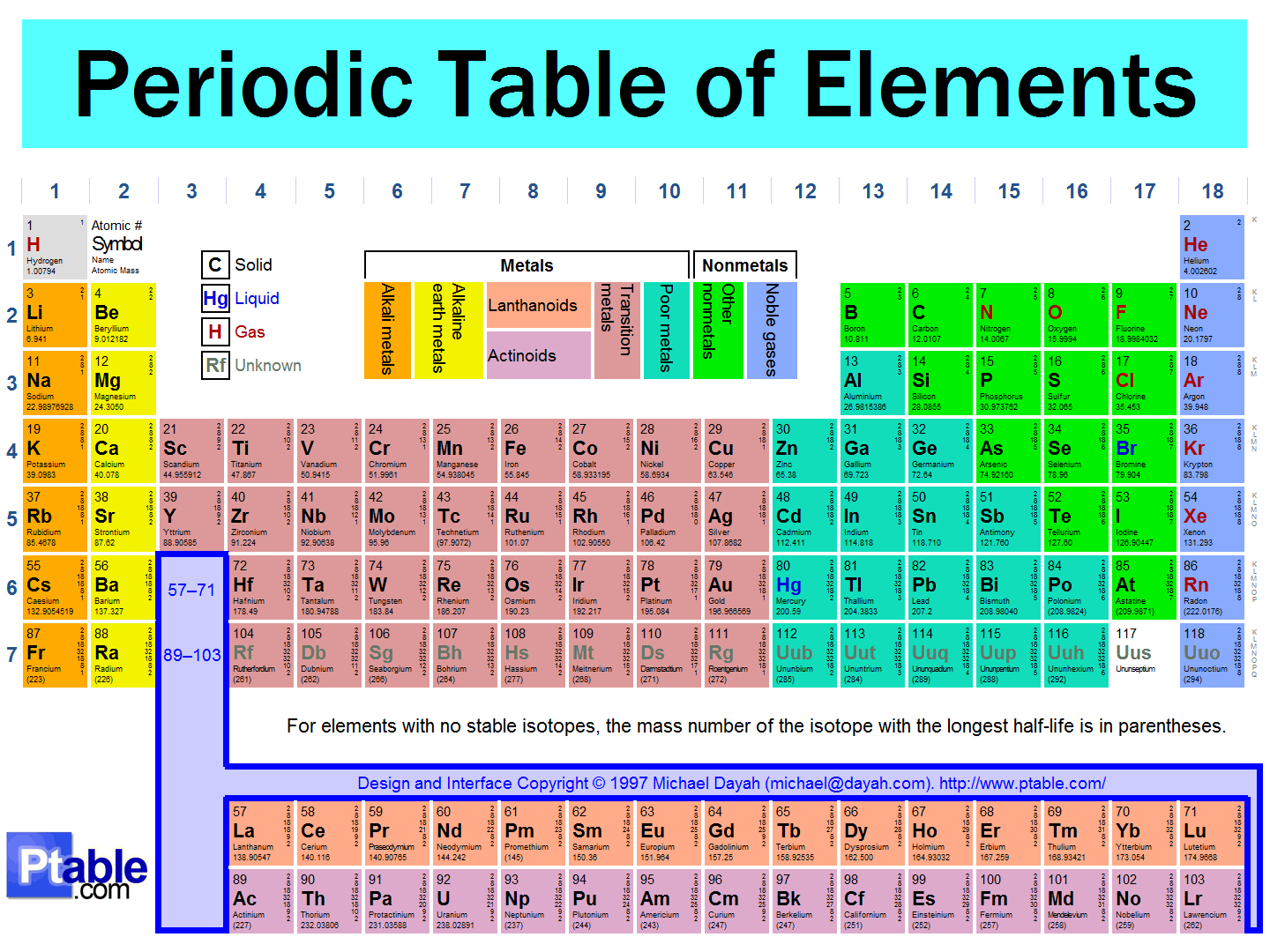
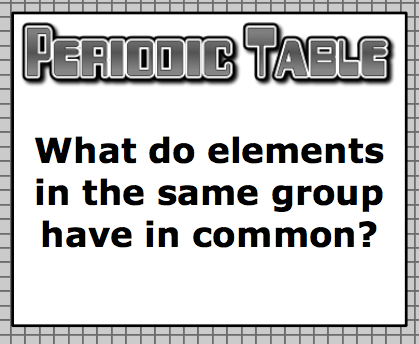
Each column in the periodic table, they contain similar properties.
a)
Period
b)
Group
c)
Element
d)
Atom
5.
A particle that moves around the nucleus is a(n)...
a)
Proton
b)
Neutron
c)
Electron
d)
Quark
6.

The atomic number of sodium (Na) is 11. How many valence electrons does sodium

have?

a)

(a) 1

b)

b) 2

c)

(c) 7

d)

(d) 8

7.

The atomic number of Sulphur (S) is 16. Identify the number of electrons in each shell of

Sulphur.

a)

(a)2, 8, 6

b)

(b)2, 8, 8

c)

(c)2, 2, 8, 4

d)

(d)2, 4, 8, 2

8.

The image shows the scientific notation of sodium. What is the atomic mass of Na?

a)

(a)11

b)

(b)12

c)

(c)23

d)

(d)34

9.

What is the smallest unit of matter? It is composed of protons and neutrons, held together in the nucleus, and electrons around the nucleus in different electron orbitals, which form an electron cloud.

a)

cell

b)

nucleus

c)

atom

d)

electron

10.

What is a subatomic particle with a positive charge that is in the nucleus of an atom?

a)

neutron

b)

proton

c)

electron

d)

valence electron

11.

What is a subatomic particle without an electric charge, located in the nucleus of an atom?

a)

neutron

b)

proton

c)

electron

d)

valence electron

12.

What is a subatomic particle with a negative charge? It is found in the electron cloud surrounding the nucleus.

a)

neutron

b)

proton

c)

electron

d)

electron cloud

13.

What is the center of an atom containing protons and neutrons?

a)

nucleus

b)

neutron

c)

proton

d)

electron cloud

14.
What electrical charge does a proton have?
a)
+1
b)
0
c)
-1
d)
+2
15.

What mass does a neutron have?

a)

1 amu

b)

0 amu

c)

-1 amu

d)

+2 amu

16.
Which particle is negatively charged?
a)
proton
b)
atom
c)
neutron
d)
electron
17.

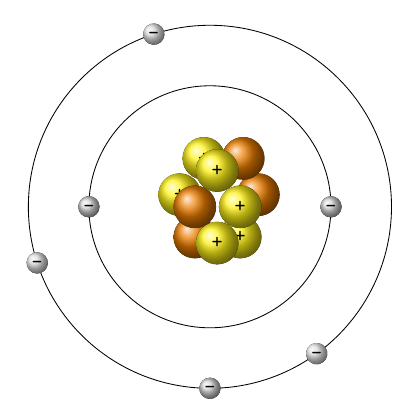
How many electrons does this atom have?

a)

2

b)

4

c)

6

d)

10

18.

The smallest piece of an element:

a)

quark

b)

electron

c)

shell

d)

atom

19.

The number 16 for the atomic element sulfur is the

a)

ionic number

b)

isotope

c)

atomic mass

d)

atomic number

20.

How many protons does sulfur have?

a)

32

b)

16

c)

48

d)

12

21.
For a given element, the atomic number indicates the number of _____
a)
protons in the nucleus
b)
neutron in the nucleus
c)
electrons in the atom
d)
nucleons in the atom
22.
If an atom contains exactly three protons, then it's an atom of _____
a)
lithium
b)
gold
c)
nitrogen
d)
carbon
23.
The sum of the number of protons and the number of neutrons is called the _____
a)
atomic number
b)
mass number
c)
isotope number
d)
average weight
24.
In the Bohr model of the atom, what is the maximum number of electrons in the first shell?
a)
1
b)
2
c)
6
d)
8
25.
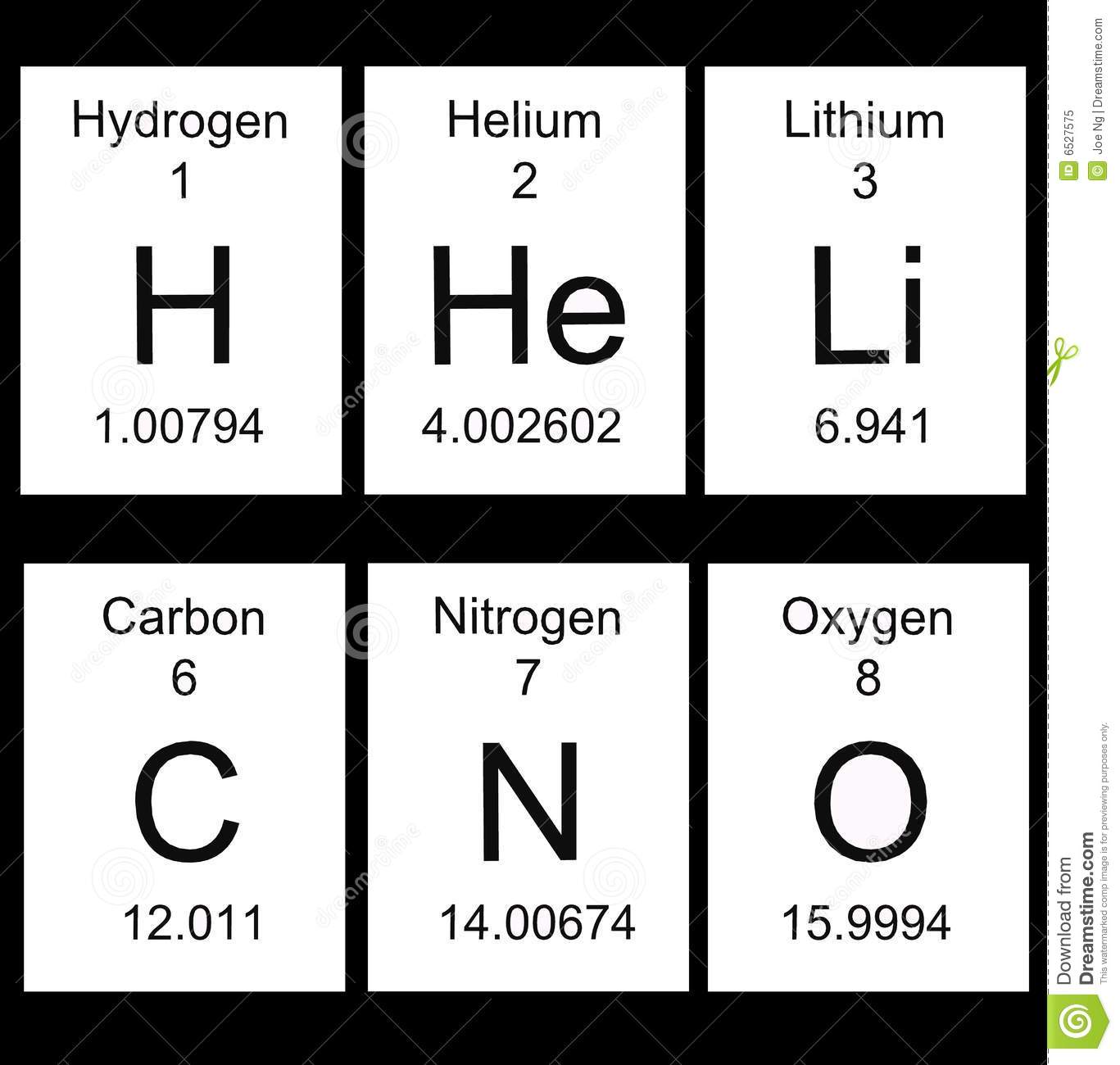
How many Protons+Neutrons are in one atom of Lithium?
a)
6.941
b)
7
c)
3
d)
6
26.
How did Mendeleev arrange the elements?
a)
alphabetical 
b)
density
c)
melting point
d)
atomic mass
27.
The horizontal row on the periodic table is called a
a)
group
b)
family
c)
period
d)
atomic number
28.
A vertical column is called...
a)
group
b)
tower
c)
period
d)
crew
29.
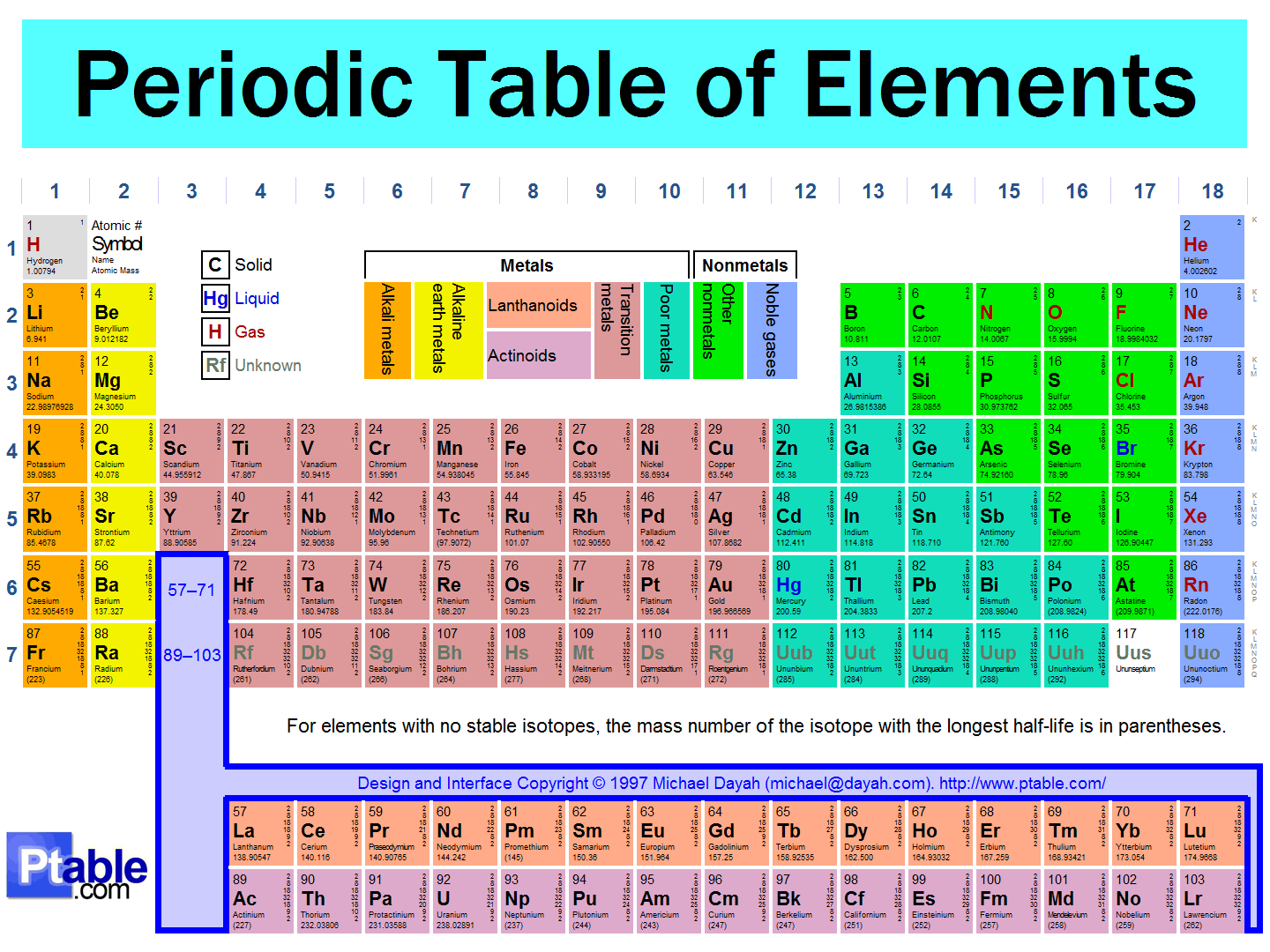
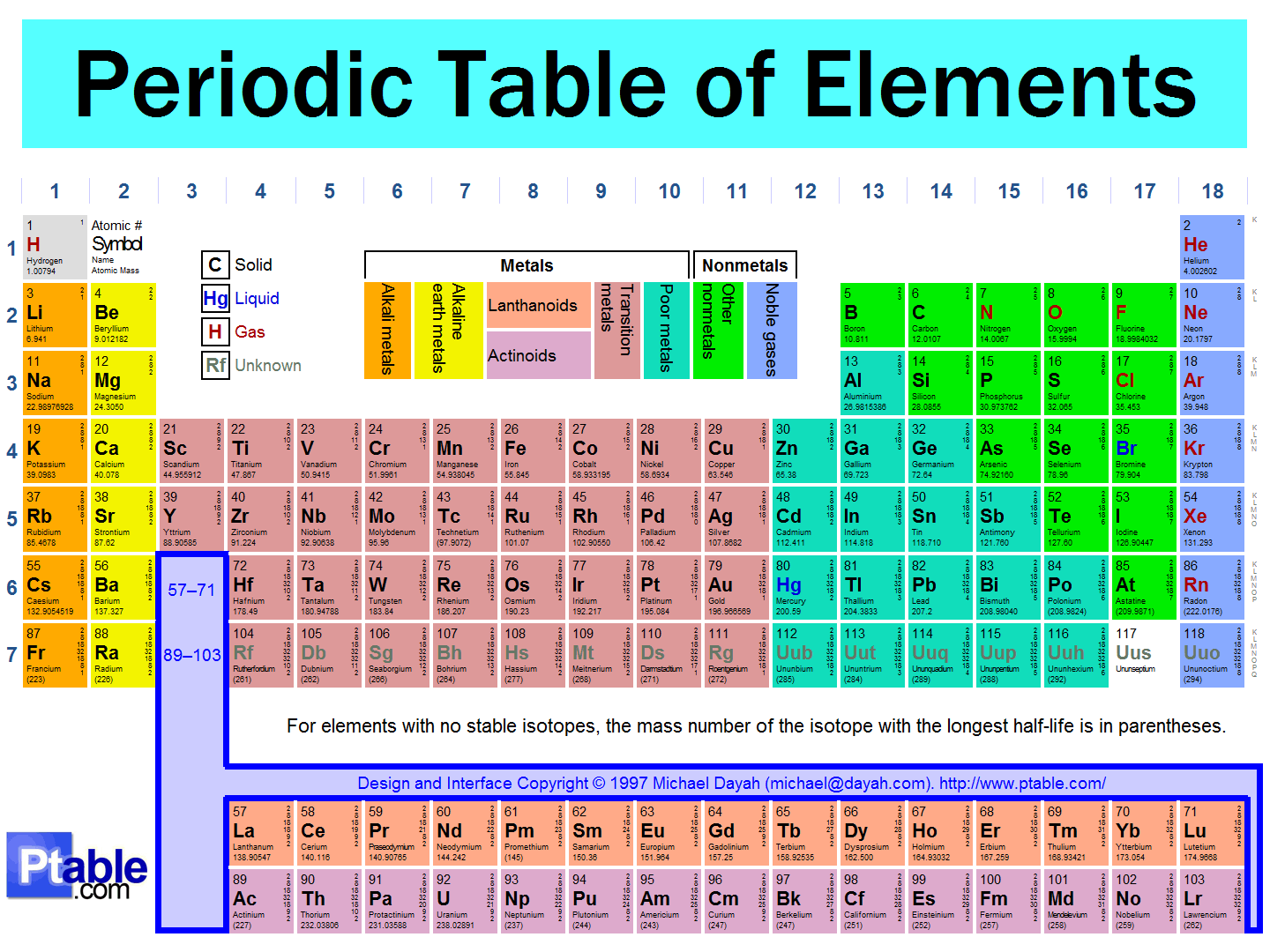
Which of the following is the most metallic element in period 3?
a)
Boron (B)
b)
Sodium (Na)
c)
Argon (Ar)
d)
Silicon (Si)
30.
Which of these element is the least metallic?
a)
Potassium (K)
b)
Carbon (C)
c)
Sulfur (S)
d)
Neon (Ne)
31.
The number at the bottom of each square on the periodic table is the ...
a)
atomic number
b)
atomic mass
c)
chemical symbol
d)
element name
32.
The number at the top of each square on the periodic table is the ...
a)
atomic number
b)
atomic mass
c)
Chemical Symbol
d)
Element Name
33.
What is the chemical symbol for Lithium?
a)
H
b)
He
c)
Li
d)
N
34.
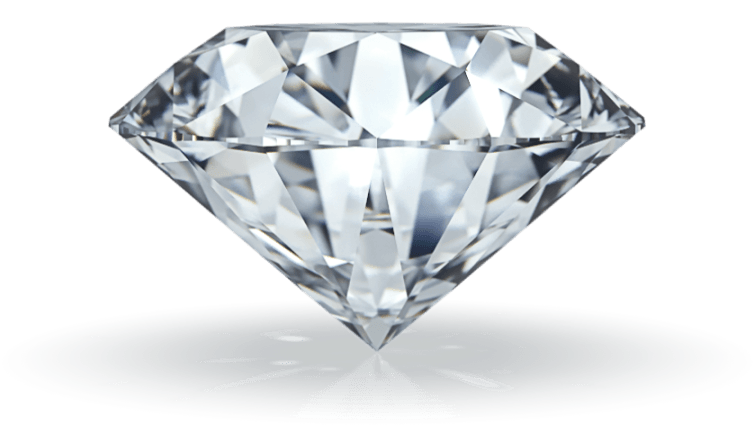
Diamonds are a pure form of what element?
a)
Carbon
b)
Oxygen
c)
Silicon
d)
Silver
35.
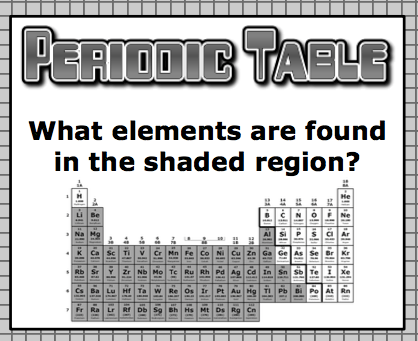
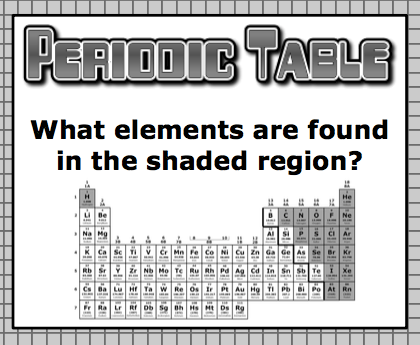
Most of the elements on the periodic table are classified as _____.
a)
Metals
b)
Nonmetals
c)
Metalloids
d)
Periods
36.
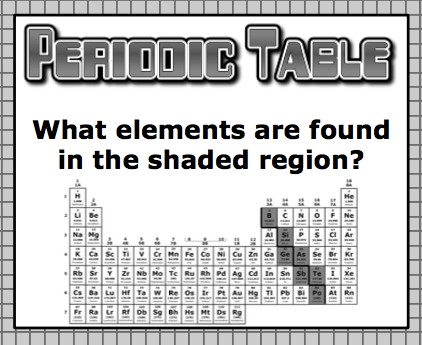
This class of elements are sometimes called "semiconductors."
a)
Metals
b)
Nonmetals
c)
Metalloids
d)
Groups
37.
a)
energy levels
b)
valence electrons
c)
protons
d)
neutrons
38.
a)
energy levels
b)
valence electrons
c)
protons
d)
neutrons
39.
a)
Group 1
b)
Group 17
c)
Group 2
d)
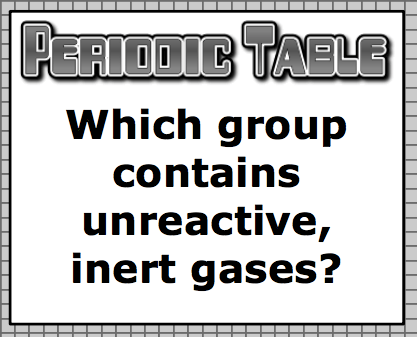
Group 18
40.
a)
Group 1
b)
Group 17
c)
Group 18
d)
Group 2
41.
a)
Group 1
b)
Group 17
c)
Group 18
d)
Group 2
42.
a)
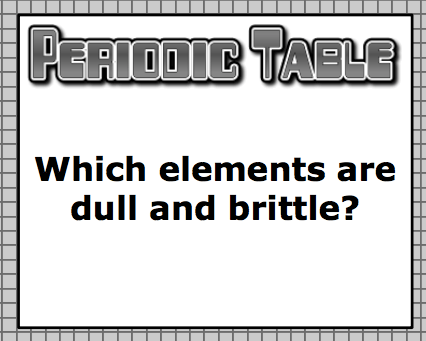
Metals
b)
Nonmetals
c)
Metalloids
43.
a)
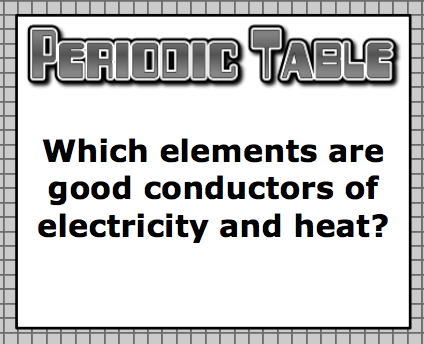
Metals
b)
Nonmetals
c)
Metalloids
44.
a)
Metals
b)
Nonmetals
c)
Metalloids
45.
a)
Metals
b)
Nonmetals
c)
Metalloids
46.
a)
Metals
b)
Nonmetals
c)
Metalloids
47.
a)
Metals
b)
Nonmetals
c)
Metalloids
48.

What Element has 7 valence electrons and 6 energy levels?

(a)  

49.

What Element is found having 78 protons and 78 electrons?

(a)  

50.

This Element has 27 times more electrons than Hydrogen?

(a)