
 Worksheets
Biology EOC REVIEW 4/18
Total questions: 45
Worksheet time: 36mins
Choose all the abiotic factors listed
water
mates
space
temperature
predators
Drought, erosion, flood, and prolonged heat spells are examples of —
communities
biotic factors within an ecosystem which affect abiotic components
populations
abiotic changes within an ecosystem which can affect biotic factors
An abiotic component of an ecosystem is represented by the —
bats under a bridge in Austin, Texas
population of deer on a deer lease in Central Texas
attack on a wheat field by fungus
monthly average rainfall in Texas

Group of populations in an area.
Organism
Ecosystem
Community
Biosphere
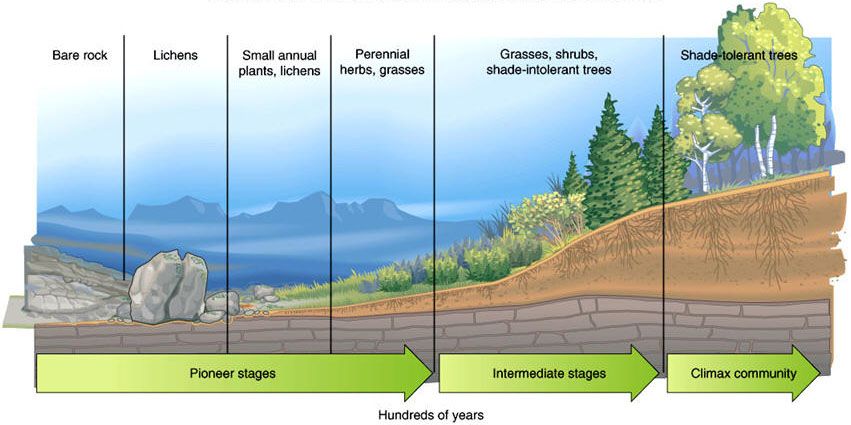
The picture display which type of succession?
primary
secondary
tertiary
all of the above
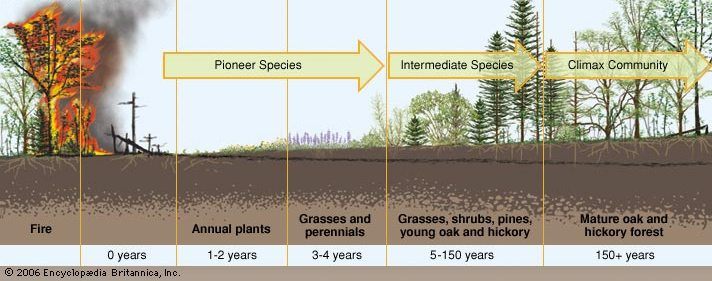
The picture displays which type of succession?
primary
secondary
tertiary
all of the above
Why is the most specific taxonomy category?
Kingdom
Domain
Species
Order
What would the scientific name of this organism be?
Kingdom: Animalia
Phylum: Chordata
Class: Reptilia
Order: Crocodila
Family: Alligatoridae
Genus: Alligator
species: mississippiensis
alligator Mississippiensis
Crocodila chordata
Alligator mississippiensis
Reptilia crocodila
What would the scientific name of this organism be?
Kingdom: Animalia
Phylum: Chordata
Class: Mammalia
Order: Carnivora
Family:Canidae
Genus: Canis
species: mesomelas
Mammalia carnivora
Canidae mesomelas
Canis mesomelas
Animalia chordata
Who created the system of Taxonomy?
Albert Einstein
Carolus Linnaeus
Aristotle
Copernicus
Binomial Nomenclature takes which two taxons to name a species?
Genus and Kingdom
Phylum and Class
Family and class
Genus and species
Two-word system developed by Carolus Linnaeus to name species; first word identifies genus, the second word identifies species; also known as a scientific name
binomial nomenclature
taxon
species
kingdom
A taxonomic group of any rank, such as a species, family, or class.
taxon
classification
domain
eubacteria

The scenario above is best described by the interaction of what three body systems?
X=respiratory system, Y=circulatory system, Z=reproductive system
X=muscular system, Y=nervous system, Z=immune system
X=circulatory system, Y=immune system, Z=muscular system
X=muscular system, Y=digestive system, Z=circulatory system

The diagram above represents an example of how the body regulates itself. This diagram describes what relationship in body systems?
The circulatory system and nervous system interact to absorb nutrients.
The circulatory system and digestive system interact to defend the body from diseases.
The circulatory system and nervous system interact to maintain homeostasis.
The nervous system and immune system interact for reproduction.
What body function is identified in the process described below?
Respiratory System – mucus in the lungs traps an infectious bacteria cell
Immune System – T-cells attack the bacteria cell
Nervous System – triggers a cough to remove the mucus from the lungs along with the destroyed bacteria
regulation of body temperature
absorption of nutrients
defense
reproduction
The organ system that breaks down food so it can be absorbed into the bloodstream.
nervous system
digestive system
skeletal system
respiratory system
The organ system that removes cellular wastes from the body.
excretory system
muscular system
digestive system
endocrine system
The set of ductless organs that secrete hormones directly into the bloodstream to regulate life processes.
endocrine system
skeletal system
digestive system
circulatory system
The body system made up of muscles that move bones.
skeletal system
muscular system
respiratory system
nervous system
The organ system that brings oxygen to body cells and removes waste gas.
circulatory system
digestive system
excretory system
respiratory system
System consisting of the skin and its associated structures, such as the hair, nails, sweat glands, and sebaceous glands.
excretory
integumentary
endocrine
digestive
Converts foods into simpler molecules that can be used by the cells of the body; absorbs food; eliminates wastes
circulatory
excretory
respiratory
digestive
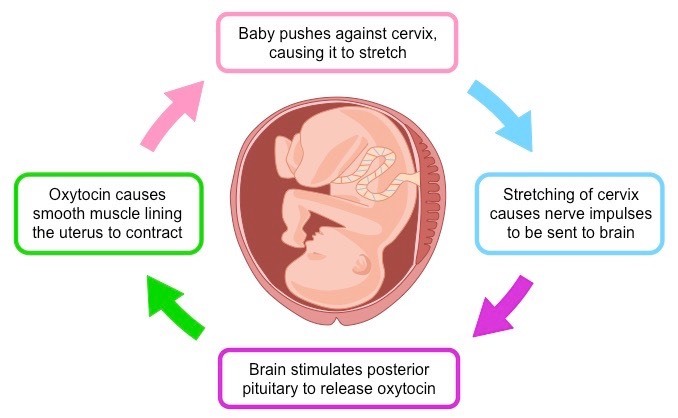
What type of feedback loop is shown?
negative
neutral
positive
Auxins are plant hormones that help regulate growth. Sunlight stimulates auxins on the shaded side of the stem causing the plant to grow faster on that side. This pushes the stem towards sunlight. This response is known as:
geotropism
transpiration
phototropism
thigmotropism

