wayground logo

Free Printable Worksheets

Font size

S
M
L
XL
Worksheets

Review for test adaptations etc.

Total questions: 57

Worksheet time: 47mins

Name
Class
Date
1.
An organism that hunts and feeds on another organism is a ______________________.
a)
prey
b)
producer
c)
predator
d)
decomposer
2.
An inherited trait that helps those organisms that have it to survive
a)
niche
b)
structure
c)
characteristic
d)
adaptation
3.
An animal that is hunted as food
a)
prey
b)
predator
c)
decomposer
d)
producer
4.
Coloring or another physical characteristic that help an organism blend in with its environment
a)
mimicry
b)
camouflage
c)
hibernation
d)
migration
5.
A natural process in which new organisms are created and the species continues
a)
population
b)
niche
c)
reproduction
d)
behavior
6.
When an organism copies a characteristic of something else in order to better its chances for survival and reproduction
a)
hibernation
b)
camouflage
c)
mimicry
d)
migration
7.
The seasonal movement of an organism from one place to another
a)
camouflage
b)
migration
c)
hibernation
d)
function
8.
When an organism slows its life functions for a period of time to better its chances for survival during harsh conditions
a)
camouflage
b)
migration
c)
mimicry
d)
hibernation
9.
features that help identify something
a)
appearance
b)
characteristics
c)
behaviors
d)
structures
10.
Which feature of a rose helps it grow without being eaten by large animals?
a)
flowers with bright colors
b)
sharp thorns
c)
small seeds
d)
deep roots
11.
Which of the following is a physical adaptation for the underlined animal?
a)
A butterfly has bright colors to warn predators that it is poisonous.
b)
A hognose snake rolls over, slows its breathing, and hangs its tongue out to play dead.
c)
A herd of buffalo encircle their young to protect them from a pack of wolves.
d)
A dung beetle rolls a piece of dung across the desert.
12.
Plants with spines and waxy leaves are well suited for life in which environment?
a)
Desert
b)
Temperate forest
c)
Grassland
d)
Tropical Rainfroest
13.
 A giraffe has a long neck.  Why would the giraffe need this adaptation?
a)
to keep warm
b)
to reach food high above the ground
c)
to have room to eat more
d)
to catch birds
14.

What would be the most useful adaptation for a rabbit in the snow...

a)

camoflauge

b)

having long ears

c)

having strong legs

d)

strong teeth

15.
What adaptation does this squirrel have that allows it to glide through the air?
a)
Extra skin under the arms and legs to capture air as it falls.
b)
Big ears to capture are as it falls
c)
Small eyes to see where it will land
d)
A short thin tail
16.
Polar bears have an adaptation that allows them to swim. What is most likely this adaptation?
a)
White coat
b)
Fat belly
c)
Small eyes
d)
Webbed Feet
17.
Most desert plants have spines. How does this adaptation help them survive in a harsh environment?
a)
The spines capture water
b)
The spines make it colder
c)
The spines will make it rain
d)
The spines will protect the plant from animals that want to eat it
18.
Cactus have a thick, hard surface (cuticle) that prevent ______________ from evaporating.
a)
Water
b)
Air
c)
Sugar
d)
light
19.
What is the function (job) of fish gills?
a)
To absorb water from the water
b)
To make the fish faster
c)
To make the fish lighter
d)
To absorb oxygen from the water
20.
What adaptation most likely helps this bird fly?
a)
A strong beak
b)
Small feet
c)
Hollow bones 
d)
The color of the bird
21.
Anteaters have a long thin snout and even longer tongue. What is this adaptation most likely for?
a)
To reach through small tunnels in the ground where it can find insects.
b)
To reach for fruits in trees
c)
To fight off predators 
d)
'to lick himself after eating 
22.
Why do hollow bones help birds during flight?
a)
Hollow bones make the birds weigh less
b)
Hollow bones are full of heavy blood
c)
Hollow bones store water
d)
Hollow bones are made of feathers 
23.
Goats have eyes on the side of the head. What does this adaptation say about the animal?
a)
He is a prey, and it allows goats to have a wide viewing range
b)
He is a prey, and it allows goats to have a smaller viewing range.
c)
Goats are predators 
d)
Goats are predators, and this allows them to see more
24.

This king snake looking just like the deadly coral snake to stay protected is an example of_________

a)

mimicry

b)

adaptation

c)

adoption

d)

camouflage

25.

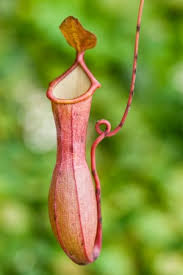
Identify the picture

a)

sundew

b)

Venus flytrap

c)

pitcher plant

26.

Pitcher plant and venus flytrap are insectivorous plant which catch __________.

a)

water

b)

air

c)

raindrops

d)

insects

27.
Which biome do we live in?
a)
Grasslands
b)
Taiga
c)
Rainforest
d)
Temperate Forest
28.
Which biome is home to cacti, scorpions, coyotes, kangaroo rats, and lizards?
a)
Desert
b)
Grasslands
c)
Temperate Forest
d)
Taiga
29.
Which adaptation (for the underlined animal) serves the function of defense?
a)
A walking stick looks like the twig on which it rests.
b)
A porcupine’s quills cause a predator to seek another meal.
c)
A whale filters plankton and krill from the water in which it swims.
d)
A penguin is dark on top and white below to blend in with the water.
30.
Dandelions have light furry seeds that allow them to spread easily. 
a)
True
b)
False
31.
How an animal protects itself Adaptation: Skunk and its spray
a)
Defense
b)
Hibernation
c)
Locomotion
d)
Migration
32.

Which would be an adaptation useful in a cold biome?

a)

Being of a smaller size

b)

Being active during the cooler times of day

c)

Blubber/fat

d)

Having dark fur

33.

Which beak is probably best suited to crack open nuts?

a)

1

b)

2

c)

3

d)

4

34.

Hydra produce offspring by growing the new individual on the body of the parent. This is an example of...

a)

budding.

b)

fission.

c)

regeneration.

d)

tubers.

35.

Sexual reproduction requires ______ parent(s) and asexual reproduction requires ______ parent(s).

a)

one, one

b)

two, two

c)

two, one

d)

one, two

36.

Where does an offspring get its DNA in asexual reproduction?

a)

from both parents

b)

from only one parent

c)

from neither parent

37.
What is an advantage of sexual reproduction?
a)
Allows genetic variation
b)
Only needs one parent
c)
Happens very quickly
d)
Offspring are exact copies of parent
38.

The body parts or physical traits are what type of adaptations

a)

physiological

b)

structural

c)

trait

d)

behavioral

39.
Which is an example of a behavioral adaptation?
a)
claws
b)
beak
c)
thumb
d)
migration
40.
A bald eagle has a sharp hook on the end of its beak. This is an adaptation for obtaining resources.  Eagles are carnivores.  What is the beak used for?
a)
cracking seeds
b)
eating worms
c)
tearing the flesh of a smaller animal
d)
digging insects out of a tree bark
41.
A social interaction with the sole purpose of finding a mate.
a)
courtship
b)
hibernation
c)
aggression
d)
submission
42.
Which of the following is an example of COURTSHIP behavior?
a)
growling at foe
b)
barking for attention
c)
nursing young
d)
showing bright feathers
43.
Which animal displays migratory behavior?
a)
geese 
b)
moose
c)
deer
d)
wild hog 
44.
A bark, snort, growl, and hoot are all examples of what type of communication 
a)
non-verbal communication
b)
verbal communication
c)
short distance communication
d)
aggressive communication 
45.

Which of the following are examples of camouflage? (Choose 2)

a)

A white rabbit hiding in the snow

b)

A moth that mimics a leaf

c)

An insect that imitates a bee

d)

A green alligator sitting in a green river

e)

A king snake that looks like a coral snake

46.

Which of the following are examples of migration?

a)

Termites build a colony under a wooden building

b)

Salmon (fish) swim to their spawning grounds each year

c)

A wolf chases a reindeer

d)

A squirrel digs a hole to sleep in for several months

e)

Monarch butterflies fly from Canada to Mexico and back every year

47.

What is courtship behaviour?

a)

all the ways animals interact with other organisms and the physical environment

b)

the way an animal looks in breeding season

c)

a set of display behaviors in which an animal attempts to attract a mate and exhibit their desire or copulate

d)

auditory (sound) signal used by animals to attract a mate

48.

Which parenting behavior does NOT increase the probability that offspring will survive?

a)

producing milk to feed offspring

b)

protecting the offspring from predators

c)

keeping the offspring warm in cold environments

d)

abandoning young before the eggs are hatched

49.

Which of these is a courting behavior that can increase a male's probability of reproductive success?

a)

a male spider performing a little dance in front of the female

b)

a male bird showing off its feathers to a female bird

c)

a male beetle winning the ideal territory for the female beetle

d)

All of these are true

50.

What do you call the type of reproduction in which the genetic materials from two different cells combine, producing an offspring?

a)

pollination

b)

sexual reproduction

c)

fertilization

d)

asexual reproduction

51.

What type of reproduction takes place when one parent organism produces offspring without meiosis and fertilization?

a)

pollination

b)

sexual reproduction

c)

asexual reproduction

d)

fertilization

52.

Which of the following is a disadvantage of asexual reproduction?

a)

All organisms have genetic variation

b)

Parents produces identical off spring which is not suitable for survival in a changing environment

c)

Finding a mate is not needed

d)

It can produce a lot of offspring

53.

What is a structural adaptation?

a)

The way an animal acts.

b)

The way an animal is built.

54.

Is the following a structural or behavioral adaptation? Birds sing to attract mates for reproduction.

a)

Structural

b)

Behavioral

55.

Is the following a structural or behavioral adaptation? Cheetahs have bones that are designed for speed.

a)

Structural

b)

Behavioral

56.

Is the following a structural or behavioral adaptation? Turtles hide in their shell when they are scared.

a)

Structural

b)

Behavioral

57.

Is the following a structural or behavioral adaptation? Porcupines have sharp quills to defend themselves from predators.

a)

Structural

b)

Behavioral