
 Worksheets
Thermochemistry Plus
Total questions: 88
Worksheet time: 4hrs 19mins
What does the symbol c mean in q=mcΔT ?

How do you calculate ΔT ?
Thermochemistry
the study of heat changes that accompany chemical reactions and phase changes
the law that states that energy cannot be created or destroyed but can be changed from one form to another
the amount of heat needed to increase the temperature of an object exactly 1°C
a process that absorbs heat from the surroundings
Calorimeter
a chemical process in which a fuel combines rapidly with oxygen to release energy and form products, often carbon dioxide and water
any chemical or physical change accompanied by the release of heat.
A device used to measure the quantity of heat energy released in a combustion reaction.
the quantity of heat energy given off when a specified amount of a substance burns in oxygen.
What term is given to a reaction which transfers heat energy to the surroundings?
Endothermic
Reversible
Exothermic
Exotermic
Surroundings
everything in the universe outside of the system
a part of the universe on which you focus your attention
The heat absorbed or released by a reaction at constant pressure
an equation that includes the quantity of energy released or absorbed as heat during the reaction
Heat
Energy that flows from a hotter to a colder object
Property of matter that determines the direction of heat flow
Capacity to do work or supply heat
the amount of heat necessary to raise the temperature of exactly one gram of water by one degree Celsius.
calorie
Energy that flows from a hotter to a colder object
Property of matter that determines the direction of heat flow
Capacity to do work or supply heat
the amount of heat necessary to raise the temperature of exactly one gram of water by one degree Celsius.
Energy
Energy that flows from a hotter to a colder object
Property of matter that determines the direction of heat flow
Capacity to do work or supply heat
the amount of heat necessary to raise the temperature of exactly one gram of water by one degree Celsius.
Exothermic reaction is where heat is __________ to the surrounding
taken in
absord
released
Endothermic reaction is when the heat is _________________ from the surrounding
taken in
released
taken out
Temperature is
the kinetic energy of the entire system
the average kinetic energy of the molecules
the potential energy of the surroundings
the kinetic and potential energy of the system
The unit for measuring heat energy
joule and calorie
newton
molecular weight
atm
The tool used to measure the average kinetic energy of molecules
thermometer
calorimeter
specific heat capacitor
A calorie is the amount of energy needed to raise 1 _______ of water 1 _______ celsius.
gram, degree
kilogram, 10
pound, mass
mass, thermo
____________ is the part of the universe we are focusing on.
System
Surroundings
Kinetic Energy
Ionic Bonding

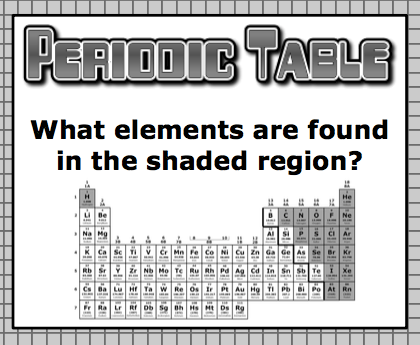
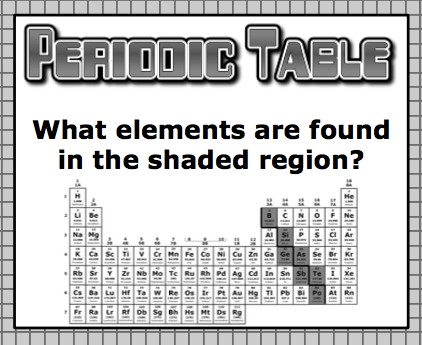
Who invented the Periodic Table?
Mendeleev
Bohr
Lewis
Democritus
What happens to the number of shells as you move down a group?
They decrease by 1
They increase by 1
Nothing
Valence means......
inside
outside
full
What do all elements in the same period have?
same number of shells
same number of electrons
belong in the same family

noble gases




Ionization energy is the energy needed to...
remove an electron
remove a proton
gain an electron
gain a proton
Ionic compounds are formed between ________ and _________.
metals and metals
nonmetals and nonmetals
metals and nonmetals
In ionic compounds electrons are
transferred
shared
lost
no clue
A mole is a
molecule
602 hexillion, a unit of measurement
a dozen
I was not paying attention
6.02e23 is referred to as
Avogadro's number
6.02 scientific notation
Dalton's Postulate
Mendelev's number
How big is 6.02 hexillion of jelly beans
big as the classroom
big as earth
big as moon
big as Tascosa
This subatomic particle has a positive charge.
Proton
Neutron
Electron
The subatomic particle holds the atom together.
Proton
Neutron
Electron
Nucleus
The subatomic particles found in the nucleus.
Electron, Neutron
Proton, Neutron
Electron, Proton
Proton, Neutron, Electron
The subatomic particle that identifies the element.
Proton
Positron
Neutron
Electron
In a stable element the number of _____________ equals the number of ______________.
protons, electrons
neutrons, electrons
protons, neutrons
Bohr stated that _______ are found in shells orbiting the nucleus.
Electrons
Protons
Neutrons
Clouds

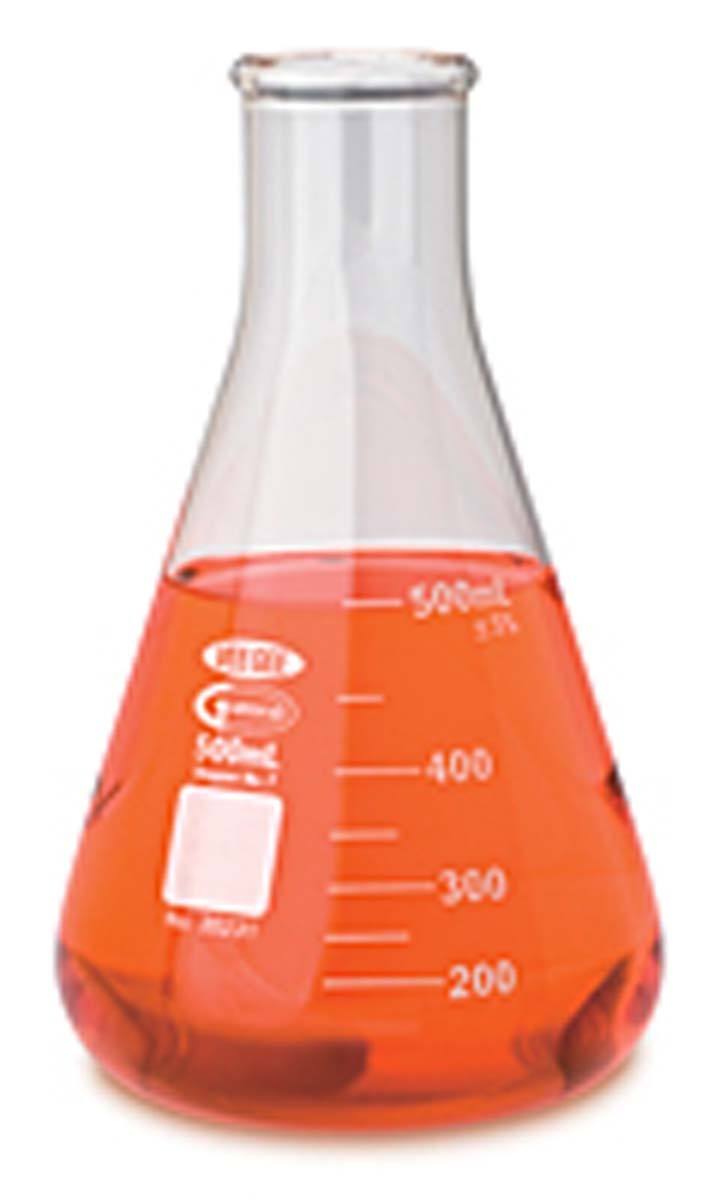
What is used to swirl, mix, or store chemicals?
Beaker
Flask
Test Tube
Graduated Cylinder

The base unit for measurement/ length in the metric system.
Meter
Liter
Gram
Inch
The base unit for mass in the metric system.
Gram
Meter
Liter
Pound
The base unit for volume in the metric system.
Liter
Meter
Gallon
Gram
A covalent compound is between a ___________ and _________.
metal metal
metal nonmetal
nonmetal nonmetal
metalloid metal
A piece of paper contains_______ of atoms.
Hundreds
Tens
Millions
Electrons in the outermost shell are called _______________.
lost electrons
neutral electrons
reactive electrons
valence electrons
The modern periodic table is arranged by this subatomic particle.
proton
neutron
electron
Elements in a group react similarly because they have the same number of_______________.
Protons
Shells
Valence Electrons
How many valence electrons are in group 18?
Full or 8
Full or 1
7
18
The subatomic particle that determines reactivity.
Electron
Proton
Shell
Neutron
The first step in a mass to mass problem is to find
Molar Mass
Number of Moles
The subscripts of the elements
the mass ratios
The second step in mass to mass problems to write down the
Coefficients
Ratios
Molecular Average
Gram Mole Average
The third step in mass to mass problems is
Molar Mass x Coefficient
Grams x Grams
Moles/Grams
Moles x Moon Mass
The fourth step in mass to mass problems is to find your
Molecular Average
Find the isotope weight
Ratio by dividing the given by the total in step 3
Molar Mass
Atoms can be seen with your eye.
True
False
The gravitational pull on an object is its
weight
mass
molarity
volume

