wayground logo

Free Printable Worksheets

NEW

Font size

S
M
L
XL
Worksheets

Ecological Interactions

Total questions: 65

Worksheet time: 52mins

Name
Class
Date
1.
 Hermit crabs live in shells made and then abandoned by snails. This relationship neither helps nor harms the snails.
a)
parasitism
b)
commensalism
c)
mutualism
2.
Ostriches and Gazelles feed next to each other.  They both watch for predators and alert each other to danger.  Since the visual abilities of the two species are different, they can each identify threats the other animal would not as readily see.  
a)
Parasitism
b)
Commensalism
c)
 Mutualism 
d)
Competition.  
3.
Yucca flowers are pollinated by yucca moths. The moths lay their eggs in the flowers where the larvae hatch and eat some of the developing seeds.  
a)
Mutualism
b)
Commensalism
c)
Parasitism
d)
Competition
4.
Rabbits and sheep both graze on shrubs, grasses, and other plants.  The increase in the population of rabbits in a region may result in a shortage of plants for sheep to graze upon.  After the increase of rabbits the relationship between sheep and rabbits will be __________.
a)
Competition
b)
Predation
c)
Mutualism
d)
Parasitism
5.
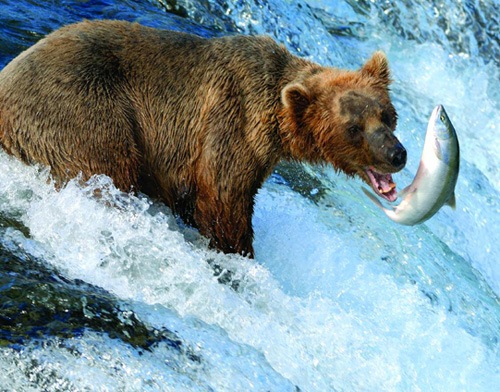
An interaction among species where one organism hunts, kills, and eats another organism.
a)
Predation
b)
Cooperation
c)
Mutualism
d)
Parasitism
6.

Another word for a plant that makes its own food using energy from sunlight…

a)

photosynthesis

b)

producer

c)

heterotroph

d)

carnivore

e)

herbivore

7.
An organism that needs to eat other organisms to obtain energy is known as a:
a)
Autotroph
b)
Producer
c)
Consumer
d)
Mutualist
8.

What is the definition of - Herbivore

a)

An organism that obtains energy by eating both plants and animals

b)

The rate at which organic matter is created by producers in an ecosystem

c)

An organism that obtains energy by eating only plants

d)

An organism that obtains energy by eating only animals

9.

What is the definition of - Carnivore

a)

An organism that obtains energy by eating both plants and animals

b)

An organism that feeds on plant and animal remains and other dead matter

c)

An organism that obtains energy by eating only plants

d)

An organism that obtains energy by eating only animals

10.

What is the definition of - Omnivore

a)

An organism that obtains energy by eating both plants and animals

b)

An organism that feeds on plant and animal remains and other dead matter

c)

An organism that obtains energy by eating only plants

d)

Series of steps in an ecosystem in which organisms transfer energy by eating and being eaten.

11.

What is the definition of - Decomposer

a)

An organism that obtains energy by eating both plants and animals

b)

An organism that obtains energy by eating only plants

c)

An organism that breaks down the remains of dead organisms and returns the nutrients back into the soil

d)

Series of steps in an ecosystem in which organisms transfer energy by eating and being eaten.

12.
Is the SUN  biotic or abiotic 
a)
Abiotic 
b)
Biotic 
13.
Is the SUN  biotic or abiotic 
a)
Abiotic 
b)
Biotic 
14.

What do fungi, mushrooms & bacteria do to dead plants and animals?

a)

Leave them there

b)

Decompose them

c)

Wait for other animals to eat them

d)

Move away

15.
This is known as a relationship in which both organisms involved benefit. 
a)
Predator-Prey
b)
Commensalism
c)
Mutualism
d)
Decomposition
16.
A relationship between two organisms where one benefits while the other is harmed is known as what?
a)
Decomposition
b)
Consummerism
c)
Mutualism
d)
Parasitism
17.

What is the correct order of the ecological levels of organization?

a)

population, community, organism, ecosystem, biosphere

b)

organism, population, community, ecosystem,biosphere

c)

biosphere, ecosystem, community, population, organism

d)

organism, community, population, ecosystem, biosphere

18.

What is a scavenger?

a)

A consumer that eats dead animals that have already been killed by other animals; does not recycle nutrients

b)

A carnivore that eats what it kills

c)

Eats plants and meat

d)

Eats plants only

19.

Lions typical fight to death for territory, mates, and food sources. Lions are most likely fighting due to:

a)

Commensalism

b)

Mutualism

c)

Competition

d)

Parasitism

20.

A feeding relationship where one organism hunts and one is hunted, such as a Lynx hunting a snowshoe hare, is known as:

a)

Commensalism

b)

Decomposistion

c)

Mutualism

d)

Predator-Prey

21.
When predator numbers decrease, prey numbers ____________ because fewer of them are being consumed.
a)
decrease
b)
increase
c)
stay the same
d)
divide in half
22.

An organism that needs to use sunlight to make its own food is known as a(n):

a)

Heterotroph

b)

Autotroph

c)

Decomposer

d)

Consumer

23.
This term describes a living part of an environment.
a)
Biotic factor
b)
Sunlight
c)
Abiotic Factor
d)
Niche
24.
An organism that eats other organisms to obtain energy is known as a:
a)
Mutualist
b)
Autotroph
c)
Producer
d)
Heterotroph
25.
A group of particular organisms that belong to the same species that live in the same habitat is known as a:
a)
Population
b)
Ecosystem
c)
Community
d)
Biome
26.
In a parasitic relationship, one organism is ___________ and one organism is benefiting. 
a)
helped
b)
harmed
c)
not effected
d)
happy
27.
In a mutual relationship, both organisms are ________________. 
a)
hurt
b)
not effected
c)
harmed
d)
benefiting 
28.
Commensalism is where one organism is benefiting and the other organism is _____________________. 
a)
not effected
b)
helped
c)
harmed
d)
hurt
29.
1.  A bee and a flower work together to benefit each other. This is an example of _________________. The bee helps the flower by pollinating it and the flower helps the bee by providing it with nectar. 
a)
commensal relationship 
b)
parasitic relationship 
c)
mutual relationship 
30.
A dog is harmed by a tick when it sucks the dog’s blood. The tick is benefiting because it is getting nutrients from the dog. This is an example of a ________________. 
a)
parasitic relationship 
b)
mutual relationship 
c)
commensal relationship 
31.
When a dog and a tick are in a relationship. The dog is being harmed and the tick is benefiting. The tick is using the dog as it's ____________. 
a)
harmer
b)
host
c)
parasite
32.

A Humpback whale has barnacles that attach to his skin. The barnacles get a free ride from the whale. The whale is not helped by this relationship. This is an example of _________.

a)

commensalism

b)

parasitism

c)

mutualism

d)

competition

33.
Which is an example of commensalism?
a)
Two different kinds of organisms harming each other. 
b)
Two different kinds of organisms are neither helping nor harming each other. 
c)
One kind of organism is being helped, but the other one is not harmed or helped. 
d)
One kind of organism is being helped, but the other is harmed. 
34.

Joshua and Jordan, were counting all of the blue crabs in a tidal pool, on North Beach. What type of observation is this?

a)

Direct observation

b)

Indirect observation

c)

Sampling

35.

The amount of births that occur in a certain population in a certain amount of time is.....

a)

death rate

b)

birth rate

36.

The main way an individual leaves a population is by dying. The ____________ is the number of deaths in a population in a certain amount of time.

a)

birth rate

b)

death rate

37.

A herd of deer leave their home and move into a new area. this is an example of ___________________

a)

Immigration

b)

Emigration

c)

Migration

38.

A clown fish leaves it's sea anemone to find a new place to live. What is this an example of ?

a)

Immgration

b)

Emigration

c)

Migration

39.
Limiting factors are sometimes helpful because they can keep the population from getting too large.
a)
True
b)
False
40.
When there is a lack of resources such as food, water, sunlight, shelter, and space this is often called __________.
a)
limiting factors
b)
wet
c)
messy
d)
found in rocks
41.
If the population of a certain predator increases, there is often _______ its prey
a)
a decrease the population of
b)
an increase of the population of 
c)
great news for its prey of
d)
no  impact found on
42.
If there is more food than usual in an ecosystem, then...
a)
Populations will stay the same
b)
Populations will decrease
c)
Populations will increase
43.
Any thing or organism that regulates the size of a population of another organism is known as __________.
a)
a limiting measure
b)
a limiting factor
c)
factorization
d)
materialization of precipitation
44.
If a disease destroying barley plants in a field swept through an ecosystem, what would happen to the barley eating bird population in the the field ?
a)
The bird population would stay the same
b)
The bird population would infinitely increase
c)
The bird population would decrease
45.
A relationship between two species in which one species benefits and the other is neither helped nor harmed.
a)
Mutualism
b)
Symbiosis
c)
Commensalism
d)
Parasitism
46.

A seal is eaten by a Great White shark. The Great White is the _______.

a)

prey

b)

parasite

c)

predator

d)

all of these

47.
A tapeworm attached to the intestine of your dog is what kind of a relationship?
a)
Mutualism
b)
Symbiosis
c)
Commensalism
d)
Parasitism
48.
An interaction in which one organism kills and eat another is..
a)
Prey
b)
Symbiosis
c)
Predation
d)
Competition
49.
The struggle between organisms to survive in a habitat with limited resources
a)
Prey
b)
Symbiosis
c)
Predation
d)
Competition
50.
Limiting factors are sometimes helpful because they can keep the population from getting too large.
a)
True
b)
False
51.

In a forest ecosystem, which of the following is the best example of a limiting factor for a rabbit population?

a)

Squirrel Population

b)

Sunlight

c)

Grass available

52.
A close relationship between species that benefits at least one of the species.
a)
Prey
b)
Symbiosis
c)
Limiting Factor
d)
Competition
53.
The number of individuals a habitat can sustain with the resources it has available
a)
Limiting Factors
b)
Limiting number
c)
Carrying capacity
d)
Habitat capacity
54.
The struggle between organisms to survive in a habitat with limited resources
a)
Prey
b)
Symbiosis
c)
Predation
d)
Competition
55.

Imagine a very hot summer with little rain. What would be the limiting factor for the populations of all of the animals?

a)

competition

b)

food

c)

space

d)

water

56.

What does the term carrying capacity describe?

a)

The maximum number of birth rates for a population.

b)

The ability of a population to accept new immigrants.

c)

The population size that the environment can sustain.

d)

The ratio of birth rates to death rates in a population.

57.

Which is NOT a limiting factor in the environment?

a)

food

b)

money

c)

shelter

d)

water

58.

If a population grows larger than its environmental carrying capacity, then

a)

death rate may rise.

b)

immigration rate may increase.

c)

birth rate may rise significantly.

d)

death rate may fall significantly.

59.

Any abiotic or biotic factor in an ecosystem that causes a population’s size to slow or decrease is a ____________ factor.

a)

growth

b)

limiting

c)

carrying

d)

density dependent

60.

The flatwoods salamander lives in marshy lowlands. These salamanders live near the cypress trees in the South Georgia swamps. The water from these lowlands is being drained for farming.


How would this MOST LIKELY affect the survival of the flatwoods salamander?

a)

The number of salamanders will decrease.

b)

The salamander will reproduce more often.

c)

Farming will provide more insects for food.

d)

The salamander will move to another marsh with water.

61.

A new development is being built near a forest, the black bears and other animals are moving to a new location, to find food and shelter. What is this an example of?

a)

Immigration

b)

Emigration

c)

Migration

62.

A Great White Shark is eating a seal. The seal is the _____.

a)

Prey

b)

Predator

c)

Unlucky

d)

Competitor

63.

A pine tree and an oak tree are in the same forest and both need sunlight. This is an example of _______________.

a)

Competition

b)

Mutualism

c)

Commensalism

d)

Predation

64.

The role of an organism in its habitat, or how it makes it's living is called it's __________________.

a)

Niche

b)

job

c)

Adaptation

65.

It is sometimes easier to observe signs of an organism rather than the organism themselves. If you count the number of nests in a forest, you would be conducting a(n) _______________ observation.

a)

Direct

b)

Indirect