wayground logo

Free Printable Worksheets

NEW

Font size

S
M
L
XL
Worksheets

215 Week #4 Review

Total questions: 35

Worksheet time: 12mins

Name
Class
Date
1.

What glands secrete their substance in response to stress?

a)

Merocrine

b)

Apocrine

c)

Eccerine

d)

Ceruminous

2.

A nurse is reviewing lab reports. The nurse recalls blood plasma is located in which of the following fluid compartments?

a)

Intracellular fluid (ICF)

b)

Extracellular fluid (ECF)

c)

Interstitial fluid

d)

Intravascular fluid

3.

Which of the following membranes is your body's outer covering?

a)

Cutaneous Membrane

b)

Mucous Membrane

c)

Serous Membrane

d)

Synovial Membrane

4.

Water is the univeral ____.

a)

solute

b)

solvent

c)

solution

5.

Number 1

a)

thoracic cavity

b)

pleural cavity

c)

cranial cavity

d)

pelvic cavity

6.

Letter C

a)

pleural cavity

b)

pericardial cavity

c)

abdominal cavity

d)

pelvic cavity

7.

What anatomical structure is labeled e?

a)

lungs

b)

heart

c)

diaphragm

d)

stomach

8.
Which is an example of a function that the muscular system performs?
a)
voluntary muscles pump blood through the body
b)
skeletal muscles keep a body's joints working properly
c)
cardiac muscles move bones and hold the bones together
d)
smooth muscles allow the bones to move freely
9.

Which of the following is an example of positive feedback?

a)

Thermoregulation

b)

Blood Pressure

c)

Childbirth

d)

Blood Sugar Levels

10.
Homeostasis
a)
allows for a wildly fluctuating internal environment
b)
is impossible in vertebrates
c)
is the maintenance of a relatively stable internal environment and often incorporates a form of feedback regulation
d)
is the maintenance of a relatively stable external environment and often incorporates a form of feedback regulation
11.

A substance that conducts an electrical current when dissolved in water is called

a)

catalyst

b)

metalloid

c)

electrolyte

d)

nonelectrolyte

12.

Which of the following is part of the mitochondria

a)

outer membrane

b)

DNA

c)

matrix

d)

all of the above

13.
Structure #3 is a/n
a)
osteon
b)
perforating (Volkmann's) canals
c)
Central (Haversian) canals
d)
canaliculi
14.
Where is the proton located?
a)
In the very dense nucleus
b)
Floating around in the negative electron cloud
c)
the loose nucleus
d)
the positive electron cloud
15.
Elements can have the same number of protons?
a)
True
b)
False
16.
A stable element with 27 electrons will contain how many protons?
a)
27 protons in the electron cloude
b)
59 protons in the extremely dense nucleus
c)
27 protons in the extremely dense nucleus
d)
59 protons in the electron cloud
17.
The fingers are distal to the elbow.
a)
True
b)
False
18.
Which plane is pictured here?
a)
frontal
b)
sagittal
c)
transverse
d)
midsagittal
19.
When a body part is close to the midsagittal plane, it is considered _____.
a)
lateral
b)
medial
c)
inferior
d)
proximal
20.

Your skin is _____________ to your muscles

a)

Superior

b)

Deep

c)

Amazinger

d)

Superficial

21.

What layer of the skin is shown in the picture?

a)

epidermis

b)

dermis

c)

subcutaneous layer

d)

melanin

22.

The skin serves as a protective shield against heat, light, injury, and infection.

a)

True

b)

False

23.

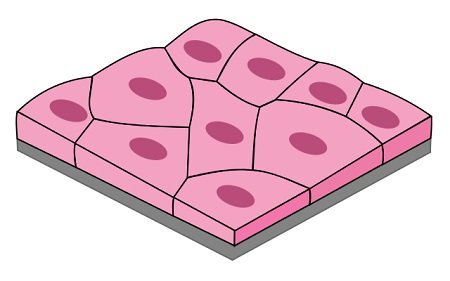
Name the type of epithelium

a)

simple cuboidal

b)

simple squamous

c)

simple columnar

d)

stratified squamous

24.

What feature found on the surface of this epithelial layer greatly increases the surface area for absorption?

a)

cilia

b)

microvilli

c)

endoplasmic reticulum

d)

multiple nuclei

25.

How many electrons does the first shell hold?

a)

1

b)

2

c)

4

d)

8

26.

How many electrons can be in the 2nd energy level hold?

a)

1

b)

2

c)

4

d)

8

27.

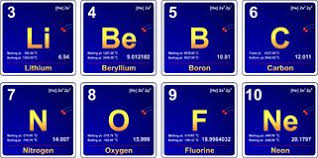
What on a periodic table tells you the number of protons in an atom?

a)

Atom number

b)

Atomic number

c)

Proton number

d)

Mass number

28.
Which of the following describes covalent bonds?
a)
Bonds form because of opposite charges
b)
Bonds form to fill outer electron shells
c)
Electrons are transferred between atoms
d)
Covalent bonds are magical
29.
In the picture, what layer is indicated by the red star?
a)
Hypodermis
b)
Arrector pili
c)
Follicle
d)
Melanocyte
30.

These cells give the epidermis its protective properties

a)

keratinocytes

b)

melanocytes

c)

Langerhans' cells

d)

Merkel Cells

31.

These cells synthesize skin pigment to give skin and hair its color; found in the deepest layer of the epidermis:

a)

keratinocytes

b)

melanocytes

c)

Langerhans' cells

d)

Merkel cells

32.
Which type of transport requires an input of energy?
a)
Passive Transport
b)
Osmosis
c)
Simple Diffusion
d)
Active Transport
33.
What is the function of ribosomes? 
a)
to bond amino acids together to form proteins
b)
to break down biological polymers
c)
to modify lipids and proteins
d)
to contain 
DNA
34.

Which skin layer is only present in thick skin?

a)

stratum corneum

b)

stratum lucidum

c)

stratum spinosum

d)

stratum granulosum

e)

stratum basale (aka: germinativum)

35.
Contains digestive enzymes to break down worn out parts of the cell.
a)
vacuole
b)
lysosome
c)
ribosome
d)
nucleolus