
 Worksheets
GAS LAWS
Total questions: 35
Worksheet time: 1hrs 8mins
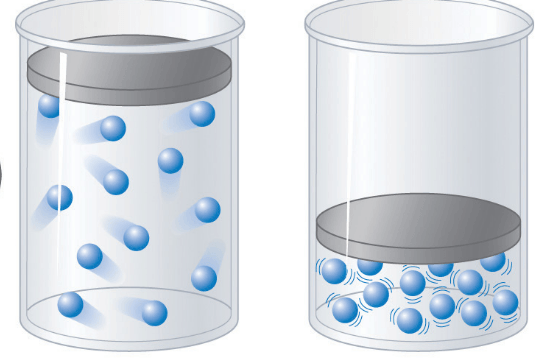
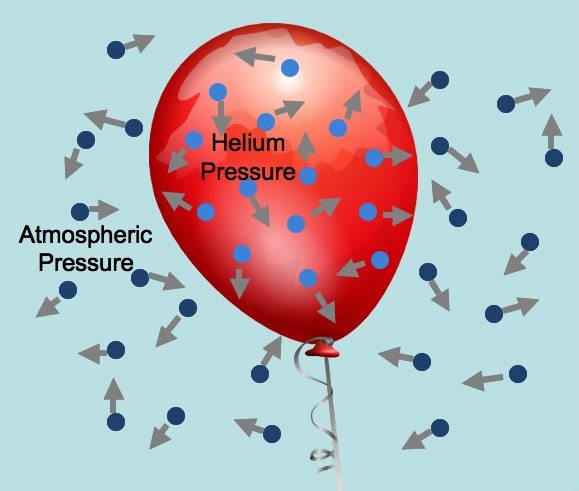

It is the theory that explains the behavior of gases on an atomic/molecular level.
Kinetic Molecular Theory of Gases
Theory of Liquids
Kinetic Molecular Theory of Matter
Kinestetic Molecular Theory of Plasma
The faster the gas particles move...
the lower the force with which they collide with the walls of their container.
the greater the force with which they collide with the walls of their container.
has no impact on the force with which they collide with the walls of their container.
When the temperature of a gas at constant volume is increased...
the pressure of the gas decreases.
the pressure remains the same.
the pressure of the gas increases.
the pressure can either increase or decrease.
Charle's Law shows that the volume of a gas is....
inversely proportional to its temperature.
directly proportional to its temperature.
unrelated to its temperature
independently related to its temperature.

.002766 mol
If I initially have 4.0 L of a gas at a pressure of 1.1 atm, what will the volume be if I increase the pressure to 3.4 atm?
1.29 L
12.36 L
15.25 L
6.55 L
If I have 5.6 liters of gas in a piston at a pressure of 1.5 atm and compress the gas until its volume is 4.8 L, what will the new pressure inside the piston be?
1.8 atm
3.27 atm
3.75 atm
3.27 atm
A sample of nitrogen occupies a volume of 250 mL at 25oC. What volume will it occupy at 95oC?
308.70 mL
456.1 mL
48.75mL
55.25mL
Oxygen gas is at a temperature of 40oC when it occupies a volume of 2.3 liters. To what temperature should it be raised to occupy a volume of 6.5 liters?
611.84oC
611.84 K
880.33 K
880.33oC
A rigid plastic container holds 1.00 L methane gas at 0.9 atm pressure when the temperature is 22.0°C. How much more pressure will the gas exert if the temperature is raised to 44.6°C?
0.97 atm
1.82 atm
1.97atm
2.88atm

