
 Worksheets
Quizizz 17
Total questions: 37
Worksheet time: 28mins

Which elements are in the same period?
A & F
F, B & D
E & D
F & B
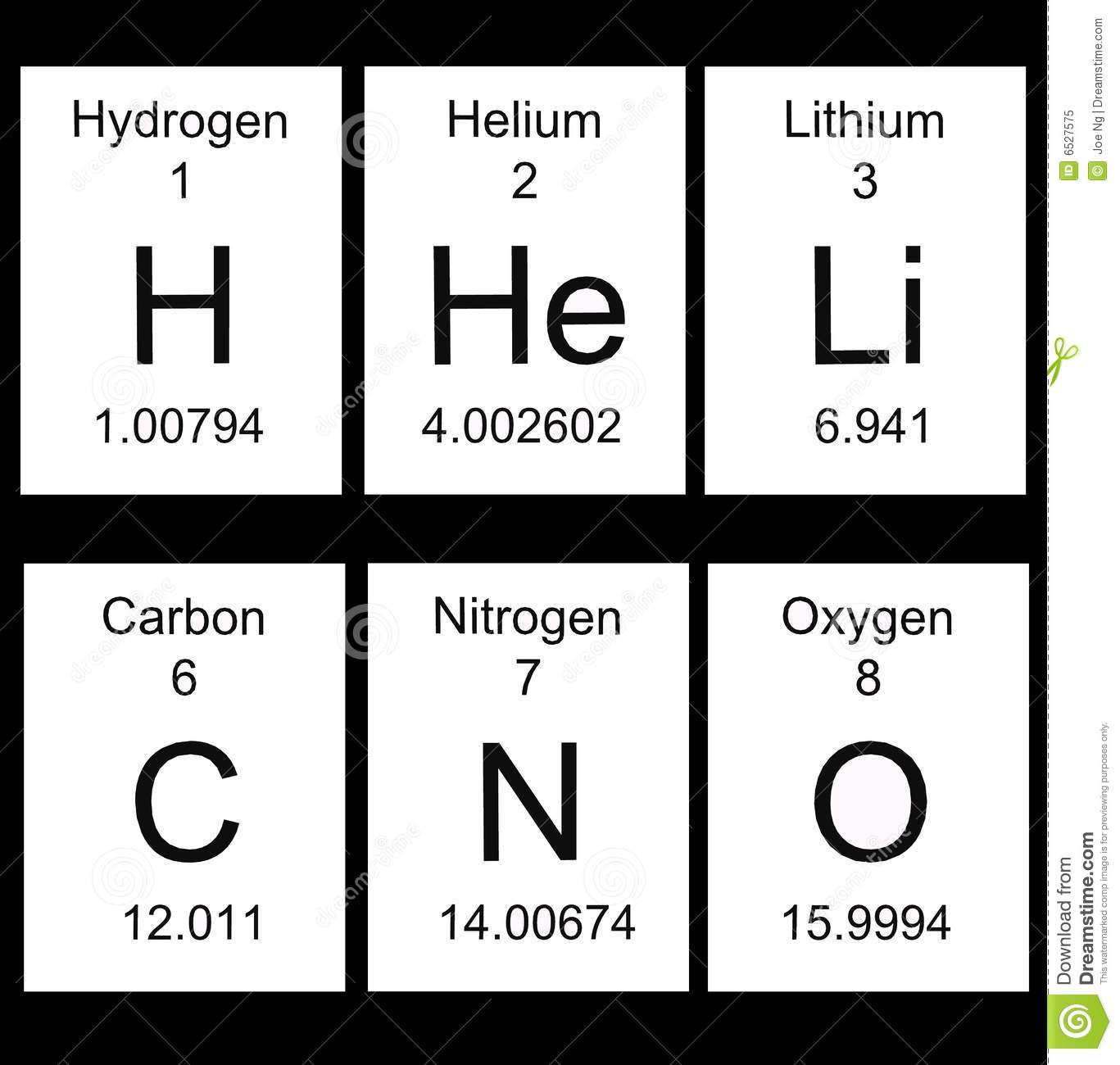
What is the chemical symbol for Lithium?
H
He
Li
N
What is the charge of a proton?
Neutral
Positive
Negative
No charge
Which of the following elements has the chemical symbol 'O'?
Oxygen
Osmium
Gold
Silver
What is the atomic number of Carbon?
6
12
8
14
Which subatomic particle is found in the nucleus and has no charge?
Electron
Proton
Neutron
Positron
Which element is represented by the chemical symbol 'Na'?
Nitrogen
Neon
Sodium
Nickel
What is the relative mass of an electron compared to a proton?
Equal
Much larger
Much smaller
Twice as large
Which of the following elements is a noble gas?
Helium
Hydrogen
Nitrogen
Oxygen
Which subatomic particle determines the chemical properties of an element?
Neutron
Proton
Electron
Positron
Which arrow points to the neutrons?
Which arrow points to the electrons?
Which arrow points to the protons?
Which two subatomic particles give mass to the atom? Click the correct LABELS.
All matter is made up of tiny particles called?
atoms
elements
protons
neutrons
Atoms are made up of which of the following?
protons
neutrons
electrons
all the above
True or False: Atoms are big.
True
False
Chemists use letters of the alphabet as __________ for the elements.
numbers
symbols
pictures
none of the above
Explain why water (H2O) is considered a compound.
It is made of two different elements bonded together.
It is made of one element.
It is a mixture of gases.
It is a single element.
Analyze the chemical formula CO2. What does it tell you about the compound?
It contains one carbon atom and two oxygen atoms.
It contains two carbon atoms and one oxygen atom.
It contains two carbon atoms and two oxygen atoms.
It contains one carbon atom and one oxygen atom.

Si has an atomic mass of ___
28
14
15
0

How many protons does Te have?
127.60
127
52
Te
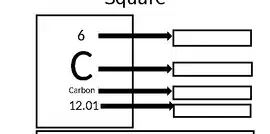
For this element, the symbol is ...
6
Carbon
12
C

For this element, 6 is the __________.
Atomic Number
Atomic Mass
Symbol
Name
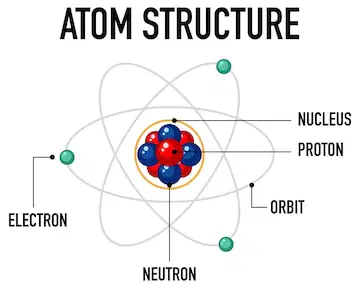
The atomic mass comes from the nucleus of the atom. Which equation is right to find the atomic mass?
Mass = Electrons
Mass = Electrons + Protons
Mass = Protons + Neutrons
Mass = Protons - Nucleus

This is the chart of all known elements that scientists reference when working with atoms or molecules.
Pterodactyl chart
Elemental Table
Periodic Table of Elements
Periods and groups
________________ electrons are found in the outer energy shell of an atom.
Final
Compound
Valence
Subatomic

Which letter represents the valence electrons?
A
B
C

An atom of Boron has how many protons?
10.811
0.811
5
6

Which type of elements are in section 3?
A. metalloids
B. alkali metals
C. transition metals
D. alkali earth metals

Which of the following is in section 2?
A. metals
B. metalloids
C. noble gases
D. nonmetals

