
 Worksheets
Unit 6 Lesson 2 - Carbon Cycle
Total questions: 46
Worksheet time: 40mins
All of the carbon in existence is continually recycled in the carbon cycle.
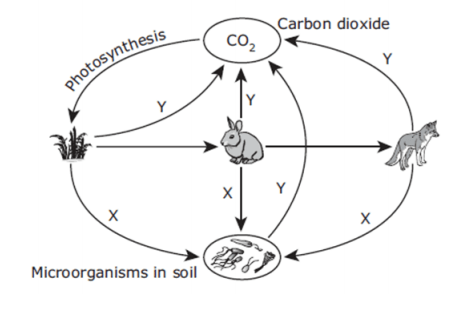
Y : Predation
Y : Decomposition
Y : Nitrogen Fixation
Y : Respiration

How does carbon become locked inside the earth?
Tree roots expel carbon into the soil as they grow.
Humans use machines to pump carbon dioxide into large underground rocks.
Rocks become richer in carbon as time goes by.
The carbon-rich bodies of plants and animals decay into the earth after they die.
Which of the following are fossil fuels?
Coal, water, oil
Oxygen, coal, oil
Coal, Oil, Natural Gas
None of the above
If the plant population decreased, the amount of total carbon on the planet would _________.
Stay the same
Increase
Decrease
The main human activity that releases greenhouse gases is
using public transportation and there by reduce the affects of greenhouse gases.
burning fossil fuels
texting on cellphones
eating meat
Which of the following are some of the major carbon stores on Earth? You can choose multiple answers
The ocean
The lithosphere (upper part of Earth's crust)
The atmosphere
How does carbon get into the ocean?
Diffusion - Shells and other carbon containing organism dissolve into the water
Cellular Respiration - animals in the ocean breath out carbon dioxide
Fossil Fuels - Human's burn fossil fuels and the oil ends up in the ocean
Rain - Rain water contains carbon that ends up in the ocean
Plants use ____________________ to make their own food.
Carbon Dioxide
Oxygen
Materials
Gravity
How do animals get carbon?
By eating plants and or other animals.
They absorb it from the atmosphere.
From the ground
They do not get carbon from anywhere.
Which is a true statement?
Humans depend on oxygen, plants depend on carbon dioxide
Plants produce carbon dioxide
Humans depend on carbon dioxide, plants depend on oxygen
Humans don't depend on plants for the air they need
What type of organism receives carbon present in dead plants and animals?
producer
primary consumer
secondary consumer
decomposer
Which process removes carbon dioxide from the atmosphere?
deforestation
tree farms
burning fossil fuels
cellular respiration
Which reservoir holds the most carbon?
atmosphere
vegetation
soil
deep ocean
Which two reservoirs hold the oldest carbon?
atmosphere
soil
fossil fuel
vegetation
limestone
In terms of time, carbon would move fastest between ...
fossil fuels to atmosphere
atmosphere to fossil fuels

Which reservoirs hold young, fast carbon? CHECK ALL that apply
atmosphere
vegetation
upper ocean and marine life
fossil fuels
limestone
Select all that apply.
Which of the following are carbon sinks.
soil and rocks
fossil fuels
forests
oceans

Forests are carbon sinks because they remove carbon dioxide from the atmosphere through ____________.
combustion
respiration
photosynthesis
decomposition
What organisms in the ocean absorb the most carbon dioxide?
Algae and marine plants
Ocean mammals, like whales and dolphins
Fish
Coral
What are the 3 types of carbon?
LIVING (organs, skin, plants, cells, feces, food, sugar, carbohydrates, corals and anything living that is made of carbon...)
NONLIVING (oil, natural gas, petroleum, shells, limestone, calcium carbonate(CaCO3), diamonds, graphite, ethanol, and other types of sedimentary rocks)
GAS (carbon dioxide(CO2), carbon monoxide(CO), methane (CO4), propane(C3H8), CFCs(chlorofluorocarbons), and any other burning gas.
What is a plant?
Carbon movement
Carbon Storage
What is fossil fuels?
Carbon movement
Carbon Storage
What is sedimentary rocks?
Carbon movement
Carbon Storage
What is decomposition?
Carbon movement
Carbon Storage
What is animals breathing?
Carbon movement
Carbon Storage
What is carbon sinking in water?
Carbon movement
Carbon Storage
What is a reservoir?
Water changing from liquid to gas
places where different things such as water or carbon are being held for long periods of time

