wayground logo

Free Printable Worksheets

Font size

S
M
L
XL
Worksheets

APUSH EXAM REVIEW

Total questions: 136

Worksheet time: 2hrs 16mins

Name
Class
Date
1.
The United States purchased the Louisiana Territory from what country?
a)
Great Britain
b)
France
c)
Russia
d)
Spain
2.

Who was the War of 1812 between?

a)

America vs France

b)

Britain vs France

c)

America vs Britain

d)

America vs Spain

3.
Which treaty ended the War of 1812?
a)
Treaty of Ghent
b)
Treaty of Paris
c)
Treaty of Versailles
d)
Treaty of Guadelupe Hidalgo
4.
What power did Marbury v. Madison enforce? 
a)
Judicial Act of 1789
b)
Judicial Review
c)
Separation of Powers
d)
Check and Balances
5.
Thomas Jefferson hired ________ and ________ to explore the Louisiana Purchase as well as find a waterway to the Pacific Ocean.
a)
John and Locke
b)
Lewis and Clark
c)
Francisco and Samuel
d)
Stewie and Brian
6.
In 1807, Congress passed the Embargo Act because of the constant raiding on U.S. ships by Britain and sometimes France. Why was this law unsuccessful?
a)
since it banned all foreign trade, it hurt the U.S. worse than it hurt other countries
b)
only the poor people in the U.S. were hurt by the law
c)
Spain saw this as an opening and began raiding on U.S. ships
d)
It only banned trade with Britain, so the French kept on with their bad behavior.
7.
Which of the following best describes the main idea of Andrew Carnegie’s Gospel of Wealth?
a)
Privately held wealth should be handed over to the government to be redistributed 
b)
Wealthy individuals should use their wealth for social benefit
c)
Parents have an obligation to pass on their wealth to their children
d)
Accumulating large amounts of wealth violates Christian principals
8.
This period during the 1870s to 1900 is known for its rise of railroads, big business, industrialization and social problems in the United States.
a)
World War I
b)
Progressive Era
c)
Gilded age
d)
Roaring Twenties
9.
The Farmer's Alliance, the Grange, and the ______________ stood for additional government regulation of trade, currency,  and the protection of other farmers' interests.
a)
Progressives
b)
Free Soil Party
c)
Knights of Labor
d)
Populists
10.
In 1890, who wrote about and photographed the horrible living conditions of America's working poor in the book How the Other Half Lives?
a)
Upton Sinclair
b)
Ida Tarbell
c)
Ida Wells
d)
Jacob Riis
11.
William Graham Sumner, a researcher during the Gilded Age,  believed that government programs to help the poor were useless because people had a certain place that could not be changed.  This philosophy was called...
a)
Evolution
b)
Monetary Policy
c)
Social Darwinism
d)
Welfare Capitalism
12.
Which of the following pairs of immigrant groups were most prominent in the construction of the first transcontinental railroad?
a)
Chinese & Irish
b)
Irish & Japanese
c)
Chinese & Japanese
d)
Chinese & Italians 
13.
At the end of the nineteenth century, the desire of American business to control supplies and processes of raw materials led to
a)
automation of industry
b)
horizontal integration
c)
vertical integration
d)
development of the "putting-out system"
14.
Which of the following was a result of the Dawes Severalty Act of 1887 ?
a)
it encouraged cooperative ownership among the Native Americans
b)
Native Indians to attack US forts
c)
forced assimilation of Native Americans
d)
Relocation of Natives across the Mississippi River
15.
What was Andrew Jackson's policy toward Native Americans?
a)
complete assimilation into white society
b)
remove them to lands in the trans-Mississippi West
c)
peaceful coexistence of Indians and whites in an atmosphere of trust
d)
preserve their culture
16.
When Andrew Jackson said: "...It is an institution too great and powerful..." the President was referring to:
a)
the U.S. Supreme Court
b)
the presidential cabinet
c)
the U.S. Senate
d)
the Bank of the United States
17.
Eli Whitney
a)
Cotton Gin
b)
Steamboat 
c)
Factory System
d)
Vulcanized Rubber
18.
Samuel F.B. Morse
a)
Reaper
b)
Sowing Machine
c)
Telegraph
d)
Cotton Gin
19.
Robert Fulton
a)
Cotton Gin
b)
Steamboat
c)
Interchangeable Parts
d)
Factory System
20.
What did protective tariffs force Americans to do?
a)
Buy goods from America
b)
Pay less for goods
c)
Learn to make their own stuff
d)
Buy goods from foreign countries
21.
Purpose of this act was to move Indians in the southeastern part of US to present day Oklahoma
a)
Indian Removal Act
b)
Trail of Tears
c)
Embargo Act
d)
Sooner Act
22.
The aquisition of land in the continental U.S. that was completed in 1853 when the U.S. paid Mexico 10 million for a strip of land in southern New Mexico and Arizona
a)
Manifest Destiny
b)
Treaty of Guadalupe Hidalgo
c)
Gasden Purchase
d)
Louisiana Purchase
23.
First elected president of the Republic of Texas
a)
Moses Austin
b)
Stephen F. Austin
c)
Sam Houston
d)
Travis Bowie
24.

What was the legacy of Marbury v. Madison?

a)

Judicial Review

b)

Impeachment

25.
Which of the following is the importance or significance of Eli Whitney's idea of "interchangeable parts?"
a)
It made farming less profitable
b)
It weakened the Factory System
c)
It made it possible to quickly produce items in large numbers
d)
It increased the demand for slave labor
26.
Which of the following connected the Great Lakes to the Atlantic Ocean,  leading to the rapid increase in trade and settlement in New York, Ohio, and Michigan? 
a)
Panama Canal
b)
Manifest Destiny
c)
Great Lakes Canal
d)
Erie Canal
27.
Which sentence best describes Manifest Destiny?
a)
The United States should not acquire Texas.
b)
The united States needed to compete for trade with Asia.
c)
The United States was meant to share North America with England and France.
d)
the United States had the right to settle North America from coast to coast.
28.
The Wilmot Proviso, which never passed, would have
a)
created a compromise by dividing the territories into free states and slave states.
b)
made it easier for slaveholders to retrieve an enslaved person
c)
prevented Congress from banning slavery in any territory gained from Mexico
d)
prohibited slavery in any territory gained from Mexico.
29.
Lincoln’s debates with the person brought him national attention
a)
Lewis Cass
b)
Stephen Douglas
c)
Henry Clay
d)
John C. Calhoun
30.
_________ was formed in 1854 out of Northern Whigs, antislavery Democrats, and Free-Soilers
a)
The Republican Party
b)
The Populist Party
c)
The Know-Nothing Party
d)
The Dixiecrat Party
31.
Abolitionist who attacked the arsenal at Harpers Ferry
a)
John Brown
b)
Preston Brooks
c)
David Atchison
d)
Nat Turner
32.
Before the Civil War began, which issue played the GREATEST role in increasing tension and conflict between northern and southern state?
a)
the Monroe Doctrine and the role of America in the world
b)
tensions between the US, Great Britain, and France
c)
westward expansion and the issue of whether slavery would be allowed in the new territories
d)
the Indian Removal Act, the "Trail of Tears," and the creation of Indian reservations in Oklahoma
33.
In the 1800's, which of the following required Northerners to help return runaway slaves?
a)
Dred Scott Decision
b)
Compromise of 1820
c)
Fugitive Slave Law
d)
Compromise of 1850
34.
What war allowed the U.S to acquire new western land including present day New Mexico, Nevada, Arizona, and Utah?
a)
War of 1850
b)
WW2
c)
Mexican American War
d)
Cold War
35.
In the Missouri Compromise, what state was allowed to enter as a slave state?
a)
Missouri
b)
Maine
c)
Kentucky
d)
Ohio
36.
What did the Texans refer themselves to after breaking free from Mexico?
a)
Freedom Riders
b)
Lone Star Republic
c)
Union of Texas
d)
Republic of New Mexico
37.
This court decision ruled that the slaves were not citizens, and therefore had no rights to sue in court. 
a)
Marbury v. Madison
b)
Plessey v. Ferguson
c)
Brown v. Board
d)
Dred Scott v. Sanford 
38.
This amendment outlawed slavery. 
a)
12th
b)
13th
c)
14th
d)
15th
39.

What was Lincoln's main goal during the Civil War?

a)

To abolish slavery in the US

b)

To stop slavery from spreading west

c)

To preserve the unity of the country

d)

To get Europe to support the north in the war

40.
Confederates attacked the fort, the Union surrendered.  First shots of the war
a)
Bull Run/ Manassas 1
b)
Antietam
c)
Appomattox Courhouse
d)
Ft. Sumter
41.
This "welfare" organization started in the south after the war, to assist blacks with homes and jobs
a)
Reconstruction Bureau
b)
Freedman's Bureau
c)
Ku Klux Klan
d)
Farm Bureau
42.
Republicans in the south who worked with northern investors to benefit from southern reconstruction
a)
Carpetbaggers
b)
Copperheads
c)
Scalawags
d)
Abolitionists
43.
Largely described as corrupt, this legislation likely ended Reconstruction
a)
Compromise of 1850
b)
Reconstruction Act
c)
Civil Rights Act of 1866
d)
Compromise of 1877
44.
this method of working in fields to earn money for food and shelter, was in essence, slavery.
a)
sharecropping
b)
partial-indenture
c)
indenture farming
45.
This term was given to those seeking gold fortunes in California
a)
Empresarios
b)
Tejanos
c)
49ers
d)
Okies
46.
This was the government's plan to rebuild the South and reunite the United States after the Civil War
a)
Reconstruction
b)
Progressive Era
c)
Antebellum America
d)
American Revolution
47.
Who wanted to punish the South during Reconstruction?
a)
Democrats
b)
Radical Republicans
c)
Scalawags
d)
Carpetbaggers
48.
The amendment that prohibits federal and state governments from denying a citizen the right to vote based on his or her race.
a)
12th Amendment
b)
13th Amendment
c)
14th Amendment
d)
15th Amendment
49.

The court case that ended segregation in public schools

a)

Brown v. Board

b)

Plessy v. Ferguson

c)

Miranda v. Arizona

d)

Engel v. Vitale

e)

Tinker v. DesMoines

50.

Truman wanted to intervene in ________ to avoid what happened in China in 1949.

a)

Vietnam

b)

Korea

c)

Greece

d)

Turkey

51.

Which of the following did NOT grow during the 1950s?

a)

Middle Class

b)

Opposition to the Vietnam War

c)

Suburbs

d)

Nuclear Arsenal

e)

Counterculture

52.

The overall strategy of the US during the Cold War

a)

Truman Doctrine

b)

Containment

c)

Marshall Plan

d)

Domino Theory

53.

What organization was formed to pursue world peace in 1945?

a)

United Nations

b)

NATO

c)

Warsaw Pact

d)

League of Nations

54.

Nixon's policy of relaxing tensions with the USSR

a)

Detenté

b)

Containment

c)

Domino Theory

d)

Brinksmanship

55.

The Civil Rights process of registering black voters in Mississippi in 1964.

a)

Freedom Summer

b)

Freedom Rides

c)

Sit-Ins

d)

March on Selma

56.

This Civil Rights Legislation outlawed Housing Segregation

a)

Civil Rights Act of 1964

b)

Civil Rights Act of 1968

c)

Civil Rights Act of 1965

d)

Civil Rights Act of 1967

57.

The controversial event that led to the US directly intervening in Vietnam.

a)

Gulf of Tonkin

b)

Tet Offensive

c)

Operation Rolling Thunder

d)

My Lai Massacre

58.

Which President faced two separate assassination attempts?

a)

Gerald Ford

b)

Ronald Reagan

c)

Barack Obama

d)

George W. Bush

59.

President Reagan asked who to "Tear Down this Wall!"

a)

Mikhail Gorbachav

b)

Josef Stalin

c)

Nikita Kruschchev

d)

Vladimir Putin

60.

The Cold War between the United States and the Soviet Union officially ends during the administration of whom?

a)

Bill Clinton

b)

George H. W. Bush

c)

Ronald Reagan

d)

Barack Obama

61.

During whose Administration do we get involved in the Persian Gulf War?

a)

Bill Clinton

b)

George H. W. Bush

c)

Jimmy Carter

d)

Gerald Ford

62.

Don't Ask to Don't Tell (DADA) discouraged which minority group from enlisting in the military?

a)

African Americans

b)

Latinos

c)

Japanese

d)

LGBT

63.

Which First Lady wanted you to "Just Say No" to drugs?

a)

Michelle Obama

b)

Nancy Reagan

c)

Barbara Bush

d)

Hillary Clinton

64.

Only two presidents have ever been impeached: Andrew Johnson and _____?

a)

Barack Obama

b)

Ronald Reagan

c)

Richard Nixon

d)

Bill Clinton

65.

The terror attack on September 11, 2001 were perpetrated by which terrorist organization?

a)

ISIS

b)

KKK

c)

Al Qaeda

d)

Black Panther Party

66.

The Bush (Jr.) Administration brought down which terrorist leader/dictator?

a)

Osama bin Laden

b)

Saddam Hussein

c)

Assad

d)

Josef Stalin

67.

Who became the first (and as of right now the only) female Speaker of the House?

a)

Sonya Sotomayor

b)

Nancy Pelosi

c)

Sandra Day O'Conner

d)

Condaleeza Rice

68.

During the Administration of George W. Bush, the U.S. entered military engagements in which countries?

a)

Afghanistan

b)

Iraq

c)

Syria

d)

Egypt

69.

Barack Obama's use of the internet/social media emulate what?

a)

FDR's "Fireside Chats"

b)

Kennedy-Nixon Debates

c)

Eisenhower's Farewell Address

d)

Nixon's Resignation

70.

Which Supreme Court case legalized same sex marriage throughout the 50 states?

a)

Roe v. Wade

b)

Brown v. Board of Education

c)

Obergefell v. Hodges

d)

Town of Skokie v. USA

71.
This period during the 1870s to 1900 is known for it's rise of railroads, big business, industrialization and social problems in the United States.
a)
World War I
b)
Progressive Era
c)
Gilded age
d)
Roaring Twenties
72.
in 1882, the Government passed this legislation that restricted immigration for 10 years from a certain group into the United States.
a)
Nativist Act
b)
Mexican Reparition Act
c)
Dawes Act
d)
Chinese Exclusion Act
73.
One reason nativists worried about influx of immigrants in 1880s...
a)
Feared immigrants gain control of city and state governments
b)
Believed immigrants receive preferential treatment from federal government and receive land
c)
Thought country's ports could not handle increasing numbers of immigrants and exports
d)
Considered immigrants from southern and eastern Europe a threat to traditional American cultural values
74.
Which of following was most closely associated with the Populist Party?
a)
Jane Addams
b)
William Jennings Bryan
c)
Eugene Debs
d)
Samuel Gompers
75.
Which was NOT true of Roosevelt's presidency?
a)
Pushed government to break up bad trusts
b)
Re-ran as a candidate for the Bull Moose party in 1912
c)
Pushed for conservation
d)
Was not a very "progressive" president
76.
What was the major difference between the first two major unions, the Knights of Labor and the American Federation of Labor?
a)
The Knights of Labor only allowed skilled workers to join
b)
The Knights of Labor did not allow immigrants to join
c)
The AFL only allowed skilled workers to join
d)
The AFL did not allow immigrants to join
77.
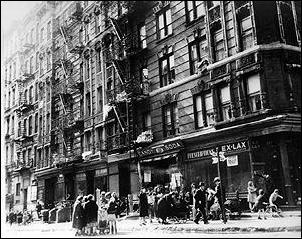
Which of these best describes life in a tenement?
a)
Very crowded
b)
Lots of sickness & disease
c)
No windows, heat, or plumbing
d)
All of these describe tenement life
78.
Congressional action taken in 1890, during the Gilded Age, that made "contracts, conspiracies, and combinations" that restrained free trade illegal.  This was done to stop the abusive practices of organized trusts in oil, sugar, tobacco...
a)
Sherman Antitrust Act
b)
Celler-Kefauver Act
c)
Clayton Antitrust Act
d)
Interstate Commerce Act
79.

What was Roosevelt's foreign policy called?

a)

Dollar Diplomacy

b)

Big Stick Diplomacy

c)

Sphere of Influence

d)

Pan-Americanism

80.
Who was president of the United States during World War I?
a)
Abraham Lincoln
b)
Theodore Roosevelt
c)
Bill Clinton
d)
Woodrow Wilson
81.
This was a major innovation found in most homes by the end of the 20s.
a)
Radio
b)
Television
c)
Telephone
d)
Microwave.
82.
Which decade saw the rise of the automobile, the red scare, and Scopes Trial?
a)
1910s
b)
1920s
c)
1930s
d)
1940s
83.
What is one way the New Deal was supposed to help the economy out of the Great Depression?
a)
by eliminating trading on the stock market
b)
by encouraging war with Germany and Japan
c)
by creating jobs through various new programs
d)
by giving people money through new bank laws
84.
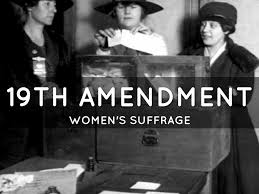
Which amendment guarantees women the right to vote?
a)
1st Amendment
b)
4th Amendment
c)
19th Amendment
d)
12th Amendment
85.

Which WWII leader became President after FDR passed, wanted to save American lives in the Pacific, and decided to drop the atomic bombs?

a)

Franklin D. Roosevelt

b)

Winston Churchill

c)

Harry S. Truman

d)

Joseph Stalin

86.
The need for workers in the Southwest led to the ____________ Program that allowed the recruitment of Mexicans to work in the U.S. during World War II.
a)
Bracero
b)
Navajo
c)
Barrio
d)
None of these are correct
87.

Who were the Tuskegee Airmen

a)

African-American military pilots

b)

Navy seals

c)

Brave foot soldiers

d)

Silent and Sneaky snipers

88.

The Great Migration refers to

a)

The movement of African Americans from the south to the north

b)

The movement of African Americans from the north to the south

c)

The spread of African culture after slavery ended

d)

The advocacy of political union of all the indigenous inhabitants of Africa

89.

How did the Harlem Renaissance influence the world? Click all that apply

a)

it only had an impact on the immediate area of New York

b)

it spread from the area of Harlem to other parts of the nation

c)

it not only influenced African Americans, but other cultures as well

90.
Practice of sensationalizing stories in order to increase subscriptions
a)
Direct Election
b)
Scientific Management
c)
Yellow Journalism
d)
Muck Rakers
91.
During WWII, Americans:
a)
experienced the rationing of scarce consumer goods such as gasoline.
b)
experienced extreme deprivation
c)
still suffered from high unemployment.
d)
were told that the end of war might bring a return of the Great Depression.
92.
The _______ Scandal, in which oil companies illegal drilled oil from public lands, illustrates the return of laissez-faire during the Harding administration and the 1920's.
a)
Teapot Dome
b)
Watergate
c)
Credit Mobilier
d)
Whiskey Ring
93.
What were the villages full of shacks located in cities filled with unemployed Americans called?
a)
Hoovervilles
b)
Okies
c)
Bonus Army Bases
d)
Rooseveltowns
94.
What was the purpose of the Open Door Policy in China?
a)
End the Boxer Rebellion
b)
Ensure trading rights with China
c)
Win leaseholds in China
d)
Establish a sphere of influence
95.
What happened to Japanese Americans who lived on the west coast after the attack on Pearl Harbor?
a)
They worked for the U.S. government
b)
They were relocated to internment camps
c)
They were allowed to stay in their homes
d)
They were spies and committed crimes against the government
96.
Which treaty made Germany take full responsibility for WWI? 
a)
Fault Clause
b)
Treaty of Versailles 
c)
Blame Clause
d)
World War 1 Cause Clause
97.
"Unrestricted submarine warfare" and "Zimmermann note" may be categorized as which of the following?
a)
Wilson's Domestic Strategies
b)
1914 Causes of World War I
c)
Causes of America's entry in the Great War
d)
Part of Wilson's 14 Points
98.

The red scare of 1919-1920 was provoked by

a)

the wartime migration of rural blacks to northern cities.

b)

urban immigrants' resistance to prohibition.

c)

public anger at evolutionary science's challenge to the biblical story of the Creation.

d)

the public's fear that labor troubles were sparked by communist and anarchist revolutionaries.

99.
Under the Truman Doctrine, the US pledged to
a)
refrain from polarizing the world into pro-Soviet and pro-American camps
b)
maintain prosperity in America after World War II
c)
give very limited assistance to nations fighting communism
d)
support those who were resisting subjugation by Communists
100.
What did Winston Churchill mean when he said an "iron curtain" descended across Europe? 
a)
the separation of Communist and capitalist nations
b)
a railroad system
c)
a divider made of iron that separated Europe into sections
d)
the Berlin Wall
101.
European diseases that arrived in the New World were particularly deadly because...
a)
little medical aid was available so far from European urban centers
b)
the European conquerors deliberately accelerated the spread of the most deadly strains
c)
the Native Americans had no natural resistance to these diseases
d)
the vast devastation of warfare with the Europeans left few to care for the sick
102.
In the view of the encomienda system, Native Americans were seen primarily as...
a)
a source of labor
b)
a group to be protected
c)
a focus of evangelization
d)
outcasts to be excluded from Spanish settlement
103.

One significant impact of the Columbian Exchange on the Old World was...

a)

the growth of the food supply and subsequent population increase

b)

the introduction of slavery as a significant source of labor for European landowners

c)

the widespread devastation of new diseases among the poor

d)

a draining of capital from the royal families and a shift of wealth to the hands of the merchant class

104.
What are the 3 G's?
a)
God, Goods, Glory
b)
Goods,  Glory, God
c)
God, Glory, Gold
d)
Grapes, Gum, Greatness
105.
Spanish soldiers were known as--
a)
conquistadores
b)
missions
c)
viceroys
d)
cartographers
106.
What is the best title for this diagram?
a)
Encomienda
b)
Silk Road
c)
Open Door Policy
d)
Columbian Exchange
107.

Which group focused their settlements primarily on the trading of fur?

a)

English

b)

Portugese

c)

French

d)

Spanish

108.

The most important export from the Virginia colony was

a)

Cotton

b)

Tobacco

c)

Rice

d)

Corn

109.

The purpose of the British Navigation Acts was to

a)

Restrict colonial trade with other countries

b)

Expand colonial trade

c)

Strengthen England's Navy

d)

Make the colonies self-sufficient

110.

Which event singularly most prompted the shift from indentured servitude to African slavery?

a)

Shay's Rebellion

b)

Bacon's Rebellion

c)

Stono rebellion

d)

Pueblo Rebellion

111.
What was the first representative house in America and what colony was its home?
a)
Liberty Hall; Virginia
b)
House of Burgesses; Pennsylvania
c)
Plymouth House; Massachusetts
d)
House of Burgesses; Virginia
112.
The chief purpose of mercantilist policies was to 
a)
help colonies to be self-sufficient
b)
strengthen the economy and power of the parent country
c)
defend the colonies from rival powers
d)
foster stable relations between the Crown and the colonies
113.

Which of the following was a characteristic of the Middle Colonies?

a)

The economy was mainly based upon trading furs

b)

They were the most religiously and ethnically diverse of the British colonies

c)

The geography allowed for very little agriculture

d)

They had a reputation as being the least tolerant of the British colonies

114.

Which of the following was a characteristic of colonies in New England?

a)

They generally had shorter life expectancies than other colonies

b)

They were mainly homogeneous communities of Puritans

c)

Most colonists were single men

d)

The economy was mainly based upon exporting cash crops

115.

What term describes investors who pool their money together in order to establish a colony?

a)

joint stock company

b)

headright system

c)

proprietary colony

d)

caste system

116.

When colonists shouted "No Taxation without Representation", they were denying Parliament's power to

a)

Legislate for the colonies in any matter whatsoever.

b)

Levy revenue-raising taxes on the colonies.

c)

Enforce the old Navigation Laws.

d)

Regulate trade in the empire.

117.

The Articles of Confederation left Congress unable to

a)

Organize development of the western lands.

b)

Allow states to create their own constitutions.

c)

Meet at the same location

d)

Enforce tax collection

118.

The Constitutional Convention addressed the North-South controversy over slavery through the

a)

Great Compromise

b)

3/5 Compromise

c)

Bill of Rights

d)

Northwest Ordinance

119.

Shared powers between the national and state governments is called

a)

Federalism

b)

Separation of Powerrs

c)

Bi-Cameral Legislature

d)

Checks and Balances

120.

Following the revolution, women were responsible for educating their children on the virtues of democracy

a)

Suffrage

b)

Democratic Motherhood

c)

Republican Motherhood

d)

Federalist Motherhood

121.
The Louisiana Purchase was an important factor in the development of U.S. trade because it
a)
opened new markets among the western Indian nations
b)
gave the country complete control of the Mississippi River
c)
added numerous French factories in the Louisiana Territory to the U.S. economy
d)
facilitated the immediate completion of the transcontinental railroad
122.
As a result of the Hartford Convention following the War of 1812,
a)
the Federalist party lost credibility and eventually died out
b)
the Constitution was amended to limit the president to two terms in office
c)
the New England states threatened to secede
d)
Congress passed the War Powers Act, limiting future presidents from gaining too much power during wartime, as Madison had
123.
Andrew Jackson accused Henry Clay of using his influence to broker the "corrupt bargain" of 1824 (which cost Andrew  Jackson the election) because Clay
a)
was promised a cabinet position if John Quincy Adams was elected president
b)
was promised the vice presidency if Jackson was defeated
c)
knew Jackson did not support his "American System"
d)
feared Jackson's pro-slavery stance on states' rights
124.

President Monroe articulated the Monroe Doctrine in his 1823 address to Congress primarily in order to

a)

warn European nations against further colonial ventures in the Western Hemisphere

b)

encourage Britain to help the fledgling Latin American states

c)

rule out United States involvement in South America

d)

respond positively to the recent Latin American revolutions

125.

The Declaration of Sentiments (1848), issued at Seneca Falls, New York, called for

a)

improved factory working conditions

b)

compulsory public education

c)

increased rights for women

d)

an end to slavery

126.

Which is an outcome of the war of 1812?

a)

The Americans were defeated

b)

Britain took over America again

c)

The Americans were disappointed in war

d)

The Americans felt a sense of pride that they held their own against a major world power

127.

What was the 1815 and 1825 period known as?

a)

Era Of Good Feelings

b)

Era Of Joyful

c)

Era Of Madness

d)

Era Of Happiness

128.

Which one was not a part of Wilson’s Fourteen Points?

a)

Freedom of Trade

b)

Open Diplomacy

c)

Ending of Slavery

d)

Arms Reduction

129.

The two atomic bombs dropped in Japan were in what cities?

a)

Hiroshima & Nagasaki

b)

Tokyo & Hiroshima

c)

Yokohama & Osaka

d)

Rio & Tokyo

130.

The prohibition movement was a ban on

a)

Immigrants

b)

Weapons

c)

Alcohol

d)

Slavery

131.

The Bonus Army was a group of

a)

Women

b)

Slaves

c)

Japanese

d)

Unemployed WWI veterans

132.

Nativism wanted to stop

a)

Discrimination

b)

Slavery

c)

Immigration

d)

The moving of Indians

133.

Executive Order 9066 affected which of the following groups?

a)

Japanese Americans

b)

Mexican Americans

c)

African Americans

d)

Americans

134.

Who sent the Zimmerman telegraph to whom?

a)

Britain to Mexico

b)

Germany to Mexico

c)

Australia to Panama

d)

Germany to Colombia

135.

What was the name given to FDR’s intimate radio broadcasts?

a)

Chewing the fat

b)

Good for thought

c)

At the White House

d)

Fireside Chats

136.

What were the Zoot Suit Riots?

a)

A mob

b)

A fancy suit

c)

Riots against the ban of alcohol

d)

Conflicts with American servicemen against Mexican American youth.