
 Worksheets
Astronomy Review
Total questions: 40
Worksheet time: 3hrs 20mins
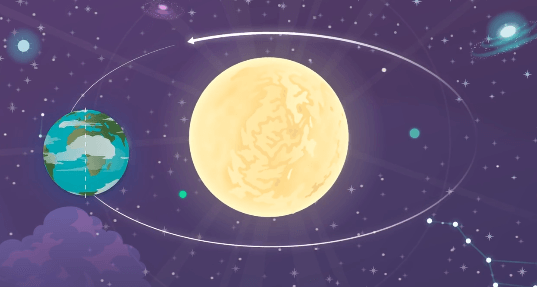
The movement of the Earth around the Sun is called its _____
revolution
rotation
precession
regression
the spinning of a celestial body, such as a planet, around an axis
Rotation
Revolution
Orbit
Gravity
The tilt of the earth is what gives us the ___
Oceans
Months
Seasons
Date
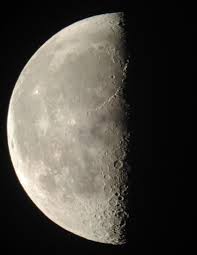
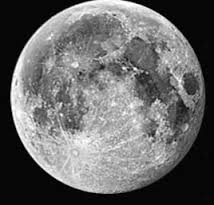
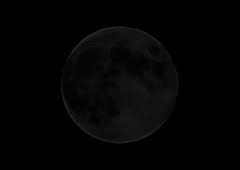
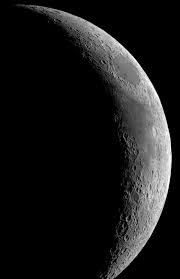
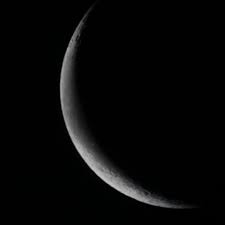
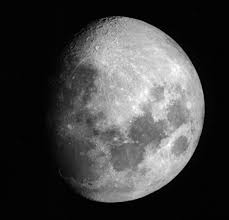
A[n] ___________ tide occurs when the sun, Earth, and the moon are nearly in a line.
spring
high
low
neap
A[n] ______________ tide occurs when the sun is at right angles to the line between Earth and the moon.
high
neap
low
spring
Heliocentrism states that:
Saturn is at the center of the universe
The sun is at the center of the universe
Jupiter is at the center of the universe
The Earth is at the center of the universe
Geocentrism states that:
The Earth is at the center of the universe
Jupiter is at the center of the universe
The Sun is at the center of the universe
The Moon is at the center of the universe
What is Kepler's 1st law?
The planets orbit in an ellipse
The plants move faster when they are closer to the sun and slower when they are further from the sun
The farther a planet is from the sun the slower the orbit
(P2 = a3)
What is Kepler's 2nd law?
The planets orbit in an ellipse
The plants move faster when they are closer to the sun and slower when they are further from the sun
The farther a planet is from the sun the slower the orbit
(P2 = a3)
What is Kepler's 3rd law?
The planets orbit in an ellipse
The plants move faster when they are closer to the sun and slower when they are further from the sun
The farther a planet is from the sun the slower the orbit
(P2 = a3)
The point in the earth's orbit where it is closest to the sun and moves the fastest.
aphelion/apogee
perihelion/perigee
The point in the earth's orbit where it is farthest to the sun and moves the slowest.
aphelion/apogee
perihelion/perigee
Mercury,Saturn
Jupiter, Uranus, Neptune
Jupiter, Neptune,
Mercury,Saturn,
Uranus
Mars,Jupiter,
Saturn,Uranus
Neptune

What are the three parts of a comer?
head, body, and tails
nucleus, coma, and tails
the nucleus, protons, and electrons
head, coma, and tails
What are asteroids?
small pieces of stars
small planets
large metallic rocks that orbit the sun
icy stars that orbit the sun
What is a comet made of?
rock, dust, and ices
ice and water
rock and dust
dust and ions
What is the Oort cloud?
the birthplace of stars
an icy spherical region that surrounds the solar system
a nearby solar system
an icy asteroid belt just outside the orbit of neptune
What is the Kuiper Belt?
a massive asteroid belt between Mars and Jupiter
A massive asteroid belt past Neptune
a small asteroid belt between Mars and Jupiter
a small asteroid belt past Pluto
Where is the asteroid belt located?
between Mars and Jupiter
between Neptune and the Kuiper Belt
between the sun and the Earth
between the Kuiper Belt and the Oort Cloud

One similarity between asteroids, comets and meteoroids is that they all:
are made of rock
come from the Asteroid Belt
come from the Oort Cloud
orbit the sun
The sun is in the ________________________ of our solar system.
outside
center
circle
moon

