wayground logo

Free Printable Worksheets

Font size

S
M
L
XL
Worksheets

Anatomy & Physiology Lec Midterm

Total questions: 100

Worksheet time: 2hrs 40mins

Name
Class
Date
1.

What is a nerve cell?

a)

axon

b)

neuron

c)

dendrite

d)

myelin

2.

The brain is covered in a membrane called:

a)

choroid plexus.

b)

meninges.

c)

ventricles.

d)

cerebral aqueduct.

3.

What is located below the cerebrum?

a)

The thalamus

b)

The cerebellum

c)

The diencephalon

d)

The hypothalamus

4.

Voluntary muscle movement is coordinated by what part of the brain?

a)

Temporal

b)

Occipital

c)

Frontal

d)

Parietal

5.

What part of the brain deals with appetite and temperature control?

a)

Cerebellum

b)

Cerebrum

c)

Hypothalamus

d)

Brain stem

6.

Becoming paralyzed as a result of a fall damages what nervous system?

a)

Sympathetic

b)

Peripheral

c)

Cental

d)

Autonomic

7.

What part of the nervous system is responsible for slowing down breathing and pulse?

a)

Spinal Nerves

b)

Sympathetic

c)

Parasympathetic

d)

Spinal Nerves

8.

How is bacterial meningitis treated?

a)

Viatmins

b)

Nothing

c)

Oxygen

d)

Antibiotics

9.

Someone with a spinal cord injury might experience:

a)

inability to move and respiratory distress

b)

hairloss

c)

increased appetite

d)

none of the above

10.

Someone experiencing serve headache, nausea and vomiting might be suffering from what disorder?

a)

Epilepsy

b)

Hydrocephalus

c)

Meningitis

d)

Cerebral palsy

11.

Which nervous system structure causes someone to have dry mouth and tachycardia after sustaining an injury from a car accident?

a)

Central

b)

Autonomic

c)

Peripheral

d)

Cerebral

12.

Hallucinations, seizures, and temporary loss of consciousness is a symptom of:

a)

hydorcephalus.

b)

meningitis.

c)

neuritis.

d)

epilepsy.

13.

An elderly woman have tremors and shuffling of her gait might be developing:

a)

cerebral palsy.

b)

Alzheimer's disease.

c)

Parkinson's disease.

d)

multiple sclerosis.

14.
The smallest units or parts of living things; the body's building blocks.
a)
cells
b)
organs
c)
tissues
d)
system
15.

Which system functions primarily to coordinate the body’s response to changes in its internal and external environment?

a)

digestive system

b)

excretory system

c)

nervous system

d)

skeletal system

16.

Which of the following is a component of the circulatory system?

a)

heart

b)

blood vessels

c)

blood

d)

all answers

17.

The system that is responsible for the production of gametes is the

a)

excretory system

b)

reproductive system

c)

nervous system

d)

integumentary system

18.
Muscle tissue functions to move 
a)
blood. 
b)
food in the digestive tract. 
c)
bones. 
d)
All Answers
19.
Organs that work together form 
a)
connective tissues. 
b)
tissue systems. 
c)
organ systems. 
d)
All Answers
20.
The functions of the skin include 
a)
defense against microbes. 
b)
regulation of body temperature. 
c)
prevention of dehydration. 
d)
All Answers
21.
The system that recognizes and attacks foreign substances is known as the 
a)
integumentary system 
b)
immune system 
c)
digestive system 
d)
nervous system 
22.
The three types of muscles are 
a)
skeletal, smooth, and cardiac. 
b)
skeletal, voluntary, and cardiac. 
c)
smooth, cardiac, and involuntary. 
d)
skeletal, cardiac, and ridged. 
23.
Which of the following is a function of both the excretory system and the digestive system? 
a)
regulating metabolism 
b)
eliminating wastes 
c)
regulating other organ systems 
d)
maintaining homeostasis 
24.
The system that involves the skin as a primary structure is called __________________. 
a)
integumentary system 
b)
digestive system 
c)
muscular system 
d)
endocrine system 
25.
The heart and the blood vessels are separate organs that form the 
a)
skeletal system. 
b)
cardiovascular system. 
c)
reproductive system. 
d)
digestive system. 
26.
Which system involves the mouth, pharynx and esophagus? 
a)
nervous system 
b)
excretory system 
c)
digestive system 
d)
reproductive system 
27.
From the smallest functional units to the largest, the body is organized as follows: 
a)
cell, system, organ, tissue, body. 
b)
organ, cell, tissue, system, body. 
c)
system, organ, tissue, cell, body. 
d)
cell, tissue, organ, system, body. 
28.
Which of the following systems is primarily involved with gas exchange? 
a)
respiratory system 
b)
excretory system 
c)
digestive system 
d)
skeletal system 
29.
The system that involves the thyroid, pancreas and hypothalamus is called the ___________. 
a)
nervous system 
b)
endocrine system  
c)
skeletal system 
d)
excretory system 
30.
Which system is primarily involved in the transport of gases, nutrients and hormones to the cells? 
a)
circulatory system 
b)
respiratory system 
c)
endocrine system 
d)
skeletal system 
31.
How many bones are in an adult human body?
a)
196
b)
206
c)
226
d)
246
32.
Which bone is the longest bone in the human body?
a)
Humerus
b)
Tibia
c)
Femur
d)
Fibula
33.
How much does the adult human brain weigh?
a)
About 1 pound
b)
About 2 pounds
c)
About 3 pounds
d)
About 4 pounds
34.
What is the largest internal organ of the human body?
a)
The lungs
b)
The heart
c)
The liver
d)
The brain
35.
What is the medical term for bad breath?
a)
Cystic fibrosis
b)
Gingivitis
c)
Halitosis
d)
Neurofibromatosis
36.

Which condition represents homeostasis?

a)

Having a stroke

b)

Shivering on a cold day

c)

Breaking a bone

37.

Anatomy is the study of the functions of the body and its parts

a)

True

b)

False

38.

The frontal plane divides the body into

a)

Front and Back

b)

Upper and Lower

c)

Right and Left

39.

Study of the large easily observable structures in an organism (bones, organs, muscles)

a)

Gross Anatomy

b)

Microscopic Anatomy

c)

Development Anatomy

d)

Regional Anatomy

40.

The small intestine is _____ to the stomach

a)

posterior

b)

medial

c)

inferior

d)

superior

41.

Anatomical direction meaning front or in front of

a)

posterior

b)

lateral

c)

superior

d)

anterior

42.

The brain is _____ to the ear

a)

lateral

b)

proximal

c)

medial

d)

superior

43.

Your dorsal cavity houses your

a)

brain

b)

lungs

c)

heart

d)

stomach

44.

The study of the structure or form of the body and its parts

a)

Physiology

b)

Anatomy

c)

System Analysis

d)

Dissection

45.

Which of the following is NOT a region of the abdominal pelvic cavity?

a)

hypochondriac

b)

lumbar

c)

epigastric

d)

thoracic

46.

Study of the skeletal system is an example of

a)

Systematic Anatomy

b)

Regional Anatomy

c)

Gross Anatomy

d)

Developmental Anatomy

47.

Molecules are two or more atoms bonded together

a)

True

b)

False

48.

Which of the following is NOT a type of muscle tissue?

a)

Cardiac

b)

Smooth

c)

Skeletal

d)

Epithelial

49.

Tissue type that protects the body by covering internal and external surfaces AND produces secretions (sweat, hormones)

a)

Epithelial

b)

Connective

c)

Muscle

d)

Nervous

50.

Anatomical position is when you are facing forward, arms at your side, palms facing up, feet flat on the ground.

a)

True

b)

False

51.

Anatomical direction for toward the point of attachment

a)

distal

b)

lateral

c)

proximal

d)

medial

52.

Which body cavity contains the thoracic and abdominopelvic cavity?

a)

Dorsal cavity

b)

Posterior cavity

c)

Ventral cavity

d)

Transverse cavity

53.
What function do the orbits, eye lashes, and lacrimal glands all have in common?
a)
Nutrition
b)
Lubrication
c)
Protection
d)
Excretion
54.
When you look in the mirror, what part of the eye can you NOT see?
a)
Iris
b)
Pupil
c)
Sclera
d)
Retina
55.
What eye condition can occur in someone with a normally shaped eyeball?
a)
Myopia
b)
Hyperopia
c)
Presbyopia
d)
Astigmatism
56.
What eye condition occurs more frequently in children?
a)
Cataract
b)
Glaucoma
c)
Strabismus
d)
Presbyopia
57.
What is the largest structure of the ear?
a)
Malleus
b)
Cochlea
c)
Pinna
d)
Tympanic membrane
58.
Of the following, when a sound is heard, what structure would be the first to transmit the sound wave?
a)
Organ of Corti
b)
Cochlea
c)
Stapes
d)
Tympanic membrane
59.
What organ of the inner ear is NOT involved in hearing?
a)
Vestibule
b)
Cochlea
c)
Organ of Corti
d)
Semicircular canals
60.
What statement about the sense of taste is true?
a)
Taste is influences by the sense of smell
b)
Taste buds are called lacteals
c)
There are no taste buds in the back of the tongue
d)
There are two main tastes, sweet and salty
61.
Olfactory receptors can be found:
a)
on the tongue
b)
in the nose
c)
in the ear
d)
in the skin
62.
Pauline has a conductive hearing loss, which can be caused by:
a)
auditory nerve damage
b)
an infection in the semicircular canals
c)
a ruptured tympanic membrane
d)
damage to the cochlea
63.
Organisms in the throat can travel up the eustachian tube and cause:
a)
Otosclerosis
b)
A cerumen plug
c)
Otitis media
d)
Meniere's disease
64.
The "color" of someone's eye is actually the color of the ______.
a)
lens
b)
sclera
c)
cornea
d)
iris
65.
The ear has 2 main functions.  They are hearing and: 
a)
Balance
b)
Draining excess fluid
c)
Managing pressure when in elevated areas
d)
Creating cerumen
66.
1. How many senses do we have as humans?
a)
1
b)
3
c)
5
67.
Which of the following tissues allows materials to pass through diffusion and filtration? 
a)
stratified squamous
b)
simple cubiodal
c)
simple columnar
d)
simple squamous
68.
Which of the following tissues would be found in the walls of kidney tubules?
a)
simple cuboidal
b)
stratified cuboidal
c)
simple squamous
d)
stratified columnar
69.
Which of the following structures increases surfaces area for absorption?
a)
cilia
b)
microcilia
c)
microvilli
d)
goblet cells
70.
What type of  tissue has a fluid-like matrix?
a)
bone tissue
b)
cartilage
c)
blood
d)
epithelial tissue
71.
What are the four main tissues found in the body?
a)
Epithelial, Connective, Bone, Blood
b)
Muscle, Connective, Blood, Epithelial
c)
Nervous, Muscle, Connective, Epithelial
d)
Nervous, Muscle, Connective, Bone
72.
Which of the following is NOT considered a function of epithelial tissue?
a)
protection
b)
secretion
c)
absorption
d)
communication
73.
What type of cartilage can be found in the larynx?
a)
fibrocartilage
b)
hyaline cartilage
c)
elastic cartilage
d)
basal cartilage
74.
Absorbs nutrients in the digestive tract
a)
Columnar
b)
Cuboidal
c)
Simple Squamous
d)
Pseudostratified
75.
Identify:
a)
Pseudostratified
b)
Smooth Muscle
c)
Transitional
d)
Stratified Squamous
76.
Identify:
a)
Areolar
b)
Smooth Muscle
c)
Transitional
d)
Simple Squamous
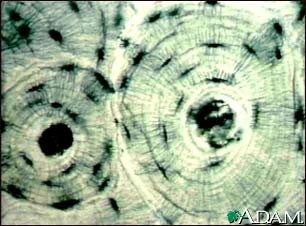
77.
a)
smooth muscle
b)
bone
c)
nerve
d)
blood
78.

The skeletal muscles that contract and shorten to move the bones form the ________ system.

a)

skeletal

b)

muscular

c)

endocrine

d)

reproductive

79.

The ________ system rids the body of indigestible food residue in feces while the ________ system removes nitrogen-containing metabolic waste in urine.

a)

urinary; digestive

b)

cardiovascular; urinary

c)

digestive; urinary

d)

reproductive; digestive

80.

When we imagine a person exhibiting anatomical position, the palms of the hands are assumed to be facing ________.

a)

to the side

b)

forward

c)

down

d)

behind

81.

The body's ability to maintain stable internal conditions is referred to as ________.

a)

metabolism

b)

homeostasis

c)

irritability

d)

output

82.

The femoral region is ________ to the crural region.

a)

superior

b)

inferior

c)

anterior

d)

lateral

83.

The armpit area is called the ________ region.

a)

brachial

b)

antebrachial

c)

axillary

d)

femoral

84.

The vertebral region is ________ to the sternal region.

a)

lateral

b)

posterior

c)

anterior

d)

medial

85.

The central region of the thoracic cavity containing the heart is called the ________.

a)

pleural cavity

b)

mediastinum

c)

quadrant

d)

visceral cavity

86.

The right and left iliac (inguinal) regions are lateral to the ________ region.

a)

hypogastric (pubic)

b)

right hypochondriac

c)

right lumbar

d)

left hypochondriac

87.

The cranial and spinal cavities are subdivisions of the ________ cavity.

a)

ventral

b)

abdominopelvic

c)

thoracic

d)

dorsal

88.

The diaphragm creates a ________ section between the thoracic and abdominal body cavities.

a)

transverse (cross)

b)

median

c)

midsagittal

d)

frontal (coronal)

89.

The hypogastric (pubic) region is ________ to the umbilical region.

a)

superior

b)

inferior

c)

posterior

d)

medial

90.

Ventral is a directional term synonymous with ________ in humans.

a)

posterior

b)

dorsal

c)

anterior

d)

medial

91.

The navel is located in the ________ region of the abdominopelvic cavity.

a)

epigastric

b)

hypogastric

c)

umbilical

d)

right lumbar

92.

The two major body cavities are ________ and ________.

a)

abdominopelvic; thoracic

b)

ventral; dorsal

c)

cranial; dorsal

d)

thoracic; ventral

93.

The abdominopelvic and thoracic cavities are subdivisions of the ________ cavity.

a)

superior

b)

ventral

c)

dorsal

d)

pelvic

94.

The majority of the liver and the gallbladder are situated in the ________ region of the abdominopelvic cavity.

a)

right lumbar

b)

left hypochondriac

c)

right hypochondriac

d)

right iliac (inguinal)

95.

The epigastric region is ________ to the right hypochondriac region of the abdominopelvic cavity.

a)

medial

b)

superior

c)

dorsal

d)

lateral

96.

When correctly situated in anatomical position, where are your feet in relation to your knees?

a)

proximal

b)

medial

c)

superior

d)

distal

e)

deep

97.

Which orientation and directional term means toward the midline of the body?

a)

superficial

b)

posterior

c)

medial

d)

anterior

e)

lateral

98.

Which body cavity is part of the dorsal cavity?

a)

thoracic cavity

b)

spinal cavity

c)

nasal cavity

d)

orbital cavity

e)

abdominopelvic cavity

99.

Which region is associated with the lower limb?

a)

brachial

b)

antebrachial

c)

axillary

d)

popliteal

e)

sacral

100.

Which of these regions is NOT associated with the ventral (anterior) portion of the head?

a)

buccal

b)

oral

c)

orbital

d)

occipital

e)

nasal