
 Worksheets
#050 Human Anatomy and Physiology Exam Study Guide
Total questions: 100
Worksheet time: 1hrs 9mins

Name the muscle that is highlighted above.
{MUSCULAR SYSTEM}
Gastrocnemius
Quadriceps
Pectoralis
Trapezius

Name the muscle that is highlighted above.
{MUSCULAR SYSTEM}
Tricep brachii
Trapezius
Bicep brachii
Teres Major

Name the muscle that is highlighted above.
{MUSCULAR SYSTEM}
Masseter
Orbicularis oris
Orbicularis occuli
Nasalis

Gluteus maximus
Hamstring group
Quadricep group
External Oblique

Name the muscle that is highlighted above.
{MUSCULAR SYSTEM}
Orbicularis Oris
Orbicularis Oculi
Corrugator
Occipitals

Name the muscle that is labeled above as #7.
{MUSCULAR SYSTEM}
masseter
trapezius
zygomaticus
platysma

Name the muscle that is highlighted above.
{MUSCULAR SYSTEM}
Trapezius
Gluteals
Deltoid
Hamstring

The neurotransmitter released by nerve cells to cause muscle contraction is called _________.
{MUSCULAR SYSTEM}
acetylcholinesterase
polymerase
acetylcholine
ATPase

A muscle's least moveable point of skeletal attachment is the __________.
{MUSCULAR SYSTEM}
insertion
origin

During anaerobic respiration muscles burn due to __________.
{MUSCULAR SYSTEM}
lactic acid
thermogenesis
ATP production
friction

What ions are released from the SR to cause a muscle to contract?
{MUSCULAR SYSTEM}
sodium
calcium
potassium
fluorine

Which connective tissue surrounds the bundles of 10-100 muscle cells?
{MUSCULAR SYSTEM}
epimysium
perimysium
endomysium
superficial fascia

RICE stands for _________.
{MUSCULAR SYSTEM}
rest, insertion, contraction, excitability
rest, ice, compress, elongate
relax, insertion, contraction, excitability
rest, ice, compress, elevate

The thin filament is made up of the following proteins:
{MUSCULAR SYSTEM}
troponin, actin, and myosin
troponin, actin, and tropomyosin
troponin, actin, and tintin
myosin only

An example of a third class level is the _________.
{MUSCULAR SYSTEM}
raising up on your toes
flexing muscles at the elbow
head resting on your vertebral column
walking

What bone is highlighted?
{SKELETAL SYSTEM}
Skull (Cranium)
Mandible
Clavicle
Scapula

What bone is highlighted?
{SKELETAL SYSTEM}
Skull (Cranium)
Mandible
Scapula
Clavicle

What bone is highlighted?
{SKELETAL SYSTEM}
Skull (Cranium)
Scapula
Clavicle
Mandible

What bone is highlighted?
{SKELETAL SYSTEM}
Skull (Mandible)
Clavicle
Mandible
Scapula
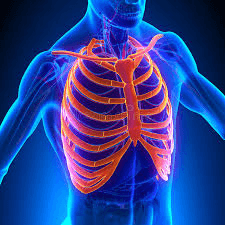
What bone is highlighted?
{SKELETAL SYSTEM}
Ribs
Vertebrae
Clavicle
Femur

What bone is highlighted?
{SKELETAL SYSTEM}
Radius
Ulna
Humerus
Carpals

What bone is highlighted?
{SKELETAL SYSTEM}
Patella
Pelvis
Clavicle
Femur

What bone is highlighted?
{SKELETAL SYSTEM}
Tibia
Fibula
Femur
Humerus
From wrist to fingertip, what is the order of bones?
{SKELETAL SYSTEM}
Carpals, metacarpals, phalanges
Phalanges, metacarpals, carpals
Carpals, phalanges, metacarpals
Metacarpals, carpals, phalanges

The vertebral column contains ____ cervical vertebrae.
{SKELETAL SYSTEM}
4
5
7
12

Mature bone cells are termed ____.
{SKELETAL SYSTEM}
condrocytes
osteoblasts
oasteoclasts
osteocytes

"Osteoclasts break down some spongy bone to create a marrow cavity." This statement occurs in what order of endochondral ossification?
{SKELETAL SYSTEM}
1
3
5
7

________ is an autoimmune disease where the immune system attacks its' own joints often leading to deformities.
{SKELETAL SYSTEM}
osteoporosis
Rickets
gout
rheumatoid arthritis

The ribs, vertebrae, and pubic symphysis are all examples of _________ joints.
{SKELETAL SYSTEM}
catilaginous
synovial
fibrous

Where the humerus, ulna and radius meet at the elbow is an example of a _________ joint.
{SKELETAL SYSTEM}
catilaginous
neither of these is correct
fibrous

What feature is this in the skull that is a large opening for the vertebral column to attach?
{SKELETAL SYSTEM}
Optic Canal
Carotid Canal
Foramen Magnum

What type of tissue is this?
{TISSUE TYPES}
connective
skeletal
epithelial
nervous

What type of epithelial tissue is this?
{TISSUE TYPES}
simple cuboidal
stratified columnar
simple squamous
stratified squamous

What type of muscle is this?
{TISSUE TYPES}
skeletal
cardiac
bone
smooth

The function of connective tissue is to _______.
{TISSUE TYPES}
establishing a structural framework for the body
providing protection for delicate organs
transporting fluids and dissolved minerals
storing energy reserves
all of these are correct

Ligaments attach ____________.
{TISSUE TYPES}
bone to bone
muscle to bone
muscle to muscle
tendons to muscle

Are tendons and ligaments examples of fibrous connective tissues?
{TISSUE TYPES}
Yes
No

Secretions onto body surfaces are characteristic of _______ glands.
{TISSUE TYPES}
exocrine
endocrine
neuron
pathology

Which of the following is the correct level of structural organization from most simple to complex?
{INTRO TO THE HUMAN BODY}
chemical, tissue, organ system, cellular, organism, organ
chemical, cellular, tissue, organ, organ system, organism
organism, organ system, organ, tissue, cellular, chemical

Which body system has glands that secrete hormones?
{INTRO TO THE HUMAN BODY}
digestive
lymphatic
endocrine
reproductive

Which body system has blood vessels that transport blood throughout the body?
{INTRO TO THE HUMAN BODY}
cardiovascular
respiratory
muscular
integumentary

Which body system breaks down food into absorbable units?
{INTRO TO THE HUMAN BODY}
digestive
reproductive
cardiovascular
nervous

The lungs are a part of the _______ system.
{INTRO TO THE HUMAN BODY}
skeletal
muscular
respiratory
lymphatic

The stomach, small intestines and large intestines are all a part of the __________ system.
{INTRO TO THE HUMAN BODY}
integumentary
lymphatic
endocrine
digestive
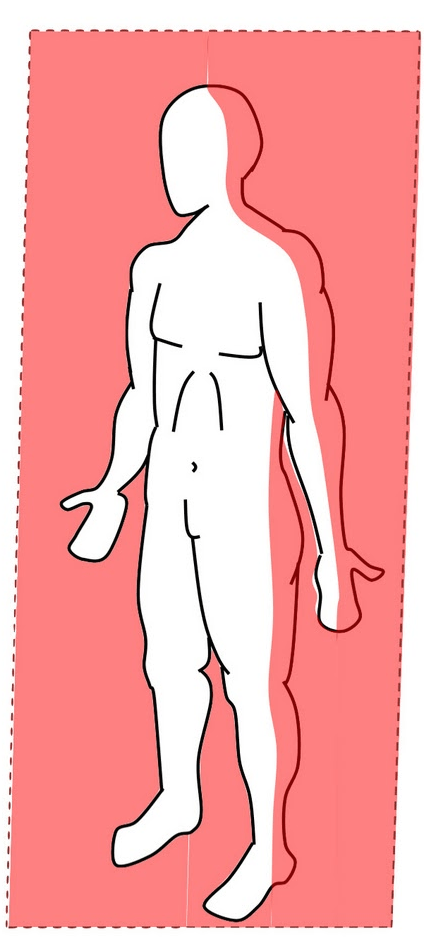
Which body plane is pictured?
{INTRO TO THE HUMAN BODY}
sagittal
frontal (coronal)
transverse
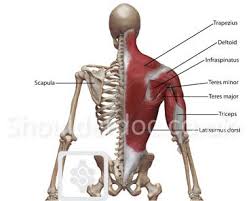
The scapula is on the anterior/posterior side of the body?
{INTRO TO THE HUMAN BODY}
deep
posterior
medial
anterior

Away from the origin or trunk
{INTRO TO THE HUMAN BODY}
Deep
Distal
Proximal
Posterior

The knee is _______ to the ankle.
{INTRO TO THE HUMAN BODY}
proximal
lateral
distal
medial
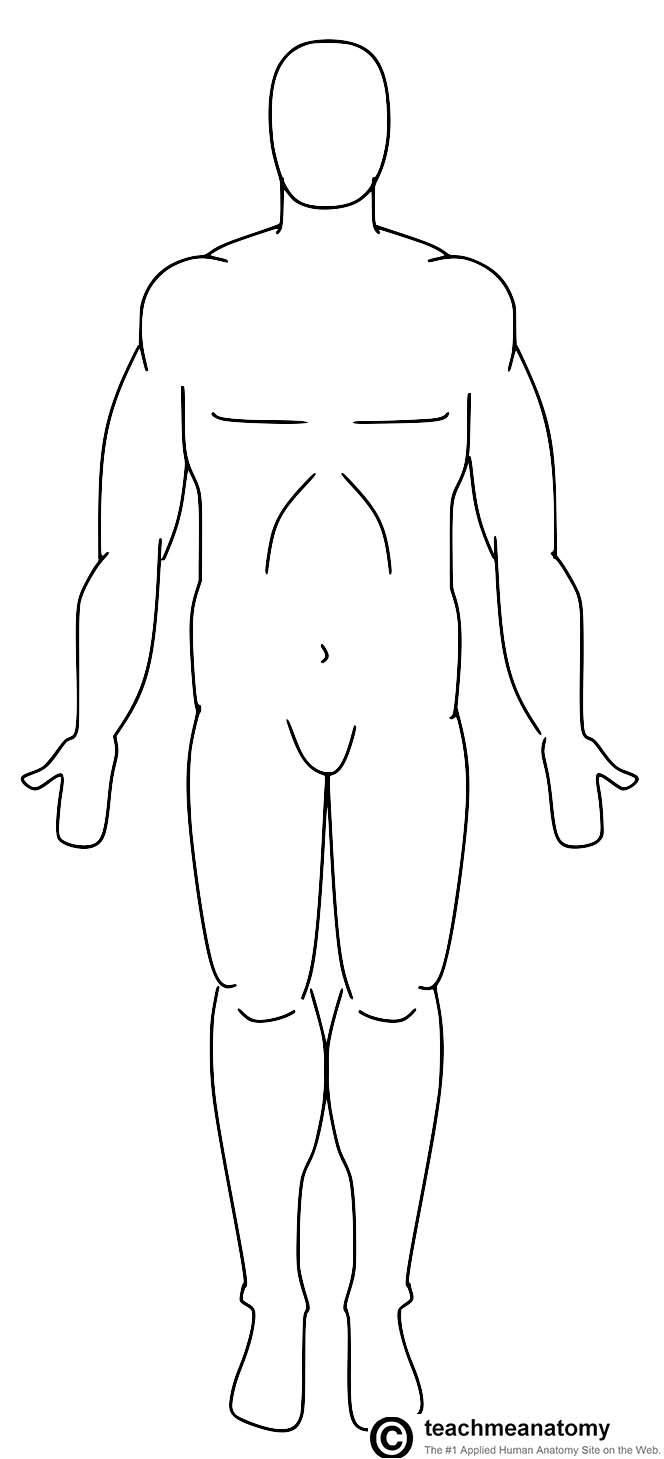
In the anatomical position, the palms are facing _________.
{INTRO TO THE HUMAN BODY}
forward
backward

Best description of tattoo.
{INTRO TO THE HUMAN BODY}
Supeficial on anterior side superior to the cervical (neck) vertebrae
Deep on posterior side cranial to the cervical vertebrae.
Superficial on ventral side caudal to neck vertebrae.
Superficial on dorsal side inferior to cervical vertebrae.

The area of sharpest vision in the retina of the eye is known as the _______.
{SENSES}
pupil
fovea centralis
optic disk
iris

The membrane that separates the external ear canal from the middle ear is known as the ____.
{SENSES}
tympanic membrane
stapes
oval window
round window

Elevations of the tongue are called
papillae
gyri
incus
sulci

___ is a condition caused by excessive pressure buildup in the aqueous humor, which can constrict blood vessels entering the eye.
{SENSES}
hyperopia
glaucoma
myopia
conjunctivitis

An ear infection in the external auditory canal (mostly after swimming) is called ____.
{SENSES}
trachoma
otitis externa
otalgia

Are there approximately 6 millions RODS or CONES in the retina?
{SENSES}
rods
cones

Structure 4
{SENSES}
Cornea
Lens
Pupil
Vitreous humor

Which part of the ear acts as a funnel?
{SENSES}
middle ear
outer ear
inner ear
cochlea

Which letter on the illustration represents the frontal lobe?
{NERVOUS SYSTEM}
A
B
C
D

Label the Neuron-What does the letter "A" represent?
{NERVOUS SYSTEM}
Axon
Dendrite
Axon Terminal
Cell Body

Label the Neuron-What does the letter "E" represent?
{NERVOUS SYSTEM}
Schwann Cell
Node of Ranvier
Axon Terminal
Myelin Sheath

The _____ functions for thirst, hunger, anger and body temperature.
{NERVOUS SYSTEM}
hypothalamus
epithalamus
thalamus
none of these

The grooves or folds in the brain are called ____.
{NERVOUS SYSTEM}
sulci
gyrus
dura mater
pia mater

The peripheral nervous system is divided into two main functional divisions: _____.
{NERVOUS SYSTEM}
autonomic/somatic
afferent/efferent
sympathetic/parasympathetic

____ is a disease that causes damage to the motor area of the brain often associated with oxygen loss during childbirth.
{NERVOUS SYSTEM}
cerebral palsy
neuroblastoma
shingles
rabies

Which part of the brain is shown in the picture above?
{NERVOUS SYSTEM}
Cerebrum
Cerebellum
Pons
Medulla


What is one secondary (helper) organ of the digestive system?
{DIGESTIVE SYSTEM}
Small Intestine
Esophagus
Gallbladder
Stomach

Bile is made by which digestive organ?
{DIGESTIVE SYSTEM}
Gallbladder
Stomach
Rectum
Liver

Nutrients from digested food are absorbed in which digestive organ?
{DIGESTIVE SYSTEM}
Small Intestine
Stomach
Large Intestine
Gallbladder

Which secondary organ makes digestive juices like insulin to help absorb food in the small intestine?
{DIGESTIVE SYSTEM}
Large intestine
Pancreas
Liver
Gallbladder

The enzyme pepsin digests ____.
{DIGESTIVE SYSTEM}
vitamins
proteins
lipids
carbohydrates

Is a person considered to be ANOREXIC if they binge and purge by inducing vomiting to control their weight?
{DIGESTIVE SYSTEM}
Yes
No

What part of the heart delivers unoxygenated blood to the lungs?
{CARDIOVASCULAR SYSTEM}
Pulmonary artery
Pulmonary vein
Aorta
Left ventricle
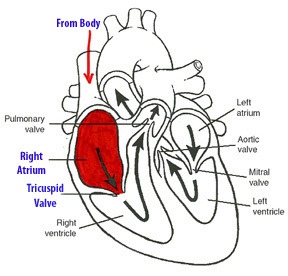
True or False: Blood flows in the following sequence in the heart: Superior vena cava/Inferior vena cava, right atrium, tricuspid valve, right ventricle, pulmonic valve, pulmonary artery, lungs, pulmonary veins, left atrium, bicuspid valve, left ventricle, aortic valve, aorta
{CARDIOVASCULAR SYSTEM}
True
False


What part of the heart is labeled above?
{CARDIOVASCULAR SYSTEM}
Left atrium
Right atrium
Left ventricle
Right ventricle

Mike has type O+ blood. Mike is a Universal Recipient.
{CARDIOVASCULAR SYSTEM}
True
False

Jim has type AB+ blood. His dad could be type O+.
{CARDIOVASCULAR SYSTEM}
True
False
What is the definition for digestion?
{DIGESTIVE SYSTEM}
The muscular tube that moves food from the mouth to the stomach?
{DIGESTIVE SYSTEM}
The organ where food doesn't pass through but it does break down fats and detoxify poisons?
{DIGESTIVE SYSTEM}
Enzymes and acids are examples of
{DIGESTIVE SYSTEM}

Number 3 is pointing to the ...
{DIGESTIVE SYSTEM}
Number 5 is pointing to the ...
{DIGESTIVE SYSTEM}
What is the correct order in which food passes through the digestive system?
{DIGESTIVE SYSTEM}
Hydrochloric acid is a caustic chemical that can burn your skin- and yet it exists in your stomach. How can this be?
{DIGESTIVE SYSTEM}
Your small intestines absorb all the hydrochloric acid
The food in your stomach absorbs all the acid
Your stomach lining protects you against burns
The hydrochloric acid in your stomach is different from the hydrochloric acid you would find in a chemistry lab

Which digestive organ makes digestive juices to help the small intestine absorb nutrients?
{DIGESTIVE SYSTEM}
Which are the tubes that carry urine from the kidney to the bladder?
{URINARY SYSTEM}
There are two kidneys, two ureters, one urinary bladder, and one urethra.
{URINARY SYSTEM}
The _________ is/are responsible for urine storage.
{URINARY SYSTEM}
The major organ of the urinary system is the
{URINARY SYSTEM}
Place the following events in sequence: A) Urine passes through the ureters B) Urea enters the kidneys C) Urine enters the urethra
{URINARY SYSTEM}
What word describes the function of the nephrons?
{URINARY SYSTEM}
In addition to water, the principal components of urine are
{URINARY SYSTEM}

What is #3?
{URINARY SYSTEM}
Urinary tract infections are often diagnosed by which one?
{URINARY SYSTEM}
Bladder failure
Decreased urination
Bacteria in the urine
Nephron death

Which sample belongs to a healthy person?
{URINARY SYSTEM}
Sample A
Sample B
Both A and B
None of the above



