wayground logo

Free Printable Worksheets

Font size

S
M
L
XL
Worksheets

Chemistry Review for Final Exam

Total questions: 115

Worksheet time: 3hrs 46mins

Name
Class
Date
1.
What step does every scientific experiment begin with?
a)
hypothesis
b)
question/problem
c)
procedures
d)
conclusion
2.
If plants are exposed to sunlight, then they will grow taller.
What part of the scientific method is this an example of?
a)
Procedure
b)
Hypothesis
c)
Question
d)
Results
3.
The summary at the end of an experiment that explains the results. 
a)
conclusion
b)
procedures
c)
materials
d)
hypothesis
4.
The independent variable is the ONE thing you _____.
a)
change on purpose
b)
control or keep constant
c)
measure
5.
The variable that is being measured or observed is called the _______________. Hint: this is the variable that is the result or effect 
a)
independent variable
b)
dependent variable
c)
control variable
6.
An experiment is performed on plants to see how different liquids affect plant growth. Each plant in the experiment is given a different liquid: water, apple juice, or milk. What variables should be kept constant/controlled? 
a)
type of plant, flower pot,  soil, and amount of sunlight
b)
water, apple juice, milk
c)
only the amount of sunlight
d)
type of plant only
7.

The part of the experiment that remains unaffected by the independent variable. Used to compare dependent variable to.

a)

constants

b)

control group

c)

independent

d)

dependent

8.
Testing a hypothesis often involves a(n):
a)
answer
b)
experiment
c)
problem
d)
safety check
9.
Which subatomic particle has a positive (+) charge?
a)
Neutron
b)
Proton
c)
Electron
10.
Which subatomic particle has a negative (-) charge?
a)
Proton
b)
Electron
c)
Neutron
11.
Which subatomic particle has a neutral or no charge?
a)
Proton
b)
Electron
c)
Neutron
12.
Where is the nucleus located in an atom?
a)
Near the electron shells/levels
b)
Near the center of an atom
13.
Which two subatomic particles make up the nucleus of an atom?
a)
Protons and Electrons
b)
Neutrons and Electrons
c)
Electrons and Protons
d)
Protons and Neutrons
14.

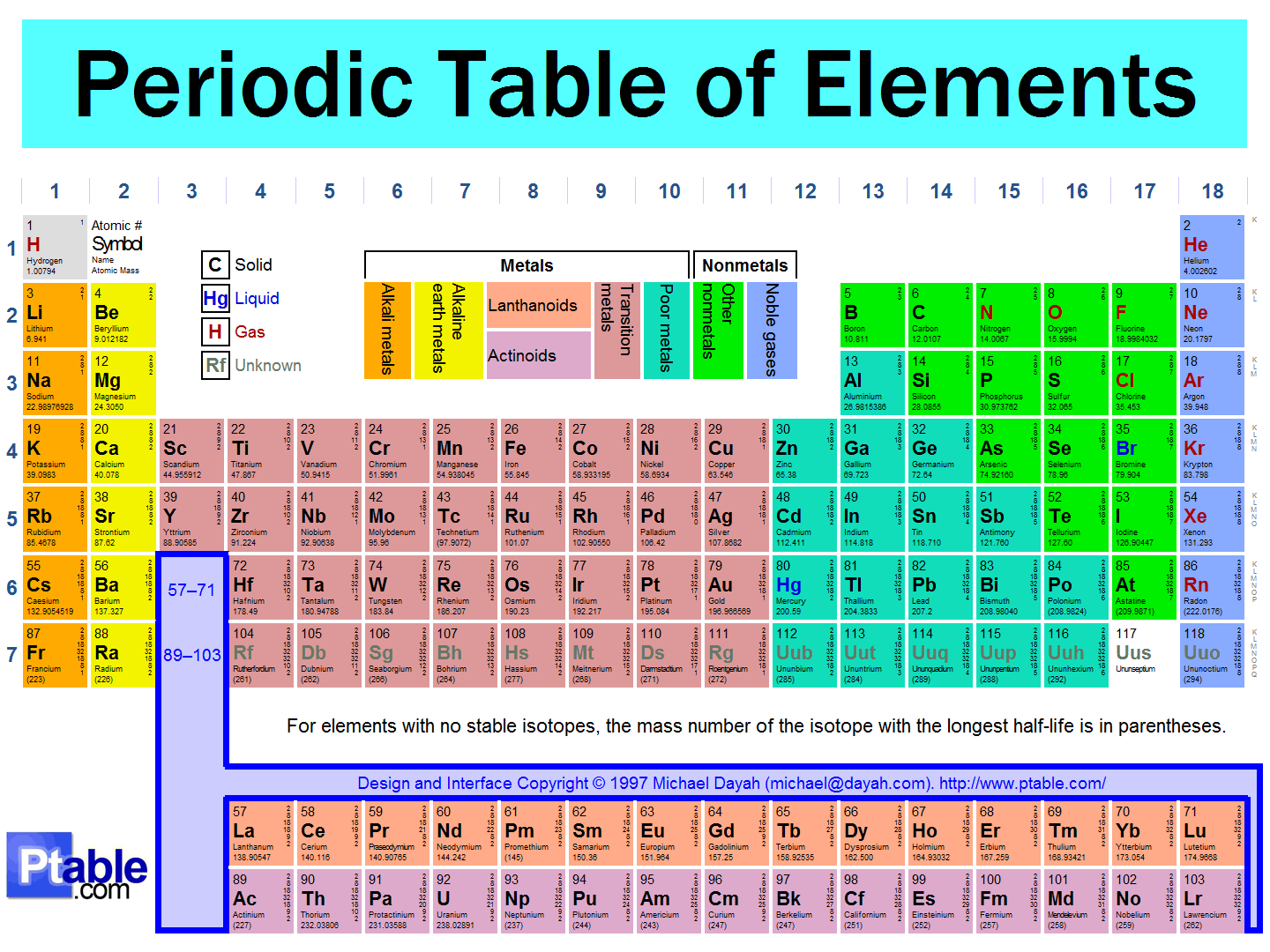
Look at this picture of Argon off the periodic table. Which of the following is true for this element?

a)

18 protons

b)

40 protons

c)

22 protons

d)

21.9 protons

15.

Which part of an atom is used to identify it?

a)

number of protons

b)

number of neutrons

c)

number of electrons

16.

The atomic mass of an atom is equal to

a)

number of protons plus number of neutrons

b)

number of protons plus number of electrons

c)

number of electrons plus the number of neutrons

17.
The nucleus of an atom is made of
a)
electrons and protons
b)
electrons and neutrons
c)
protons and neutrons
d)
empty space
18.
Outside the nucleus of an atom are these
a)
protons
b)
neutrons
c)
quarks
d)
electrons
19.
The mass of this particle is so small that it is not counted.
a)
proton
b)
electron
c)
neutron
d)
quark
20.
The charge of the nucleus of all atoms or ions
a)
positive
b)
negative
c)
neutral
d)
sometimes positive and sometimes negative
21.
The number of these determines which element an atom is.
a)
neutrons
b)
electrons
c)
protons
22.
Which of these phrases best describes an atom?
a)
a positive nucleus surrounded by a hard negative shell
b)
a positive nucleus surrounded by a cloud of negative charges
c)
a hard sphere with postive and negative charges on the outside
d)
a negative nucleus surrounded by protons and neutrons
23.
What is true about an atom?
a)
Most of the space in an atom is taken up by the nucleus
b)
Atoms are mostly empty space
c)
Atoms have no mass
d)
Electrons have much more mass that protons or neutrons.
24.
The term "neutral" means
a)
having only a little bit of charge
b)
having a positive charge
c)
having a negative charge
d)
having no charge at all
25.
DIFFERENT kinds of atoms chemically combined to form a substance are
a)
Mixture
b)
Element
c)
Compound
d)
Substance
26.

In which way are protons and electrons the same in an atom?

a)

same mass

b)

same number of particles

c)

same charges

27.

Which subatomic particle determines the charge of an atom?

a)

protons

b)

neutrons

c)

electrons

28.
What is the number of protons that the element in this image contain?
a)
14
b)
7
c)
15
d)
18
29.

The number 16 for the atomic element sulfur is the

a)

ionic number

b)

isotope

c)

atomic mass

d)

atomic number

30.

How many electrons does sulfur have

a)

16

b)

32

c)

48

d)

12

31.

How many protons does sulfur have?

a)

32

b)

16

c)

48

d)

12

32.

The center of an atom is called the ________________.

a)

electron cloud

b)

nucleus

c)

neutrion

d)

nuetron

33.

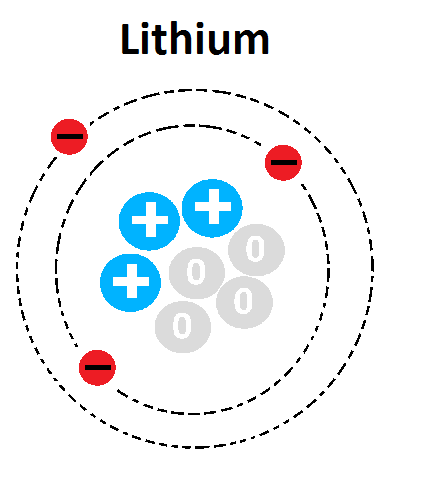
What is the atomic number of this atom?

a)

1

b)

3

c)

4

d)

7

34.
Most of the mass in an atom is made up of _____________________?
a)
protons and electrons
b)
protons and neutrons
c)
neutrons and electrons
d)
electrons and quarks
35.
In order for an atom to be neutral what has to be true?
a)
The atom has more protons than neutrons
b)
The atom has more neutrons than protons
c)
The atom has the same number of protons and neutrons
d)
The atom has the same number of protons and electrons
36.
How is the number of neutrons in the nucleus of an atom calculated?
a)
Add the number of e- and p+ together
b)
Subtract the number of e- from p+
c)
Subtract the number of p+ from the mass number
d)
Add the mass number to the number of e-
37.

An atom has 10 protons, 15 neutrons and 10 electrons what is its mass number.

a)

20

b)

10

c)

35

d)

25

38.
The atomic number of an element that has 9 protons, 9 electrons, and 10 neutrons is _____.
a)
9
b)
10
c)
19
d)
28
39.
An element with a mass number of 11 and an atomic number of 5 has how many neutrons?
a)
11
b)
5
c)
6
d)
16
40.
Fluorine has an atomic number of 9. What can you conclude about an atom of fluorine from this fact?
a)
it has 9 protons
b)
it weighs 9 grams
c)
it has 9 electron shells
d)
it has a boiling point of 9 degree celsius
41.
In what part of an atom can protons be found?
a)
inside the electron
b)
inside the neutron
c)
inside the atomic nucleus
d)
inside the electron shells
42.
What do carbon-12 and carbon-14 have in common?
a)
they have same number of protons
b)
they have the same number of neutrons
c)
they have the same atomic mass
d)
they have the same atomic weight
43.
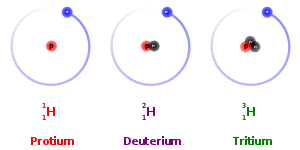
What quantities vary between isotopes of an element?
a)
protons, electrons, and atomic mass
b)
protons, electrons, and atomic number
c)
neutrons and electrons
d)
neutrons and atomic mass
44.
Different isotopes have...
a)
different masses
b)
different atomic numbers
c)
different electrons
d)
different protons
45.

Isotopes of an element have a different number of...

a)

Protons

b)

Neutrons

c)

Electrons

d)

Mass

46.
How did Mendeleev arrange the elements?
a)
alphabetical 
b)
density
c)
melting point
d)
atomic mass
47.
The horizontal row on the periodic table is called a
a)
group
b)
family
c)
period
d)
atomic number
48.
A vertical column is called...
a)
group
b)
tower
c)
period
d)
crew
49.
Which of the following is the most metallic element in period 3?
a)
Boron (B)
b)
Sodium (Na)
c)
Argon (Ar)
d)
Silicon (Si)
50.
The number at the bottom of each square on the periodic table is the ...
a)
atomic number
b)
atomic mass
c)
chemical symbol
d)
element name
51.
The number at the top of each square on the periodic table is the ...
a)
atomic number
b)
atomic mass
c)
Chemical Symbol
d)
Element Name
52.
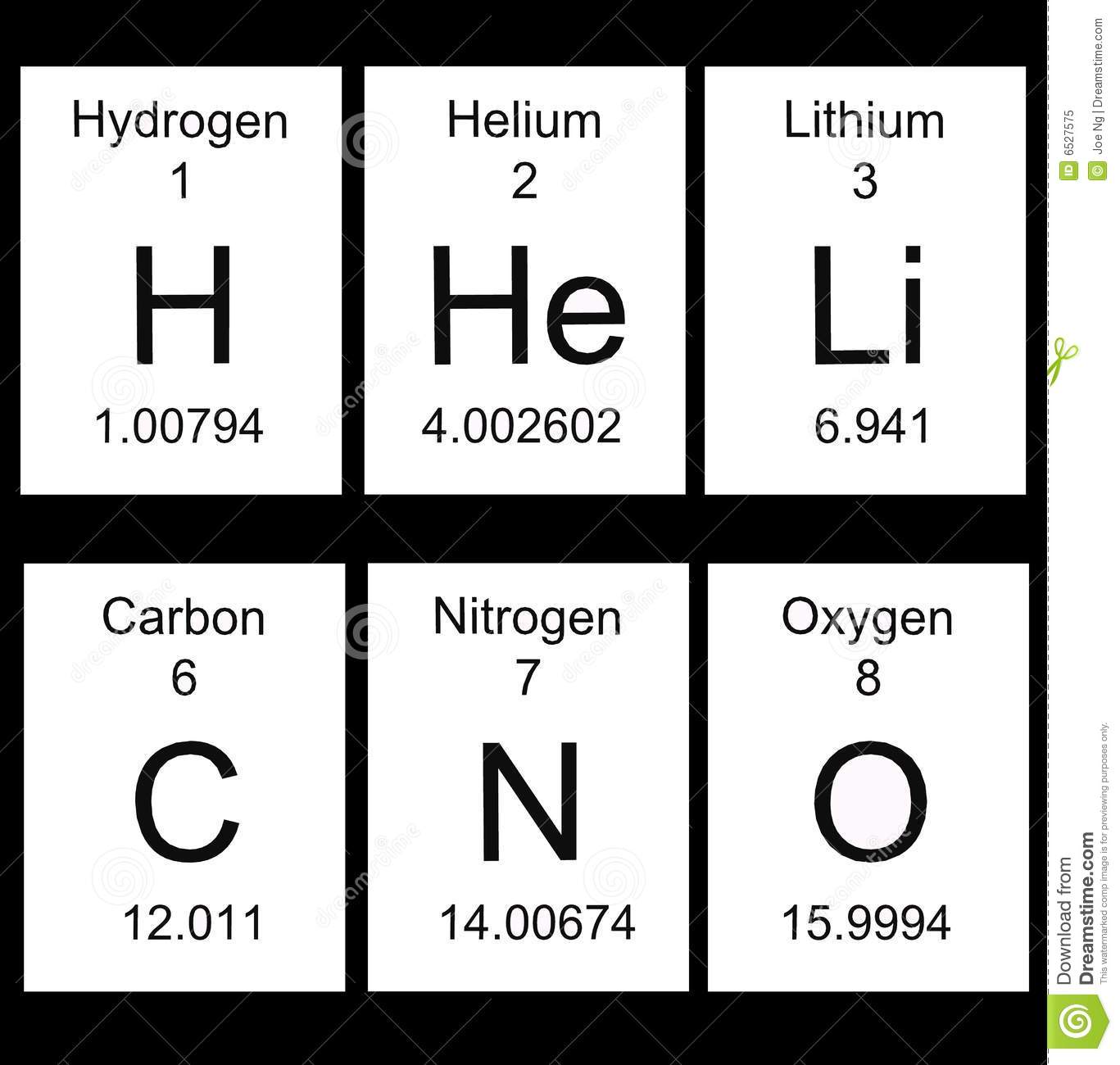
What is the chemical symbol for Lithium?
a)
H
b)
He
c)
Li
d)
N
53.
Which one of these is not a noble gas?
a)
Helium
b)
Radon
c)
Iodine
d)
Krypton
54.
What is the atomic number of Rubidium?
a)
37
b)
44
c)
45
d)
86
55.
What is the atomic number of Oxygen?
a)
6
b)
7
c)
8
d)
9
56.
Which one of these is the symbol for lead?
a)
Rb
b)
Pb
c)
Li
d)
Au
57.
Elements which are shiny, conduct electricity and heat are called
a)
metal
b)
nonmetal
c)
metalloid
d)
nonexistent
58.
Which is a halogen?
a)
Helium
b)
Chlorine
c)
Oxygen
d)
Neptune
59.
If an atom had the same properties as fluorine (F), it would probably be located in
a)
period 1.
b)
period 2.
c)
group 2.
d)
group 17.
60.
Atoms with similar properties are most likely located...
a)
in the same period.
b)
in the same group.
c)
in different periods.
d)
to the right and left of each other.
61.
Group Name and Number for Neon
a)
Alkaline Earth Metals 2 or 2A
b)
Noble Gases 18 or 8A
c)
Halogens 17 or 7A
d)
Alkali Metals 1 or 1A
62.
Which elements have the most similar chemical properties?
a)
K and Na
b)
K and Ca
c)
K and Cl
d)
K and S
63.
What atom matches this electron configuration?
1s2s2p3s2
a)
Neon
b)
Magnesium
c)
Aluminum
d)
Potassium
64.
Which is the electron configuration for an oxygen atom?
a)
1s22s22p63s23p64s2
b)
1s22s22p4
c)
1s22s22p6
d)
1s22s22p63s23p6
65.
What is the maximum number of electrons that an orbital can have?
a)
1 electron
b)
2 electrons
c)
3 electrons
d)
4 electrons
66.
How many valence electrons are represented here?
a)
7
b)
5
c)
2
d)
8
67.
How many d orbitals are there in a given sublevel?
a)
1
b)
3
c)
5
d)
7
68.
How many p orbitals are there in a sublevel?
a)
2
b)
1
c)
4
d)
3
69.
How many electrons can the d sublevel hold?
a)
8
b)
10
c)
2
d)
4
70.
What is the shorthand electron configuration for Sulfur atom?
a)
[Ar] 3p4
b)
[He] 3s23p4
c)
[Ne] 3s23p4
d)
[Na] 3s23p3
71.
How many electrons can the first energy level hold?
a)
1
b)
2
c)
8
d)
0
72.
How many valence electrons does Chlorine have?
a)
5
b)
2
c)
7
d)
5
73.
How many valence electrons does phosphorus have?
a)
5
b)
2
c)
8
d)
15
74.
Which element is pictured?
a)
neon
b)
fluorine
c)
magnesium
d)
argon
75.
Identify the element in Period 5 that has 1 valence electron?
a)
Rb
b)
Nb
c)
Ag
d)
Sb
76.
What element in Period 4 has 5 valence electrons?
a)
Zr
b)
As
c)
V
d)
Sb
77.
Which of the following is a p block element?
a)
Ca
b)
Ar
c)
Re
d)
Au
78.
Electron arrangement that uses arrows
a)
Electron configuration
b)
Shorthand configuration
c)
Lewis dot structure
d)
Orbital diagram
79.
What do you start electron configuration with?
a)
1s2
b)
1d10
c)
1f14
d)
1p6
80.

Ionic bonds form between...

a)

nonmetals and nonmetals

b)

metals and nonmetals

c)

metals and metals

d)

noble gases

81.

In a covalent bond...

a)

A metal bonds with a metal

b)

One electron is shared

c)

A pair of electrons are shared

d)

Atoms try to get 6 valence electrons total

82.

A covalent bond that is polar...

a)

Has an uneven share of electrons

b)

Electrons are shared equally

c)

The bond is magnetic

d)

H2 is an example

83.
When an atom loses an electron, it becomes a:
a)
positive ion
b)
negative ion
c)
neutral ion
d)
neutral atom
84.
A(n) _________ is an ion with a positive (+) charge.
a)
anion
b)
cation
c)
ion
d)
solute
85.
Magnesium bromide is an ionic compound with the chemical formula MgBr₂.  What does the "2" tell you?
a)
There are 2 bromide ions for every magnesium ion
b)
Bromide has a 2- charge
c)
Bromide has a 2+ charge
d)
There are 2 magnesium ions to every bromide ion
86.
Elements in Group 1 lose one electron to form ions with a _________________ charge.
a)
1+
b)
2+
c)
0
d)
1-
87.
A charged particle that has gained at least one electron is called a(n) _____.
a)
Anion
b)
Cation
c)
Anonion
d)
chemistry cat
88.
Which is the correct name for CaBr2?
a)
Calcium Bromine
b)
Bromine Calcium
c)
Calcium Bromide
d)
Carbon and Bromine
89.
A covalent compound contains _______.
a)
Alkali metals
b)
Two metals
c)
A metal and a nonmetal
d)
Nonmetals
90.
Which group of elements have full outer shells?
a)
The alkali metals
b)
The full gases
c)
The halogens
d)
The noble gases
91.
How many valence electrons do most atoms need to have a complete outer shell and be happy?
a)
1
b)
8
c)
10
d)
5
92.
How many valence electrons does Oxygen have?
a)
8
b)
2
c)
16
d)
6
93.

Is KCl an ionic or covalent bond?

a)

ionic

b)

covalent

94.

This could be the dot diagram of

a)

Mg

b)

Cl

c)

C

d)

O

95.

What is the goal of the Lewis Dot Structure?

a)

To determine the electron position.

b)

To show the element's valence electrons & bonding capabilities.

c)

To find the atomic mass of an element.

d)

To search for the number of electrons in an individual atom.

96.

How many valence electrons should Lithium have in its Lewis dot model?

a)

1

b)

2

c)

3

d)

4

97.

How many valence electrons should Oxygen have in its Lewis dot model?

a)

5

b)

6

c)

7

d)

8

98.

How many valence electrons should Magnesium have in its Lewis dot model?

a)

1

b)

2

c)

3

d)

4

99.

Which of these is correct?

a)
b)
100.

Which of these is correct?

a)
b)
c)
101.

How many electrons are in a single covalent bond?

a)

2

b)

4

c)

6

d)

8

102.

How many electrons are in a double covalent bond?

a)

2

b)

4

c)

6

d)

8

103.

Name the ionic compound, LiCl

a)

lithium chlorine

b)

lithium chloride

c)

lithium chlorate

d)

lithium monochloride

104.

Name the ionic compound, CaCO3

a)

calcium carbide

b)

calcium carbon trioxide

c)

calcium carbon oxide

d)

calcium carbonate

105.

Name the molecular compound CO

a)

carbon monoxide

b)

monocarbon monoxide

c)

carbide

d)

oxygen carbide

106.

Name the following compound:

CO2

a)

monocarbon dioxide

b)

carbon oxide

c)

carbon dioxide

d)

oxygen carbonide

107.
Where are the non-metals located on the periodic table?
a)
All over
b)
On the left side of the "staircase"
c)
On the right side of the "staircase"
108.
What is the proper name for CaCl2?
a)
Calcium dichloride
b)
Monocalcium dichloride
c)
Calcium chloride
d)
Calcium chlorine
109.

What is the correct formula of phosphorus trichloride?

a)

P2Cl3

b)

P3Cl3

c)

PCl3

d)

PCl5

110.

What is the correct molecular formula for sodium nitrate?

a)

NaNO2

b)

Na3N

c)

Na3NO

d)

NaNO3

111.

The mass of one mole of an element is equal to

a)

its atomic number from the periodic table, but in amus.

b)

its atomic mass from the periodic table, but in amus.

c)

its atomic mass from the periodic table, but in grams.

d)

its atomic number from the periodic table, but in grams.

112.

What is the molar mass of PbSO4?

a)

303.27 g/mol

b)

255.27 g/mol

c)

163.87 g/mol

d)

372.27 g/mol

113.

How many formula units are in 2.5 moles of NaCl?

a)

1.5 x1024 formula units

b)

1.5 formula units

c)

4.2 formula units

d)

4.2 x10⁻²⁴ molecules

114.
A formula with the lowest whole # ratio of elements in a compound is called
a)
Molecular Formula
b)
Chemical Formula
c)
Empirical Formula 
d)
Distance Formula
115.

What is the empirical formula for C4H6?

a)

CH

b)

CH3

c)

C2H3

d)

C4H6