
 Worksheets
8 Review Topic 9
Total questions: 143
Worksheet time: 2hrs 12mins
The combination of two or more different kinds of substances that are together in the same place, but their atoms are not chemically combined, keeping their properties is called a __________________.
solution
mixture
solubility
miscibility
A mixture with such small particles that you cannot see the individual particles is called ___________________ mixture.
suspension
sublimation
heterogeneous
homogeneous
This type of mixture has large enough particles that you can see the different types of particles.
Homogeneous
Heterogeneous
Colloid
Solution
Which of the following examples is a homogeneous mixture?
Tap Water
Beach Sand
Chocolate chip cookie
Mud water

This is an example of a
solution.
heterogeneous mixture.
homogeneous mixture.
In a heterogeneous mixture, the substances
can be physically separated.
are chemically combined.
can only be separated through chemical processes.
break down into new substances.
Having studied mixtures at school, Daniel wanted to investigate how to separate the parts from different mixtures. He knew that the individual components of a solution kept their properties. So, Daniel gathered his materials and began to separate some of the mixture combinations. Which of the following tests could he perform to separate different kinds of mixtures? Choose all the statements that apply.
Use a cup of salt and dissolve it by adding water.
Use a magnet to separate the metal parts.
Use a hotplate to evaporate the liquid.
Use a filter to separate large particles.

Which of the following statements is true?
A solution is a pure substance.
A solution is a mixture.
The solvent is dissolved in the solute.
A solution has the same properties as a compound.
The substance getting dissolved in a solution is called ________.
solvent
solute
solution
mixture
The substance that does the dissolving is called ______________________.
solute
solvent
solution
mixture
How is a solute different from a solvent in a solution?
The solute is present in a smaller amount.
The solute is present in a greater amount.
The solute is a solid and the solvent is a liquid.
The solute is a liquid and the solvent is a gas.
In sweet tea the solvent would be
water.
tea.
sugar.
lemon.
When a few spoonfuls of sugar are mixed into a cup of water, sugar is the
acid.
base.
solvent.
solute.
Choose each sentence that is true about particles in a solution.
When an ionic solid mixes with water, its ions repel water molecules.
When a molecular solid mixes with water, the covalent bonds within molecules are broken.
When an ionic solid mixes with water, water molecules surround each ion.
When a molecular solid mixes with water, the solute breaks down into individual molecules.
The amount of solute in a given amount of solvent or solution is called __________________.
concentration
miscible
solute
solubility
Choose each sentence that is true about the effects of solutes on solutions.
Solutes raise the boiling point of a solvent.
The temperature must drop lower than 0°C for water to freeze when a solute is dissolved in the water.
Solutes raise the freezing point of a solvent.
More solute in water makes water denser.
If you made a pitcher of lemonade and added a spoonful of sugar, you would call this solutions
concentrated.
diluted.
supersaturated.
saturated.

To make a solution less concentrated by adding more liquid is to _________________.
evaporate
dilute
solute
react
While making chicken soup for his family one evening, Luis added the amount of salt the recipe called for. After tasting the soup, he decided the seasoning was correct. He then he let the chicken soup simmer for two hours to blend the flavors. But when he served the soup, it was too salty. What happened to the soup to make it so salty?
He added too much solvent.
He added something else besides salt.
Some of the chicken was saltier than the rest of it.
Some water evaporated and concentrated the salt.
What is solubility?
a measure of how much solute can dissolve in a solvent at a given temperature
a measure how the solute and the solvent react
a measure how well the solution is mixed
a measure of how hot the solution is
When a solution is saturated
no additional material will dissolve in it.
you need to stir it more .
two materials have combined to create a clear liquid.
crystals form .
Weak tea is an example of a
dilute solution.
concentrated solution.
suspension.
solvent.

Which of the following will allow for more solute than normal to be dissolved in a solvent?
freezing the solution
shaking the solute
cooling the solution
heating the solution
A mixture in which more solute can be dissolved is called a(n) _____________________ solution.
saturated
unsaturated
over saturated
supersaturated
What are the factors that affect the rate of solubility?
rate of stirring
particle size
temperature
all of these
Which of the following is most likely the reason why the scientists stirred the solution at a high rate of speed?
Stirring allows solvent to be dissolved.
Stirring allows solute to do the dissolving.
Stirring allows the solution to be unsaturated.
Stirring makes the particles move faster.

Increasing the temperature will increase the kinetic energy of particles, therefore increasing the collisions between particles.
false
true
On a hot day, Ava got herself a carbonated beverage. She knew from her science class that carbonated drinks had carbon dioxide in them.
When she first opened it, there were lots of bubbles. However, as her drink got warmer, she noticed that there were fewer bubbles in it. Choose the words to finish the sentence correctly.
In general, as the temperature increases, the solubility of solids _________________.
increases
decrease
does not change
On a hot day, Ava got herself a carbonated beverage. She knew from her science class that carbonated drinks had carbon dioxide in them.
When she first opened it, there were lots of bubbles. However, as her drink got warmer, she noticed that there were fewer bubbles in it. Choose the words to finish the sentence correctly.
In general, as the temperature increases, the solubility of gases _________________.
increases
decrease
does not change
Choose the sentence that is true about how the properties of the solvent affect solubility.
Polar and nonpolar molecules do not mix.
Polar molecules mix only with nonpolar molecules.
Nonpolar molecules do not mix with anything.
Polar molecules mix easily with oil.
The higher the pressure of the gas, the ___________ gas can dissolve in a solvent.
more
less
When a compound dissolves in water,
it breaks up into individual crystals.
it always conducts electricity.
its particles surround individual water molecules.
each of its particles becomes surrounded by water molecules.
How can a scientist tell whether a solution is salt in water or sugar in water?
by tasting the solution
by smelling the solution
by testing the electrical conductivity of the solution
by filtering the solution
What happens when you add salt to the water when cooking spaghetti?
It brings the water to a boil faster.
It makes the water boil at a higher temperature.
It reduces evaporation of the water.
It makes the spaghetti cook more slowly.
When a solute is added to a solvent, the freezing point of the solution is
higher than the freezing point of either substance alone.
lower than the freezing point of either substance alone.
the same as the freezing point of the solute.
the same as the freezing point of the solvent.
The presence of a solute makes it harder for solvent molecules to escape when heated, and so the boiling point of a solution is ____________________ than that of the pure solvent.
lower
higher
the same
What is one way to increase the solubility of sugar in water?
Heat the water.
Chill the water.
Increase the amount of sugar.
Decrease the amount of water.
Ionic and polar compounds ____________________ in water because water molecules are polar.
mix
spread out
do not mix
settle out
Among the factors that affect the solubility of a substance are type of solvent and ____________.
temperature
speed
pressure
gravity
Which of the following describes the difference between a physical change and a chemical change?
Physical change is only a change to the outside appearance.
Chemical change is when matter is changed into something new.
Atoms are rearranged in chemical changes & not in physical.
All are correct.

Identify what type of change happening in the picture below.
Chemical reaction
Physical change
Change in state
Change in appearance only
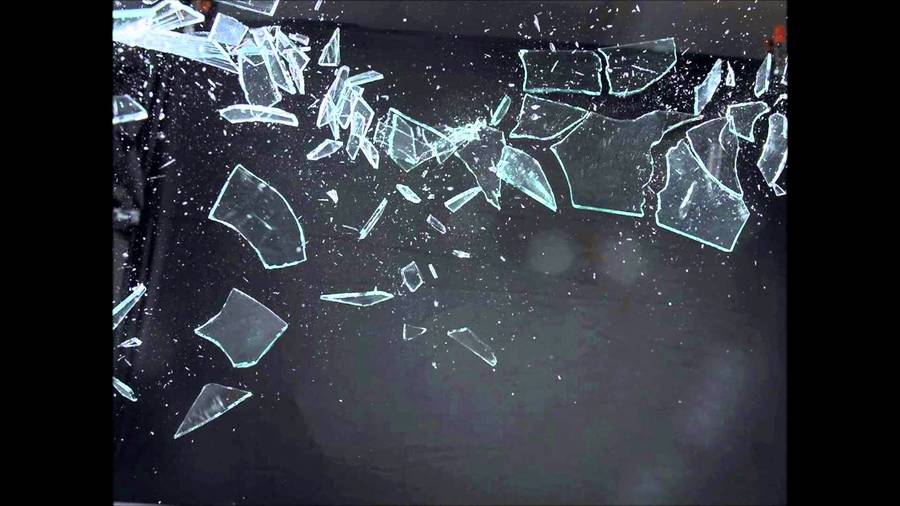
Glass breaking into tiny shards is a __________________.
chemical change
physical change
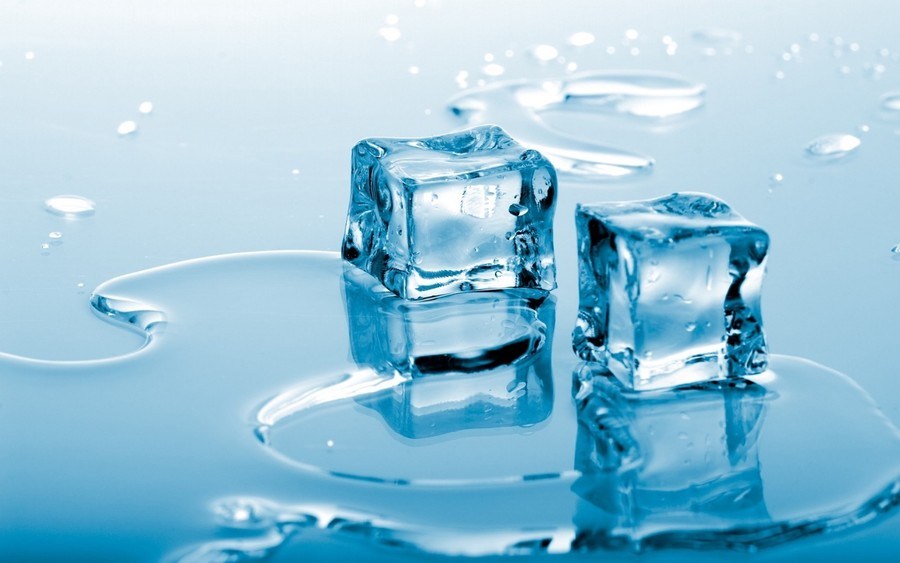
Water freezing into ice is an example of a __________________.
physical change
chemical change
Water vapor in the air turns to liquid water in the form of rain. This is an example of a
physical change.
chemical change.
chemical equation.
chemical formula.
The process of dissolving sugar in water is a ____________________ change.
physical
chemical
physical and chemical
none of these

This is an example of a _________ change.
physical
chemical
During chemical reactions the substances that are used are called ____________________.
precipitate
corrosion
reactants
products
During chemical reactions the new substances created are called ____________________.
precipitate
corrosion
reactants
products
What does a chemical change result in?
A change in state of the substance (ex. liquid to solid)
A change in texture of the substance.
A change in the way atoms are bonded to each other.
A change in the appearance of the substance.
What happens when chemical bonds break and new bonds form?
a physical change
a chemical reaction
matter is destroyed
surface area increases
Which of the following could indicate that a chemical change took place?
Change in color
Production of Energy
Formation of Gas
All are correct
The flame from the candle gives off black smoke. Does this statement describe evidence for a physical change or a chemical change? Explain.
A chemical change. The black smoke is evidence that a new substance is not forming which means a chemical change occurred.
A physical change. The black smoke is evidence of the formation of a new substance, which means a chemical change occurred.
A chemical change. The black smoke is evidence of the formation of a new substance, which means a chemical change occurred.
A physical change. The black smoke is evidence of a solid turning into a gas
Which of the following is evidence of a chemical change?
Gas formation
Melting
Dissolving
Evaporating
The only sure evidence for a chemical reaction is
the formation of a gas.
a color change.
the production of new materials.
changes in properties.
A solid that forms from solution during a chemical reaction is called a(n)
element.
bond.
mixture.
precipitate.

Which scientific observation, shown in the chart, indicates that a chemical reaction has NOT occurred?
Number 1
Number 2
Number 3
Number 4

Observe the chemical equation shown here. What evidence of a chemical reaction is present when 2NO is added to O2 ?
A gas is present
The total number of atoms remains unchanged
The state of matter remains the same
A brown gas is produced
Every chemical reaction involves a change in
mass.
energy.
concentration.
state.
A student mixes two clear liquids together. After a few minutes, a white powdery solid can be seen settling on the bottom of the test tube. Which of the following is a conclusion that the student can draw based on these observations? The two clear liquids
were pure substances before they were mixed.
are toxic and should be handled with extreme caution.
have gone through a chemical change in which a new substance called a precipitate was produced.
have been stored too long and are no longer good.
A student added white crystals to a clear liquid. The crystals dissolved in the liquid. After a few seconds, the liquid became quite warm and then turned bright red in color. Indications that a chemical change was taking place could be observed when
the white crystals were added to the clear liquid.
the crystals dissolved in the liquid leaving only the liquid visible.
There are no indications of chemical change.
the temperature of the liquid increased and an unexpected color change occurred.
What term is given to a reaction which transfers heat energy to the surroundings?
Endothermic
Reversible
Exothermic
Exotermic
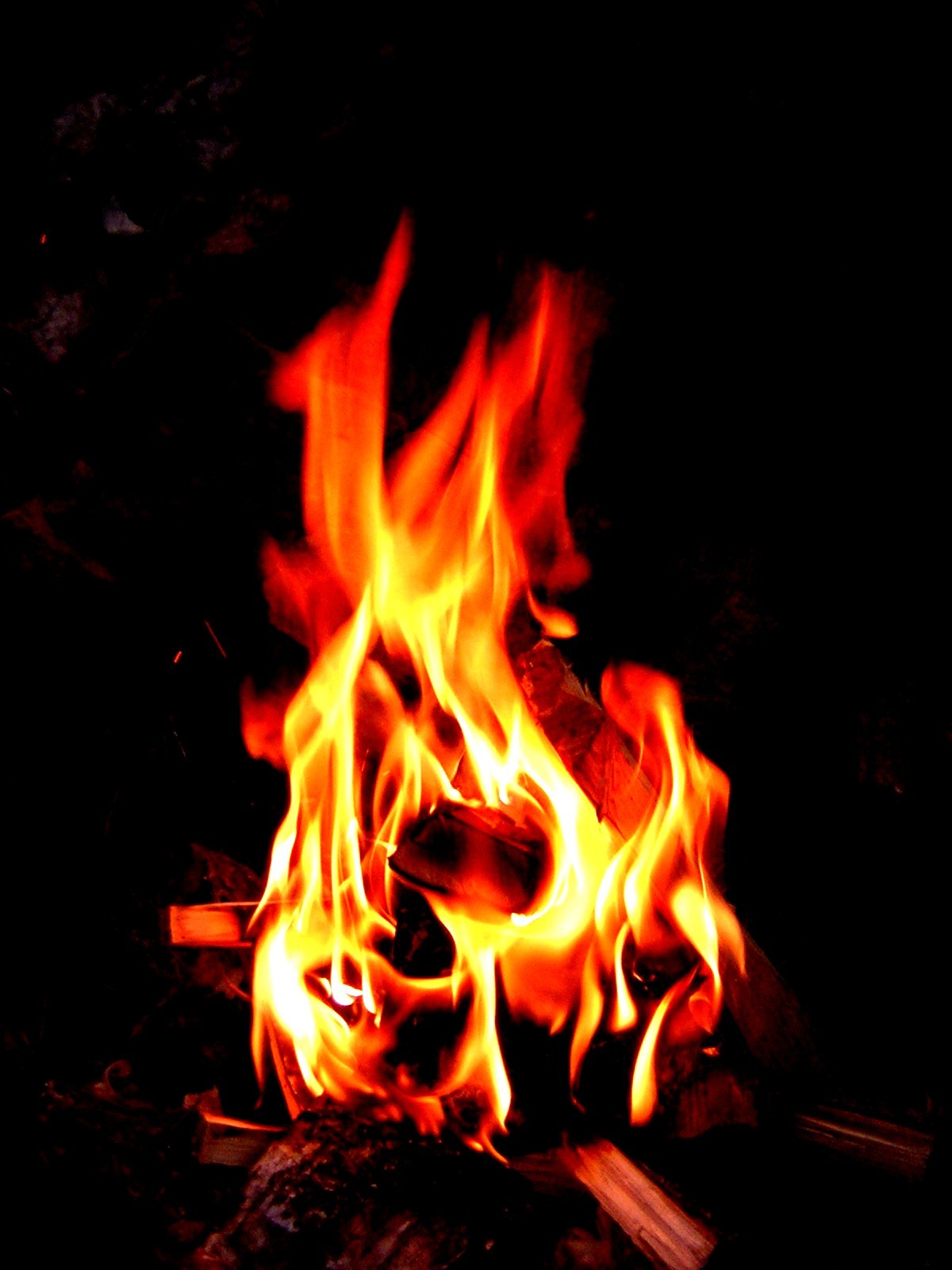
_____ reactions usually feel hot!
endothermic
exothermic
In an endothermic reaction, energy is _________.
absorbed
released
What is the activation energy in a reaction?
The energy needed for products to be formed
The energy needed to break products into reactants
The minimum energy needed to make products
The minimum energy needed by reactants for them to react

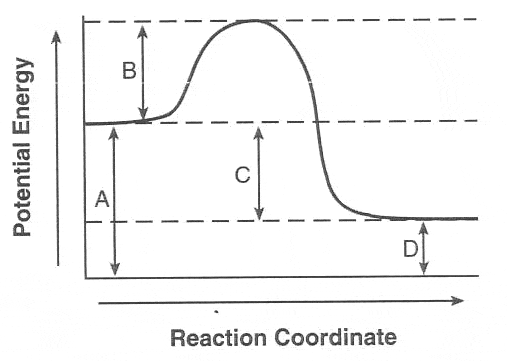
The _________________________ is the minimum amount of energy that must be added to start a chemical reaction.
kinetic energy
activation energy
heat energy
potential energy
In a chemical reaction, how quickly or slowly reactants turn
into products is called the
catalyst.
reaction rate.
concentration.
temperature.
More collisions among the reactants result
faster reaction rate.
slower reaction rate.
constant reaction rate.
How can you increase the surface area of a solid?
Divide the solid into smaller pieces
Get more solid
Turn it into a gas
Grinding a seltzer tablet into powder increases the rate of reaction due to increased
concentration.
surface area.
temperature.
reactants.
Grains of sugar have a greater _______ than a solid cube of
sugar of the same mass, and therefore will dissolve quicker in water.
surface area
catalyst
temperature
concentration
Which of the following is an example of how to supply activation energy to begin a reaction?
Cool the reaction flask in an ice bath.
Add a catalyst.
Heat the reaction flask on a hot plate.
Add an inhibitor.
Products will form faster if
the particle size of the reactants are larger.
temperature is decreased.
concentration of the reactants are increased.
the reaction is not stirred.
How does a catalyst work in speeding up a reaction?
By lowering the activation energy or reaction
by giving them more energy
by making them more available
What does a catalyst do?
Speeds up reactants
Speeds up a chemical reaction
Speeds up products
Speeds up particles
What is the name given to a catalyst in the human body?
Biology
Catalyst
Chemical
Enzyme
Increasing the ____ causes the particles (atoms
or molecules) of the reactants to move more quickly so that
they collide with each other more frequently and with more
energy.
Catalyst
Surface Area
Temperature
Concentration
The ____________________ is the amount of one material present in a given volume of another material.
concentration
inhibitor
catalyst
enzyme
A material used to decrease the rate of a reaction is called a(n) ____________________.
catalyst
enzyme
inhibitor
solvent
Chemical equations
give directions for naming compounds.
describe only biological changes.
describe chemical reactions.
show how to write formulas.
CaCO3 represents a chemical ________________.
symbol
formula
subscript
reaction
Name the part in red.
H2 + O2 -> H2O
Coefficient
Product
Yield
Subscript
In an equation, numbers often appear in front of a chemical formula. These numbers tell you the
number of atoms in each molecule in the reaction.
number of elements in the reaction.
number of molecules or atoms of each substance in the reaction.
number of molecules in each atom in the reaction.
To balance a chemical equation, it may be necessary to adjust the _____________________.
formulas of the products
subscripts
coefficients
number of products

Identify the number in blue.
Product
Reactant
Coefficient
Subscript

How many Nitrogen (N) atoms are in 4NH3?
4
1
3
12

How many Hydrogen (H) atoms are in 4NH3?
4
1
3
12

How many total molecules is 4NH3?
4
1
3
12
How many total atoms make up 4NH3?
4
16
3
12
Why must chemical equations be balanced?
So that the equation doesn't explode.
The reaction won't happen until it is balanced.
Based on the Law of Conservation of Matter, matter cannot be created or destroyed.
Based on the Law of Conservation of Energy, energy cannot be created or destroyed.
When a chemical reaction takes place in an open system,
matter can enter from or escape to the surroundings.
matter is not allowed to enter from or escape to the surroundings.
matter can enter from the surroundings, but cannot escape to the surroundings
matter cannot move at all.
Which of the following represent chemical equations? Check all that apply.
2Na + H2O → 2NaOH + H2
2KClO3 → 2KCl + 3O2
2Fe + 3O2 → 2Fe2O3
2H2O
3O3 , H2O

Identify the Reactants in this equation.
A
B
Which are the reactants in the following reaction?
2Mg + O2 ---> 2MgO
Mg and O2
MgO
Mg and MgO
O2 and MgO

What does the symbol inside the circle mean?
"yields, or produces"
"dissolved in water"
"forms a precipitate"
"released as a gas"

To balance an equation you should
ONLY change subscripts.
ONLY change coefficients.
Change BOTH subscripts and coefficients.

Observe the reaction shown here. The formula for this equation is N2 + H2 → NH3 . What do you observe about the atoms of nitrogen in this reaction?
There are 2 atoms of nitrogen in the reactants and only 1 in the products. This violates the Law of Conservation of Mass.
There are 2 atoms of nitrogen in the reactants and 3 in the products. This violates the Law of Conservation of Mass.
There are 2 atoms of nitrogen in the reactants and 2 in the products. This is in line with the Law of Conservation of Mass.
Observe the reaction shown here. The formula for this equation is N2 + H2 → NH3 . What do you observe about the atoms of hydrogen in this reaction?
There are 2 atoms of hydrogen in the reactants and only 1 in the products. This violates the Law of Conservation of Mass.
There are 2 atoms of hydrogen in the reactants and 3 in the products. This violates the Law of Conservation of Mass.
There are 2 atoms of hydrogen in the reactants and 2 in the products. This is in line with the Law of Conservation of Mass.
When balancing this equation, 2 Fe + Cl2 → 2FeCl3, the correct coefficient for Cl2?
1
2
3
4
Balance this equation.
CaCO3 → CaO + CO2
3,1,2
1,1,1
1,3,1
2,6,3
Fill in the blanks with coefficient.
PCl5+_ H2O→_ HCl+H3PO4
4, 5
1, 6
3, 8
2,2
_Mg + _Cl2 --> _MgCl2
How many atoms of aluminum are on each side of the following equation?
4Al + 3O2 --> 2Al2 O3
2
6
1
4
2KI + ____Cl2 → 2KCl + I2
2Al +____ HCl → 2AlCl3 + 3H2
Balance this equation.
H2 + Cl2 --> HCl
It is balanced
3H2 + Cl2 --> 6H2Cl
H2 + Cl2 --> 2HCl
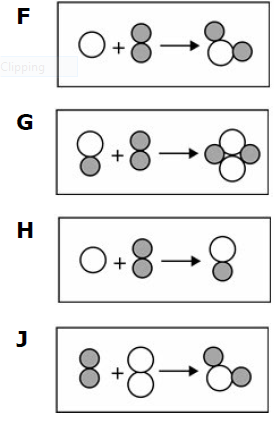
What type of reaction is represented by the following model?
AB + CD →AD + CB
Double Replacement
Single Replacement
Synthesis
Decomposition
Identify this type of reaction.
Cl2 + 2KI ---------> I2 + 2KCl
Synthesis
Single replacement
Double replacement
Decomposition
Identify this type of reaction.
2 C5H5 + Fe --> Fe(C5H5)2
single displacement
double displacement
decomposition
synthesis
Identify this type of reaction.
2 AgNO3 + Cu --> Cu(NO3)2 + 2 Ag
single displacement
double displacement
decomposition
synthesis
Identify this type of reaction.
A + BC →B + AC
Single Replacement
Decomposition
Double Replacement
Synthesis
Identify this type of reaction.
NO2 →N2 + O2
Synthesis (combination)
Decomposition
Single replacement
Combustion
A bottle of hydrogen peroxide that eventually turns into a bottle of water and oxygen gas is an example of a
synthesis reaction.
decomposition reaction.
replacement reaction.
precipitate reaction.
What type of reaction is FeS + 2 HCl -----> FeCl2 + H2S?
a synthesis reaction
a decomposition reaction
a single replacement reaction
a double replacement reaction

