wayground logo

Free Printable Worksheets

Font size

S
M
L
XL
Worksheets

8th Science MOY

Total questions: 148

Worksheet time: 2hrs 49mins

Name
Class
Date
1.
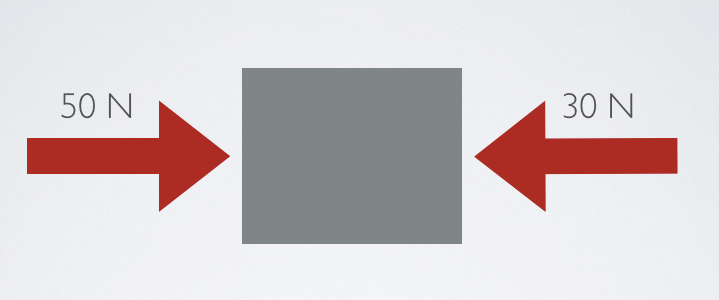
What is the net force?
a)
65 N left
b)
65 N right
c)
35 N left
d)
35 N right
2.
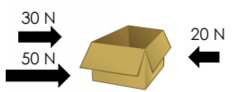
What is the net force?
a)
4.2 N left
b)
4.2 N right
c)
2.2 N left
d)
2.2 N right
3.
What is the net force?
a)
5.5 N left
b)
5.5 N right
c)
2.5 N left
d)
2.5 N right
4.
What is the net force?
a)
11 N left
b)
11 N right
c)
3 N left
d)
3 N right
5.
What is the net force?
a)
3 N left
b)
3 N right
c)
7 N left
d)
7 N right
6.
What is the net force?
a)
1.3 N left
b)
1.3 N right
c)
3.7 N left
d)
3.7 N right
7.
The graph shows how the speed of an object changed over time. During which segments of this graph were the forces acting on the object balanced?
a)
R only
b)
Q and S
c)
R and T
d)
R, S and T
8.
A toy car was used in an investigation about forces. During which of the following scenarios was the car experiencing balanced forces?
a)
The toy car speeds up as it rolls down a ramp.
b)
The toy car travels forward at a constant speed.
c)
The toy car slows down as it rolls up a hill.
d)
The toy car changes direction at a constant speed.
9.
The diagram below shows a toy car moving along a smooth, frictionless track. In which sections of the track will this toy car experience unbalanced forces? 
a)
Sections 1 and 3
b)
Sections 1 and 2
c)
Sections 2 and 4
d)
Sections 3 and 4
10.
The diagram below shows a skateboarder pushing himself forward with a force of 25 N while the wind pushes back with a force of 5 N. How will the skateboarder be affected if the force of the wind increases to 8 N?
a)
The speed of the skateboarder will increase.
b)
The speed of the skateboarder will remain constant.
c)
The speed of the skateboarder will decrease.
d)
The skateboarder will come to a stop.
11.
This list below includes six different scenarios. Which objects in the list experience an unbalanced force?
a)
The ball, the cat, and the flag
b)
The marble, the book and the toy car
c)
The cat, the book, and the flag
d)
The marble, the ball, the cat, and the toy car
12.
A group of students places weights onto 4 different carts. The students pull each of the carts with the same amount of force. Which cart has the least change in speed?
a)
A
b)
B
c)
C
d)
D
13.
What can you use to decrease the amount of friction? 
a)
Salt 
b)
Water 
c)
Sugar 
d)
Peanut Butter 
14.
What direction is this object moving and what is the net force? 
a)
10N Right 
b)
0N 
c)
25N Right 
d)
1N Right 
15.
If the forces exerted on an object are equal the object will move? 
a)
True
b)
False
16.
Which direction will the soccer ball go and with how much force? 
a)
200N Left 
b)
1.66N Left 
c)
50N Left 
d)
12N Left 
17.
a)
Unbalanced 
b)
Balanced 
18.
What is the net force? 
a)
25N Up ON Left
b)
50N Left 25N Down 
c)
175N Up 50N Down 
d)
100N Right 75N Up
19.

Mrs. King and Mr. King decided to move a dresser across the room. They both stood on one side and pushed left with 30N of force, although there was 10N of friction. What is the net force and direction?

a)

40N Left

b)

30N Left

c)

20N Left

d)

10N Left

20.
Is this object moving? 
a)
Yes, Left 
b)
Yes, Right 
c)
Yes, Up
d)
Yes, Down 
21.
a)
Balanced 
b)
Unbalanced 
22.

When the vectors (arrows) point away what function do you use?

a)

Dividing

b)

Multiplying

c)

Subtracting

d)

Adding

23.
A force is a push or pull measured in what units? 
a)
Meters per second, squared
b)
Kilograms 
c)
Newtons 
24.

The positive particles of an atom are

a)

electrons

b)

positrons

c)

neutrons

d)

protons

25.
the central region of an atom where its neutrons and protons are is its 
a)
nucleus 
b)
electron cloud
c)
core 
d)
center 
26.
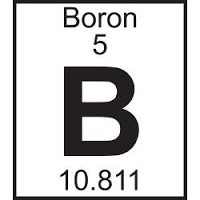
Which number here is my atomic number?
a)
5
b)
10.811
27.
How many protons does this atom have?
a)
2.5
b)
6
c)
5
d)
10.811
28.
In order for me to find the number of neutrons, I must round the atomic mass and then do what?
a)
atomic number-atomic mass
b)
atomic number x atomic mass
c)
atomic mass + atomic number
d)
atomic mass - atomic number
29.
What part of the atom is the arrow pointing to?
a)
nucleus
b)
proton
c)
electron shell
d)
electron
30.
Particles in an atom that are neutral and have no charge are 
a)
negatrons 
b)
electrons 
c)
neutrons 
d)
protons 
31.
all matter is made of what 
a)
energy 
b)
atoms 
c)
electrons 
d)
compounds 
32.
an atom with atomic number 6 would have how many protons 
a)
6
b)
12
c)
3
d)
cannot be determined 
33.
Which two particles make up the nucleus of an atom?
a)
Protons and Electrons
b)
Protons and Neutrons
c)
Molecules and Compounds
d)
Neutrons and Electrons
34.
In an atom, what is the number of protons equal to?
a)
The number of electrons.
b)
The number of neutrons.
c)
The number of molecules.
d)
The number of nuclei.
35.
The particles with no charge in an atom are the _______.
a)
electrons
b)
neutrons
c)
protons
d)
protons and neutrons
36.
The positively charged particles of an atom are the ________.
a)
electrons
b)
protons
c)
neutrons
d)
protons & neutrons
37.
The negatively charged particles of an atom are the ______.
a)
electrons
b)
protons
c)
neutrons
d)
protons & neutrons
38.
A neutron has this charge
a)
negative
b)
positive
c)
neutral
39.
An electron has this charge
a)
positive
b)
negative
c)
neutral
40.
What number indicates the nucleus?
a)
1
b)
2
c)
3
d)
4
41.
Which element has 31 protons ?
a)
Gallium 
b)
Germanium
c)
Gadolinium
d)
Polonium
42.
What is the atomic number?
a)
number of protons
b)
number of neutrons
43.
What is at the center of every atom?
a)
An electron
b)
A compound
c)
A molecule
d)
A nucleus
44.
What two measurements are necessary for calculating speed?
a)
Mass and time
b)
Temperature and mass
c)
Mass and distance
d)
Distance and time
45.
A measurement of how fast an object is moving
a)
Velocity
b)
Speed
c)
Vector
d)
Acceleration
46.
What does this graph represent?
a)
Constant speed
b)
Acceleration
c)
Not moving
47.
What is happening at C?
a)
Stationary
b)
Accelerating
c)
Fast steady speed; moving away from the starting position
d)
Slower steady speed; moving away from the starting position
48.
What does this graph represent?
a)
Constant speed
b)
Acceleration
c)
Not moving
49.
What is happening at D?
a)
Stationary
b)
Accelerating
c)
Fast steady speed; moving away from the starting position
d)
Slower steady speed; moving away from the starting position
50.
What is happening at A?
a)
Stationary
b)
Accelerating
c)
Slower steady speed; moving away from the starting position
d)
Steady speed; returning to start position
51.
What is happening at B?
a)
Stationary
b)
Accelerating
c)
Slower steady speed; moving away from the starting position
d)
Steady speed; returning to start position
52.
Which runner won the race?
a)
A
b)
B
c)
C
53.
Which runner had a head start?
a)
A
b)
B
c)
C
54.
At what time did runner A pass runner B?
a)
0 seconds
b)
1 second
c)
2 seconds
d)
3 seconds
55.
Marta rides her bike 10 miles in 5 hours. Joel rides his bike 11 miles in 5 hours. Avery rides her bike 15 miles in 5 hours. Which child rides her bike faster?
a)
Marta
b)
Avery 
c)
Joel
56.

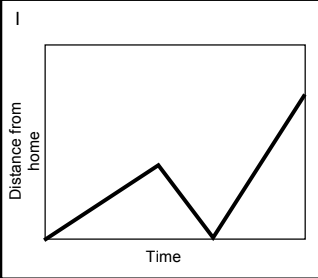
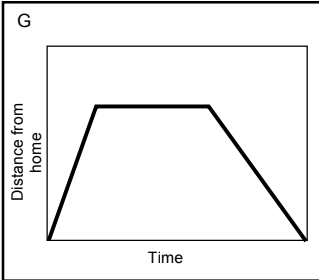
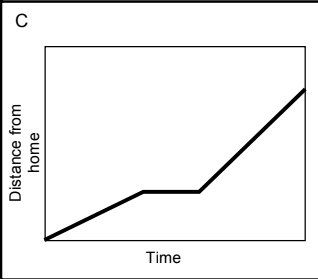
In which of the following graphs below are both runners moving at the same speed?

a)
b)
c)
d)
57.

Match the description to the graph:

"The car is stopped."

a)
b)
c)
d)
58.

Match the description to the graph:

"The speed of the car is decreasing."

a)
b)
c)
d)
59.

Match the description to the graph:

"The car is coming back."

a)
b)
c)
d)
60.

Segment O-A The bus is _________________.

a)

at rest

b)

returning (to original position)

c)

moving forward

61.

Segment A-B The bus is _________________.

a)

at rest

b)

returning (to original position)

c)

moving forward

62.

Segment C-D The bus is _________________.

a)

at rest

b)

returning (to original position)

c)

moving forward

63.

Segment B-C The bus is _________________.

a)

at rest

b)

returning (to original position)

c)

moving forward

64.

Which runner won the race?

a)

Albert

b)

Bob

c)

Charlie

65.

Which runner stopped for a rest?

a)

Albert

b)

Bob

c)

Charlie

66.

How long did Charlie stop for a rest?

a)

2.5 seconds

b)

2 seconds

c)

3 seconds

d)

5 seconds

67.

How long did Bob take to complete the race?

a)

17 seconds

b)

12 seconds

c)

14 seconds

d)

15 seconds

68.
a)
b)
c)
d)
69.
a)
b)
c)
d)
70.
a)
b)
c)
d)
71.
a)
b)
c)
d)
72.
How many Oxygen are in H2O?
a)
1
b)
2
c)
0
d)
4
73.
How many Hydrogen are in 4H2O?
a)
6
b)
8
c)
2
d)
4
74.
How many Oxygen atoms are in Al₂(SO₄)₃
a)
4
b)
12
c)
7
d)
24
75.
Number of H in 3(NH₄)₂CrO₄
a)
4
b)
2
c)
8
d)
24
76.
How many atoms are there TOTAL in:
H2SO4
a)
6
b)
5
c)
7
d)
3
77.
In this compound structure of alcohol, how many Hydrogen atoms are there?
a)
2
b)
4
c)
6
d)
8
78.

How many Oxygen atoms are in H2O?

a)

1

b)

2

c)

0

d)

4

79.

How many Magnesium atoms are in 10MgCl2?

a)

10

b)

5

c)

20

80.

How many Nitrogen atoms are in the in H2C3O4N5?

a)

2

b)

3

c)

4

d)

5

81.
How many atoms of carbon (C) are in C6H12O6?
a)
3
b)
6
c)
12
d)
24
82.

How many Aluminum atoms are in Al2O3?

a)

3

b)

2

c)

5

d)

1

83.

How many elements are present in this compound? (Careful!)

Mg2As3COHNi2

a)

2

b)

4

c)

6

d)

10

84.
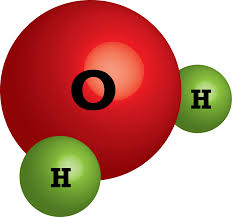
Which is the correct formula for:
 three hydrogen (H)
one sulfur (S)
four oxygen (O)
a)
H3SO4
b)
HSO4
c)
H4S3O
d)
H2O
85.
Which is the correct formula for:
 three hydrogen (H)
one sulfur (S)
four oxygen (O)
a)
H3SO4
b)
HSO4
c)
H4S3O
d)
H2O
86.
The number of Na's in Na₂CO₃
a)
1
b)
2
c)
3
d)
6
87.
How many atoms of Hydrogen are in this compound
a)
1
b)
2
c)
3
d)
4
88.
What is the number of protons that the element in this image contain?
a)
14
b)
7
c)
15
d)
18
89.

How many CARBONs are in this formula?

a)

1

b)

4

c)

8

d)

12

90.

How many total POTASSIUM atoms are in this formula?

a)

8

b)

2

c)

4

d)

12

91.

Which formulas have the most number of HYDROGENs?

a)
b)
c)
d)
92.

A PERIOD goes-

a)

left to right

b)

up and down

c)

diagonal

93.

A GROUP goes-

a)

diagonal

b)

up and down

c)

left to right

d)

right to left

94.

Energy levels are found in-

a)

nucleus

b)

electron cloud

95.

How many electrons does Lithium have?

a)

3

b)

7

c)

4

d)

10

96.

The atomic number tells us-

a)

electron count

b)

neutron count

c)

mass

d)

proton count

97.

The atomic mass is-

a)

all electrons

b)

the valence electrons

c)

the protons and neutrons in the nucleus

d)

the mass of the electron cloud

98.

A Student drew atomic models of four atomic models. Based on the drawings, which one is the least reactive?

a)

Chlorine, because it has three energy levels with seven electrons in the third level

b)

Gallium, because it has four energy levels with three electrons in the fourth level

c)

Neon, because it has two energy levels with eight electrons in the second level

d)

Tin, because it has five energy levels with four electrons in the fifth level

99.

An atom of which element is represented by this model?

a)

Carbon (C)

b)

Neon (Ne)

c)

Sodium (Na)

d)

Boron (B)

100.

Four students were asked to name the parts of an atom that determine the atom’s identity and chemical properties. The students’ responses are shown in the table below.

a)

Student 1

b)

Student 2

c)

Student 3

d)

Student 4

101.

How many valence electrons does the atom of Carbon-14, shown above have?

a)

14

b)

10

c)

6

d)

4

102.
a)
2
b)
8
c)
3
d)
13
103.
a)
2
b)
6
c)
10
d)
16
104.

True or False: Cl3 is a compound.

a)

True

b)

False

105.

Which of the following is an example model of CH4?

a)
b)
c)
d)

None of these options

106.

How many carbon atoms are there in C3H12O5?

a)

1

b)

3

c)

12

d)

5

107.
How will this object move? 
a)
It won't move. 
b)
It will move to the right. 
c)
It will move to the left. 
d)
It will move up. 
108.
A wheeled cart is moving to the right at a constant speed.  Two forces of equal magnitude are acting upon the cart. Which of the following best describes the forces and motion of the cart?
a)
Balanced Forces, Constant Speed
b)
Balanced Forces, Acceleration
c)
Unbalanced Forces, Constant Speed
d)
Unbalanced Forces, Acceleration
109.
How will this object move? 
a)
It won't move. 
b)
It will move to the right. 
c)
It will move to the left. 
d)
It will move in both directions. 
110.
What is the net force?
a)
30 N left
b)
25 N right
c)
5 N left
d)
55 N right
111.
What is the net force?
a)
40 N left
b)
0 N Balalnced
c)
400 N right
d)
40 N right
112.
Calculate the Net Force. 
a)
60N, Left 
b)
40N, Right 
c)
0N
d)
60N, Right
113.
Calculate the Net Force. 
a)
40N, Left
b)
40N, Right
c)
0N, Balanced
d)
75N, Right
114.
What is the net force?
a)
10 N
b)
0 N
c)
25 N
d)
1 N
115.
The tendency of an object at rest to stay at rest unless it is acted upon by a force is called ___________________
a)
inertia
b)
motion
c)
gravity
d)
lubricant
116.
A wheeled cart is moving to the right at a constant speed.  Two forces of equal magnitude are acting upon the cart. Which of the following best describes the forces and motion of the cart?
a)
Balanced Forces, Constant Speed
b)
Balanced Forces, Acceleration
c)
Unbalanced Forces, Constant Speed
d)
Unbalanced Forces, Acceleration
117.
What is the net force?
a)
400 N Up
b)
400 N Down
c)
- 400 N Down
d)
800 N Down
118.
Which of the blocks above has balanced forces acting on it?
a)
A
b)
B
c)
C
d)
D
119.
An airplane is travelling North through the sky at a constant speed when turbulence causes it to take a different route, changing its direction. Explain the forces at work on this plane.
a)
Unbalanced, because the plane is moving forward, not backwards
b)
Unbalanced, because the speed is constant and there is a change in direction
c)
Balanced, because the plane is not falling to a lower altitude
d)
Unbalanced, because the plane is in motion
120.
If two forces act on an object in the same direction, the net force is the _____________
a)
the difference between the two forces
b)
the sum of the two forces
c)
Only one of the forces acts on the object
d)
DOOMSDAY!
121.
Why is person B having a hard time moving down the hill?
a)
Person B has more friction than person A.
b)
Person B has the same friction as person A.
c)
Person B is out of shape.
d)
Person B has less friction has person A.
122.
Are forces balanced or unbalanced when a car is moving at a constant speed in a straight line?
a)
Balanced
b)
Unbalanced
123.

What does the Xe represent?

a)

Atomic number

b)

Element Symbol

c)

Atomic Mass

d)

Element Name

124.

What does the 54 represent?

a)

Atomic Number

b)

Element Symbol

c)

Atomic Mass

d)

Element Name

125.

What does the 131.29 represent?

a)

Atomic Number

b)

Element Symbol

c)

Atomic Mass

d)

Element Name

126.

What does Xenon represent?

a)

Atomic number

b)

Element Symbol

c)

Atomic mass

d)

Element Name

127.

Which element has an atomic number of 29?

a)

Iron

b)

Copper

c)

Nickle

d)

Silver

128.

Which element has the atomic mass of 6.941?

a)

Lithium

b)

Beryllium

c)

Chlorine

d)

Argon

129.

Which element has the elemental symbol of Hg?

a)

Hydrogen

b)

Zinc

c)

Argon

d)

Mercury

130.

Which element has the atomic number of 14?

a)

Silicon

b)

Nitrogen

c)

Arsenic

d)

Germanium

131.

Which element has the atomic mass of 40.078?

a)

Zirconium

b)

Palladium

c)

Calcium

d)

Iodine

132.

Which of the following elements is a non-metal in group 14?

a)

Carbon (C)

b)

Silicon (Si)

c)

Tin (Sn)

d)

Lead (Pb)

133.

Which pair of elements would most likely have similar properties?

a)

Calcium (Ca) and cobalt (Co)

b)

sodium (Na) and chlorine (Cl)

c)

boron (B) and phosphorus (P)

d)

oxygen (O) and sulfur (S)

134.

Which two elements are in the same period?

a)

boron (B) and lithium (Li)

b)

beryllium (Be) and calcium (Ca)

c)

phosphorus (P) and oxygen(O)

d)

boron (B) and phosphorus (P)

135.

Which arrow shows the direction of the groups on the

Periodic Table?

a)
b)
c)
136.

The atomic number is the same as

the---

a)

atomic mass

b)

group number

c)

number of protons

d)

period number

137.

Mendeleev arranged the elements by their ________________

a)

alphabetical

b)

density

c)

melting point

d)

atomic mass

138.

The horizontal rows on the periodic table are called

a)

groups

b)

families

c)

periods

d)

atomic numbers

139.

Each vertical column on the periodic table is called a...

a)

group

b)

tower

c)

period

d)

crew

140.

In each square of the periodic table, the number at the bottom is the:

a)

atomic number

b)

atomic mass

c)

chemical symbol

d)

element name

141.
The number at the top of each square on the periodic table is the ...
a)
atomic number
b)
atomic mass
c)
Chemical Symbol
d)
Element Name
142.

What is the chemical symbol for Lead?

a)

Le

b)

Fe

c)

Ld

d)

Pb

143.

On the periodic table, elements on the right side of the "stair-step" line are classified as:

a)

nonmetals

b)

metals

c)

gases

d)

Halogens

144.
Most of the elements on the periodic table are classified as _____.
a)
Metals
b)
Nonmetals
c)
Metalloids
d)
Periods
145.
In the modern periodic table elements are arranged by:
a)
atomic mass
b)
atomic number
c)
valence electrons
d)
number of isotopes
146.

How many Valance electrons does Iodine Have?

a)

6

b)

16

c)

7

d)

17

147.
Beryllium is in group number______.
a)
Group 2
b)
Group 3
c)
Group 4
d)
Group 7
148.

The atomic mass of an element is:

a)

the amount of electrons the element has

b)

the element's size

c)

the number of protons and neutrons an element has in its nucleus

d)

the element's name