wayground logo

Free Printable Worksheets

Font size

S
M
L
XL
Worksheets

The Earth in space

Total questions: 170

Worksheet time: 2hrs 25mins

Name
Class
Date
1.

The crust is about ______ km on continental masses.

a)

5

b)

0.35

c)

3.05

d)

35

2.

What's the volume of the crust on Earth?

a)

0.01%

b)

1%

c)

10%

d)

0.1%

3.

The main mineral constituents of the continental mass are-

a)

silica and magnesium

b)

sima

c)

silica and alumina

d)

sial

4.

Crust is only _______ km on ocean floors.

a)

0.5

b)

0.50

c)

5

d)

50

5.

What is the oceanic crust called?

a)

Sima

b)

Sial

c)

Mantle

d)

Silica

6.

The crust of the continental mass is called-

a)

Sima

b)

Sial

c)

Alumina

d)

Continental crust

7.

The mantle extends up to a depth of __________km below the crust.

a)

2.900

b)

0.2900

c)

2900

d)

2.900

8.

Mantle consists of _____________ % of the earth.

a)

8.04

b)

0.84

c)

84

d)

48

9.

_______________ is just beneath the crust.

a)

Core

b)

Inner crust

c)

Mantle

d)

Lithosphere

10.

__________ is just above the mantle-

a)

Outer mantle

b)

Core-mantle boundary

c)

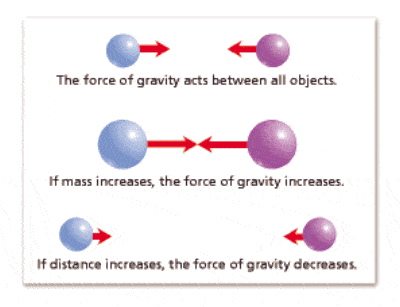
Crust

d)

Sima

11.

Where do convection cycles happen?

a)

core

b)

mantle

c)

crust

12.

Which material is more dense?

a)

solid

b)

liquid

c)

gas

13.

Convection cycles move in the mantle. How does this affect the crust?

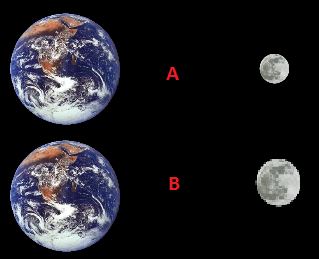
a)

crust has no motion

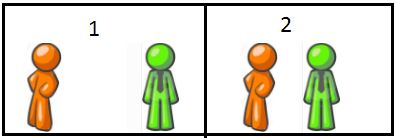
b)

crust moves in random direction

c)

crust moves in same direction convection cycle moves

14.

What is magma made of?

a)

solid rock

b)

melted rock

c)

small pieces of sediment

15.

Density has to do with what two things?

a)

Material and Volume

b)

Mass and Volume

c)

Mass and Density

d)

Material and Density

16.

Which state of matter is least dense?

a)

Solid

b)

Liquid

c)

Gas

17.

What layer of earth changes because of the convection cycle?

a)

Crust

b)

Core

c)

Mantle

18.

If magma increases in temperature (get hot) what will happen?

a)

It moves down (sinks)

b)

It moves up (rises)

19.

If magma decreases in temperature (cooler) what will happen to the magma?

a)

It will move down (sink)

b)

It will rise up (float)

20.

How does density relate with viscosity?

a)

more dense, higher the viscosity

b)

less dense, higher the viscosity

21.

Which has a higher viscosity?

a)

Oil

b)

Honey

22.

Why does hot mantle rise (go/move up)?

a)

hot = less dense

b)

hot = no change

c)

hot = more dense

23.

What is a high tide?

a)

Sea pulled TOWARD the moon where Earth is CLOSEST to the moon

b)

Sea pulled AWAY from the moon where Earth is FARTHEST to the moon

c)

Sea pulled AWAY from the moon where Earth is CLOSEST to the moon

24.
Which body has the greater effect on Earth's tides?
a)
Sun
b)
Saturn
c)
Moon 
d)
Venus
25.

Wha type of tide would this arrangement of earth-moon-sun create?

a)

full moon tide

b)

new moon tide

c)

neap tide

d)

spring tide

26.
What type of tides would this arrangement of earth-moon-sun create?
a)
neap tide
b)
spring tide
c)
new moon tide
d)
full moon tide
27.
Tides are caused by
a)
strong winds that blow over ocean waters.
b)
the interaction of Earth, the moon and the sun.
c)
the shifting of the plates on the ocean floor.
d)
variations in the salinity of ocean water
28.
What causes tides?
a)
gravity
b)
wind
c)
spring
d)
neap
29.
If tides alternate from high to low and there are two of each type of tide a day, about how many hours will generally be between each different tide?
a)
2 hours
b)
6 hours
c)
12 hours
d)
24 hours
30.
How many low tides and high tides happen in a day?
a)
1 low tide, 1 high tide
b)
4 low tides, 4 high tides
c)
3 low tides, 3 high tides
d)
2 low tides, 2 high tides
31.
You visited the beach at 12 pm (noon) and it is high tide. If you return 6 hours later what tide will you see? 
a)
high 
b)
low 
c)
none
d)
spring 
32.
What do we call the small tides that happen when the sun and moon are at right angles to each other?
a)
Neap Tide
b)
Spring Tide
c)
Larger Change
d)
Smaller Change
33.
The Moon has a greater influence on Earth tides than the Sun because...
a)
it is smaller than the Sun
b)
it revolves around the Earth
c)
it is closer to the Earth
34.
Differences in the moon's and sun's pull on different sides of the Earth cause _________.
a)
gravity
b)
lunar phases
c)
tides
d)
dabbing
35.
The bulge of water on the side of the Earth closest to the moon produces ___________.
a)
high tide
b)
low tide
c)
neap tide
d)
spring tide
36.
A neap tide is a tide with the greatest difference between low and high tides
a)
true
b)
false
37.
What is a difference between spring and neap tides?
a)
Spring tides occur when the earth and sun are IN LINE with the new or full moon. 
b)
Spring tides occur when moon in 3rd or 1st quarter phases
c)
Spring tides are LOWER than neap tides
d)
Spring tides occur in Spring and neap tides can occur in any season
38.
A[n] ______________ tide occurs when the sun is at right angles to the line between Earth and the moon. 
a)
high
b)
neap
c)
low
d)
spring
39.
A[n] ___________ tide occurs when the sun, Earth, and the moon are nearly in a line. 
a)
spring
b)
high
c)
low
d)
neap
40.
Neap tides occur once a month. 
a)
True
b)
False
41.

What is a high tide?

a)

Sea pulled TOWARD the moon where Earth is CLOSEST to the moon

b)

Sea pulled AWAY from the moon where Earth is FARTHEST to the moon

c)

Sea pulled AWAY from the moon where Earth is CLOSEST to the moon

42.
Which body has the greater effect on Earth's tides?
a)
Sun
b)
Saturn
c)
Moon 
d)
Venus
43.
What type of tides would this arrangement of earth-moon-sun create?
a)
neap tide
b)
spring tide
c)
new moon tide
d)
full moon tide
44.
How many low tides and high tides happen in a day?
a)
1 low tide, 1 high tide
b)
4 low tides, 4 high tides
c)
3 low tides, 3 high tides
d)
2 low tides, 2 high tides
45.
The Moon has a greater influence on Earth tides than the Sun because...
a)
it is smaller than the Sun
b)
it revolves around the Earth
c)
it is closer to the Earth
46.
When the moon is at full moon or new moon, what type of tide will we experience?
a)
rip tide
b)
spring tide
c)
neap tide
d)
breaker tide
47.
Spring tides and neap tides occur in patterns governed by the
a)
phases of the moon
b)
seasons (fall, winter, etc.)
c)
surface currents
d)
deep sea currents
48.
What happens when there is a spring tide
a)
high tides 
b)
really high tides
c)
low tides
49.
What is the periodic rise and fall of the water level in the oceans?
a)
Tide
b)
Wave
50.
What is a difference between spring and neap tides?
a)
Spring tides occur when the earth and sun are IN LINE with the new or full moon. 
b)
Spring tides occur when moon in 3rd or 1st quarter phases
c)
Spring tides are LOWER than neap tides
51.
What type of tide would this arrangement of earth-moon-sun create?
a)
full moon tide
b)
new moon tide
c)
neap tide
d)
spring tide
52.
How many times per month does a spring tide occur?
a)
Once
b)
twice
c)
three times
d)
it changes every month
53.
What part of the moon do we see from Earth?
a)
all of it
b)
the same side
c)
none of it
d)
only one quarter
54.
As the moon's shape appears to get smaller, we say that the moon is _.
a)
swelling
b)
waxing
c)
waning
d)
disappearing
55.
Phases of the moon in which the moon appears to be getting larger are referred to as _.
a)
waxing
b)
waning
c)
new
d)
eclipse
56.
A[n] ___________ tide occurs when the sun, Earth, and the moon are nearly in a line. 
a)
spring
b)
high
c)
low
d)
neap
57.
What is a difference between spring and neap tides?
a)
Spring tides occur when the earth and sun are IN LINE with the new or full moon. 
b)
Spring tides occur when moon in 3rd or 1st quarter phases
c)
Spring tides are LOWER than neap tides
d)
Spring tides occur in Spring and neap tides can occur in any season
58.
Which body has the greater effect on Earth's tides?
a)
Sun
b)
Saturn
c)
Moon 
d)
Venus
59.
What happens when there is a spring tide
a)
Short Tides and semi-short tides
b)
High tides and very low tides
c)
low tides and medium tides
d)
small tidal ranges
60.
What do we call a tide that has a large range?
a)
gravity
b)
wind
c)
spring
d)
neap
61.
What do we call tides that have a smaller range that happen when the sun and moon are at right angles to each other?
a)
Neap Tide
b)
Spring Tide
c)
Larger Change
d)
Smaller Change
62.
What type of tides would this arrangement of earth-moon-sun create?
a)
neap tide
b)
spring tide
c)
new moon tide
d)
full moon tide
63.
What type of tide would this arrangement of earth-moon-sun create?
a)
full moon tide
b)
new moon tide
c)
neap tide
d)
spring tide
64.
Which moon phase is shown in this diagram?
a)
new moon
b)
first quarter
c)
full moon
d)
last quarter/3rd quarter
65.
What causes tides?
a)
gravity
b)
wind
c)
spring
d)
neap
66.
Which body has the greater effect on Earth's tides?
a)
Sun
b)
Saturn
c)
Moon 
d)
Venus
67.
At the same time the sea is drawn to the moon, another tidal bulge takes place on other side of Earth.  True or False?
a)
True
b)
False
c)
Maybe
d)
I don't know!
68.
If tides alternate from high to low and there are two of each type of tide a day, about how many hours will generally be between each different tide?
a)
2 hours
b)
6 hours
c)
12 hours
d)
24 hours
69.
What type of tides would this arrangement of earth-moon-sun create?
a)
neap tide
b)
spring tide
c)
new moon tide
d)
full moon tide
70.
We see the same side of the moon all the time.
a)
True
b)
False
71.
The moon reflects light from the sun.
a)
True
b)
False
72.
It takes about one ________ for the moon to orbit Earth.
a)
day
b)
month
c)
year 
d)
minute
73.
When the moon looks round, it is called a _______ moon.
a)
half
b)
crescent
c)
full
d)
craters
74.
As the moon's shape appears to get smaller, we say that the moon is _.
a)
swelling
b)
waxing
c)
waning
d)
disappearing
75.
Which moon phase is when you can't see the moon at all?
a)
Waning crescent
b)
Full moon
c)
Waxing gibbous
d)
New moon
76.
How many phases does the moon go through?
a)
4
b)
8
c)
10
d)
16
77.
Does this picture represent a waxing or waning moon?
a)
waxing 
b)
waning
78.
What is the difference between a gibbous moon and a crescent moon?
a)
The gibbous shows more than half of the bright side of the moon.
b)
The crescent shows more than half of the bright side of the moon.
c)
The gibbous shows less than half of the bright side of the moon. 
79.
What does the moon not have?
a)
Craters
b)
Atmosphere
c)
Gravity
d)
Light
80.
What is this a picture of?
a)
Full Moon
b)
Quarter Moon
81.
What is this a picture of?
a)
New Moon
b)
Waxing Gibbous
82.
What is this a picture of?
a)
Waxing Gibbous
b)
Waning Gibbous
83.
What is this a picture of?
a)
Waxing Gibbous
b)
Waning Gibbous
84.
What is this a picture of?
a)
Waxing Crescent
b)
Waning Crescent
85.
What is this a picture of?
a)
Waxing Crescent
b)
Waning Crescent
86.
What is this a picture of?
a)
First Quarter
b)
Last Quarter
87.
What is this a picture of?
a)
First Quarter
b)
Last Quarter
88.
How many phases does the moon have?
a)
8
b)
7
89.
What makes the moon bright?
a)
sun
b)
stars
90.
The moon ____________ around the Earth.
a)
revoloves
b)
rotates
c)
up
d)
down
91.
Name the moon phase
a)
waning crescent
b)
waxing crescent
c)
waning gibbous
d)
waxing gibbous
92.
Name the moon phase
a)
waning crescent
b)
waxing crescent
c)
waning gibbous
d)
waxing gibbous
93.
Name the moon phase
a)
waning crescent
b)
waxing crescent
c)
waning gibbous
d)
waxing gibbous
94.
Name the moon phase
a)
waning crescent
b)
waxing crescent
c)
waning gibbous
d)
waxing gibbous
95.
Name the moon phase
a)
waning crescent
b)
waxing crescent
c)
waning gibbous
d)
waxing gibbous
96.
Name the moon phase
a)
First Quarter
b)
Last Quarter
c)
New Moon
d)
Full Moon
97.
Name the moon phase
a)
First Quarter
b)
Last Quarter
c)
New Moon
d)
Full Moon
98.
Name the moon phase
a)
First Quarter
b)
Last Quarter
c)
New Moon
d)
Full Moon
99.
Name the moon phase
a)
First Quarter
b)
Last Quarter or (third quarter)
c)
New Moon
d)
Full Moon
100.
How much of the moon is always lit?
a)
can't tell
b)
always changes
c)
half
d)
3/4
101.
Name the moon phase that would come AFTER this moon.
a)
waning crescent
b)
waxing crescent
c)
waning gibbous
d)
waxing gibbous
102.
What moon phase came right BEFORE this one?
a)
First Quarter
b)
Last Quarter
c)
New Moon
d)
Full Moon
103.
How long is the moons complete phase?
a)
29.5 days
b)
30 days 
c)
45 days 
d)
I don't know
104.
How long does it take for the moon to revolve around the Earth?
a)
365 days
b)
24 days
c)
27.5 days
d)
24 hours
105.
How do we see different phases of the moon?
a)
Because the moon rotates on its axis
b)
The earth revolves around the moon so the light is reflected on different areas of the moon.
c)
The earth rotating on its axis allows us to see different phases of the moon.
d)
The moon revolves around the Earth so the light is reflected on different areas of the moon.
106.
The law of universal gravitation is credited to whom? 
a)
Einstein 
b)
Galileo
c)
Darwin
d)
Newton 
107.
Two factors effecting the magnitude of force of gravity between 2 objects are...
a)
weight and mass 
b)
distance and weight 
c)
mass and matter 
d)
mass and distance 
108.
Gravity attracts all objects towards one another. 
a)
True
b)
False 
109.
Look at the picture.  Is the force of gravity on the boy a push or a pull? 
a)
Pull
b)
Push
110.
An object with mass has gravity.
a)
True
b)
False 
111.
As distance between objects increases the pull of gravity...
a)
increases 
b)
decreases 
c)
Stays the same 
112.
The amount of matter in an object.
a)
force 
b)
mass
c)
weight 
d)
pressure 
113.
Which of the following never changes no matter where you are in the universe? 
a)
Pounds 
b)
weight 
c)
Force
d)
Mass
114.
A person would weigh less on the moon than on the Earth because...
a)
the moon has less mass, and therefore less gravity
b)
the moon has more mass, and therefore less gravity
c)
the moon has less mass, and therefore more gravity
d)
the moon has more mass, and therefor more gravity
115.
The relationship between the mass of objects and its weight on Earth is constant. 
a)
True
b)
False 
116.
An example of a gravitational interaction is that the Earth... 
a)
orbits the sun
b)
orbits the moon
c)
orbits other planets 
d)
None of the above 
117.
A person weights _______ on the moon than they do on Earth.
a)
the same
b)
more
c)
less
118.
A person would weigh more on Jupiter than on the Earth because---
a)
Jupiter has less mass, and therefore less gravity
b)
Jupiter has more mass, and therefore less gravity.
c)
Jupiter has less mass, and therefore more gravity.
d)
Jupiter has more mass, and therefore more gravity
119.
If a person weights 100 pounds on Earth, calculate how much that person would weight on Jupiter. (Jupiter has 3 times the amount of gravity than Earth does)
a)
100 pounds 
b)
300 pounds 
c)
33.3 pounds 
d)
Not enough information is given
120.
__________holds all of the planets in orbit around the sun.
a)
Force
b)
Motion
c)
Weight
d)
Gravity
121.
Gravity on Mar's surface is much lower than it is here on Earth. This is because the mass is __________than Earth.
a)
less
b)
more
c)
the same 
122.

What two things determine the gravity of an object?

a)

mass & weight

b)

mass & distance

c)

density & mass

d)

volume & distance

123.

When will the forces of gravity between two objects be the GREATEST?

a)

when the masses of both objects are small and the objects are far apart

b)

when the masses of both objects are large and the objects are close together

c)

when the masses of both objects are small and the objects are close together

d)

when the masses of both objects are large and the objects are far apart

124.

When will the gravity between two objects be the LEAST?

a)

when the masses of both objects is small and the objects are close together

b)

when the masses of both objects is small and the objects are far apart

c)

when the masses of both objects is large and the objects are close together

d)

when the masses of both objects is large and the objects are far apart

125.

Which statement about gravity is true?

a)

gravity causes objects to pull towards one another

b)

gravity causes objects to push away from each other

c)

gravity only takes place between planets

d)

the moon doesn't have any gravity

126.
What is the SI unit used to measure force? 
a)
pounds 
b)
grams 
c)
newtons 
d)
kg/ m2
127.
The law of universal gravitation is credited to whom? 
a)
Einstein 
b)
Galileo
c)
Darwin
d)
Newton 
128.
Look at the picture.  Is the force of gravity on the boy a push or a pull? 
a)
Pull
b)
Push
129.
An object with mass has gravity.
a)
True
b)
False 
130.
The amount of matter in an object.
a)
force 
b)
mass
c)
weight 
d)
pressure 
131.
As mass increases, what happens to gravitational force?
a)
increases
b)
decreases
c)
stays the same
d)
i don't know
132.
Which model has greater gravitational attraction (if any)
a)
Model A
b)
Model B
c)
Both Model A and Model B (same gravity)
133.
Which system has the greater gravitational attraction between the two objects (if any)?
a)
System A
b)
System B
c)
Same gravitational attraction fro System A and System B
134.
Which System has the greater gravitational pull between the two objects?
a)
System 1
b)
System 2
c)
Same: there is no gravitational attraction between the two objects
135.

More mass equals:

a)

less gravity

b)

less distance

c)

more gravity

d)

more distance

136.

Less mass equals:

a)

less gravity

b)

less distance

c)

more gravity

d)

more distance

137.

What element is found in all four areas of the earth (lithosphere or solid earth), biosphere (all living matter on earth), hydrosphere (all water on earth), and atmosphere (the sphere of gases surrounding our earth)?

a)

Sodium (Na)

b)

Oxygen (O)

c)

Carbon (C)

d)

Nitrogen (N)

138.
What is the most abundant element found in the earth's atmosphere?
a)
Oxygen
b)
Sulfur
c)
Nitrogen
d)
Argon
139.
This element occurs in large amount in the atmosphere and small amount in living things.
a)
Nitrogen
b)
Oxygen
c)
Argon
d)
Carbon
140.

Which element is the second most abundant in Earth's crust?

a)

Oxygen

b)

Calcium

c)

Sodium

d)

Silicon

141.

Two elements that occur in the earth's atmosphere are _____ and _______.

a)

Silicon and Argon

b)

Argon and Aluminum

c)

Nitrogen and Oxygen

d)

Helium and Nitrogen

142.
Which of the following are the elements found in the solid part of the Earth?
a)
Calcium and Oxygen
b)
Oxygen and Silicon
c)
Iron and Oxygen
d)
Potassium and Silicon
143.
Which of the following elements is most abundant in the solid part of the Earth?
a)
Calcium
b)
Iron
c)
Silicon
d)
Potassium
144.

The area where all living things and humans live is called our _________________

a)

Geosphere

b)

Hydroshere

c)

Atmosphere

d)

Biosphere

145.

All of the water on the earth makes up the

a)

Lithosphere

b)

Atmosphere

c)

Hydrosphere

d)

Biosphere

146.

The layer of gases surrounding the earth is called the

a)

Atmosphere

b)

Lithosphere

c)

Biosphere

d)

Hydrosphere

147.

The solid part of the earth is known as the

a)

Atmoshpere

b)

Lithosphere

c)

Biosphere

d)

Hydrosphere

148.

Which pie chart MOST accurately reflects the information in the table?

a)
b)
c)
d)
149.

Which element, which is essential for human life, is found in large amounts in both Earth's atmosphere and oceans?

a)

helium

b)

silicon

c)

oxygen

d)

calcium

150.

Look at the data table. Which graph below best represents the most abundant elements in the Earth's crust?

a)
b)
c)
d)
151.

What graph is represented?

a)

Living Things

b)

Ocean

c)

Crust

d)

Atmosphere

152.

What is this graph representing?

a)

Living Things

b)

Ocean

c)

Crust

d)

Atmosphere

153.

What is this graph representing?

a)

Ocean

b)

Living Things

c)

Atmosphere

d)

Crust

154.

What is this graph representing?

a)

Ocean

b)

Atmosphere

c)

Crust

d)

Living Things

155.

What do we call the center of the Earth?

a)

Mantle

b)

Crust

c)

Lithosphere

d)

Core

156.

What is the outermost layer of the Earth that consists of the continents and the oceans?

a)

Mantle

b)

Outer Core

c)

Crust

d)

Inner Core

157.

What is the layer of rock between the Earth's outer core and crust?

a)

Inner Core

b)

Mantle

c)

Crust

d)

Core

158.

What do we call the crust that makes up the continents (land)?

a)

Tectonic plates

b)

Oceanic crust

c)

Continental crust

d)

Atmosphere

159.

The crust beneath the oceans is:

a)

Oceanic crust

b)

Tectonic plates

c)

Continental crust

d)

Ocean floor

160.

The Earth's crust is divided into a number of large pieces called

a)

Plate margins

b)

Tectonic plates

c)

Continents

d)

Countries

161.

We live on the core of the Earth

a)

True

b)

False

162.

The majority of the earths crust is continental crust

a)

True

b)

False

163.

The hottest layer of the Earth is:

a)

Mantle

b)

Inner core

c)

Outer core

d)

Crust

164.

Which of these layers is the largest?

a)

Outer core

b)

Mantle

c)

Crust

d)

Asthenosphere

165.

What is the inner core made of?

a)

Solid rock

b)

Molten metal

c)

Molten rock

d)

Solid metal

166.

The outer core is

a)

Molten metal

b)

Solid metal

c)

Molten rock

d)

Solid rock

167.

What type of rock is the Asthenosphere (upper mantle, below lithosphere) made of?

a)

Molten

b)

Solid

c)

Semi-molten

168.

What kind of solid rocks make up the Earth's crust?

a)

Magma

b)

Granite & basalt

c)

Continents

169.

The lithosphere consists of the upper most part of the mantle and the..

a)

Crust

b)

Asthenosphere

c)

Core

d)

Continents

170.

What are the 3 main layers of the Earth?

a)

Atmosphere, Hydrosphere, Biosphere

b)

Crust, Mantle, Core

c)

Rock, Magma, Ocean

d)

Top, Middle, Bottom