
 Worksheets
physics final
Total questions: 114
Worksheet time: 2hrs 36mins
LASER is the acronym for
Light Amplified by Spontaneous Emission of Radiation
Light Amplification by Stimulated Absorption of Radiation
Light Amplification by Stimulated Emission of Radiation
Light Absorption by Stimulated Emission of Radiation
It is a natural process.
Stimulated absorption
Spontaneous emission
Stimulated emission
None
The photon emitted by this process can be moved only in the direction of the incident photon.
Stimulated Emission
Spontaneous Emission
Stimulated Absorption
Coherence
Population inversion means
Number of atoms in excited state are equal to the number of atoms in the ground state.
Number of atoms in excited state are more than the number of atoms in the ground state.
Number of atoms in excited state are less than the number of atoms in the ground state.
No atom in excited state.
The minimum number of levels required for the condition of population inversion is
2
4
5
3
The life time of metastable state is
smaller than the lifetime of excited state
equal to the lifetime of excited state
More than the lifetime of excited state
Zero
LASER action in He-Ne laser is due to
Ne
He
Ne and He both
Natural process
The nature of output radiation in He-Ne laser is
pulse mode
continuous
Both
None
What is the role of Helium in He-Ne laser?
The condition of population inversion is achieved in He.
He is responsible of Laser action.
He atoms excite Ne atoms.
Einstein proved thermodynamically that
The probability of stimulated absorption is equal to the probability of stimulated emission.
The probability of stimulated absorption is equal to the probability of spontaneous emission.
The probability of stimulated emission is equal to the probability of spontaneous emission.
The population inversion can be achieved by exciting the medium with a suitable form of energy. This process is called....
Stimulated absorption
Stimulated emission
Spontaneous emission
Pumping
The pumping mechanism required in He-Ne Laser is
Electric discharge
optical pumping
Direct conversion
Chemical conversion
A source is said to be Monochromatic if
light coming from a source has only one frequency.
light coming from a source has two frequency.
Light coming from a source has multiple frequency.

What does the picture below illustrate?
Visible Light Spectrum
Electromagnetic Spectrum
Frequency Indicator
Color Line
What is the saying that can help you remember the order of the visible spectrum?
ROYGBIV
RYOBIVG
ROYBVIG
RIBYOVG
How are we able to see the color white?
All colors except red are absorbed
All colors are absorbed
All colors are reflected
All colors except red are reflected
What does reflection mean?
Bending Light
Bouncing Light
Of the visible spectrum, what color has the longest wavelength?
Blue
Green
Yellow
Red
Violet
What type of wave does a light wave resemble?
Transverse wave
Compressional wave
Light is a type of energy that travels as an ______________ ____________.
Longitudinal Wave
Electric Current
Electromagnetic Wave
Magnetic Wave
A prism can be used to...
separate visible light into colors
make a beam of light brighter
measure the speed of light
make UV light visible
What happens when light transitions into a new medium?
Reflection
Absorbing
Refraction
Mirror
A blue dish appears blue because it
absorbs blue light
absorbs white light
reflects white light
reflects blue light

What is this a picture of?
Reflection
Refraction
___________ is a form of energy that we can see with our eyes.
Radio Waves
Visible Light
Ultraviolet
Reflection
What is visible light used in?
Light Bulbs, TVs, Lasers
Nothing, Visible light cannot be used
Sound
When we Breathe
Is Visible Light Dangerous?
No, Visible light cannot harm you
Yes, visible light is highly radioactive and should be handled carefully. Visible light when in contact with human skin can cause aerial skin cancer.
No, this is because visible light isn't real
Yes, Visible light at high concentrations can cause burns, blindness, and indirect DNA damage but at low levels is harmless
What is the Corona? (BONUS)
The temperature of the sun
The outer most layer of the Sun's atmosphere
Another name for the Electromagnetic Spectrum
The measurement of the crests and troughs on a transverse wave
The distance traveled by a wave in one period is called?
Frequency
Period
Speed of wave
Wavelength
Amplitude
Which of the following is the speed of a wave traveling with a wavelength λ, frequency f, and period T?
v=fλ
v=λf
v=λ⋅f
v=f⋅T
v=Tf
The frequency of a wave is doubled when the wavelength remains the same. What happens to the speed of the wave?
It doubles
It quadruples
Remains unchanged
It is cut to one-half
It is cut to one-fourth
The frequency of a wave increases when the speed remains the same. What happens to the distance between two consecutive crests?
It increases
It decreases
Stays unchaged
It increases first and then decreases
It decreases first and then increases
Which of the following statements is true about transverse waves?
They always have the same frequencies
They always have the same velocities
They always have the same wavelengths
They always travel through a dense medium
The particles vibrate in perpendicular direction with respect to the wave motion
Which of the following statements is true about longitudinal waves?
They always have the same frequencies
They always have the same velocities
They always have the same wavelengths
They always travel through a dense medium
The particles vibrate along the same direction as the wave motion
A wave travels on a string of length L, linear density µ, and tension T. Which of the following is true?
The wave speed is inversely proportional to the tension T
The wave speed is directly proportional the linear density µ
The wave speed increases with increasing tension T
The wave speed increases with increasing linear density
The wave speed only depends on the length of the string

A wave pulse travels a long a thin part of a horizontal cord and reaches another part of the cord which is much thicker and heavier. Which of the following is true about the reflected and transmitted pulse by the boundary in the cord
Reflected Pulse: Upright; Transmitted Pulse: Upright
Reflected Pulse: Inverted; Transmitted Pulse: Inverted
Reflected Pulse: Upright; Transmitted Pulse: Inverted
Reflected Pulse: Inverted; Transmitted Pulse: Upright
Reflected Pulse: Zero Amplitude; Transmitted Pulse: Zero Amplitude

A wave pulse travels a long a heavy part of a horizontal cord and reaches another part of the cord which is much thinner and lighter. Which of the following is true about the reflected and transmitted pulse by the boundary in the cord
Reflected Pulse: Upright; Transmitted Pulse: Upright
Reflected Pulse: Inverted; Transmitted Pulse: Inverted
Reflected Pulse: Upright; Transmitted Pulse: Inverted
Reflected Pulse: Inverted; Transmitted Pulse: Upright
Reflected Pulse: Zero Amplitude; Transmitted Pulse: Zero Amplitude

Two wave pulses with equal positive amplitudes travel on a cord approaching each other. What is the result of the oscillations when the pulses reach the same point?
It is constructive interference with twice the amplitude
It is destructive interference with zero amplitude
It is constructive interference with slightly greater amplitude
It is constructive interference with the negative amplitude
The standing wave is produced

Two wave pulses one with a positive amplitude the other with equal negative amplitude travel on a cord approaching each other. What is the result of the oscillations when the pulses reach the same point?
It is constructive interference with twice the amplitude
It is destructive interference with zero amplitude
It is constructive interference with slightly greater amplitude
It is constructive interference with the negative amplitude
The standing wave is produced

What is the amplitude of oscillations?
0.5 cm
1 cm
2 cm
5 cm
20 cm
What is the wavelength of the wave?
0.5 cm
1 cm
2 cm
5 cm
20 cm

What is the amplitude of oscillations?
1 cm
2 cm
4 cm
6 cm
8 cm
What is the wavelength of the wave?
1 cm
2 cm
4 cm
6 cm
8 cm

A stretched string of length L = 2 m resonates in two loops. What is the wavelength of the wave?
1m
2m
3m
4m
6m

A stretched string of length L = 6 m resonates in three loops. What is the wavelength of the wave?
1m
2m
3m
4m
6m

A stretched string of length 8 m vibrates at a frequency of 50 Hz producing a standing wave pattern with 4 loops. What is the speed of wave?
50 m/s
100 m/s
150 m/s
200 m/s
250 m/s

A guitar string resonates at a frequency of 500 Hz forming a standing wave pattern with 5 loops. What is the fundamental frequency?
100 Hz
200 Hz
300 Hz
400 Hz
500 Hz
A guitar string resonates at a fundamental frequency of 300 Hz. Which of the following frequencies can set the string into resonance?
30 Hz
100 Hz
400 Hz
500 Hz
600 Hz
The distance traveled by a wave in one period is called?
Frequency
Period
Speed of wave
Wavelength
Amplitude

What are stocks?
A share in the ownership of a company.
Stealing part of a company
Running a company
Mooching off of someone for your own benefit

Why do companies issue stocks?
To raise money for their company
To make extra money
To steal from other
To fuel gambling addictions
What does the shareholder get out of the deal?
Satisfaction
The joy that they’re helping a company
The hope that the stock will be worth more in the future
Good juju
What’s an IPO?
Iguanas Penguins and Ostriches
I Parked Oddly
I Placed an Order
Initial Public Offering
What is a dividend?
A portion of something
Money that a company pays to its stockholders from the profits it makes
Extra money for the spa
money owed to the company
Difference between common and preferred stocks?
One is the type most people purchase and one doesn’t have the same voting rights.
I don’t know.
One is good and one is bad
Common because everyone makes money and preferred because it’s better
Is the U.S the only country that trades?
No
Yes
What is the bull?
When the economy is doing well, the GPD is growing and stock prices are rising.
An animal
Energy drink stock
When everything is going your way and you’re making money. You’re gambling more and more, spending more and more money on each stock and then next thing you know BOOM, you’re poor. You lost EVERYTHING. Now you have to attend GA meetings because your family thinks you have a problem.
The bear?
Depends on which bear?
The same as the Bull.
Opposite of the Bull.
I don’t know
What makes someone want to buy a stock?
any stock
The cheapest stock
The price of the stock and what the investor thinks the worth of the company is
How cool the stock is
Do current world events have an impact on stock?
Yes
No
Maybe, so
If you don’t get the joke I’ll be disappointed.
How do stocks trade?
Flea markets
NYSE is a physical location and NASDAQ is a virtual market.
note passing
I don’t know
I’ll do great on the test
Yes
No
What does the prefix tract mean
draw
type
paint
engrave
Stretched bow and arrow?
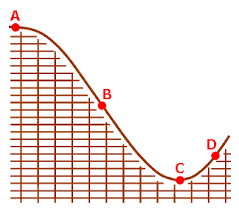
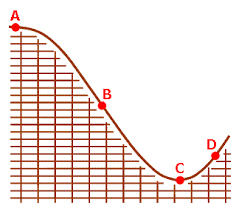
Select all: Work is equal to...
KE + PE
Change in energy
mg
Fd
Bobby lifts a book to the second floor in 20 seconds. Carol lifts the same book to the second floor in 10 seconds. Who did more work?
Bobby
Carol
They did the same amount of work
Not enough information
A girl weighs 400 N. She runs up a flight of stairs of height 5 m in 4 seconds. Her power is:
320 W
400 W
500 W
2 000 W


How much gravitational potential energy does a 100kg (220lb.) skydiver have if they jump from 4000 meters?
3920000 J
294 J
180000 J
1225 J

A 6kg cat misjudges a jump and falls 5 meters. How much gravitational potential energy does the cat have? (The cat is fine by the way.)
294 J
180000 J
1225 J
3920000 J

What is the kinetic energy of a 1,600kg Mustang travelling at 15 m/s (33mph)
180000 J
294 J
1225 J
3920000 J

A 50kg (100lb) person is running at 7m/s (about 16 mph). How much kinetic energy do they have?
1225 J
180000 J
294 J
3920000 J

What is the unit for mass?
kilogram (kg)
meter (m)
Newton (N)
Joule (J)

What is the unit for distance?
kilogram (kg)
meter (m)
Newton (N)
Joule (J)

What is the unit for force?
kilogram (kg)
meter (m)
Newton (N)
Joule (J)

What is the unit for energy?
kilogram (kg)
meter (m)
Newton (N)
Joule (J)

What is the formula for speed?
distance / time
mass x acceleration
velocity / time
½(mass) x (velocity)2
(mass) x (acceleration of gravity) x (height)

What is the formula for force?
distance / time
mass x acceleration
velocity / time
½(mass) x (velocity)2
(mass) x (acceleration of gravity) x (height)

What is the formula for acceleration?
distance / time
mass x acceleration
velocity / time
½(mass) x (velocity)2
(mass) x (acceleration of gravity) x (height)

What is the formula for kinetic energy?
distance / time
mass x acceleration
velocity / time
½(mass) x (velocity)2
(mass) x (acceleration of gravity) x (height)

What is the formula for gravitational potential energy?
distance / time
mass x acceleration
velocity / time
½(mass) x (velocity)2
(mass) x (acceleration of gravity) x (height)

A 2kg television falls from 1 meter. How much energy does it have?
19.6 J
196 J
2 J
9.8J

In what math subject does The Golden ratio appear frequently?
Differential Equation
Trigonometry
Calculus
Physics Geometry

. The golden ratio is claimed to appear in many fields, such as cosmology, theology, arts, architecture, botany and others.
True
False
Which of the following is the symbol for Golden Ratio?
Σ (Sigma)
ϕ (Phi)
π (Pi)
µ (Mu)


Choose all of the ratios equivalent to 6:4:8
3:2:4
9:6:12
1.5:1:2
12:8:16
Determine if the pair of ratios or rates are equivalent.
18 vocabulary words learned in 2 hours; 27 vocabulary words learned in 3 hours
Yes
No
Determine if the pair of ratios or rates are equivalent.
78 correct answers out of 100 test questions; 39 correct answers out of 50 test questions
Yes
No
Fibonacci Sequence Looks Like
1,1,2,3,5,13
0,1,2,3,4,5,6,7
0,1,1,2,3,5,8,13
1,2,4,6,8
Formula of Fibonacci sequence
xn=xn-1+xn-2
xn
xn-x-1
xn-1xn-1
Examples of Fibonacci Sequence
Pencil
Human Anatomy
Parthenon
Both B and C

Leonardo Fibonacci is from:
Pisa, Italy
Berlin, Germany
Rome, Italy
Paris France
Which of these is an Example of Fibonacci sequence in nature
Galaxies
The Flowers Petals
Rock
Grass
The Golden Ratio is approximately
1.618
0.618
3.14
None of the above
Around what Year was he born
1175
1999
1350
1340
What Number system did he popularize
Roman Numerals
Hindu-Arabic
Russian-Chinese
North-South American

