wayground logo

Free Printable Worksheets

Font size

S
M
L
XL
Worksheets

2022 Chemistry Final Study Guide

Total questions: 93

Worksheet time: 23hrs 15mins

Name
Class
Date
1.

Substances to the left of the arrow are called ...

a)

reactants

b)

products

c)

elements

d)

yields

2.

What is the type of reaction shown by this equation?

a)

synthesis

b)

single displacement

c)

combustion

d)

decomposition

3.

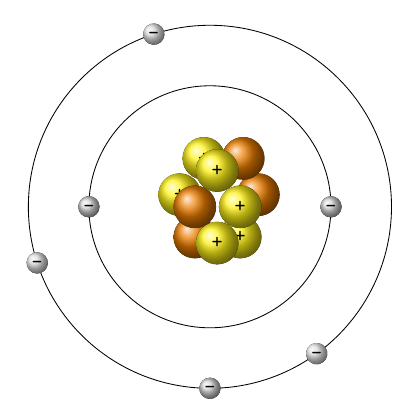
What element is shown by this electron configuration?

a)

sodium

b)

chlorine

c)

sulfur

d)

berrylium

4.

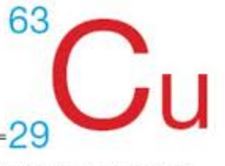
How many valence electrons are represented here?

a)

4

b)

6

c)

2

d)

8

5.

Which element does this model represent?

a)

berryllium

b)

carbon

c)

boron

d)

nitrogen

6.

Which of the following are neutral?

a)

molecule

b)

ion

c)

polyatomic ion

d)

electron

7.

The law of conservation of matter states ...

a)

that we cannot predict the exact velocity or location of an electron.

b)

that matter is neither created nor destroyed.

c)

that electrons fill from the lowest energy level to the highest.

d)

that electrons do not pair up until they have to.

8.
Which of the following shows the correct way to balance the chemical equation?
Fe + O2 -> Fe2O3
a)
4Fe + 3O2 -> 2Fe2O3
b)
2 Fe + 3O2 -> Fe2O6
c)
4 Fe + O6 -> 2Fe2O3
d)
None of the options are correctly balanced.
9.

What is the formula for diphosphorus pentoxide?

a)

P2O5

b)

PO5

c)

P5O2

d)

Po2O5

10.
What is the formula for Hydrosulfuric Acid?
a)
H2(SO3)
b)
H2S
c)
H2(SO2)
d)
H2(SO4)
11.

The number of significant figures in the measurement 0.00580 km is ___.

a)

6

b)

3

c)

5

d)

2

12.

A crayon has a mass of 10.0 g and volume of 5.0 mL. What is the density?

a)

30 g/mL

b)

15 g/mL

c)

1.0 g/mL

d)

2.o g/mL

13.

In an electron configuration, what follows 4s?

a)

4p

b)

3d

c)

4s

d)

2f

14.

The formula for Nickel (II) Oxide is...

a)

Ni2O2

b)

NiO2

c)

NiO

d)

Ni2O

15.
Elements in a ..................have similar chemical properties.  
a)
period
b)
group
c)
row
16.
Which subatomic particle has a positive (+) charge?
a)
Neutron
b)
Proton
c)
Electron
17.
Which subatomic particle has a negative (-) charge?
a)
Proton
b)
Electron
c)
Neutron
18.
Which subatomic particle has a neutral or no charge?
a)
Proton
b)
Electron
c)
Neutron
19.
Where is the nucleus located in an atom?
a)
Near the electron shells/levels
b)
Near the center of an atom
20.
Which two subatomic particles make up the nucleus of an atom?
a)
Protons and Electrons
b)
Neutrons and Electrons
c)
Electrons and Protons
d)
Protons and Neutrons
21.
Where are the Electrons found in the structure of an atom?
a)
In the nucleus
b)
In spaces around the nucleus
22.
The subatomic particles in blue are...
a)
Neutrons
b)
Protons
c)
Electrons
23.
The subatomic particles in green are...
a)
Protons
b)
Neutrons
c)
Electrons
24.
The subatomic particles in red are
a)
Electrons
b)
Neutrons
c)
Protons
25.
How many protons does this atom have?
a)
3
b)
6
c)
4
d)
2
26.
How is carbon-12 different from carbon-14?
a)
They have a different number of protons
b)
they have a different number of electrons
c)
they have a different number of neutrons
d)
they are different elements
27.
An atom becomes _______ when it loses electrons.
a)
Positive
b)
Negative
c)
Neutral
d)
Invinsible
28.
An atom becomes _________ when it gains electrons.
a)
Positive
b)
Negative
c)
Neutral
d)
Invinsible
29.
Cations are...
a)
Positive
b)
Negative
c)
Neutral
d)
Purring
30.
Anions are...
a)
Positive
b)
Negative
c)
Neutral
d)
Crying
31.
Why are ions formed?
a)
To make our lives difficult
b)
Because atoms want 8 valence electrons
c)
Because atoms have the same number of protons and electrons
d)
Because atoms gained neutrons
32.
What is an ion?
a)
A Charged Atom
b)
A Large Atom
c)
A Small Atom
d)
A Cute Atom
33.
Which element has the smaller atomic radius: potassium (K) or bromine (Br)?
a)
potassium (K)
b)
bromine (Br)
34.
Which element has the greatest ionization energy: Aluminum (Al)    or    Chlorine (Cl)?
a)
Aluminum (Al)
b)
Chlorine (Cl)
35.
Which element has the greatest electronegativity: Nitrogen (N) or Arsenic (As)?
a)
Nitrogen (N)
b)
Arsenic (As)
36.
As you move down a group, atomic radius increases because - 
a)
you add more and more neutrons
b)
you add more and more protons
c)
you add more and more shells (energy levels)
d)
you add more atomic mass
37.
The atom with the largest atomic radius in Group 18 is - 
a)
Ar
b)
He
c)
Kr
d)
Rn
38.
As you move across the periodic table atoms tend to get smaller because, ______________.
a)
the atoms have more mass.
b)
the atoms have less mass
c)
the atoms have more protons.
d)
the atoms have less electrons.
39.

What group is the family found? These halides are very reactive and almost have full outer energy level/shell.

a)

1

b)

2

c)

16

d)

17

40.
Which element is not in the Alkali metal family?
a)
Li
b)
H
c)
Fr
d)
Cs 
41.
Argon (Ar)
a)
alkali metal
b)
alkaline earth metal
c)
halogen
d)
noble gas
42.

The reason that Noble Gases do not react is because

a)

Their outer electron shell is filled

b)

Their inner electron shell is filled

c)

They are able to bond to fill their outer shell

d)

None of the above, Noble Gases are highly reactive
43.
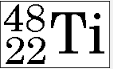
How many protons does this isotope of titanium have?
a)
48
b)
22
c)
26
d)
70
44.
How many neutrons does the isotope of lithium have?
a)
8
b)
3
c)
4
d)
5
45.
How many electrons does a Copper atom have?
a)
63
b)
29
c)
92
d)
34
46.

12 protons, 10 electrons, 12 neutrons

a)

24Mg2^{24}Mg^{-2}

b)

24Cr+2^{24}Cr^{+2}

c)

24Cr2^{24}Cr^{-2}

d)

24Mg+2^{24}Mg^{+2}

47.

Which letter represents the element's name?

a)

a

b)

b

c)

c

d)

d

48.

Which letter represents the element's atomic number?

a)

a

b)

b

c)

c

d)

d

49.

Which letter represents the element's atomic mass?

a)

a

b)

b

c)

c

d)

d

50.

Which letter represents the element's symbol?

a)

a

b)

b

c)

c

d)

d

51.

Which subatomic particle determines an atom's identity?

a)

Proton

b)

Neutron

c)

Electron

d)

Nucleus

52.

How are elements organized in the Periodic Table?

a)

Elements are ordered by atomic weight

b)

Elements are ordered by atomic number

c)

Elements are arranged alphabetically

d)

Elements are grouped color

53.

The vertical (up and down) columns in the Periodic Table are called

a)

groups

b)

towers

c)

periods

d)

atomic numbers

54.

A row on the Periodic Table of Elements

a)

family

b)

period

c)

row

d)

isotope

55.

Periodic law states that the elements are arranged according to their atomic ________ so that elements with similar chemical properties are in the same ________ and properties repeat periodically.

a)

numbers, rows

b)

masses, rows

c)

masses, column

d)

numbers, column

56.
Elements in the same column of the periodic table always have the same # of _______ as one another.
a)
Protons
b)
Neutrons
c)
Electrons
d)
Valence Electrons
57.

One mole of sulfur (S) is equal to home many atoms?

a)

32 atoms

b)

16 atoms

c)

1.20 x 10²³ atoms

d)

6.022 x 10²³ atoms

58.

5.11 x 10²³ atoms of lithium (Li) is equal to how many moles?

a)

1.18 moles

b)

0.351 moles

c)

1.34 moles

d)

0.849 moles

59.

0.75 mole of copper (Cu) is equal to how many atoms?

a)

8.03 x 10²³ atoms

b)

6.02 x 10²³ atoms

c)

4.51 x 10²³ atoms

d)

3.11 x 10²³ atoms

60.
What is the molar mass of table salt (NaCl)?
a)
116.886 g/mol
b)
35.453 g/mol
c)
22.990 g/mol
d)
58.443 g/mol
61.
What is the molar mass of CO2?
a)
12
b)
16
c)
32
d)
44
62.

What is the percent by mass of Cu in CuBr2?

a)

50%

b)

71.6%

c)

28.4%

d)

44.3%

63.

What is the percent by mass of Na in NaOH?

a)

40%

b)

2.5%

c)

22.9%

d)

57.5%

64.

What is the empirical formula for C4H6?

a)

CH

b)

CH3

c)

C2H3

d)

C4H6

65.

C2F6

Choose the correct empirical formula...

a)

CF

b)

C2F6

c)

C6F2

d)

CF3

66.

What is the molecular formula for a compound with the empirical formula: K2SO4 and a molecular mass of 696g.

a)

K2SO4

b)

K8SO16

c)

K8S4O8

d)

K8S4O16

67.

What is the molecular formula if the empirical formula is CH2O and the molecular molar mass is 180.18?

a)

CH2O

b)

C2H4O2

c)

C4H8O4

d)

C6H12O6

68.

Which has the greater electronegativity:  N or C?

a)
C
b)
N
69.
Electronegativity is...
a)
how good an atom is at attracting electrons
b)
the ability of an atom to lose electrons
c)
the energy required to remove an electron from a specific atom
d)
how easy it is to make friends. 
70.
The element with the largest electronegativity in the halogens is - 
a)
At
b)
F
c)
Cl
d)
Br
71.
2Al + 3H2SO4 -> Al2(SO4)3 + 3H2
How many grams of aluminum sulfate would be formed if 250g H2SO4 completely reacted with aluminum?
a)
0.85 g
b)
290 g
c)
450 g
d)
870 g
72.
For the reaction represented by the equation Cl2 + 2KBr → Br2 + 2KCl, how many grams of potassium chloride can be produced from 356 grams potassium bromide?
a)
749 g
b)
225 g
c)
479 g
d)
814 g
73.
Use the equation 2 Al + 3 Cl2 ---> 2 AlCl3.  If 2 moles of aluminum and 2 moles of chlorine are reacted, identify the limiting reactant.
a)
AlCl3
b)
Cl2
c)
Al
74.
What is the limiting reactant if 10 moles of NH3  react  with 30.0 moles of NO?
4NH3+6NO --> 5N2 + 6H2O
a)
NH3
b)
NO
c)
N2
d)
water
75.

If I initially have 4.0 L of a gas at a pressure of 1.1 atm, what will the volume be if I increase the pressure to 3.4 atm?

a)

1.29 L

b)

12.36 L

c)

1.29 atm

d)

12.36 atm

76.

If I have 5.6 liters of gas in a piston at a pressure of 1.5 atm and compress the gas until its volume is 4.8 L, what will the new pressure inside the piston be?

a)

1.8 atm

b)

3.27 atm

c)

1.8 L

d)

3.27 atm

77.

I’ve got a car with an internal volume of 12,000 L. If I drive my car into the river and it implodes, what will be the volume of the gas when the pressure goes from 1.0 atm to 1.4 atm?

a)

8571.43 L

b)

3210.26 L

c)

8669.0 atm

d)

3905.33 atm

78.

2Fe2O3 + C → Fe + 3CO2

You add 28 grams of carbon. You find the actual yield to be 181.2 grams of CO2. What is the percent yield of CO2? (Hint: calculate theoretical yield of CO2 first)

a)

58.83%

b)

308%

c)

6435%

d)

15.5

79.

When reacting Na with Cl2, we calculated that the theoretical yield should be 13 grams. Our actual yield was 12.5 grams. What is the percent yield?

a)

90.4%

b)

104%

c)

96.15%

d)

1.04%

80.
Theoretical yield = 73g
Actual yield = 62g
Calculate the percent yield.
a)
1.16%
b)
116%
c)
85%
d)
76%
81.
P+ 6Cl--> 4PCl
The reaction of 75.0g P4 with excess chlorine gas produces 110g PClin lab. Find the theoretical yield and calculate percent yield for the reaction. 
a)
78%
b)
64%
c)
27%
d)
33%
82.

2Al + 6HCl --> 2AlCl3 + 3H2

Aluminium reacts with hydrochloric acid. How many grams of aluminum are necessary to produce 11 L of hydrogen gas at STP?

a)

13

b)

8.8

c)

0.99

d)

1.0

83.

1Mg + 2H2O --> Mg(OH)2 + H2

What volume of hydrogen will be produced at STP by the reaction 67.3 g of magnesium?

a)

62.0 L

b)

0.12 L

c)

2.77 L

d)

1.15 L

84.
Calculate the volume that a 0.323-mol sample of a gas will occupy at 265 K and a pressure of 0.900 atm.
a)
7.18 L 
b)
7.81 L
c)
4.63 L
d)
4.36 L
85.
Determine the Kelvin temperature required for 0.0470 mol of gas to fill a balloon to 1.20 L under .998 atm pressure. 
a)
0 K 
b)
107 K 
c)
207 K 
d)
307 K 
86.
Ammonium
a)
NH4+
b)
NO3-
c)
NO2-
d)
MnO4-
87.
Which of the following is nitrate?
a)
NO-
b)
NO2-
c)
NO3-
d)
NO4-
88.
Carbonate
a)
Cr2O4-2
b)
CH3COO-
c)
CO3-2
d)
CN-
89.
Hydroxide
a)
Cr2O4-2
b)
Cr2O4-2
c)
O3-2
d)
OH-
90.
Permanganate
a)
NH4+
b)
NO2-
c)
NO3-
d)
MnO4-
91.
Phosphate
a)
PO4-3
b)
O2-2
c)
OH-
d)
CO3-2
92.
Sulfate
a)
S2O3-2
b)
O2-2
c)
SO4-2
d)
SO3-2
93.
A gas that has a pressure of 2 atm and a volume of 10 L.  What would be the new volume if the pressure was changed to 1 atm?
a)
P1/T1 = P2/T2
b)
P1V1 = P2V2
c)
V1/n1 = V2/n2
d)
PV = nRT