
 Worksheets
VSEPR Practice
Total questions: 88
Worksheet time: 1hrs 20mins
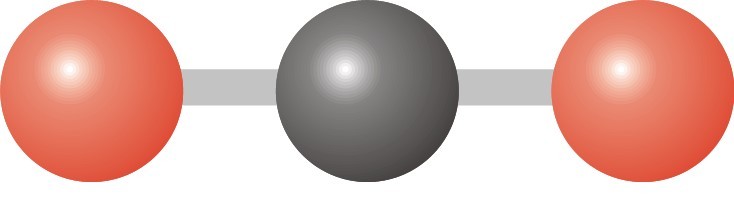
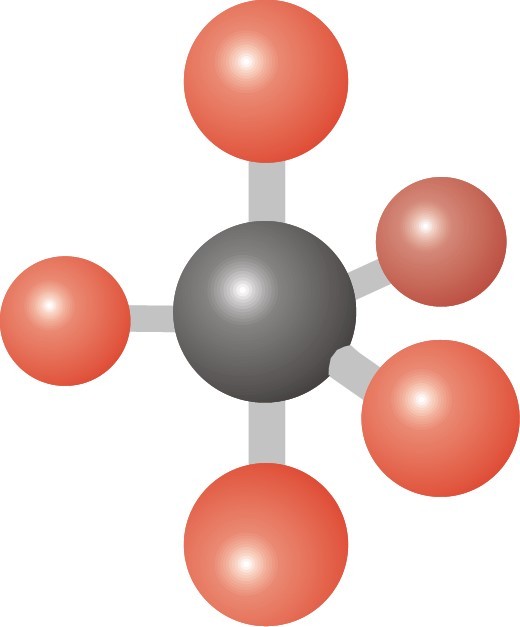
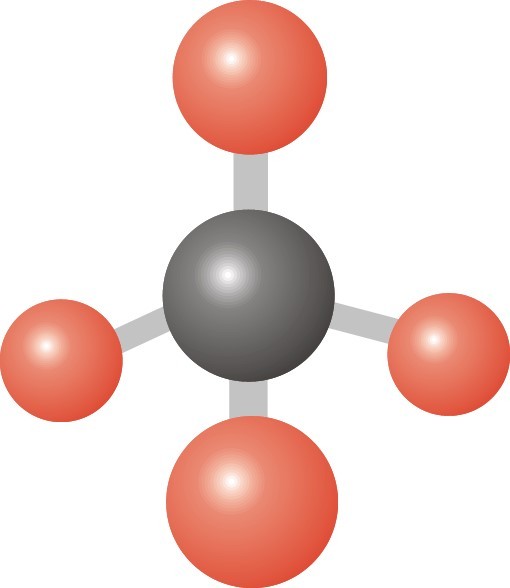
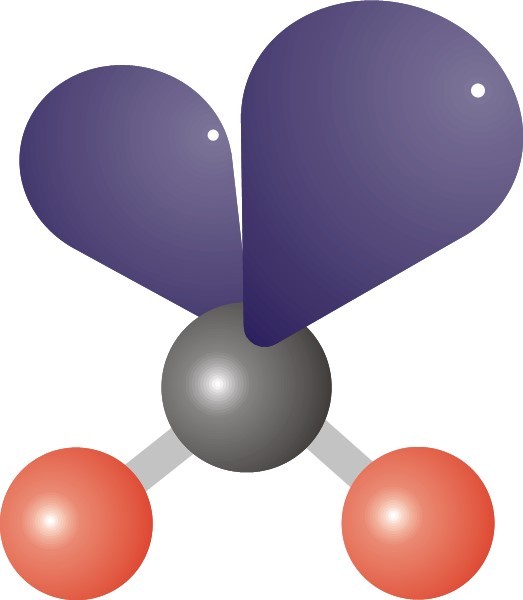
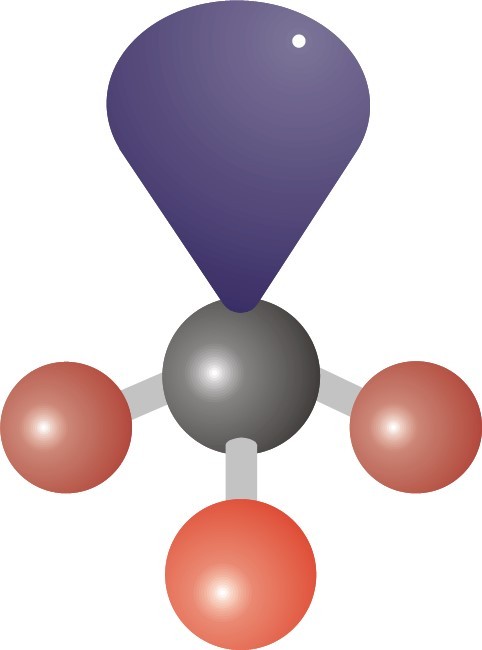
3 atoms bonded and 0 lone pairs
linear
trigonal planar
bent
tetrahedral
trigonal pyramidal



What is the molecular shape of a molecule with 3 bonded atoms and 2 lone pairs?
T-Shape
Trigonal Bipyramid
See-Saw
Square Planar
What is the molecular shape of a molecule with 5 bonded atoms and 1 lone pair?
Octahedral
Pentagon
Square Pyramid
Square Planar
What is the Polarity of BrF2-?
Polar
Non-Polar
What the polarity of IF5?
Polar
Non-Polar
What is the Molecular Shape of ICl3?
Square Planar
See-Saw
T-Shape
Square Pyramid

Which type of IMF is responsible for the attraction pictured above?
Dipole-Dipole Interaction
Ion-Dipole Interaction
Hydrogen Bonds
Covalent Bond
Ionic Bond

Which type of IMF is responsible for the attraction pictured above?
Dipole-Dipole Interaction
Ion-Dipole Interaction
Hydrogen Bonds
Covalent Bond
Ionic Bond

Which type of IMF is responsible for the attraction pictured above?
Dipole-Dipole Interaction
Ion-Dipole Interaction
Hydrogen Bonds
Covalent Bond
Ionic Bond
Intermolecular forces are attractions between ______.
Cations and anions
Atoms within a molecule
Neighboring molecules
Protons and electrons

For which of the following would hydrogen bonding occur between molecules?


The electrons in a polar covalent molecule are shared...
Evenly
Unevenly
Electrons are not shared
None of the Above
The electrons in a nonpolar covalent molecule are shared...
Evenly
Unevenly
Electrons are not shared
None of the Above
The electrons in an ionic molecule are shared...
Evenly
Unevenly
Electrons are not shared
None of the Above
In a polar covalent bond, the electrons gather around...
The atom with the Greatest Electronegativity
The atom with the Lowest Electronegativity
Each atom Equally
None of the Above
In a nonpolar covalent bond, the electrons gather around...
The atom with the Greatest Electronegativity
The atom with the Lowest Electronegativity
Each atom Equally
None of the Above
Partial charges are present in which type of bond?
Ionic
Nonpolar Covalent
Polar Covalent
Both Polar Covalent and Ionic
A diatomic molecule like O2 is always _____ because electrons are shared _____
nonpolar; unequally
polar; equally
nonpolar; equally
polar; unequally
How many unshared pairs of electrons will a bent molecule have?
0
2
3
4
Does the following reference Polar, Nonpolar, or both:
"equal sharing of electrons"?
Polar
Nonpolar
Both
Does the following reference Polar, Nonpolar, or both:
"affected by an electrical charge"?
Polar
Nonpolar
Both


Is this molecule polar or non-polar?
Polar
Non-polar

Is this molecule polar or non-polar?
Polar
Non-polar

Is this molecule polar or non-polar?
Non-polar
Polar

Is this molecule polar or non-polar?
Non-polar
Polar

Is this molecule polar or non-polar?
Polar
Non-polar


What VSEPR structure is this?
Trigonal Pyrimidal
Trigonal Planar
Tetrahedral
Bent
Which VSEPR shape is trigonal pyramidal?


Which VSEPR shape is trigonal planar?
Which VSEPR shape is bent?
Match the following formulas to the shape it will make:
HCl
linear
H2S
bent
BBr3
trigonal planar
PBr3
trigonal pyramid
CCl4
tetrahedral
Draw the Lewis Dot Diagram for SiH4:

Draw the Lewis Dot Diagram for AsF3:
The only difference between trigonal planar and trigonal pyramid is that the pyramid has (a) .
Draw the Lewis Dot Diagram for BCl3:
Draw the Lewis Dot Diagram for H2Se:
Draw the Lewis Dot Diagram for SiS2:
Draw the Lewis Dot Diagram for H2:
Fluorine has (a) valence electrons so it will make (b) bond(s). Sulfur has (c) valence electrons so it will make (d) bond(s). Boron has 3 valence electrons so it will make (e) bond(s).
Cl2 will form a (a) shape. H2Te will form a (b) shape. BF3 will form a (c) shape. SbCl3 will form a (d) shape. SiI4 (silicon & iodine) will form a (e) shape.
What is the molecular geometry/shape of HCN?
linear
trigonal planar
bent
tetrahedral

Which of these is the shape of CCl4?


Which of these is the shape of BF3?
Which of these is the shape of NH3?
Which of these is the shape of CO2?

