
 Worksheets
Stellar Astronomy Unit Summative - May, 2022
Total questions: 62
Worksheet time: 2hrs 4mins

What are the two most abundant elements in a main sequence star?
a) carbon and hydrogen
b) hydrogen and helium
c) helium and carbon
d) carbon and heavy metals

The life cycle path followed by a star is determined by the star’s initial:
a) mass & size
b) temperature & origin
c) luminosity & color
d) luminosity & structure

Which factor determines a star’s absolute magnitude (luminosity)?
a) The star’s temperature
b) The star’s distance
c) The star’s shape
d) b & c

What is the Sun’s luminosity?
1
102
-102
105

Gamma rays, X-rays, visible light, and radio waves are all types of
Nuclear energy
Ultraviolet radiation
Low energy waves
Electromagnetic energy/radiation

The unit used to measure Earth’s average distance from the Sun is called:
A kepler
A light year
An Earth year
An Astronomical Unit (AU)

The distance between stars is measured in
light years (ly).
nuclear fusion.
dark energy.
astronomical units (AU).

Our Sun is considered average because its temperature and absolute magnitude place it near the center in the ____ _________ of the H-R diagram.
white dwarf
red giant
main sequence
supergiant

The Hertzsprung-Russell diagram shows that main-sequence stars
are mostly hot and dim.
are mostly cool and bright.
increase in brightness as they increase in temperature.
decrease in brightness as they increase in temperature.

Look at the diagram: According to the HR diagram, what is the approximate absolute magnitude of Rigel?
0
+1
-2
-5

Look at the diagram: Compared to our Sun, Alpha Centauri A would be
hotter and brighter
cooler and brighter
hotter and dimmer
cooler and dimmer

Look at the diagram: The North Star (Polaris) is described best as
a yellow, bright star at 6000 K
a white, dim star at 5800 K
a bright yellow supergiant at 6000 K
a yellow main sequence star at 5800 K

The diagram below shows the types of electromagnetic energy given off by the Sun. The shaded part of the diagram shows the approximate amount of each type actually reaching Earth’s surface. Which conclusion is best supported by the diagram?
a) All types of electromagnetic energy reach Earth’s surface.
b) Gamma rays and x-rays make up the greatest amount of electromagnetic energy reaching Earth’s surface.
c) Visible light makes up the greatest amount of electromagnetic energy reaching Earth’s surface.
d) Ultraviolet and infrared radiation make up the greatest amount of electromagnetic energy reaching Earth’s surface.

On the list below, which type of radiation has the shortest wavelength?
a) radar
b) ultraviolet
c) visible light
d) infrared
Which statement about electromagnetic energy is correct?
a) Violet light has a longer wavelength than red light.
b) X-rays have a longer wavelength than infrared waves
c) Radar waves have a shorter wavelength than ultraviolet rays
d) Gamma rays have a shorter wavelength than visible light

What is the name of the cloud that a star is formed in?
Nebula / Stellar Nursery
Supernova
Main Sequence
Dwarf

When a Red Giant runs out of fuel, it becomes a….
Supernova
Nebula
White Dwarf
Main Sequence Star

What is fusion?
It is the measure of brightness of a star.
The process of merging atoms together to create energy.
It is the process of analyzing stars for what atoms they contain.
It is a description of how massive a star is.

What is a supernova?
The measure of brightness of a star.
Something that only low mass stars can do.
A star that explodes, creating a great amount of light and energy.

A neutron star is
One possible end phase of a massive star.
A star made up of only protons.
The type of star you have before it turns into a supergiant.

What determines if a star becomes a giant or a supergiant?
star's initial mass
star's temperature
star's color
star's luminosity


The color of a star tells us its
magnitude
temperature
size
age

An astronomer collects data on a star that indicates it has a very high luminosity (100,000 times that of our Sun) but has a temperature that is cooler than the Sun. What can you conclude about this observation?
a) It could be a main sequence star.
b) It may be very large (a red supergiant).
c) This is a typical characteristic of stars.
d) There must be an error in measurement.
What factor below usually determines whether a star is currently on the main sequence of the H-R Diagram?
a) age (where star is in its stellar evolution or life)
b) elements in composition (what the star is made of)
c) frequency of starquakes
d) distance from our Sun

What process produces the Sun’s energy?
solar flares
electromagnetic waves
nuclear fusion in the Sun’s core
nuclear fission on the Sun’s surface
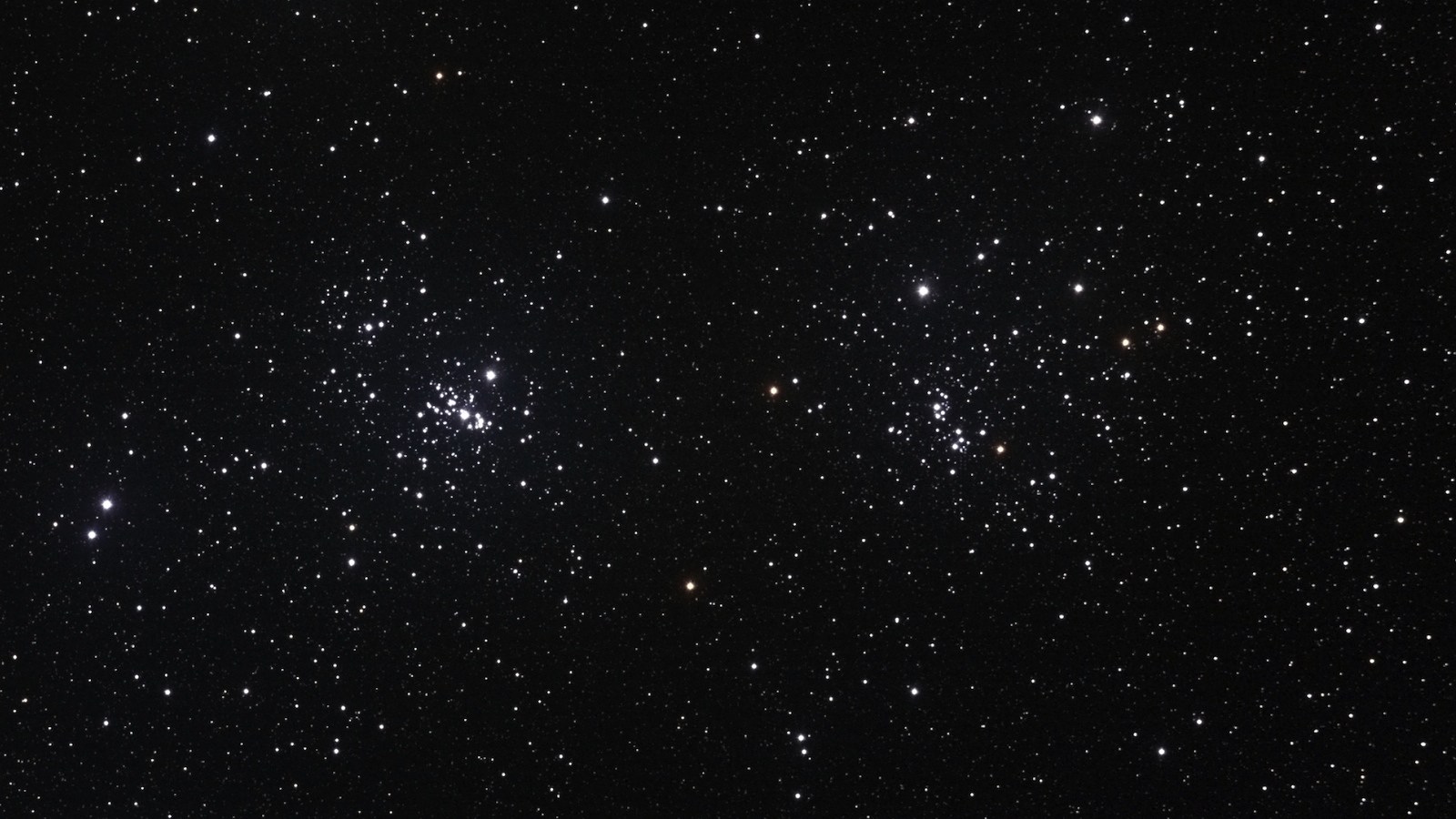
Why do other stars appear so much smaller than the Sun?


Why does the Sun look small in the sky to us?

Constellations are stars that appear to be in a pattern.
All stars on the main sequence are middle aged. That is, they are fusing ________ into ________ in their cores.
How did the matter and elements we have on Earth get here?
What is the relationship between the size of a star and its lifetime?
Why won't our Sun ever become a black hole?
A meteorite is DIFFERENT from a meteoroid mainly because it
has a tail of ice and gas.
is found in orbit between Jupiter and Mars.
hits or strikes the Earth.
has a nucleus made of rock and snow.

These objects have a hydrogen cloud, coma, and a nucleus and are almost invisible except when their obits take them near the Sun. ________ are sometimes called "dirty snowballs".
Asteroids
Stars
Meteors
Comets
_________ and _________ are composed mainly of rock and metal.
A rock entering a planet's atmosphere is a _______, which may also be called a “shooting star.”
Which of the following does the radiation from a star tell us?
moving toward (blue shift) or away (red shift)


It isn't a star, it is a comet.

If something that makes light or sound is moving away from you, it spreads the wavelengths out. This application of the Doppler effect is known as ___.
blue shift
green shift
red shift
black shift
A date that is usually accepted for the Big Bang is ____ years ago.
100,000
250 million
13.7 billion
Ten trillion
Most distant galaxies show a red shift. This is considered evidence that the universe is ___.
getting cooler
expanding
condensing into a small point
swirling around
Big Bang theorists believe that there should be energy left over from the Big Bang, and it should be in the form of ___.
low level microwave energy
extreme heat
a swirling vortex
visible light

How does Cosmic Microwave Background Radiation support the Big Band Theory?
Microwaves are found everywhere in the universe.
Microwaves occurred at the time of the Big Bang
Microwaves are useful in our everyday lives
Only A & B

What is the name of the galaxy in which Earth is located?
Big Band
Milky Way
Mars
Universe
What type of galaxy is the Milky Way galaxy?


Which of the following statements best describes a galaxy?
A system of planets with an elliptical orbit
A giant nuclear reactor held together by gravity
A cloud that produces stars
A system of gas, dust and billions of stars held together by gravity

What unit of length is equal to the distance that light travels through space in one year?
light year
speed of light
galaxy
solar mass

A light year is a measurement of
time
distance
temperature
mass
What are the TWO factors working against each other that will determine how the universe ends?
Gravity
expansion rate (less mass in a given volume of space as acceleration of the explosion continues)
Antimatter
Nuclear fusion
One possible end of the universe: Similar to overstretched rubber band, the universe continues to expand until it suddenly snaps back to its original singularity point. Crushing everything to an infinitesimally small space, it possibly causes a new big bang .and the cycle begins again.
Big Rip
Big Crunch
Big Freeze
One possible end of the Universe: The universe stops expanding at an accelerating rate but doesn’t contract or expands at a constant non accelerating rate. Slowly, all energy is converted to heat; there are no more useful energy conversions, and the universe freezes to death.
Big Rip
Big Crunch
Big Freeze

What is the "Big Rip"?
An hypothesis that the universe will end when every atom in Universe will be ripped apart like an exploded balloon.
Our local group of our stars will explode in a series of supernovas.
Black holes eat the entire Universe

When you use a telescope to look out into space across vast distances, you are actually looking ….
at the blue shift of elements that make up all stars.
at the Sun’s twin Nemesis.
forward into the future.
back through time.

