wayground logo

Free Printable Worksheets

Font size

S
M
L
XL
Worksheets

Semester 2 Finals Review

Total questions: 90

Worksheet time: 2hrs 15mins

Name
Class
Date
1.
The momentum of an object depends upon the object's ___________&_____________.  
a)
size and shape
b)
mass and speed
c)
mass and veloctiy
d)
mass and energy
2.
Determine the momentum of 1000-kg car moving northward at 20 m/s......... 
a)
20000 N
b)
20000 Joules
c)
20000 Kg * m/s
d)
20000 kg * m/s north
3.
The definition of momentum is
a)
Mass in Motion
b)
The size of an object
c)
The velocity of an object
d)
A comparison between two objects
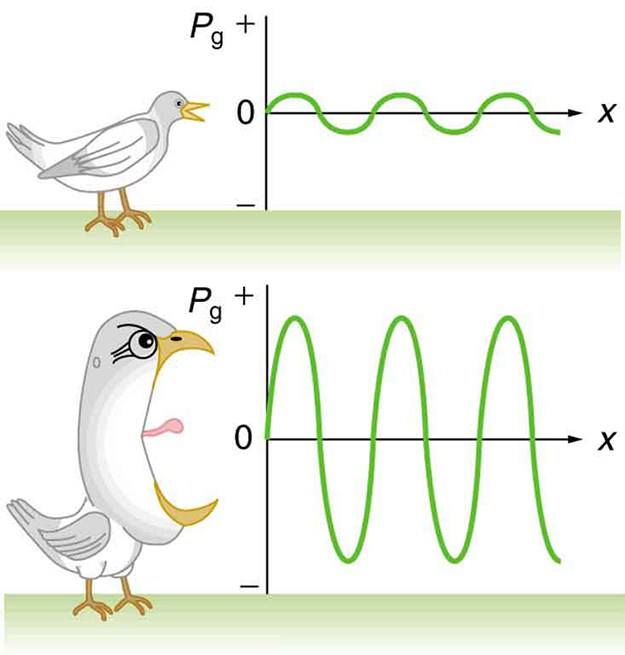
4.
The equation to calculate momentum is
a)
p=mv
b)
p=1/2mv2
c)
p=mgh
d)
p=mg
5.
In any collision (crash) the ______ is ALWAYS constant
a)
Total Momentum
b)
total speed
c)
total Velocity
d)
Energy
6.
A 9 kg blob moving at 5 m/s collides and sticks to a second blob with a mass of 5 kg. If the two bobs stick together, what will the velocity of the two blobs move at?
a)
3.57 m/s
b)
3.2 m/s
c)
10.0  m/s
d)
9.0  m/s
7.

A 9300 kg railroad car traveling at a velocity of 5 m/s strikes a second boxcar that weighs 5000 kg at rest. If the 9300 kg car comes to a stop, what speed will the second boxcar move?

a)
18.6 m/s
b)
9.3 m/s
c)
7.5 m/s
d)
1.86 m/s
8.
A runner has a momentum of 720 kg m/s and is traveling at a velocity of 5 m/s. What is his mass?
a)
14.4 kg
b)
1400 kg
c)
144 kg
d)
360 kg
9.
When the speed of an object is doubled, its momentum
a)
remains unchanged in accord with the conservation of momentum.
b)
doubles
c)
quadruples
d)
decreases
10.
Most modern vehicles have padded dashboards. This reduces collision injuries by...
a)
reducing the driver's change in momentum
b)
increasing the driver's change in momentum
c)
increasing the force of impact
d)
increasing the time of impact
11.

In an elastic collision, ______ is conserved.

a)

Momentum only

b)

Kinetic Energy only

c)

Both momentum and energy

12.
A person on a stationary skateboard throws a bowling ball with a velocity of 5.0 m/s. What is a possible speed of the person after the throw? 
a)
0 m/s
b)
1.5 m/s
c)
5.0  m/s
d)
7.5 m/s
13.
What happens to the speed of the wagon as the rain collects inside of it?
a)
it decreases
b)
it remains constant
c)
it increases
14.
Both students experience the same ____
a)
force of impact
b)
time of impact
c)
change in momentum
d)
all of the above
15.

A 5 N force is applied to a 3 kg ball to slow it down from 9 m/s to 3 m/s. What is the impulse on the ball?

a)

-2.5 N⋅s

b)

-10 N⋅s

c)

-18 N⋅s

d)

-45 N⋅s

16.

The units for Impulse are

a)

kg

b)

NsN\cdot s

c)

N

d)

m/s

e)

kgmskg\cdot\frac{m}{s}

17.

What do all waves transfer?

a)

Matter

b)

Heat

c)

Electricity

d)

Energy

18.

What are the two types of waves?

a)

longitudinal and transverse

b)

sound and light

19.

What do all waves transfer?

a)

Matter

b)

Heat

c)

Electricity

d)

Energy

20.

Which of the following can waves transfer energy through?

a)

solid

b)

liquid

c)

gas

d)

empty space

e)

all of the above

21.

What are the two types of waves?

a)

longitudinal and transverse

b)

sound and light

22.

What is the number of complete waves passing a fixed point in a given amount of time?

a)

Amplitude

b)

Intensity

c)

Wavelength

d)

Frequency

23.

What is the frequency of this wave? You must count the number of complete waves.

a)

1 Hz

b)

5 Hz

c)

10 Hz

24.

What is frequency measured in?

a)

Milliseconds

b)

Miles

c)

Hertz

d)

Kilograms

25.

Period of a wave refers to...

a)

how long it takes for the event to repeat.

b)

how strong a wave is.

c)

how long a wave is.

d)

how much energy a wave has.

26.

Which type of waves have the longest wavelength?

a)

Visible light

b)

Radio waves

c)

X-rays

d)

Gamma-Rays

27.

Wavelengths are usually measured in ....

a)

seconds

b)

Hz

c)

inches

d)

meters

28.

Shorter wave lengths can carry more energy. Which of these probably carries the MOST energy:

a)

Infrared light

b)

Visible light

c)

X-rays

d)

UV light

29.

What is the distance between the calm sea and the highest wave called?

a)

Wave

b)

Frequency

c)

Amplitude

d)

Magnitude

30.

What does #1 represent?

a)

Period

b)

Frequency

c)

Wavelength

d)

Amplitude

31.

What does #2 represent?

a)

Period

b)

Frequency

c)

Wavelength

d)

Amplitude

32.

What does #3 represent?

a)

Period

b)

Frequency

c)

Wavelength

d)

Amplitude

33.

What do all waves transfer?

(a)  

34.
The highest point on a wave is:
a)
the crest
b)
the trough
c)
the top
d)
the coast 
35.
The type of waves that require medium to pass:
a)
Mechanical Waves
b)
Electromagnetic Waves
36.
What do waves carry from place to place?
a)
Energy, but not matter or particles
b)
Energy and matter or particles
c)
Matter or particles but not energy
d)
Neither energy nor matter or particles
37.
What are the parts of a longitudinal wave?
a)
Compressions and rarefactions
b)
Crests and troughs
c)
Compressions and crests
d)
Rarefactions and troughs
38.
Light is an example of which type of wave?
a)
Transverse
b)
Longitudinal
c)
Both
d)
Neither
39.

This wave is found in/on a

a)

String

b)

Bar or Open Tube

c)

Closed Tube

40.

This wave is found in/on a

a)

String

b)

Rod

c)

Open Tube

d)

Closed pipe

41.

This open end tube is in the

a)

1st harmonic

b)

2nd harmonic

c)

3rd harmonic

d)

4th harmonic

42.

This string is in the

a)

1st harmonic

b)

2nd harmonic

c)

3rd harmonic

d)

4th harmonic

43.
How many wavelengths are there on a string vibrating at its fundamental frequency?
a)
1/4
b)
1/2
c)
1
d)
2
44.
When a sound is louder what measurement gets bigger?
a)
Frequency 
b)
Amplitude 
c)
Wavelength 
d)
Crest
45.

This closed end tube is in the

a)

6th harmonic

b)

7th harmonic

c)

8th harmonic

d)

9th harmonic

46.

The pictured tube is 1.2 meters long. What is the wavelength of the wave inside?

a)

.6 m

b)

1.2 m

c)

1.6 m

47.

Which tube, if the same length, would have the lowest frequency?

a)
b)
c)
d)
48.

What is the speed of light?

a)

3.0x10⁸ ms

b)

3.0x10⁸ m/s

c)

6.626x10⁻³⁴ Js

d)

6.626x10⁻³⁴ J/s

49.

A wave with a large wavelength will have a ______ frequency and _____ energy

a)

high, low

b)

high, high

c)

low, high

d)

low, low

50.
One end of the rope is vibrated to produce a wave with a wavelength of .25 m.  The Frequency of the wave is 3.0 Hz.  What is the speed of the wave?
a)
3.00 m/s
b)
2.50 m/s
c)
.75 m/s
d)
1.25 m/s
51.
A tennis coach paces back and forth along the sideline 10 times in 2 minutes. The frequency of her pacing is 
a)
5 Hz
b)
5 s
c)
0.08 Hz
d)
0.08 s
52.
 A wave has frequency of 50 Hz and a wavelength of 10 m. What is the speed of the wave?
a)
500 m/s
b)
50 m/s
c)
5 m/s
d)
0.5 m/s
53.

A guitar string vibrates with a frequency of 320 hz. If the wavelength of the vibration is 0.23 meters what is the speed of the wave?

a)

320.23 m/s

b)

1391.3 hz

c)

73.6 m/hz

d)

73.6 m/s

54.
A period is
a)
Amount of time it takes a wavelength to complete one cycle.
b)
How many wave lengths happen in a second.
c)
An indication of the amount of energy in a wave.
d)
The distance between two crests or two troughs.
55.
During a physics lab, a plastic strip was rubbed with cotton and became positively charged. The correct explanation for why the plastic strip becomes positively charged is that ...
a)
the plastic strip acquired extra protons from the cotton.
b)
the plastic strip acquired extra protons from the charging process 
c)
protons were created as the result of the charging process
d)
the plastic strip lost electrons to the cotton during the charging process 
56.
Insulators are different than conductors in that insulators ____.
a)
do not contain electrons or protons 
b)
 do not contain any charge
c)
have a weaker affinity for electrons 
d)
do not allow charge to freely move 
57.
Consider the conduction charging shown. 
a)
Electrons move from the insulating stand into the sphere.
b)
Protons move from the bar into the sphere.
c)
Electrons move from the charged metal bar into the sphere.
d)
Protons move from the sphere into the negatively charged bar.
58.
 A balloon is rubbed against a student's hair and then touched to a wall. The balloon sticks to the wall due to
a)
magnetic forces between the particles of the balloon and the particles of the wall
b)
electrostatic forces between the particles of the balloon and the particles of the wall
c)
magnetic forces between the particles of the wall
d)
electrostatic forces between the particles of the balloon
59.
Two electrically charged identical-sized metal spheres, A (charge of -4) and B (charge of +8). If the spheres are brought into contact, which sphere will have a net gain of electrons?
a)
both A and B
b)
neither
c)
only A
d)
only B
60.
Electrostatic force F exists between two point charges. If the both charges are doubled, the force between the charges will be
a)
F
b)
4F
c)
2F
d)
F/4
61.

Which two particles are attracted to each other?

a)

Two neutrons

b)

A proton and an electron

c)

Two protons

d)

An electron and a neutron

62.
The Electric Force is strongest when charges are...
a)
close together
b)
far apart
c)
the electric force is constant everywhere
63.

Which is the value of the constant in Coulomb's equation?

a)

k = 9·10-9

b)

k = 9.8

c)

k = 6.67·10-11

d)

k = 9 ·109

64.
Find the magnitude of the force between two charges of 1.0 C each which are 1.0 meter apart?
a)
9E-9 N
b)
9E9 N
c)
1.1E10 N
d)
1.1E-10 N
65.

A 5 C and 8 C charge give off a force of 2.5 x 10⁹ N. What is the distance between them?

a)

11 m

b)

12 m

c)

121 m

d)

144 m

66.

Two charges of equal magnitude give off a force of -441000 N when they are 1000 m away from each other. What are the charges magnitude?

a)

5

b)

7

c)

9

d)

11

67.

Which of the following best explains an electric current?

a)

An electric current is the flow of positive charges in a circuit.

b)

An electric current is the flow of atoms in a circuit.

c)

An electric current is the flow of electrons in a circuit.

d)

An electric current is the flow of neutrons in a circuit.

68.

Which of the following statements is correct about electrical insulators?

a)

They do not contain any atoms.

b)

Their protons are not allowed to move about freely.

c)

The electrons are not able to move about freely.

d)

They are good at conducting heat only.

69.

Which of the following substances is the best conductor of electricity?

a)

Glass

b)

Wood

c)

Water

d)

Mercury

70.

A higher resistance in a circuit causes a _____________.

a)

higher voltage

b)

larger current

c)

smaller current

d)

lower voltage

71.

The instrument that measures electric current is called ___________.

a)

a resistor

b)

a voltmeter

c)

an ammeter

d)

an electrometer

72.

Is the image shown a series or a parallel circuit?

a)

series

b)

parallel

73.

Is the image shown the switch is closed, are the lights on or off?

a)

all lights are off

b)

all lights are on

74.

What will happen to the 2 magnets if they are released?

a)

attract

b)

repel

75.

Are the lights on in this circuit?

a)

yes, the lights are on

b)

no, the lights are off

76.

Which of the following would have a light bulb turned on?

a)

an open switch

b)

a closed switch

c)

a break in the wire

d)

a wire and a load only

77.

Copper wire, an iron nail, and a battery can be used to make an

(a)  

78.
What is the unit for resistance?
a)
Volts
b)
Amperes
c)
Ohms
79.
If the battery produced 12.6 Volts and what would be the current flow be for a 6 Ohm resistor
a)
2.1 Amps
b)
2.4 Amps
c)
1.71 Amps
d)
15 Amps
80.
What voltage is needed to cause a 2A current flow through a 10Ω resistor?
a)
5V
b)
0.2V
c)
20V
d)
200V
81.
Which type of current comes from a battery?
a)
alternating current (AC)
b)
direct current (DC)
82.

A 12 Volt car battery pushes charge through the headlight circuit resistance of 10 ohms. How much current is passing through the circuit?

a)

120 A

b)

1.2 A

c)

12 A

d)

0.834 A

83.
This is the symbol for a _____?
a)
switch
b)
light 
c)
battery
d)
wires
84.
This is the symbol for a _____?
a)
an AC current source
b)
a DC current source
c)
a battery
d)
a single cell
85.
This is the symbol for a _____?
a)
Lamp
b)
Water wheel
c)
Loudspeaker
d)
Motor
86.

Circuit which has 2Volts and 2Amperes in it.

Electric power?

P = I x V

a)

4

b)

6

c)

1

d)

0

87.

A circuit contains two resistors in series. One is 5ohms and the other 10 ohms. What is the total resistance of the circuit?

a)

5 ohms

b)

10 ohms

c)

15 ohms

88.

If the cell above has a potential difference of 8V, what is the potential difference across one bulb?

a)

8V

b)

4V

c)

16V

d)

2V

89.

If the cell in the circuit above has a potential difference of 8V, what is the potential difference across one of the bulbs?

a)

8V

b)

4V

c)

16V

d)

2V

90.

Look at figure 4. Ammeter A2 and A3 read the same value at 0.4Amps. What is the reading on Ammeter A1?

a)

0.4A

b)

0.2A

c)

0.8A