Wayground logo

Free Printable Worksheets

Font size

S
M
L
XL
Worksheets

Biology Finals Semester 2

Total questions: 60

Worksheet time: 2hrs 46mins

Name
Class
Date
1.
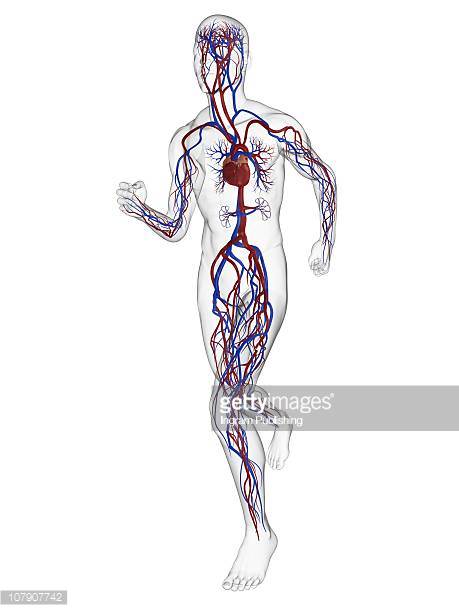
The heart has ___ chambers.
a)
1
b)
2
c)
3
d)
4
2.
What is the Circulatory System also known as?
a)
The heart
b)
Cardiovascular System
c)
Nervous System
d)
Aorta
3.

What is the main organ of the circulatory system?

a)

small intestine

b)

bone

c)

lungs

d)

heart

4.

Arteries carry oxygen rich blood away from the heart.

a)

True

b)

False

5.

Veins carry oxygen poor blood back to the heart.

a)

False

b)

True

6.

The job of the heart is to . . .

a)

pump blood around the body.

b)

send food to the small intestines.

c)

break down food.

d)

give energy to the body.

7.

The heart is about the size and shape of your . . .

a)

head

b)

fist

c)

hand

d)

foot

8.
______________ are the smallest blood vessels.
a)
Arteries
b)
Veins
c)
Capillaries
9.
The circulatory system works with the ___________ system to provide our body with oxygen.
a)
respiratory
b)
digestive
c)
muscular
d)
skeletal
10.
The main function of the circulatory system is 
a)
To give the body structure and support
b)
Excrete waste
c)
transport blood, nutrients, and gases throughout the body
d)
to transport messages from the body to the brain
11.

The elbow bends when

a)

the biceps muscle contracts

b)

the triceps muscles contracts

c)

the biceps muscle relaxes

d)

the triceps muscle relaxes

12.
Involuntary
a)
skeletal
b)
cardiac
c)
smooth
d)
smooth and cardiac
13.
How are muscles attached to bone?
a)
Ligaments
b)
Cartlidge
c)
skin
d)
Tendons
14.
When a muscle contracts, it _______
a)
gets longer
b)
gets shorter
c)
gets thinner
d)
grows hair
15.

What muscle is highlighted in the picture?

a)

Triceps

b)

Biceps

c)

Quads

d)

Deltoids

16.

What muscle is highlighted in the picture?

a)

Triceps

b)

Biceps

c)

Quads

d)

Deltoids

17.

What muscle is highlighted?

a)

Triceps

b)

Biceps

c)

Quads

d)

Deltoids

18.

What muscles is highlighted?

a)

Deltoid

b)

Trapezius

c)

Tricep

d)

Pectoralis

19.

What muscle is highlighted?

a)

Trapezius

b)

Lats

c)

Pectoralis

d)

Deltoids

20.

What muscle is highlighted?

a)

Lats

b)

Abdominals

c)

Pectoralis

d)

Quads

21.
This is a tube about 12cm long with c-shaped rings of cartilage to keep it open
a)
Nasal cavity
b)
Trachea
c)
Mouth Cavity
d)
Pharynx
22.
Two short tubes that carry air into the lungs
a)
Trachea
b)
Bronchioles
c)
Lungs
d)
Bronchi
23.
Clusters of tiny air sacs that allow the exchange of oxygen and carbon dioxide
a)
Pharynx
b)
Diaphragm
c)
Alveoli
d)
Lungs
24.
When alveoli in the lungs enlarge and cant push oxygen to the blood
a)
Bronchitis
b)
Lung cancer
c)
Asthma
d)
Emphysema
25.
Muscular structure that helps to expand and contract the lungs, forcing air in and out
a)
Pharynx
b)
Nasal cavity
c)
Alveoli
d)
Diaphragm
26.
Smaller tubes within the lungs
a)
Bronchioles
b)
Bronchi
c)
Lungs
d)
Alveoli
27.
Passage way that moistens the air and has hairs to trap dust and particles
a)
Nasal cavity
b)
Bronchi
c)
Mouth cavity
d)
Larynx
28.
What is the function of the respiratory system
a)
Take in O2 only
b)
Remove CO2 only
c)
Take in O2 ad remove CO2
d)
Make sugar
29.
Made up of spongy, elastic tissue that stretches as you breathe
a)
Alveoli
b)
Lungs
c)
Nasal Cavity
d)
Pharynx
30.
Bronchial tubes contract quickly causing shortness of breath, coughing, and wheezing
a)
Bronchitis
b)
Emphysema
c)
Lung cancer
d)
Asthma
31.
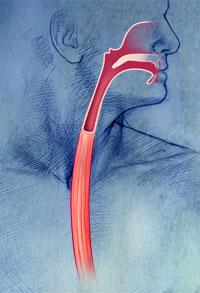
This is an image of the
a)
stomach
b)
small intestine
c)
esophagus
d)
large intestine
32.
What is the function of the digestive system?
a)
to break down and absorb nutrients
b)
to support and protect our bodies
c)
to produce vitamin D
d)
to help us move
33.

Which of the following correctly describes the purpose of digestion?

a)

To break down complex food molecules into simple soluble molecules

b)

To make complex food molecules from simple soluble molecules

c)

To make use of simple soluble food molecules

d)

To remove complex food molecules from the body

34.

Which enzyme does the stomach produce?

a)

amylase

b)

lipase

c)

maltase

d)

protease

35.

Where is the digestion of foods completed?

a)

liver

b)

large intestine

c)

stomach

d)

small intestine

36.

Why is the oesophagus muscular?

a)

To break the food into even smaller pieces

b)

To produce enzymes to digest food

c)

To push food from the mouth into the stomach

d)

To move the food back and forth in two directions

37.

Where does carbohydrate digestion begin?

a)

liver

b)

mouth

c)

oesophagus

d)

stomach

38.

Where does protein digestion begin?

a)

large intestine

b)

mouth

c)

small intestine

d)

stomach

39.

Select all the enzymes present in the intestinal juice.

a)

amylase

b)

lipase

c)

maltase

d)

protease

40.

Which of the following kills bacteria in the human alimentary canal?

a)

hydrochloric acid

b)

mucus

c)

pancreatic juice

d)

saliva

41.
attaches bone to bone
a)
tendon
b)
ligament 
c)
cartiliage
d)
bones
42.
attaches muscle to bone 
a)
tendon
b)
ligament 
c)
cartilage
d)
bone
43.
what are functions of the skelton?
a)
protection
b)
Make blood cells
c)
movement
d)
all of them
44.
Where are blood cells made? 
a)
Yellow marrow 
b)
Red marrow
c)
Spongy Bone 
d)
Periosteum
45.
What are the bones that protect your heart and lungs?
a)
rib cage
b)
sternum
c)
clavicle
d)
femur
46.

Yellow marrow functions to ______.

a)

produce new bone cells

b)

store calcium

c)

store fat

d)

produce calcium

47.
_________ is a function of the skeletal system that is completed by joints, ligaments, and tendons.
a)
Protection
b)
Storage
c)
Synthesis
d)
Movement
48.
our hip joint would be considered which type of joint?
a)
hinge
b)
ball and socket
c)
pivot
d)
fixed 
49.

Which of the following statements about joints is NOT true?

a)

ball and socket joints allow the greatest range of motion

b)

fibrous joints allow no movement

c)

the only hinge joint is the elbow

d)

joints are also called articulations

50.

The vertebra is a gliding joint.

a)

True

b)

False

51.
Name the two major parts of the central nervous system.
a)
The brain and the skull. 
b)
The brain and the body.
c)
The spinal cord and the brain.
d)
The spinal cord and the body. 
52.
A_______is what your body does in reaction to a stimuli. 
a)
reaction
b)
response
c)
change
53.
What is "stimuli"?
a)
A major organ in the brain that is a part of the nervous system. 
b)
What your body does to a change or a signal. 
c)
A change or a signal your body receives. 
54.
What are the two divisions of the nervous system?
a)
The brain and spinal cord. 
b)
The central nervous system and the skeletal system. 
c)
The central and peripheral nervous systems. 
55.
the central nervous system______________
a)
is the control center of the body. 
b)
the main body system. 
56.

What is the number 2 pointing to?

a)

brain stem

b)

cerebrum

c)

cerebellum

d)

spinal cord

57.

What is the number 1 pointing to?

a)

Spinal Cord

b)

Brain Stem

c)

Cerebellum

d)

Cerebrum

58.

The brain is covered in a membrane called:

a)

choroid plexus.

b)

meninges.

c)

ventricles.

d)

cerebral aqueduct.

59.

Cranial nerves and spinal nerves are part of the peripheral nervous system.

a)

True

b)

False

60.

What is the inner most meningeal layer of the brain?

a)

Arachnoid

b)

Dura mater

c)

Pia mater

d)

Ventricles