wayground logo

Free Printable Worksheets

Font size

S
M
L
XL
Worksheets

Weather Quiz

Total questions: 100

Worksheet time: 2hrs 33mins

Name
Class
Date
1.

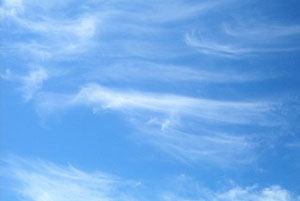
What is a Cirrus Cloud?

a)

Thick Cloud

b)

High Could

c)

Low Cloud

d)

Thin Cloud

2.

The layers of air above and around Earth

a)

cold front

b)

warm front

c)

atmosphere

d)

weather

e)

air mass

3.

A body of air in the atmosphere that has mostly constant temperature, humidity, and pressure

a)

cold front

b)

warm front

c)

atmosphere

d)

weather

e)

air mass

4.

When these masses of cooler, denser air and warmer, lighter air move, it is called __________.

a)

air

b)

air pressure

c)

ocean

d)

wind

e)

climate

5.

Even in the winter, the Sun's energy heats the land faster than the ocean nearby, which causes changes in _______

a)

air

b)

air pressure

c)

ocean

d)

wind

e)

climate

6.
a)
High Air Pressure
b)
High Temperatures
c)
Heavy Rain
d)
Hail
7.
This type of cloud is thin, wispy, and made of ice crystals
a)
cumulus cloud
b)
stratus cloud
c)
cirrus cloud
d)
cumulonimbus cloud
8.
The temperature at which water vapor condenses is the 
a)
relative humidity
b)
humidity
c)
freezing point
d)
dew point
9.
This type of cloud is thin and flat, and the edges are not clearly defined
a)
cirrus cloud
b)
cumulus cloud
c)
stratus cloud
d)
cumulonimbus cloud
10.
Which of these is NOT a way in which clouds affect climate?
a)
clouds cool Earth's surface
b)
clouds warm Earth's surface
c)
clouds deliver precipitation
d)
clouds block all harmful radiation
11.
This type of cloud is thick and puffy on top, and generally flat on the bottom. It has well-defined edges and can change shape rapidly.
a)
cumulus cloud
b)
stratus cloud
c)
cirrus cloud
d)
cloud 9
12.
Which of the following is an example of a cloud of vertical development?
a)
nimbostratus cloud
b)
cumulonimbus cloud
c)
cirrus cloud
d)
stratus cloud
13.
This type of cloud is thin, wispy, and made of ice crystals
a)
cumulus cloud
b)
stratus cloud
c)
cirrus cloud
d)
cumulonimbus cloud
14.

Which type of cloud is white and puffy?

a)

cumulus

b)

cirrus

c)

stratus

d)

cumulonimbus

15.

Clouds form during the process of...

a)

evaporation

b)

condensation

c)

precipitation

d)

runoff

16.
What type of clouds are called "fair weather clouds" and look like floating cotton?
a)
Cumulus
b)
Stratus
c)
Nimbus
d)
Cumulonimbus
17.
Name the two types of low level clouds
a)
Altostratus and Altocumulus
b)
Cirrus and Cumulus
c)
Cirrocumulus and Cumulonimbus
d)
Stratus and Nimbostratus
18.
Are stratus clouds or cirrus clouds found closer to the ground?
a)
Cirrus
b)
Stratus
19.

Which type of cloud is highest in the sky?

a)

Cirrus

b)

Cumulus

c)

Stratus

20.

Which type of cloud is lowest in the sky?

a)

Cirrus

b)

Cumulus

c)

Stratus

21.
Which instrument tells you the direction from which the wind is blowing?
a)
compass
b)
wind vane
c)
anemometer
d)
a compass and a wind vane
22.
If a rain gauge has 4 cm of precipitation before a storm and 7 cm after a storm, how much rain fell during the storm?
a)
7 cm
b)
4 cm
c)
3 cm
d)
11 cm
23.
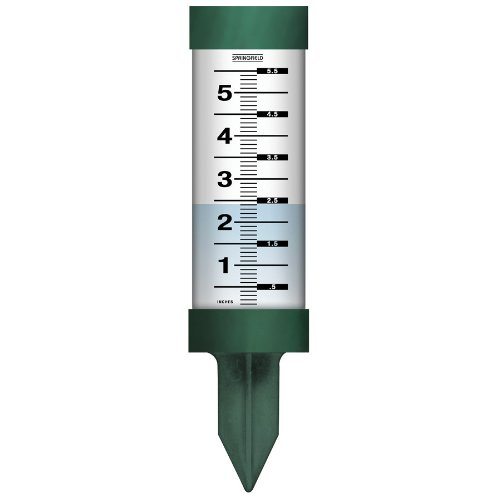
What does this device show?
a)
a change in temperature
b)
a change in humidity
c)
wind speed
d)
the amount of rainfall
24.
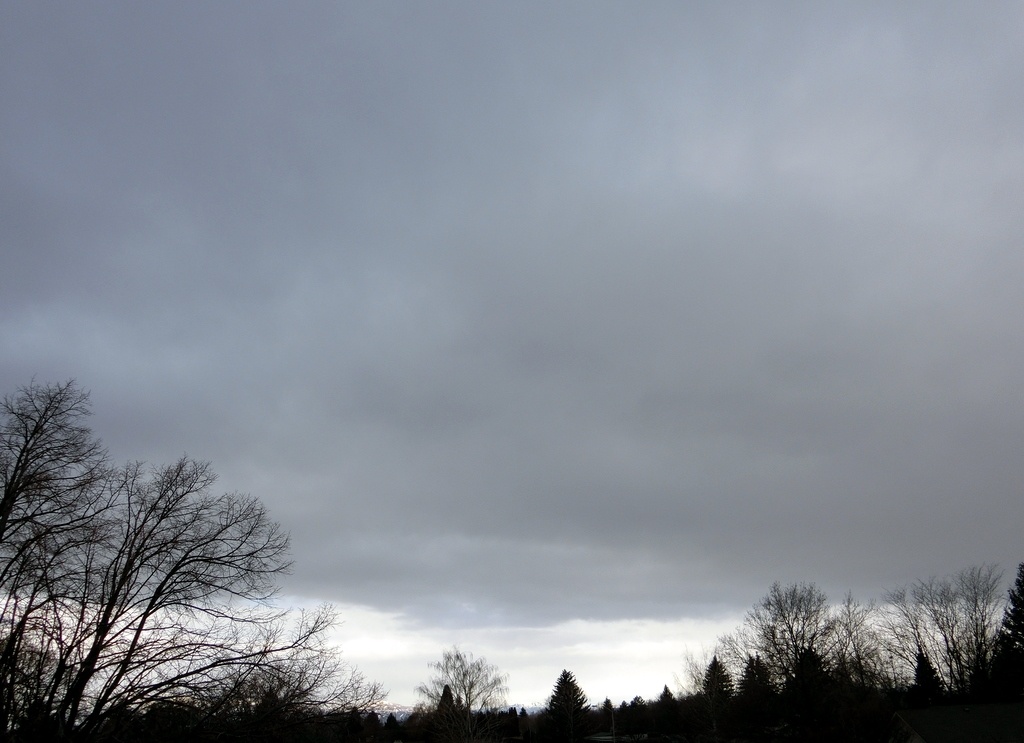
If you observe thick, grey clouds, what type of weather can you expect to come?
a)
heavy rain
b)
a change in temperature
c)
heavy winds
d)
a snow storm
25.
If you observe stratus clouds, how would you describe them?
a)
puffy
b)
spread out like a blanket
c)
wispy and high in the sky
d)
low to the ground
26.
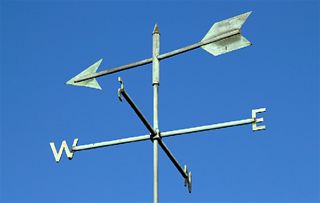
From which direction is the wind blowing in this picture?
a)
north
b)
east
c)
south
d)
west
27.
a)
70 degrees F
b)
65
c)
70
d)
65 degrees F
28.
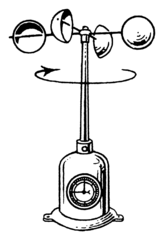
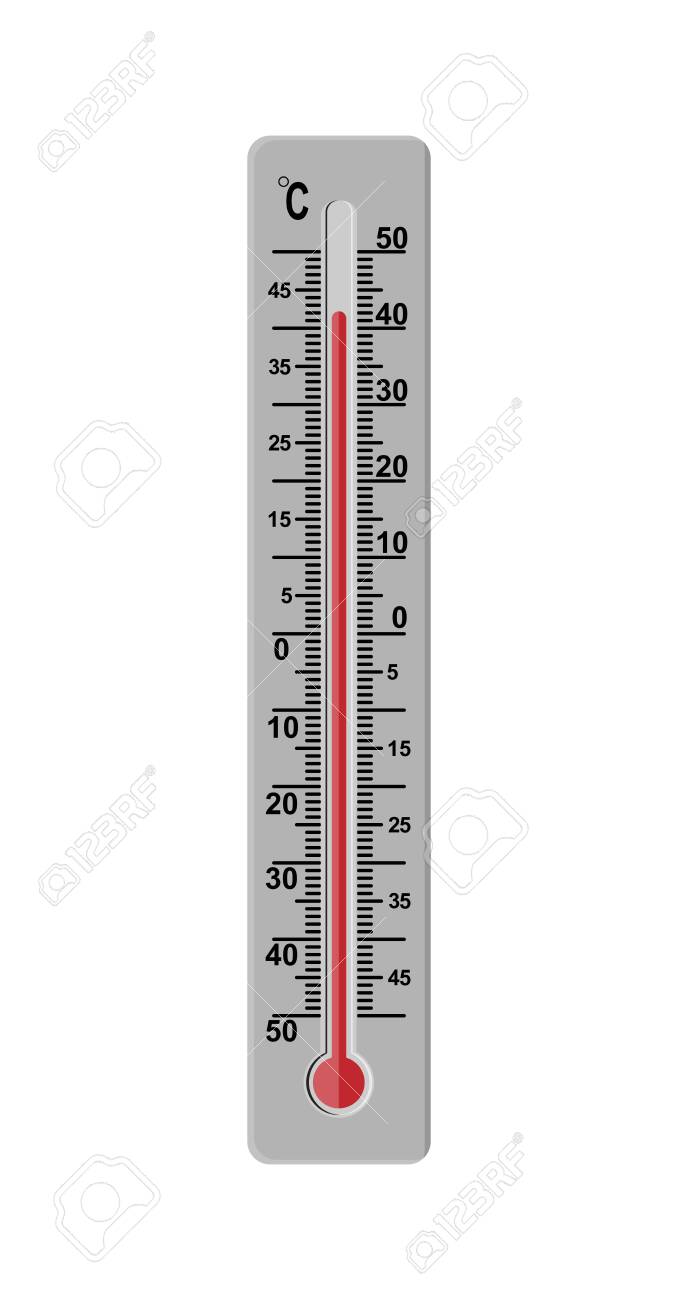
This weather instrument is a...
a)
anemometer
b)
barometer
c)
wind vane
d)
thermometer
29.
This weather instrument is a...
a)
thermometer
b)
wind vane
c)
anemometer
d)
rain gauge
30.
This weather instrument is a...
a)
rain gauge
b)
U.F.O.
c)
satellite
d)
anemometer
31.
This weather instrument is a...
a)
thermometer
b)
anemometer
c)
rain gauge
d)
barometer
32.
This weather instrument is a...
a)
anemometer
b)
Christmas ornament
c)
wind vane
d)
barometer
33.
This weather instrument is an...
a)
wind vane
b)
anemometer
c)
barometer
d)
thermometer
34.
This tool is used with a wind vane to determine the direction of the wind.
a)
wrench
b)
screwdriver
c)
compass
d)
telescope
35.
This weather instrument is a...
a)
wind vane
b)
hydrometer 
c)
rain gauge 
d)
anemometer 
36.
What does the wind vane point towards.
a)
Where the wind is coming from
b)
Where the wind is blowing to
c)
the sun
d)
the moon 
37.
What instrument measures wind speed?
a)
thermometer 
b)
wind vane
c)
barometer
d)
anemometer 
38.
What instrument measures air pressure?
a)
barometer
b)
hydrometer 
c)
rain gauge
d)
anemometer 
39.
What instrument measures temperature?
a)
rain gauge 
b)
hydrometer
c)
thermometer 
d)
wind vane
40.
What instrument measures wind direction?
a)
wind vane
b)
hydrometer
c)
rain gauge
d)
barometer 
41.
This tool photographs clouds and sends data to meteorologists.
a)
camera
b)
iPhone 5
c)
satellite
d)
radar
42.
A rain gauge measures what?
a)
Air pressure
b)
Wind speed
wind speed
c)
Amount of rain fall
d)
Wind direction
43.

What is this instrument?

a)

Thermometer

b)

Barometer

c)

Anemometer

d)

wind vane

44.
Weather is a condition of the air, or the _____ on our planet
a)
geosphere
b)
biosphere
c)
hydrosphere
d)
atmosphere
45.
A fast-spinning column of air that stretches down to the Earth's surface is called _____
a)
a hurricane
b)
a blizzard
c)
a tornado
d)
a drought
46.
Storms with blowing or falling snow, high winds, and cold temperatures are called _____
a)
hurricanes
b)
blizzards
c)
tornadoes
d)
droughts
47.
Storms with high winds and heavy rain that form over warm ocean waters are called _____
a)
hurricanes
b)
blizzards
c)
tornadoes
d)
droughts
48.
When too much rain forces streams, rivers and lakes to overflow it's called _____
a)
a hurricane
b)
a flood
c)
a tornado
d)
a drought
49.
When an area doesn't receive enough rainfall, drying up rivers and lakes, it's called _____
a)
a hurricane
b)
a flood
c)
a tornado
d)
a drought
50.
Which form of severe weather could dry up ponds, affecting both plants and animals?
a)
a drought
b)
a flood
c)
a hurricane
d)
a blizzard
51.
Sometimes big flows of rainwater can cause a hillside to collapse, in an event called _____
a)
an earthquake
b)
a tornado
c)
a mudslide
d)
a thunderstorm
52.
How do the conditions for a tornado differ from the conditions for a hurricane?
a)
Tornadoes never form when there is rain, while hurricanes always form with rain.
b)
Tornadoes form under low pressure, while hurricanes form under high pressure
c)
Tornadoes form in a stable atmosphere, while hurricanes form in an unstable atmosphere 
d)
Tornadoes form over land, while hurricanes form over bodies of water
53.
What storm is a funnel shaped cloud?
a)
tornado
b)
hurricane
c)
thunderstorm
54.
Which storm forms over water?
a)
tornado
b)
hurricane
c)
thunderstorm
55.
During a _________ you should lay low in a ditch if you can't seek shelter inside.
a)
tornado
b)
hurricane
c)
thunderstorm
56.
What are thunderstorms?
a)
a storm with thunder and lighting and typically also heavy rain or hail
b)
a storm that can be the same as thunderstorms, but even more dangerous
c)
a mobile, destructive vortex of violently rotating winds having the appearance of a funnel shaped cloud and advancing beneath a large storm system.
d)
a huge storm with strong winds and storm surges
57.
What are tornadoes?
a)
a storm with thunder and lighting and typically also heavy rain or hail
b)
a storm that can be the same as thunderstorms, but can be even more dangerous
c)
a mobile, destructive vortex of violently rotating winds having the appearance of a funnel shaped cloud and beneath a large storm system.
d)
a huge storm with strong winds and storm surges
58.
This person studies the Earth's atmosphere and monitors and forecasts the weather
a)
Seismologist
b)
Meteorologist
c)
Volcanologist
d)
Geologist
59.

Which one is not a severe weather?

a)

Blizzard

b)

Thunderstorm

c)

Sunny

d)

Hurricane

60.
What does the picture show?
a)
climate
b)
weather 
61.

_______________is a dangerous act of nature that puts people, animals, and buildings at risk.

a)

severe weather

b)

sunny weather

c)

storms

d)

cloudy weather

62.
Hurricanes form near areas close to the equator. Why? 
a)
Solar heating is greatest near the equator.
b)
The Moon's plane of orbit is close to the equator.
c)
Earth's volcanic activity is clustered around the equator.
d)
the rate of rotation of Earth's surface is less at the equator.
63.
A _______ is a rotating column of air that extends from the clouds of a thunderstorm to the group and has winds spinning at very high speeds.
a)
hurricane
b)
tornado
c)
thunderstorm
d)
blizzard
64.
Suppose you are outside and see lightning strike the ground. The first thing you should do is...
a)
take cover inside
b)
avoid windows
c)
stand near metal objects
d)
listen for thunder
65.
Most of the damage caused by a tornado is the result of what?
a)
high winds
b)
flooding
c)
heavy rain
d)
failing hail
66.
Which of the following is the general rule of safety when a tornado strikes?
a)
Go to the highest point in a house of building
b)
Go beside a window to see when the tornado passes
c)
Go outside and move away from the tornado
d)
Go to  low area insdie with no windows and stay there
67.
More tornadoes hit the United States per year than any other country in the world. This is because of the:
a)
dense population in the United States
b)
weather conditions in  the United States
c)
large mountain ranges in the United States
d)
high  air pollution in  the United States
68.
A hurricane becomes more powerful from water that evaporates over
a)
lakes
b)
mountains
c)
oceans
d)
rivers
69.
In the Midwest of the United States, tornadoes are very common. To protect human life from severe weather like this, we would expect to see many homes with:
a)
churches
b)
storm cellars
c)
tin  roofs
d)
barns and other outbuildings
70.
"This summer was much cooler than last summer," is a qualitative observation about the weather. What would be needed to make a quantitative observation about the summer temperature?
a)
Opinions of summer weather experts
b)
A larger number of students
c)
There is no way to make a quantitative observation about summer temperatures
d)
The daily temperatures for this summer and last summer
71.
What are the highest ratings for hurricanes and tornadoes, respectively?
a)
EF 5 and Category 5
b)
EF 5 and Category 4
c)
EF 6 and Category 5
d)
EFG and HIJ
72.
What happens if a hurricane moves over land or cold ocean water?
a)
it will get stronger
b)
it will get weaker
c)
it will upgrade its category
d)
it will morph into a typhoon
73.
Which of these would you NOT expect from a thunderstorm?
a)
lightning
b)
strong wind
c)
storm surge
d)
heavy rain
74.
_____ always form over warm ocean water.
a)
Hurricanes
b)
Tornadoes
c)
Blizzards
d)
Thunderstorms
75.
_______ are the storms that create the strongest winds possible on Earth.
a)
Blizzards
b)
Thunderstorms
c)
Hurricanes
d)
Tornadoes
76.
This is the large electrical discharge during a thunderstorm, caused by static electricity.
a)
thunder
b)
lightning
c)
storm surge
d)
The Flash
77.

What is hibernation?

a)

When an animal goes to a warmer place in the winter.

b)

When an animal goes into a deep sleep in the winter.

c)

When an animal plays in the winter.

78.

What do these animals do in the winter?

a)

play

b)

hibernate

c)

migrate

79.

What is migration?

a)

When animals move to a warmer place in winter.

b)

When animals go into a deep sleep during winter.

c)

When animals play in winter.

80.

What do these animals do in the winter?

a)

hibernate

b)

migrate

c)

play

81.

Why do animals hibernate?

a)

They are tired

b)

They want to move to a warmer place

c)

To help them survive the winter

82.

Why do animals migrate?

a)

They want to go some where warm

b)

They need to find food

c)

Both a and b

83.

What animals migrate?

a)

bears, bats, snakes

b)

some birds, whales, butterflies

c)

all of the above

84.

What animals hibernate?

a)

bears, bats, snakes

b)

some birds, whales, butterflies

c)

none of the above

85.

What happens during hibernation?

a)

The animal plays all winter

b)

The heart rate of the animal slows down

c)

The animal travels to a warmer place

86.

How does an animal prepare for migration?

a)

The animal plays until it gets tired

b)

It finds shelter

c)

The animal eats lots of food and stores it as fat

87.

Bears during the winter.

a)

Camouflage

b)

Hibernation

c)

Migration

88.

When an animal moves to have babies.

a)

Camouflage

b)

Hibernation

c)

Migration

89.
The Sun gives _____ and _____ energy to Earth.
a)
temperature and star
b)
heat and light
c)
sun and star
d)
heat and star
90.
Without _____ from the Sun we could not be able to see.
a)
Sun
b)
Star
c)
Temperature
d)
light
91.
Which of the following is true about the Sun?
a)
The Sun is the main source of energy for Earth.
b)
The Sun is a star.
c)
The Sun is a ball of gas.
d)
All of the above.
92.
a mixture of gases that surround the earth
a)
thermosphere
b)
Troposphere
c)
Atmosphere
d)
Ozone Layer
93.
The atmosphere is made up primarily of 
a)
Nitrogen
b)
Oxygen
c)
Carbon Dioxide
d)
Water Vapor
94.
Air Pressure decrease with altitude
a)
True
b)
False
95.
Air Temperature decrease with altitude
a)
True 
b)
False
96.
In the layers of the atmosphere , Air temperature differences result mainly because of 
a)
Composition of gases
b)
the way solar energy is absorbed through the atmosphere
c)
the further you move up, the fewer molecules
d)
Density decrease with increase in altitude
97.

A mixture of gases that surrounds the Earth like a blanket.

a)

atmosphere

b)

troposphere

c)

ozone

d)

nitrogen

98.

Gas in the atmosphere that protects the Earth from the Sun's rays

a)

atmosphere

b)

troposphere

c)

ozone

d)

nitrogen

99.

The gas that makes up most of Earth’s atmosphere

a)

lifting

b)

troposphere

c)

wind funnel

d)

nitrogen

100.

Air that is concentrated together as a result of encountering a landform, such as a canyon

a)

lifting

b)

troposphere

c)

wind funnel

d)

nitrogen