
NEW
Font size
 Worksheets
Weather Part 2
Total questions: 51
Worksheet time: 1hrs 12mins
A huge body of air that has similar temperature, humidity, and air pressure at any given height
air mass
front
tornado
hurricane
a boundary between two air masses
air mass
cold front
front
warm front
a front where warm air moves over cold air and brings drizzly rain and then are followed by warm and clear weather
warm front
cold front
stationary front
occluded front
A front where cold air moves in under a warm air mass.
warm front
cold front
occluded front
stationary front
A situation in which the surface position of a front does not move
cold front
warm front
stationary front
eye wall

This front can cause tornadoes when a warm air mass collides with a cold air mass and is quickly forced upward.
occluded front
stationary front
warm front
cold front


The _____________ is the source of all energy on earth and powers the water cycle.
water
wind
rain
sun
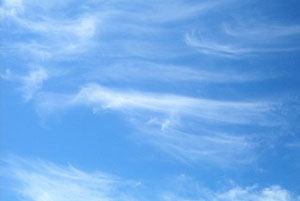

Which type of cloud is white and puffy?
cumulus
cirrus
stratus
cumulonimbus
Which term best describes water vapor?
Solid
Liquid
Gas
What are clouds made out of?
Molecules of pure oxygen
ozone and carbon dioxide
water droplets, dust, and smoke particles
78% nitrogen, 21% oxygen, and 1% other gases
That Latin root alto means
precipitation
high altitude
low altitude
middle altitude
The dew point is
the point at which water vapor evaporates.
the point at which water vapor condenses.
the point at which hail starts.
the point that water vapor becomes saturated.
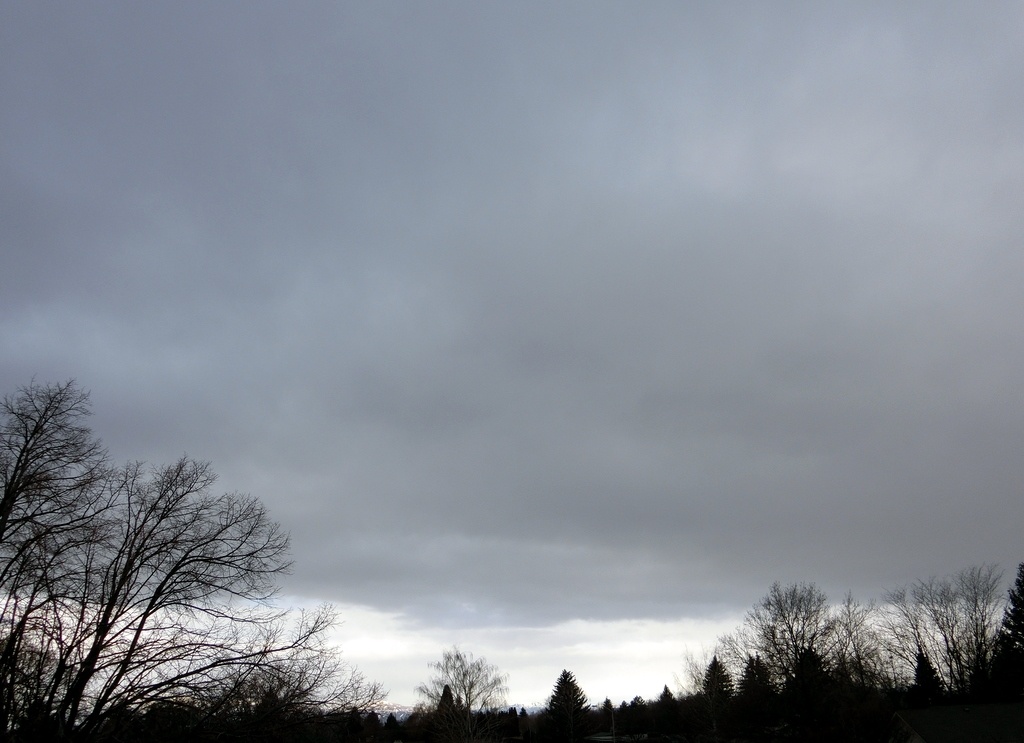
This type of cloud can be in layers and it covers most of the sky.
Which example is a form of precipitation?
Dew
Fog
Frost
Hail
As a part of the water cycle, water from Earth's surface enters the clouds and finally falls back to the ground in the form of rain. What is the correct sequence of processes water undergoes?
Evaporation, Condensation, Precipitation
Precipitation, Condensation, Evaporation
Condensation, Evaporation, Precipitation
Evaporation, Precipitation, Condensation
What would happen if the Sun is removed from the water cycle?
The water cycle would not include precipitation but would continue with groundwater flow.
The water cycle would no longer occur because the Sun provides the energy for evaporation and transpiration.
The water cycle would no longer occur because the Sun provides energy for the formation of clouds.
The water cycle would not include evaporation and transpiration but would continue with condensation.

What is the energy source that drives the water cycle?
The moon T
The heat from our home in the winter all around the world
The sun
he heat generated solely from the core of the earth

What are formed when water vapor condenses?
Clouds
Mountains
Transpiration
Valleys


A group of friends gather around a fire to stay warm. This is an example of ________.
conduction
convection
radiation
Which is an example of heat being transferred by conduction?
a furnace heating the air in a school
an ice cube melting in a person’s hand
a pot of water on a stove boiling
the sun heating water in a swimming pool

The handle of a metal spoon warms up when it is placed in a hot bowl of soup because of ________.
convection
conduction
radiation

Near the ceiling of a room the air is warmer. The warm air rises because of ________.
conduction
convection
radiation
Water heats up and cools down _________ slowly than land.
more
less

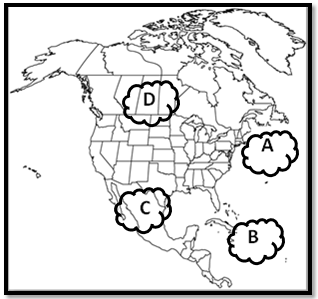
Which type of air would you find at air mass C?
mT
mP
cT
cP
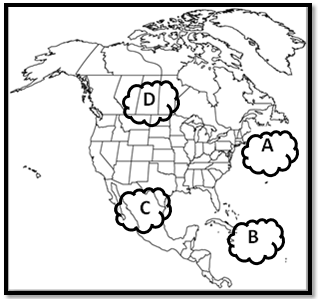
Which type of air would you find at air mass D?
mT
mP
cP
cT


Name that symbol.
Cold Front
Warm Front
Stationary Front
Occluded Front
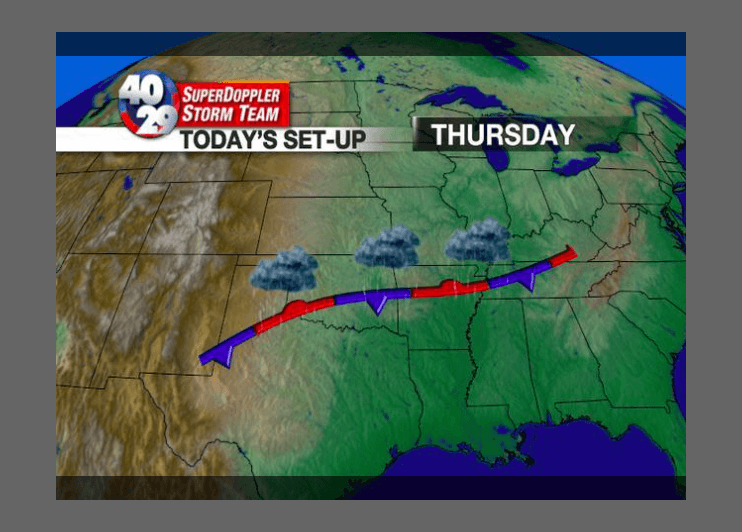
Name that symbol.
Cold Front
Warm Front
Stationary Front
Occluded Front

Which kind of weather is produced from a warm front?
Thunderstorms
Light rain
It depends


What type of cloud is this? Made of ice crystals, signals snow; high puffy clouds
Cirrocumulus
Altocumulus
Cirrostratus
Altostratus



