Wayground logo

Free Printable Worksheets

Font size

S
M
L
XL
Worksheets

Forensics Spring Final 2022

Total questions: 71

Worksheet time: 2hrs 59mins

Name
Class
Date
1.
What blood stain pattern is created or formed by the force of gravity acting alone?
a)
Passive Drop
b)
Low Velocity Impact Spatter
c)
Flow Pattern
d)
Drip Pattern
2.
What blood spatter pattern is seen in the picture?
a)
Transfer/Contact
b)
Swipe
c)
Wipe
d)
Saturation
3.
What blood spatter pattern is seen in the photo?
a)
Wipe
b)
Swipe
c)
Walking Drip
d)
Flow
4.
What bloodstain pattern is created when an object moves through an existing stain, removing or altering its appearance?
a)
Swipe
b)
Walking Drip
c)
Wipe
d)
Contact
5.
What type of blood spatter is typically created from a gunshot?
a)
Medium Velocity
b)
High Velocity
c)
Cast-Off
d)
Void
6.
What blood spatter pattern is seen in the picture?
a)
Cast Off
b)
Medium Velocity
c)
Void
d)
High Velocity
7.
What pattern of blood spatter is this?
a)
arterial gushes
b)
splash
c)
smear
d)
pool
8.
What pattern of blood spatter is this?
a)
arterial gushes
b)
splash
c)

wipe

d)
pool
9.
What bloodstain pattern is created when blood is released or thrown from a blood-bearing object?
a)
Cast-Off
b)
Walking Drip
c)
Medium Velocity
d)
Void
10.

Which kind of insect inhabits a body first?

a)

flies

b)

beetles

c)

wasps

d)

worms

11.
The means by which someone dies is known as the:
a)
Proximate cause of death
b)
Mechanism of death
c)
Manner of death
d)
Cause of death
12.

PMI is

a)

postmortem insect

b)

Postmeridian interval

c)

Premortem interval

d)

Postmortem Interval

13.
the immediate reason for a person's death
a)
death
b)
mechanism of death
c)
cause of death 
d)
manner of death
14.

This occurs 2-4 hours after death, where the blood pools due to gravity. The area affected is a bluish-red color.

a)

rigor mortis

b)

algor mortis

c)

livor mortis

15.
The cooling of body temperature after death is:
a)
algor mortis
b)
livor mortis
c)
rigor mortis
d)
pallor mortis
16.

The process that causes the muscles in the body to stiffen resulting in rigidity after death is called

a)

algor mortis

b)

rigor mortis

c)

livor mortis

17.

The five stages of decomposition are: fresh (initial decay), putrefaction (bloating), black putrefaction (active decay), butyric fermentation (advanced decay), and......

a)

skeletonization

b)

dry decay

c)

dehydration

d)

decompositition

18.

Livor, rigor, and algor mortis occur during this stage

a)
fresh
b)
bloat
c)
active decay
d)
advanced decay
19.

Gases cause a bloated appearance of the decomposing body

a)
fresh
b)
bloat
c)
active decay
d)
advanced decay
20.
Also known as Black Putrefaction this stage of decomposition is characterized by a strong odor and is recognizable by a great loss in mass; the body may also collapse. The end of this stage is marked by the dispersal of the maggots from the body.
a)

Fresh

b)

Bloat

c)

Active decay

d)

Advanced decay

21.

Odor and insect activity decrease

a)
fresh
b)
bloat
c)
active decay
d)
advanced decay
22.

The corpse is almost dry and further decay is slow due to lack of moisture.

a)

fresh

b)

active decay

c)

advanced decay

d)

dry decay

23.

Which of the following is the correct order of the life cycle of a blow fly?

a)

egg, pupa, larva (1st instar, 2nd instar, 3rd instar), adult

b)

larva, egg, pupa, adult

c)

adult, larva (1st instar, 2nd instar, 3rd instar), egg

d)

egg, larva (1st instar, 2nd instar, 3rd instar), pupa, adult

24.

What does a medical examiner determine?

a)

cause of death

b)

manner of death

c)

time of death

d)

all of these answers are correct

25.

An internal autopsy begins with a...

a)

x incision

b)

T incision

c)

y incision

d)

I incision

26.

Which series is the proper order of an autopsy?

a)

External exam- Y incision- chest plate removed- organs examined- body fluid collection

b)

Y incision- organs examined- chest plate removed- sew up skin

c)

External exam- Chest plate removed- Y incision- body fluid collection- organs examined

d)

Y incision- chest plate removed- body fluid collection- organ collection- external exam

27.

The fluid collected from the eye during autopsy is

a)

Eyeball juice

b)

Vitreous humor

c)

Aqueous humor

d)

Choroid fluid

28.
The pelvis of a female is _____ as compared to a male.
a)
wide and circular
b)
wide and heart-shaped
c)
narrow and circular
d)
narrow and heart-shaped
29.
Why does an infants skeleton contain a higher number of bones?
a)
They are born with many bones that have not fused completely
b)
They are mutant ninja bebes
c)
They are born with bones that eventually turn into cartilage
d)
all of the above
30.
Suture Lines on the __________ are helpful in determining the __________ of a victim
a)
skull , age
b)
name , number
c)
jaw , race
31.
One of the  ways to determine the race using bones is by examining the :
a)
the pelvis
b)
the leg bones
c)
skull
d)
the occipital bump
32.
The pelvis in the picture is most likely
a)
male
b)
female
33.

How many teeth does a typical human have?

a)

24

b)

32

c)

40

d)

18

34.
How many bones do adult humans have?
a)
206
b)
306
c)
350
d)
450
35.
What is the process of bone replacing cartilage?
a)
Anthropology
b)
Ossification
c)
Tendonitis
d)
Osteoporosis
36.
Which is the most reliable bone to determine the sex of a skeleton? 
a)
Femur
b)
Skull
c)
Pelvic bone
d)
Collarbone
37.
Using the photos on the screen, which Pelvis belongs to a male?
a)
1
b)
2
38.

The highlighted bone in the image is

a)

Humerus

b)

Radius

c)

Ulna

d)

Fibula

39.

The highlighted bone in the image is the:

a)

Tibia

b)

Fibula

c)

Radius

d)

Ulna

40.

These green bones are in the palm of your hand.

a)

metacarpals

b)

metatarsals

c)

tarsals

d)

carpals

41.

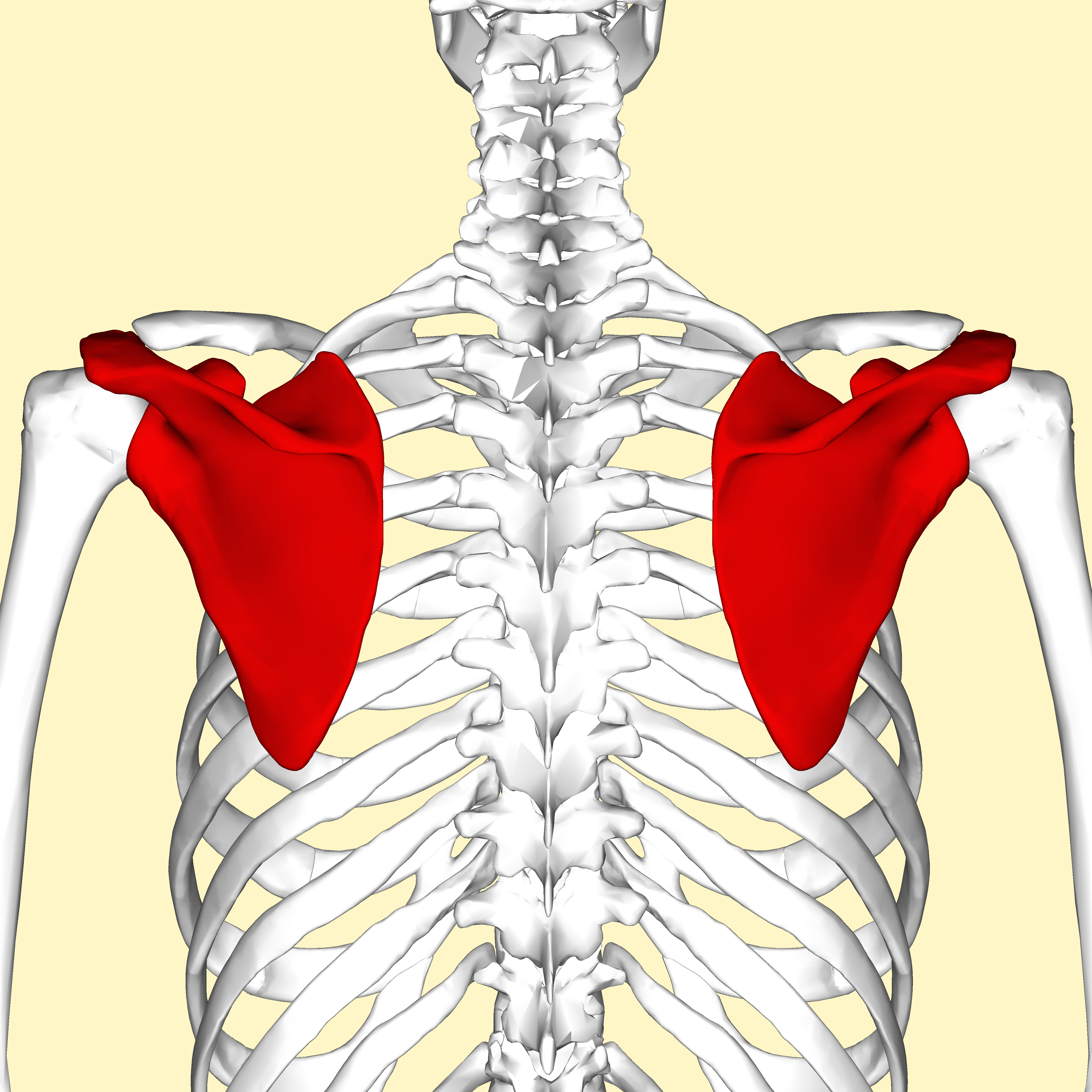
What bones are colored red?

a)

Clavicle

b)

Scapula

c)

Sternum

d)

Carpals

42.

What bone is highlighted?

a)

Femur

b)

Tibia

c)

Fibula

d)

Humerus

43.
Which of these is a long bone?
a)
Femur
b)
Patella
c)
Scapula
d)
Carpal
44.
Which bone?
a)
Parietal
b)
Occipital
c)
Frontal
d)
Forehead
45.
a)
vertebrae
b)
tibia
c)
pelvis
d)
femur
46.
a)
Humerus
b)
Ulna
c)
Radius
d)
Clavicle
47.
Name the bones.
a)
Tarsals
b)
Carpals
c)
Phalanges
d)
Mandible
48.
Name the bone highlighted in red.
a)
Clavicle
b)
Rib Cage
c)
Humerus
d)
Femur
49.
Also known as the kneecap
a)
Patella
b)
Tibia
c)
Fibula
d)
Femur
50.
a)
Pelvis
b)
Humerus
c)
Rib Cage
d)
Bird Cage
51.
a)
pelvis
b)
tibia
c)
sternum
d)
sacrum
52.

Which bones are highlighted

a)

carpals

b)

tarsals

c)

metacarpals

d)

metatarsals

53.

Which bones are highlighted

a)

carpals

b)

tarsals

c)

metacarpals

d)

metatarsals

54.
If skeletal remains were determined to be from an Asian person, it is termed
a)
caucasoid
b)
mongoloid
c)
africoid
d)
aboriginal
55.

This skull, with a wide nasal opening and square eye sockets, can be mostly likely classified as:

a)

Mongoloid

b)

Negroid

c)

Middle Eastern

d)

Caucasian

56.
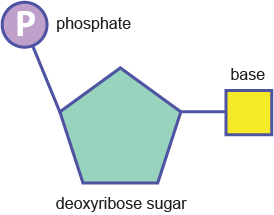
Nucleotides are made up of a sugar, phosphate, and..?
a)
nitrogenous base
b)
nucleic acid
c)
cholesterol
d)
fatty acid
57.
Guanine bonds with ______________.
a)
Adenine
b)
Guanine
c)
Cytosine
d)
Thymine
58.
Which of the following units are repeatedly joined together to form a strand of DNA? (This is the MONOMER of DNA.) 
a)
amino acids
b)
nucleotides
c)
fatty acids
d)
polysaccharides
59.
The sugar in DNA is ?
a)
sucrose
b)
glucose
c)
deoxyribose
d)
fructose
60.

A method used to rapidly make multiple copies of a specific segment of DNA.

a)

PCR (Polymerse Chain Reaction)

b)

Electrophoresis

c)

DNA Probe

61.

Tandem repeats of short DNA sequences with varying numbers of repeats found among individuals.

a)

STR (Short Tandem Repeat)

b)

PCR (Polymerase Chain Reaction)

c)

VNTR (Variable number of Tandem Repeats)

62.

The molecular "scissors" used to CUT DNA are called

a)

restriction enzymes

b)

RFLP's

c)

STRs

d)

helicases

63.

Parts of the cell where DNA can be found: nucleus and

a)

ribosomes

b)

endoplasmic reticulum

c)

mitochondria

d)

golgi apparatus

64.

The FBI database that stores DNA profiles

a)

CODIS

b)

AFIS

c)

STRATUS

d)

FEDDNA

65.

mtDNA is used to trace ancestry through the female line.

a)

True

b)

False

66.

Which of the following would be the compliment to the DNA strand: CTA AGC

a)

CTA AGC

b)

AGC CTA

c)

GAT TCG

d)

CGA ATC

67.

If a DNA sequence it GAATGCCT, what are the matching base pairs?

a)

ACGTACCTG

b)

AEIOU and sometimes Y

c)

CTTACGGA

d)

GCCTATGC

68.

What is another name for white blood cells?

a)

Erythrocytes

b)

Leukocytes

c)

Thrombocytes

d)

Plasma

69.

These are responsible for protecting the body from foreign invaders.

a)

Leukocytes

b)

Erythrocytes

c)

Platelets

d)

Thrombocytes

70.

Red blood cells carry______________.

a)

oxygen

b)

plasma

c)

antibodies

71.

Blood typing is less expensive and quicker for analyzing blood evidence than DNA profiling. Since many different people share the same type, this blood evidence is considered to be:

a)

trace evidence

b)

biological evidence

c)

individual evidence

d)

class evidence