Wayground logo

Free Printable Worksheets

Font size

S
M
L
XL
Worksheets

Honors Bio Unit 10 Ecology

Total questions: 67

Worksheet time: 1hrs 5mins

Name
Class
Date
1.

How does an amoeba move?

a)

It uses cilia.

b)

It uses a flagellum.

c)

It uses pseudopods.

d)

It cannot move.

2.

The process of _____________ allows some protists to make their own food.

a)

chloroplast

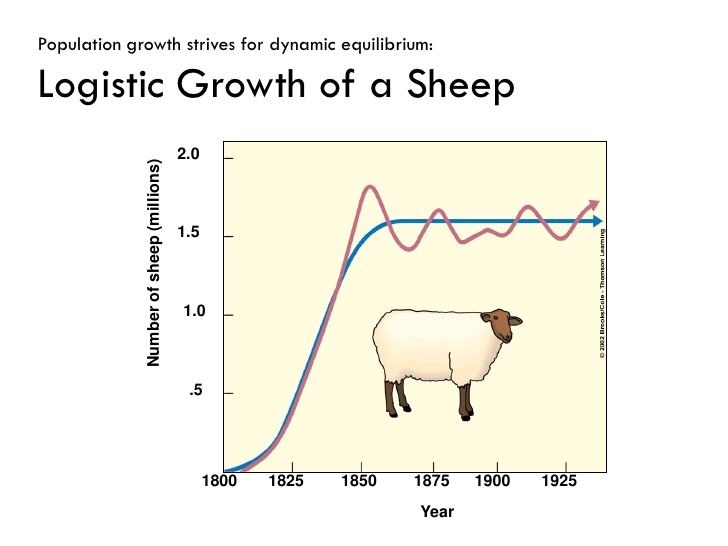
b)

heterotroph

c)

photosynthesis

d)

autotroph

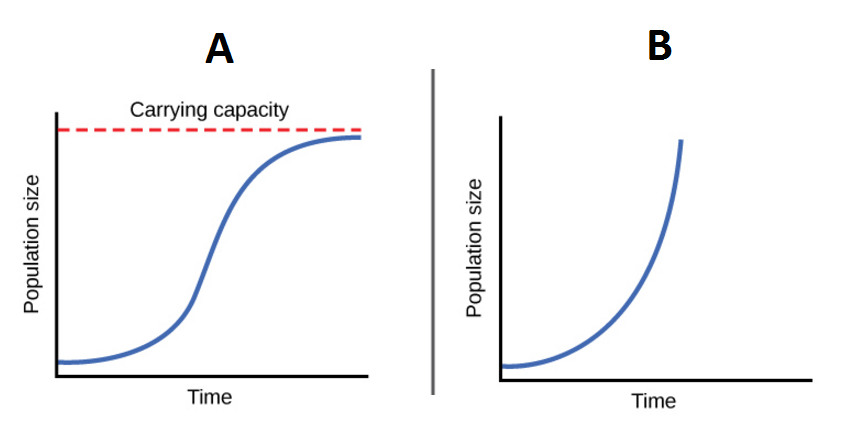
3.

These type of protists are classified by their locomotion

a)

Fungi-like Protists

b)

Animal Like Protists

c)

Plant Like Protists

d)

All of kingdom protista

4.

Slime molds and water molds belong to which class of protists?

a)

Animal like

b)

Plant like

c)

Fungus like

d)

Sporozoans

5.

A protist has a true nucleus, so it is a ...

a)

Prokaryote

b)

Cell

c)

Eukaryote

d)

Atom

6.

Which of these is an organism with symbiotic associations of photosynthetic microorganisms in a network of fungal hyphae?

a)

mushroom

b)

yeast

c)

lichens

d)

protizoa

7.

What are the branching tubes fungi use to absorb food called?

a)

hyphae

b)

amoeba

c)

algae

d)

pseudopod

8.

What is one important role fungi play in ecosystems?

a)

They are autotrophs

b)

They are photosynthetic

c)

They are prokaryotes

d)

They are decomposers/

saprophytes

9.

What kind of protist is an amoeba?

a)

Plant-like

b)

Fungi-Like

c)

Bacteria-Like

d)

Animal-like

10.
Protist?
a)
Euglena
b)
Paramecium
c)
Amoeba
d)
Stentor
11.
Name this protist?
a)
Volvox
b)
Euglena 
c)
Amoeba 
d)
Paramecium 
12.
Most fungi reproduce by using . . . 
a)
Budding
b)

Fragmentation

c)
Spores
d)

All of the choices

13.
Which is represented by all of the bullfrogs living around a pond?
a)
community
b)
habitat
c)
population
14.
Which is an example of a parasitic relationship?
a)
a bee pollinates a flower
b)
a tapeworm takes nutrients from a dog
c)
an orchid lives in a tree but does not harm the tree
15.
In which type of relationship do both species benefit?
a)
parasitism
b)
mutualism
c)
commensalism
16.
Barnacles grow on whales.  Whales give the barnacles a place to live but the barnacles do not help or harm the whale.  Which type of relationship is this?
a)
commensalism
b)
mutualism
c)
parasitiesm
17.
An oxpecker bird eats ticks off of a zebra.  The bird gets food from eating the ticks and the zebra has harmful parasites removed.  Which type of symbiosis is this?
a)
mutualism
b)
parasitism
c)
commensalism
18.
Non-living factor that affects an ecosystem
a)
biotic factor
b)
abiotic factor
c)
food chain 
d)
biome
19.
A collection of organisms that belong to different populations but all live in the same area and interact with one another.
a)
Population
b)
Ecosystem
c)
Community
d)
Ecosphere
20.

Which organisms would be at the top or last trophic level?

a)

plant

b)

herbivore

c)

omnivore

d)

carnivore

21.

The monkey would be a

a)

decomposer

b)

producer

c)

primary consumer

d)

secondary consumer

22.

Introduced species disrupt ecosystems because they are a/an

a)

Keystone Species

b)

Endemic Species

c)

Invasive Species

d)

Native Species

23.

Which is an example of where primary succession could occur?

a)

a glacier melts and exposes new rocks

b)

natural fire burns a prairie

c)

a corn field is abandoned and left to overgrow

d)

flood covers a piece of land

24.

These organisms are often not shown in a food chain, but are important for recycling nutrients

a)

producers

b)

decomposers

c)

primary consumers

d)

carnivores

25.

What percentage of energy is passed on to the next trophic level?

a)

5%

b)

10%

c)

50%

d)

90%

26.
Which of the following best describes an ecosystem?
a)
all the living organisms in an area and their physical surroundings
b)
a region with a distinct climate
c)
all the living organisms of the same species throughout the world
d)
all the living organisms in an area
27.
78% of Earth's atmosphere is nitrogen gas. All living things need nitrogen as a part of DNA and RNA. Yet you and I, and other living things, cannot use the nitrogen in our atmosphere directly. One type of organism is responsible for "fixing" nitrogen or helping to put it in a form so other living things can use it. That organism is
a)
bacteria.
b)
fungi.
c)
plants.
d)
viruses.
28.
Largest number of individuals of a population that the environment can support...  
a)
carrying capacity
b)
population crash
c)
lag phase
d)
mutualism
29.
What is the carrying capacity for this sheep population?
a)
1.8 million
b)
1.25 million
c)
1.6 million
d)
1.o million
30.
What type of growth is represented behind?
a)
exponential
b)
logistics
c)
a good kind
d)
representative
31.
What point on the graph represents the carrying capacity?
a)
A
b)
B
c)
C
d)
D
32.

Which of the following are density dependent factors?

a)

competition for resources

b)

predation

c)

disease

d)

natural disasters

33.

Which of the following are examples of a density independent factors?

a)

forest fire

b)

seasonal cycles

c)

storms

d)

disease

34.

What type of growth model is shown in image A?

a)

Exponential

b)

Logistic

35.
What does the graph represent?
a)
Emigration
b)
Exponential growth
c)
Immigration
d)
Logistic Growth
36.
What is formed during primary succession that doesn't need to be formed during secondary succession?
a)
pioneer species
b)
soil
c)
climax community
d)
lichens
37.
succession that occurs in an area with no soil
a)
ecological succession 
b)
primary succession 
c)
secondary succession
d)
pioneer speciles
38.
succession that occurs in an area where soil is already present
a)
ecological succession 
b)
primary succession 
c)
secondary succession
d)
pioneer speciles
39.
starts with bare rock followed by lichen
a)
primary succession 
b)
secondary succession
c)
both types of succession
40.

In this energy pyramid, which organism would most likely be in level 2?

a)

bird

b)

fox

c)

caterpillar

d)

tree

41.

Which one of the following is true of grass in an ecosystem?

a)

It converts oxygen to glucose.

b)

It produces carbon dioxide from oxygen and water.

c)

It produces glucose from carbon dioxide and water.

d)

It converts water to energy.

42.

The picture shows an energy pyramid. What will most likely happen to the foxes and the wolves if the rabbits are removed?

a)

The foxes will eat more wolves.

b)

The foxes will eat fewer wolves.

c)

There will be more foxes and wolves.

d)

There will be fewer foxes and wolves.

43.

Which of these organisms would most likely be found at the top of an energy pyramid?

a)

clams

b)

sardines

c)

sharks

d)

kelp (seaweed)

44.
What does a Primary Consumer eat?
a)
Tertiary Consumers
b)
Secondary Consumers
c)
Producers
45.
Which organism receives the least amount of energy from the producer?
a)
Owl
b)
Grasshopper
c)
Lilypad
d)
Mouse
46.

If the producer has 20,000 kJ of energy, how much energy should the secondary consumer have?

a)

2,000 kJ

b)

500 kJ

c)

200 kJ

d)

1,000 kJ

47.

The first trophic level is

a)

Carnivore

b)

Producer

c)

Primary Consumer

d)

Herbivore

48.

tertiary consumers

a)

Eat the primary consumer

b)

Eat plants and animals

c)

Consume the producer

d)

eat the secondary consumer

49.

a primary consumer is always a

a)

omnivore

b)

carnivore

c)

omnivore or herbivore

d)

herbivore

50.

a producer always

a)

eats other producers

b)

gets energy from the sun

c)

is a herbivore

d)

is a plant

51.
The process of plants losing water through their leaves is called ____.
a)
condensation
b)
evaporation
c)
transpiration
d)
exhaling
52.
What is the most abundant gas in the atmosphere?
a)
hydrogen
b)
oxygen
c)
helium
d)
nitrogen
53.
Where are denitrifying bacteria found?
a)
In the soil
b)
Root nodules
c)
In dead things
d)
In the atmosphere
54.
What is the only process that removes carbon from the atmosphere?
a)
combustion
b)
cellular respiration
c)
photosynthesis
d)
decomposition
55.
What 3 things are made during cellular respiration?
a)
useable energy, water, glucose
b)
glucose, water, carbon dioxide
c)
oxygen, carbon dioxide, glucose
d)
carbon dioxide, water, useable energy
56.

In the nitrogen cycle, the important work is done by ________

a)

fungi

b)

insects

c)

bacteria

d)

worms

57.

Which of the following statement about competition is correct?

a)

Species that out compete will not be harmed.

b)

Interspecific competition is more intense than imtraspecific competition

c)

In natural environment, species that lose the competition will be eliminated entirely from the habitat.

d)

Individuals involved in competition will compete for limited resource such as food, water, shelter and mates.

58.

Which organism in the food web would

contain the highest concentration of chemical pollutants?

a)

producers

b)

primary consumers

c)

secondary consumers

d)

tertiary consumers

59.
Which organism in this diagram has the highest DDT concentration?
a)
Zooplanktons
b)
small fish
c)
large fish
d)
Fish-eating birds
60.
In the energy pyramid here, which organisms have the most energy available?
a)
Producers
b)
Carnivores
c)
Herbivores
d)
Top Predator
61.
In the energy pyramid below, which organism has the least amount of energy available?
a)
Producers
b)
Herbivores
c)
Carnivores
d)
Top Predator
62.

The first species to populate an area after a disturbance is called:

a)

A pioneer species

b)

A pilgrim species

c)

A founder species

d)

A primary species

63.

Type 2 curve shows us

a)

deaths at the end

b)

the graph going down

c)

constant death at all stages

d)

death at the beginning

64.

The exponential graph is a graph that shows us population size increasing quickly, which one below shows us that

a)
b)
c)
d)
65.

What is the reason for this growth curve?

a)

There are biotic factors

b)

There are abiotic factors

c)

There are limiting factors

d)

There are NO limiting factors

66.

Which of the following graphs illustrates the population growth curve of bacteria growing in a flask of ideal conditions with unlimited resources?

a)

Graph A

b)

Graph B

c)

Graph C

d)

Graph D

67.

Which of the following graphs illustrates the growth curve of a small population of rodents that has grown to reach a stable carrying capacity?

a)

Graph A

b)

Graph B

c)

Graph C

d)

Graph D

e)

Graph E