
 Worksheets
Human Impact & Evolution Final
Total questions: 68
Worksheet time: 2hrs 55mins

Which type of pollution is shown in the image below?
Air pollution
Water pollution
Acid precipitation
Global warming

Which type of human impact is shown in the picture below?
Desertification
Deforestation
Urban sprawl
Land pollution
Which of the following is an example of a non-renewable resource?
Solar Energy
Wind Energy
Hydro Energy
Fossil Fuel Energy
What is the Greenhouse Effect?
A federal law that requires all houses to have a greenhouse in their yard
Explains how the atmosphere protects the Earth
The way certain gases, like carbon dioxide trap energy from the sun and increase Earth's temperature
Explains how plants grow better inside than outside
There are many sources of air pollution in the United States and around the world. Some are natural sources, and others come from humans. Which of these examples is a human source of air pollution?
Dust Storms
Volcanic Ash
Industrial emissions like from factories and cars
Forest fires caused by lightning
The ozone hole is actually an area of depleted ozone in Earth’s atmosphere. Which of the following human activities has the greatest contribution to the development of the ozone hole?
The use of oil in automobile engines
The use of airplanes in the atmosphere
The increase in factory emissions
The use of chlorofluorocarbons (CFCs) in refrigeration
Which of the following does not produce carbon dioxide?
coal
oil
biomass
hydropower
Which explanation supports the proposal? Proposal: We should start replacing goods made out of plastic with biodegradable materials.
This will reduce the amount of trash put in landfills each year.
This will increase the amount of trash placed in landfills each year.
This will decrease the amount of non biodegradable products that are harmful to earth.
The design of air conditioners and aerosol cans that contain CFC's has been changed in the last few years in an attempt to reverse which ecological problem?
deforestation
freshwater pollution
hole in the ozone layer
acid rain
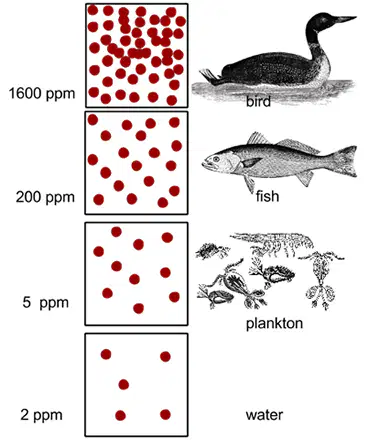
Poisons such as DDT build up in lakes and streams due to runoff. Then they enter the food chain. Once in living organisms, the poisons are not broken down and their concentrations increase as they are passed up the food chain.
Which term best describes this ecological phenomenon?
global warming
loss of biodiversity
biological magnification
loss of genetic diversity
How can ground pollutants affect the local fresh water supply?
The chemicals evaporate underground and come back in the rain water, filling lakes and rivers with toxic chemicals.
Erosion of soil causes those chemicals to leak into the ground water supply and end up in lakes and rivers
The chemicals absorb down their concentration gradient and eventually move to lakes and rivers
When plants are harvested the soil and excess plant parts are dumped into the water supply
When certain chemicals such as CFC (chlorofluorocarbons) react with Ozone (O3), ozone breaks down to O2 (oxygen gas). Why would this have a negative impact on the climate?
More oxygen causes more storms
More oxygen in the atmosphere increases plant growth
Ozone is part of what protects us from harmful UV radiation.
More oxygen leads to increased human overpopulation and desertification
increased and /or continued use of fossil fuels
Resources that are used faster than they form
Resources that can replenish themselves almost as fast as they are used
Resources that exist only in urban areas
Resources that exist only in rural areas
Why is plastic dangerous for animals?
*** choose all that apply***
They can be trapped in plastic things.
They can choke with small plastic pieces and die.
They can eat plastic which fills their stomaches and they die of starvation because they don't feel hungry.
Plastic is not so dangerous for animals.
Why recycling can't win with plastic pollution?
*** choose all that apply***
Because recycling is wrong
Because people produce too much plastic to recycle it all.
Because not every plastic can be recycled.
Because not many people recycle rubbish.
How can we help to reduce plastic pollution?
We should use paper/cloth bags.
We should use less plastic.
We should refill our drinking bottles not buy new ones.
We should avoid (unikać) plastic or styrofoam containers.
All answers are correct.
Most of the plastic garbage is collected and recycled.
No, over 90% of trash is put in landfills or thrown into oceans.
Yes, that's why we should recycle.
As plastic travels through the ocean _____.
*** choose all that apply***
it does not change in size
it carries living organisms from one part of the world to another
it poisons fish that eat it
it eventually poisons humans who eat the fish

Why Is The Ocean Important?
Because it looks good
Because it provides us with food,plants and oxygen
Because it produce fresh water
Because you can swim in it
What do scientists call plastics when they break down into tiny pieces?
Microtrash
Microplastics
Microparticles
Macroplastics
How does plastic trash cause marine life and sea birds to starve?
They mistake plastic for food, which clogs their stomachs and doesn't leave any room for real food.
Plastic takes up space in the water so marine animals have no place to live.
The plastic in the ocean is so dense that the marine life cannot find food easily.
Plastic doesn't cause marine life or sea bird to starve: they're smart enough to know the difference between plastic and food.
Environment is best described as
a food chain
the surrounding conditions that influence on organism
the living parts of an ecosystem
a job that an organism has in its ecosystem
Recently it has been proven that humans are also ingesting plastic that has ended up in the ocean. How is this possible.
The tiny plastic particles in the ocean end up coming through the faucets in our sinks once the salt water is converted to fresh water.
The fish in the ocean eat the plastics and humans eat the fish, causing the toxic chemicals from the plastics to spread from the fish to humans.
Humans are mistaking plastics in the ocean for food just as the marine life and sea birds are.
All of the above.
What percentage of plastic items that go in the recycling bin ACTUALLY get recycled?
23%
72%
1%
9%
How many tonnes of plastic enters the ocean each year?
9 million tons
10 million tons
20 million tons
330 million tons
In 2015 how many percent of sea birds have eaten plastic at some point in their lives?
50%
70%
80%
90%

What is the main chemical in plastic?
Bisphenol A (BPA)
Phthalates
Dibutyl phthalate
DBP
True or False: Plastic has a major impact on the environment
True
False
How long does a plastic bottle remain in the environment
1 month
1 year
10 years
100s of years
Which of these is NOT a possible solution to the issue of plastic pollution
Developing new kinds of biodegradable plastic
Creating plastic-eating bacteria
Strictly regulating the use and production of plastic
Burning plastic to get rid of it
What does deforestation cause?
Loss of habitat for Plants and animals
Decrease in oxygen in our biosphere
Loss of biodiversity needed for medication, food, and stable food webs in which humans are a part

What are some other effects of deforestation ?
The meaning of endangered is________________________.
Organisms in danger of becoming extinct.
Animals that have not been seen for 50 years.
Animals that may become endangered.
Animals in zoos.
Illegal hunting is called...
...poached eggs.
...poaching.
...poching.
...porching.
Which of the following best describes the term biological magnification?
The buildup of non-biodegradable chemicals in consumers as they are passed up the food chain
When members of a crowded population are at odds for food, water, space, and other resources
Using the earth's resources more carefully, and preserving and restoring natural habitats
When food, water, and space are limited, causing carrying capacity to be reached
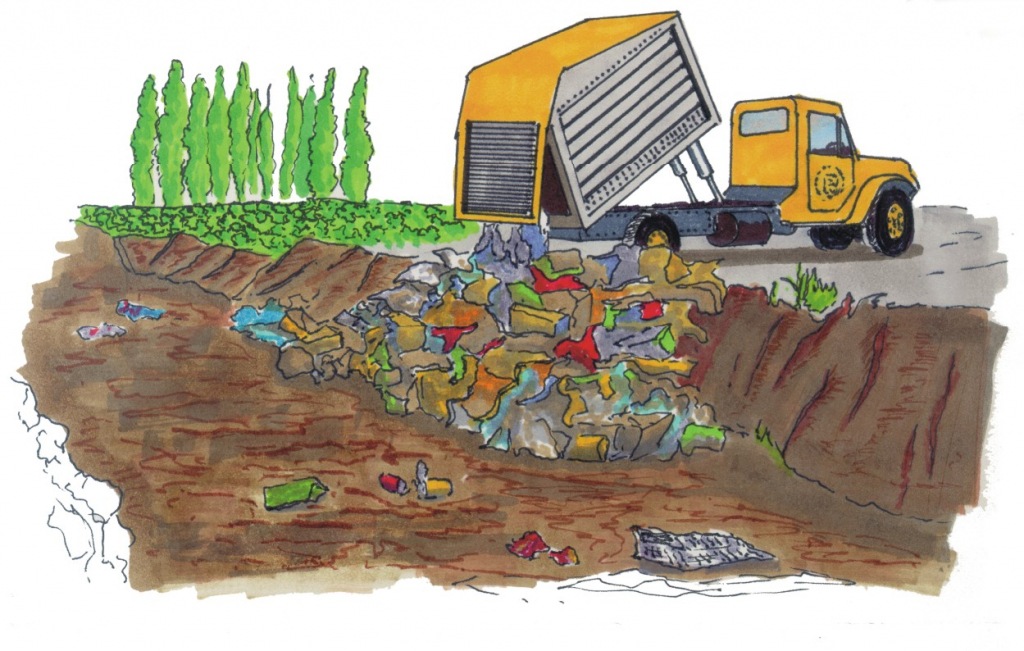
How can land pollution harm the environment?
It can release greenhouse gases
It can destroy the habitats of animals
It can allow for harmful chemicals to enter the soil
All of the above
An organism (plant, animal, fungus, or bacterium) that is not native and has a negative effect on an ecosystem.
deforestation
climate change
global warming
invasive species
The use of solar panels has increased in the last ten years. A benefit of using solar energy would include
adding more carbon dioxide to the atmosphere
using less fossil fuel to meet energy needs
using a nonrenewable source of energy
releasing more gases for photosynthesis
Which action could humans take to slow the rate of global warming?
Cut down trees for more effi cient land use.
Increase the consumption of petroleum products.
Use alternate sources of energy such as wind.
Reduce the use of fuel-effi cient automobiles.
Humans deplete the most resources when
using wind energy as a power source
generating power by using fossil fuels
using water power to generate electricity
recycling glass and plastics
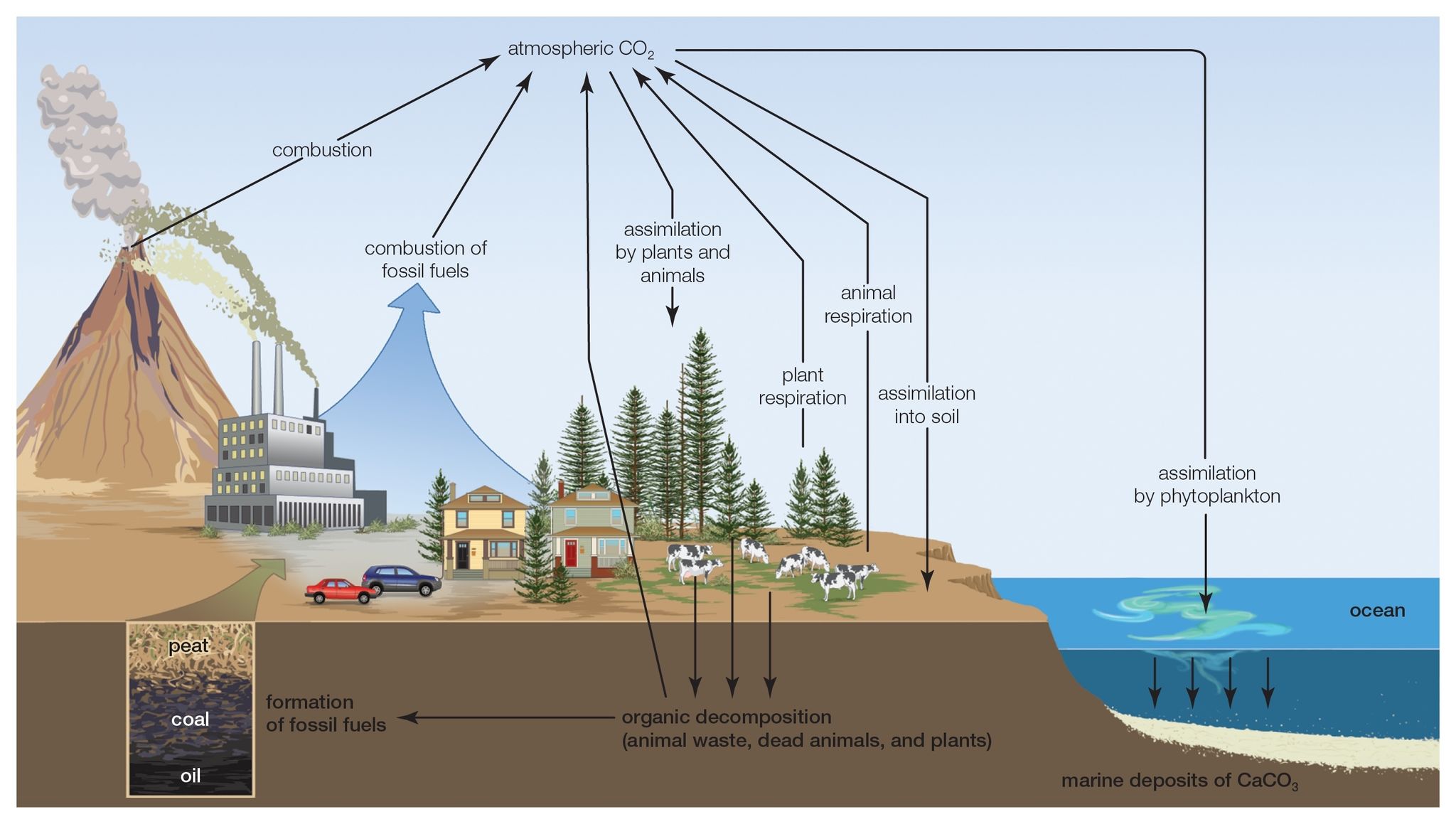
Where does all the carbon in organisms (living things) originate from?
Earth's atmosphere
Rocks
Water
Soil
How do organisms (living things) move carbon through the carbon cycle?
Respiration only
Decomposition only
Photosynthesis, respiration, and decomposition
Decomposition and sedimentation
Respiration, decomposition, sedimentation, and photosynthesis
Plants use ____________ to make their own food
Water
Sunlight
Carbon dioxide
All of these
Which of the following removes carbon dioxide from the atmosphere?

What type of structure does this image illustrate?
Analogous structures
Homologous structures
Vestigial structures
A type of structure that is physically present, but does not seem to serve a significant function for an organism.
Homologous structure
Analogous structure
Vestigial structure
Standard structure
When multiple transitional fossils are found in many rock layers, they provide evidence of-
Seasonal variation in the diet of a species
Gradual change of a species over time
DNA functioning of the genetic material of an organism
An unchanging environment

Evolution occurring quickly due to catastrophic events
Homeostasis
Gradualism
Statsis
Punctuated Equilibrim

What type of evidence are shown in the picture above?
Fossils
Embryology
Homologous Structures
Vestigial Structures
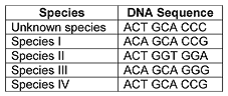
Scientist study the ____________________ to learn about the history of life, past environments on Earth, and how different groups of organisms have changed over time.
fossil record
animal record
historical record
Earth record


What is the equation for photosynthesis?
O2+ H2O → C6H12O6 + CO2
CO2+ Light → C6H12O6 + O2
CO2+ H2O+ light → C6H12O6 + O2
Which gas do plants release, that humans depend on for survival?
Water
Carbon Dioxide
Oxygen
Sugar


A species that plays a critical role in the health, maintenance, growth, or definition of an ecosystem.
keystone
invasive
engineer
predator

