
 Worksheets
Chem1 2-5 review: Acid/base
Total questions: 41
Worksheet time: 41mins
The word equation for an acid reacting with a base is
acid + metal → salt + carbon dioxide + water
acid + base → salt + water
acid + metal → salt + hydrogen
acid + metal → salt + water
Properties of bases are
feel soapy and neutralise acids
irritate your skin and react with metals to produce bubbles
taste sour and turn litmus red
have pH less than 7
Which of the following values would represent the pH of a strong base?
1
8
7
13
Which of the following is NOT a characteristic of an acid?
sour taste
corrosive
turns litmus paper blue
neutralises bases
Which of the following is true .
Acids and bases form hydroxide ions in solution
Acids form hydroxide ions and bases hydrogen ions in solution
Acids form hydrogen ions in solution, bases do not form ions in solution
Acids form hydrogen ions in solution and bases hydroxide ions
A substance that is 3 on the pH scale would be a(n):
acid
base
neutral
solute
Indigestion occurs when
stomach acid rises into the oesophagus, causing burns, because it is corrosive
the pH in the stomach is too high, so the stomach lining is damaged
there is not enough stomach acid to digest food sufficiently
stomach acid has reacted with carbonates to form carbon dioxide
Which of the following is a neutralisation reaction?
metal + acid → salt + hydrogen
metal + acid → salt + water
carbonate + acid → salt+ carbon dioxide + hydrogen
base + acid → salt + water
Indicators
have a very high pH
change colour to show the pH of a substance
change colour in the presence of salts
have a very low pH
Which formula is for hydrochloric acid
HCl
H2Cl
H2SO4
HNO3
What is the name for this acid H2SO4
hydrochloric acid
phosphorus acid
sulfuric acid
nitric acid
What is the name for this acid HNO2
hydronitric acid
nitrous acid
nitric acid
nitrate acid
what is the name for this acid HF
fluoric acid
hydrofluoric acid
fluorous acid
The correct formula for hydrobromic acid is
HCl
HBe
HBr
H2Br
The correct formula for carbonic acid is
HCl
H2CO2
HCO3
H2CO3
The correct name for this acid H2SO3 is
Hydrosulfiric acid
Sulfurous acid
Sulfiric acid
Sulfate acid
The correct formula for phosphoric acid
HPO4
H2PO4
H2PH4
HPO3
The correct name for this acid CH3COOH is
hydrochloric acid
acetic acid
hydroacetic acid
acetate acid
the anion part in HNO2 is
nitrite ion
nitric ion
nitrate ion
nitrogen ion
The anion part in this H2PO4 acid is
nitrate ion
phosphate ion
phosphite ion
nitrous ion
Binary acids start with "____________"
acid
nitric
hydraulic
hydro
Always add the word "________" to the end when naming acids
base
hydro
acid
Baumstark
When naming oxyacids, change "-ite" to:
-ate
-ic
-ous
-ite
When naming oxyacids, change "-ate" to:
-ate
-ic
-ous
-ite
Which is the correct set of acid properties, as described by Boyle:
sour taste, corrosive, change litmus from red to blue
sour taste, corrosive, change litmus from blue to red
sweet taste, slippery, change litmus from blue to red
sour taste, slippery, change litmus from blue to red
Neutral solutions have a pH of:
0
1
7
14
pH is the measure of the concentration of ______.
Acids
H+ ion
OH- ion
Bases
Which is a characteristic of a base?
tastes sour
found mostly in foods
feels slippery
turn litmus paper red
A sour taste is a characteristic of:
acids
bases
neutral
pH scale
According to Bronsted-Lowry, what is the definition of an BASE?
a substance that donates a hydrogen (H+) ion
a substance that donates a hydroxide (OH-) ion
a substance that accepts a hydrogen (H+) ion
a substance that accepts a hydroxide (OH-) ion
According to Arrhenius, what is the definition of an ACID?
a substance that contains hydroxide and ionizes to produce OH-
a substance that contains hydrogen and ionizes to produce H+
a substance that contains hydrogen and ionizes to produce OH-
a substance that contains hydroxide and ionizes to produce H+
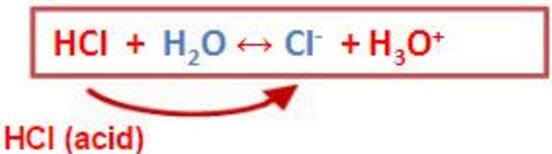
Acids react with carbonates and hydrogen carbonates to form
salt, water
salt, water and carbon dioxide
salt, carbonate
salt, water and hydrogen
Complete the following reaction:
HCl + Mg(OH)2 -->
MgCl2 + H2O
Mg +H2O
MgCl2 + H2
MgCl2 + H2O + CO2
Complete the following reaction:
H3PO4 + NaOH -->
Na3PO4 + H2O
Na +H2O
Na3PO4 + H2
Na3PO4 + H2O + CO2
Complete the following reaction:
HNO3 + Ca(OH)2 -->
Ca(NO3)2 + H2O
Ca +H2O
Ca(NO3)2 + H2
Ca(NO3)2 + H2O + CO2
HCl + NaOH → NaCl + H2O

