Wayground logo

Free Printable Worksheets

Font size

S
M
L
XL
Worksheets

Circulatory System

Total questions: 82

Worksheet time: 1hrs 1mins

Name
Class
Date
1.

The heart is made of which of the following types of muscles?

a)

Cardiac muscle

b)

Striated muscle

c)

Smooth muscle

d)

None of the above

2.

Your heart always pumps at the same rate.

a)

True

b)

False

3.

Electricity cause your muscles to contract.

a)

True

b)

False

4.

Which of the following are chambers of the heart?

a)

Valves

b)

Atrium and ventricle

c)

Arteries and veins

d)

Sinoatrial nerve

5.

Blood clots can cause a heart attack

a)

True

b)

False

6.

Which of the following is true about your heart?

a)

Your heart may stop beating from time to time.

b)

You have to think in order to keep your heart beating.

c)

Your heart pushes blood through your body.

d)

All of the above

7.

What can happen sometimes when you stand up to quickly?

a)

You become light-headed.

b)

Your blood stays down at your legs and feet.

c)

Your blood does not get to your head fast enough.

d)

All of the above.

8.

Your heart is an involuntary muscle that is always working.

a)

True

b)

False

9.

The pulmonary artery is the artery that carries the blood to your heart from your lungs.

a)

True

b)

False

10.

How are arteries and veins different?

a)

One is bigger than the other.

b)

The arteries carry more blood than the veins.

c)

The arteries carry blood away from the heart while veins carry blood to the heart.

d)

The veins carry blood away from the heart while arteries carry blood to the heart.

11.
What part of blood carries hemoglobin?
a)
Red blood cells
b)
Plasma
c)
Platlets
d)
White blood cells
12.
The lack of sufficient red blood cells in the blood system is called
a)
cyanosis
b)
anemia
c)
hemochromatosis
d)
hypoxia
13.
What is the function of hemoglobin?
a)
to carry iron
b)
to carry wastes
c)
to carry oxygen
d)
to produce oxygen
14.
Another name for white blood cells is
a)
erythrocytes
b)
plasmocytes
c)
leukocytes
d)
thrombocytes
15.
The shape of the RBC allows for a greater surface area so the cell can
a)
fit through capillaries easily
b)
exchange gasses more quickly
c)
hold additional hemoglobin
d)
reproduce quicker
16.
The liquid portion of the blood is
a)
leukocytes
b)
erthryocytes
c)
plasma
d)
thrombin
17.
What part of blood is responsible for fighting infections?
a)
Red Blood Cells
b)
White Blood Cells
c)
Platelets
d)
Plasma
18.
The process of stopping bleeding
a)
homeostasis
b)
hemostasis
c)
phagocytosis
d)
dermatographia
19.
Blood has how many parts?
a)
1
b)
2
c)
3
d)
4
20.
These blood cells are the protectors and help fight off disease.
a)
Red blood cells
b)
White blood cells
c)
Plasma
d)
Platelets 
21.
This part of blood helps it clot, when you get cut.
a)
Red blood cells
b)
Plasma
c)
Platelets
d)
White blood cells
22.
These blood cells deliver oxygen to the parts of the body.
a)
Red
b)
White
c)
Patelets
d)
Plasma
23.
_______ is made mostly of water and makes up about 55% of the blood
a)
Plasma
b)
Platelets 
c)
Red blood cells
d)
White blood cells
24.
The cheerios in this picture are representing?
a)
Red blood cells
b)
White blood cells
c)
Pasma
d)
Platelets
25.
In this picture the white blood cells are represented by?
a)
Cheerios
b)
marshmallows
c)
yellow die
d)
pom pom balls
26.
What part of blood is responsible for carrying wastes, nutrients, and minerals?
a)
Red Blood Cells
b)
White Blood Cells
c)
Platelets
d)
Plasma
27.
What part of blood is responsible for carrying oxygen and carbon dioxide to or from body cells?
a)
Red Blood Cells
b)
White Blood Cells
c)
Platelets
d)
Plasma
28.
What part of blood is responsible for fighting infections?
a)
Red Blood Cells
b)
White Blood Cells
c)
Platelets
d)
Plasma
29.
liquid portion of the blood
a)
leukocytes
b)
erthryocytes
c)
plasma
d)
thrombin
30.
What does blood consist of?
a)
plasma, red blood cells, white blood cells, platelets
b)
hormones, oxygen, nutrients, water
c)
red blood cells
d)
carbon dioxide and minerals
31.
What does blood transport?
a)
Nutrients
b)
Oxygen 
c)
Carbon Dioxide
d)
All of the above
32.
What part of blood is responsible for fighting bacteria and viruses?
a)
Red Blood Cells
b)
White Blood Cells
c)
Platelets
d)
Plasma
33.
How many pints of blood are in the average human?
a)
1
b)
20
c)
10
34.

What is the main organ of the circulatory system?

a)

small intestine

b)

bone

c)

lungs

d)

heart

35.

The job of the heart is to . . .

a)

pump blood around the body.

b)

send food to the small intestines.

c)

break down food.

d)

give energy to the body.

36.

How does the heart work?

a)

It pumps blood first to the lungs, back to the heart and then around the rest of the body.

b)

It pumps blood first to the rest of the body, back to the lungs and then to the heart.

c)

It pumps blood around the rest of the body, back to the heart and then to the lungs,

37.

The circulatory system works with the ___________ system to provide our body with oxygen.

a)

respiratory

b)

digestive

c)

muscular

d)

skeletal

38.
The circulatory system works with the __________ system to obtain energy from nutrients that we eat. 
a)
respiratory 
b)
digestive
c)
skeletal
d)
nervous
39.
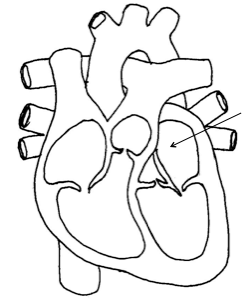
Name this part.
a)
Right atrium
b)
Left ventricle
c)
Right ventricle
d)
Left atrium
40.
Which is responsible for providing oxygen to cells?
a)
respiratory system
b)
circulatory system
c)
muscular system
d)
nervous system
41.
Which best describes the relationship between the muscular system and the circulatory system? 
a)
The circulatory system captures carbon dioxide from the air for muscle energy.
b)
The circulatory system produces red blood cells to bring oxygen to the muscles
c)
The circulatory system provides a framework for muscle movement
d)
The circulatory system delivers oxygen for muscle energy
42.

Deoxygenated blood means that the blood is low in...

a)

Oxygen

b)

Carbon Dioxide

43.

About how big is the human heart?

a)

the size of your nose

b)

the size of your foot

c)

the size of your fist

d)

the size of your ear

44.

Which of the following is not part of the circulatory system?

a)

veins

b)

heart

c)

stomach

d)

arteries

45.

As the blood reaches the lungs, what is removed from the blood?

a)

oxygen

b)

carbon dioxide

c)

red blood cells

d)

white blood cells

46.

The part of the blood that carries oxygen is called ___________. (Remember we can't live without our blood-line)

a)

red blood cells

b)

white blood cells

47.

What do we call the movement of blood through the heart and around the body?

a)

circulation

b)

digestion

48.
The main function of the circulatory system is 
a)
To give the body structure and support
b)
Excrete waste
c)
transport blood, nutrients, and gases throughout the body
d)
to transport messages from the body to the brain
49.
True or false:  The circulatory system includes all of your bones.
a)
True
b)
False
50.

Human blood vessels are

a)

artries, capillaries, and atria

b)

ventricles, atria and pulmonary veins

c)

capillaries, artries, and veins

d)

veins, artries, and aorta

51.

The thickest and strongest blood vessel is the

a)

vein

b)

artery

c)

capillary

d)

both veins and capillaries

52.
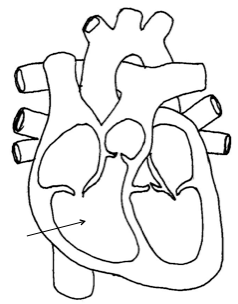
Name this part.
a)
Right atrium
b)
Left ventricle
c)
Right ventricle
d)
Left atrium
53.

The blood vessel that has the largest diameter is

a)

vein

b)

artery

c)

capillary

54.

The blood vessel that has valves at intervals...

a)

capillary

b)

artery

c)

vein

d)

none of the above

55.

Valves in veins

a)

support them

b)

protect them

c)

prevent the backward movement inside them

d)

provide them elesticity

56.

These are one cell thick

a)

arteries

b)

capillaries

c)

veins

57.

High cholesterol can increase your risk of developing heart disease because of the

a)

pressure

b)

plaque

c)

diabetes

d)

obesity

58.

Smoking increases your risk of heart diseases because it causes

a)

obesity

b)

diabetes

c)

blood vessel damage

d)

increases HDL

59.

Which of the following blood vessels carries blood back to the heart (returns the blood)?

a)

veins

b)

arteries

60.

Plaque is made up of

a)

cholesterol

b)

calcium

c)

other minerals

d)

all of the above

61.

If a blood clot prevents blood from reaching the brain, we call this a _______

a)

stroke

b)

heart attack

c)

tumor

d)

hernia

62.

How many valves does the heart have?

a)

2

b)

4

c)

6

d)

8

63.

During a coronary angioplasty, what happens to the plaque?

a)

It is compressed

b)

It is removed

c)

It is softened

64.
Name this part.
a)
Left ventricle
b)
Pulmonary artery
c)
Right atrium
d)
Pulmonary veins
65.
what is the part as labeled num 11
a)
L.atrum 
b)
R.atrum
c)
L.ventrical
d)
R.ventrical
66.
Name this part.
a)
Right ventricle
b)
Pulmonary artery
c)
Left ventricle
d)
Right atrium
67.
Which side of the heart pumps oxygen-rich blood to the rest of the body?
a)
Right
b)
Left
68.
Which side of the heart pumps blood into the lungs?
a)
Right
b)
Left
69.

______ carry blood TOWARDS the heart.

a)

Arteries

b)

Veins

c)

Capillaries

d)

Vena Cava

70.

_____ carries blood AWAY from the heart.

a)

Blood cells

b)

Veins

c)

Capillaries

d)

Arteries

71.

De-oxygenated blood flows into what atrium?

a)

Left

b)

Bottom

c)

Right

d)

Top

72.
what is the part as labeled num 7
a)
R.artum
b)
L.venctical
c)
R.ventrical
d)
L.artum
73.

what is the part as labeled num 13

a)

AV

b)

SL

c)

polanry valve

74.
what is the part as labeled num 14
a)
L.ventrical
b)
R.ventrical
c)
arota
75.

what is the part as labeled num 1

a)

aorta

b)

lung

c)

hart

76.
A flap of tissue that prevents blood from flowing backward
a)
Aorta
b)
Atrium
c)
Septum
d)
Valve
77.
How many chambers does the heart have ? 
a)
4
b)
6
c)
3
d)
1
78.
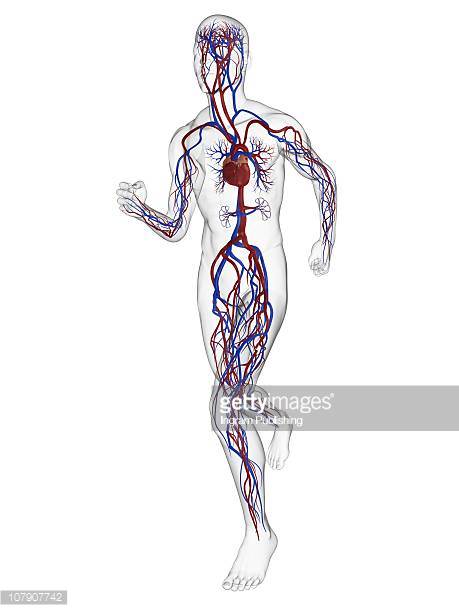
What are the colored structures?
a)
Arteries
b)
Veins
c)
Valves
d)
Chambers
79.
The arrow indicates the
a)
Right atrium
b)
Left ventricle
c)
Right ventricle
d)
Left atrium
80.
The arrow indicates the 
a)
Left ventricle
b)
Pulmonary artery
c)
Right atrium
d)
Pulmonary veins
81.
The arrow indicates the 
a)
Pulmonary vein
b)
Right atrium
c)
Aorta
d)
Pulmonary artery
82.
The arrow indicates the
a)
Left ventricle
b)
Vena cava
c)
Right atrium
d)
Right ventricle