
 Worksheets
8th Grade Science Final Review
Total questions: 80
Worksheet time: 1hrs 28mins
Name
Class
Date
1.
Which structure’s main function is to produce food (sugar) in a plant?
a)
flower
b)
leaf
c)
stem
d)
roots
2.
An organism that contains chloroplasts is able to produce food by the process of
a)
photosynthesis
b)
reproduction
c)
respiration
d)
digestion
3.
Competition within a pack of wolves may increase if there is an increase in the
a)
amount of food available
b)
amount of oxygen available
c)
size of their population
d)
size of the area they inhabit
4.
Which sequence lists the hereditary material found inside cells from the smallest unit to the largest unit?
a)
chromosome → gene → nucleus
b)
chromosome → nucleus → gene
c)
gene → nucleus → chromosome
d)
gene → chromosome → nucleus
5.
A fox with thick fur would have a survival advantage over other foxes if
a)
there is more competition for food in the fox population
b)
the air temperature significantly decreases in winter
c)
a drought occurs, limiting the amount of water available
d)
a new disease appears that infects the foxes
6.
What is the main factor that prevents the growth of tropical plants in the northern part of the United States?
a)
predators
b)
pollutants
c)
overpopulation
d)
climate
7.
A puggle is a type of dog first produced by mating two other types of dog, a pug and a beagle. This process is an example of
a)
asexual reproduction
b)
genetic engineering
c)
selective breeding
d)
natural selection
8.
The information below describes a relationship between a type of fish known as a goby and a species of blind shrimp.
The shrimp digs a hole that provides shelter for itself and the goby fish. The goby fish lives at the opening to the hole and watches for predators. When a predator swims by, both organisms quickly move farther into the hole for safety.
The relationship between these two organisms is best described as
The shrimp digs a hole that provides shelter for itself and the goby fish. The goby fish lives at the opening to the hole and watches for predators. When a predator swims by, both organisms quickly move farther into the hole for safety.
The relationship between these two organisms is best described as
a)
competitive
b)
harmful
c)
beneficial
d)
predatory
9.
A student viewing a cell with a microscope observes a cell wall, a cell membrane, and a nucleus. The presence of these structures indicates that the student is looking at a cell from a
a)
rabbit
b)
carrot
c)
worm
d)
fly
10.
Dogs and cats are animals that have many similar body structures but they do not mate with each other. These two animals are classified in
a)
the same kingdom and the same species
b)
the same kingdom, but different species
c)
different kingdoms, but the same species
d)
different kingdoms and different species
11.
The hereditary material in corn plants can be altered by scientists so the plants produce more corn. Which term identifies this process?
a)
environmental degradation
b)
ecological succession
c)
natural selection
d)
genetic engineering
12.
Which process is responsible for the growth and repair of human tissue?
a)
evolution
b)
germination
c)
cell division
d)
natural selection
13.
Which type of organism converts wastes and dead materials into nutrients that can be used by plants?
a)
herbivore
b)
carnivore
c)
decomposer
d)
producer
14.
All of the different organisms interacting in a pond make up
a)
a community
b)
a population
c)
the water cycle
d)
a habitat
15.
One positive effect of recycling aluminum cans to manufacture new beverage containers is
a)
conserving Earth’s resources
b)
creating acid rain
c)
warming Earth’s atmosphere
d)
increasing the ozone layer
16.
An organism can be classified as an omnivore because it eats
a)
both plants and animals
b)
neither plants nor animals
c)
only plants
d)
only animals
17.
Which process releases energy from digested food
a)
photosynthesis
b)
cellular respiration
c)
vitamin production
d)
fertilization
18.
A body cell that is undergoing abnormal cell division is most likely
a)
producing sex cells
b)
transporting nutrients
c)
forming cancerous cells
d)
developing an infection
19.
Which model can be used to trace genetic inheritance?
a)
life cycle
b)
pedigree chart
c)
food web
d)
energy pyramid
20.
A green plant absorbs light. A frog eats flies. These are both examples of how organisms
a)
obtain energy
b)
escape predators
c)
produce offspring
d)
excrete waste
21.
A single human body cell typically contains thousands of
a)
genes
b)
nuclei
c)
chloroplasts
d)
bacteria
22.
What eventually happens to a species when the environment changes and the organisms do not adapt?
a)
classification
b)
development
c)
extinction
d)
regulation
23.
Which process is a cause of variation in a species?
a)
metamorphosis
b)
cellular respiration
c)
sexual reproduction
d)
regulation
24.
Herbivores obtain most of their energy by
a)
consuming animals
b)
consuming plants
c)
producing sugar
d)
absorbing sunlight
25.
A biological community is made up of all the
a)
populations living in an area
b)
natural resources present in an area
c)
members of a species on Earth
d)
environments on Earth
26.
If an ecosystem’s balance is disturbed by a volcanic eruption, what will most likely occur?
a)
The ecosystem will not change from its original state.
b)
The ecosystem will eventually become balanced again
c)
The consumers in the ecosystem will begin to consume carbon dioxide.
d)
The consumers in the ecosystem will beginto produce more oxygen.
27.
The amount of which greenhouse gas in the air will increase the most if large forests are cut down to be used for building materials without planting new trees in their place?
a)
ozone
b)
methane
c)
water vapor
d)
carbon dioxide
28.
In living things, traits are passed on from one generation to the next by the transfer of
a)
blood
b)
minerals
c)
Calories
d)
DNA
29.
The basic life functions of an organism are carried on by
a)
atoms
b)
cells
c)
nutrients
d)
hormones
30.
Which factor would most likely limit the number of mice living in an area?
a)
plentiful resources
b)
stable climate
c)
more predators
d)
less competition
31.
Which human organ system produces sperm or egg cells?
a)
digestive system
b)
nervous system
c)
respiratory system
d)
reproductive system
32.
Pesticides and fertilizers can help farmers to produce more crops. However, overuse of these chemicals can result in
a)
ecological succession
b)
material recycling
c)
environmental pollution
d)
selective breeding
33.
Which factor contributes to global warming?
a)
increased use of solar-powered cars
b)
increased burning of fossil fuels
c)
better long-term weather forecasts
d)
changing distance between Earth and the Sun
34.
Which organisms obtain energy for growth and development directly from the Sun?
a)
caterpillars
b)
hawks
c)
frogs
d)
bean plants
35.
What factor might contribute to the extinction of a species of woodpecker?
a)
a new source of food
b)
an overabundance of trees
c)
the use of pesticides in the forest
d)
an increase in the population of insects
36.
The fur of a snowshoe rabbit changes to white during the winter. This change is an example of
a)
adaptation
b)
competition
c)
metamorphosis
d)
metabolism
37.
The male sex cell is
a)
egg
b)
ovary
c)
testes
d)
sperm
38.
Organisms are classified as insects based on their
a)
method of reproduction
b)
internal and external structures
c)
natural habitat
d)
form of communication
39.
In sexual reproduction, what fraction of genes does each parent contribute to the offspring?
a)
1/4
b)
1/3
c)
1/2
d)
3/4
40.
To provide energy for the work that cells do, all cells need
a)
chloroplasts
b)
nutrients
c)
carbon dioxide
d)
atmospheric nitrogen
41.
A new yeast cell is sometimes produced from a single parent by a process called budding. The process of budding is best described as
a)
sexual reproduction, with genetically identical offspring
b)
sexual reproduction, with genetically different offspring
c)
asexual reproduction, with genetically identical offspring
d)
asexual reproduction, with genetically different offspring
42.
The vast variety of different traits found in humans results from
a)
intensive training and education
b)
sexual reproduction and mutations
c)
exercise and conditioning
d)
birth defects and recessive genes
43.
A new variety of tomato is better tasting and can be stored longer than other tomato varieties. This new tomato is produced by placing additional gene segments into the cells of the tomato plant. This process is known as
a)
genetic engineering
b)
selective breeding
c)
natural selection
d)
sexual reproduction
44.
What is the original source of almost all energy in most ecosystems?
a)
carbohydrates
b)
sunlight
c)
water
d)
carbon
45.
An organism that produces its own food supply from inorganic compounds is called a(an)
a)
heterotroph
b)
consumer
c)
detritivore
d)
autotroph
46.
Autotrophs make up the _______ level in all ecosystems.
a)
First
b)
Second
c)
Third
d)
Fourth
47.

What does a food web represent?
a)
All connections of energy flow throughout all organisms in a habitat.
b)
The specific ways that mutualism is carried out.
c)
A single pathway or energy flow between organisms.
d)
How carnivores get their food.
48.

The image provided is an example of a(n):
a)
Carnivore
b)
Herbivore
c)
Producer
d)
Autotroph
49.

The image provided is an example of a(n):
a)
Producer
b)
Autotroph
c)
Consumer
d)
Insect
50.
The living portions of the ecosystem.
a)
Biotic factors
b)
Abiotic factors
51.
An illustration that uses arrows to show the many possible directions in which matter and energy can pass through the organisms in an ecosystem.
a)
Food chain
b)
Food web
c)
Energy Pyramid
d)
Succession Map
52.
Water temperature would be an example of ...
a)
A biotic factor
b)
An abiotic factor
53.
Which of the following is purebred?
a)
AA
b)
oo
c)
Ao
d)
Both AA and oo
54.
Heterozygous is when...
a)
the alleles are the same
b)
the alleles are different
c)
the alleles are absent
d)
the alleles are present
55.
How many alleles does an individual have for each trait?
a)
1
b)
2
c)
3
d)
4
56.
Which of the following is a phenotype?
a)
Aa
b)
red hair
c)
heterozygous
d)
BB
57.
Adenine bonds with ______________.
a)
Guanine
b)
Thymine
c)
Cytosine
d)
Adenine
58.
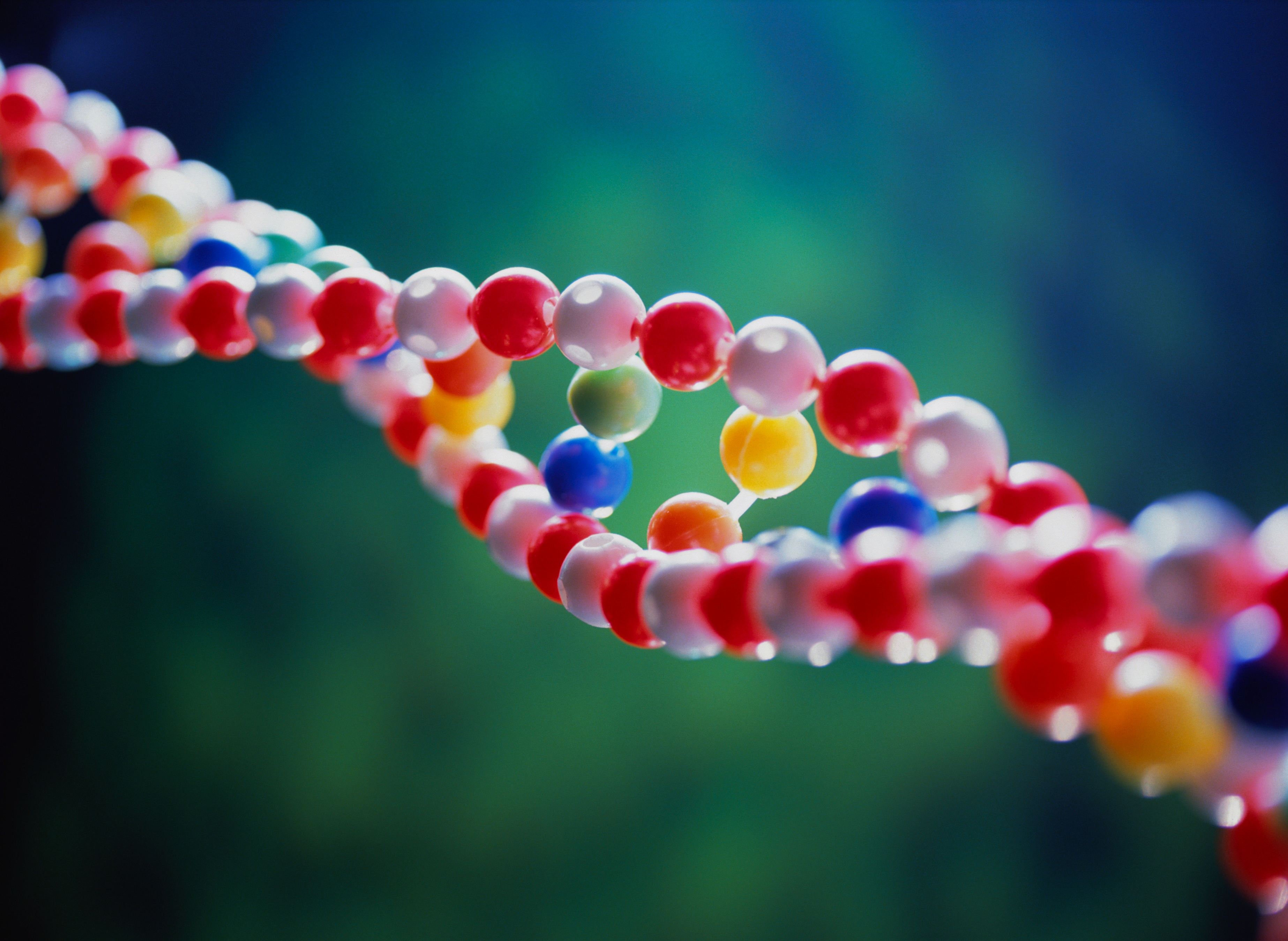
Why is DNA important?
a)
it is very small and very complicated
b)
it's in everything
c)
it serves as the blueprint for traits of all living things
d)
because we eat it every day for energy
59.
Which organelle is DNA usually found in?
a)
cell membrane
b)
vacuole
c)
chloroplast
d)
nucleus
60.
Which sequence of DNA bases would pair with this partial strand
ATG TGA CAG
ATG TGA CAG
a)
ATG TGA CAG
b)
TAC ACT GTC
c)
GTA AGT GAC
d)
CAT TCA CTG
61.
Mutations are a source of _______________.
a)
Variation
b)
Disease
c)
Polypeptide
62.
Who is the father of evolution?
a)
Darwin
b)
Mendel
c)
Newton
d)
Einstein
63.
What is a change in an organism that allows for it to survive in its environment?
a)
homologous
b)
vestigial
c)
variation
d)
adaptation
64.

Which layer is the oldest?
a)
1
b)
2
c)
3
d)
4
65.
When the DNA of an organism is altered it is referred to as…
a)
Mutation
b)
Gene Flow
c)
Genetic Drift
d)
Sexual Selection
66.

Darwin wrote that organisms with traits that are best suited to the environment will ________________
a)
increase in number
b)
become extinct
67.
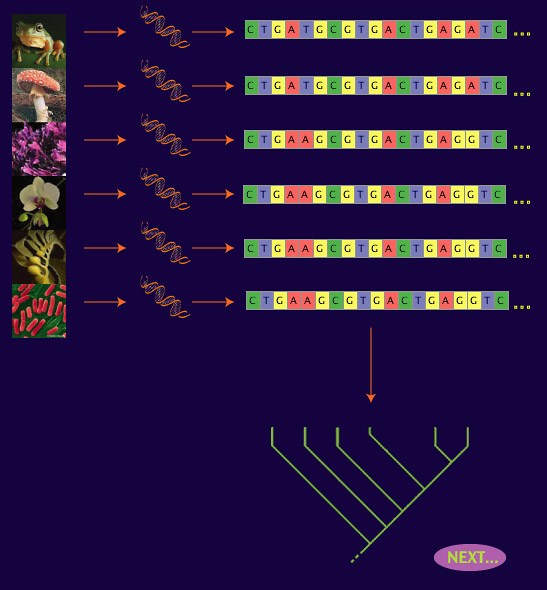
Two organisms that are closely related would have
a)
very similar DNA sequence
b)
exactly the same DNA sequences
c)
no proteins in common
d)
completely different DNA sequence
68.
The struggle for existence against other organisms is
a)
Competition
b)
Natural Selection
c)
gene flow
d)
genetic drift
69.
A group of similar organisms that can mate with each other and produce fertile offspring is called a species.
a)
True
b)
False
70.
Why do muscle cells have more mitochondria than bone cells?
a)
Muscle cells require more energy and therefore undergo respiration more frequently.
b)
Bone cells require more energy and therefore undergo respiration more frequently.
c)
Muscle cells require more energy and therefore undergo photosynthesis more frequently.
d)
All of these options are correct.
71.
How are cellular respiration and photosynthesis related processes?
a)
The products of one are the reactants to the other.
b)
They both share the same reactants.
c)
They both have the same products.
d)
All these responses are correct.
72.
What are the reactants to photosynthesis?
a)
Oxygen and Water
b)
Carbon dioxide and water
c)
Water and glucose
d)
All of the above options are correct.
73.
What are the products of photosynthesis?
a)
Oxygen and glucose
b)
Oxygen and carbon dioxide
c)
Carbon dioxide and glucose
d)
All of the options are correct.
74.
Which of the following is the correct equation for PHOTOSYNTHESIS?
a)
CO2 + light + H2O --> O2 + glucose
b)
CO2 + glucose + H2O --> O2 + light
c)
O2 + light + H2O --> CO2 + glucose
d)
CO2 + O2 + H2O --> Light+ glucose
75.
Breaking down glucose to release ATP energy is known as
a)
Photosynthesis
b)
Respiration
c)
Mitosis
d)
Fission
76.
Oxygen is...
a)
needed for photosynthesis to occur
b)
a product of cellular respiration
c)
a product of photosynthesis
d)
deadly to humans
77.
Using carbon dioxide and water to create glucose and oxygen is
a)
photosynthesis
b)
Cellular respiration
c)
diffusion
d)
osmosis
78.

Why is photosynthesis an essential process for life?
a)
it creates oxygen for animals to breathe
b)
most food chains and food web depend on it
c)
it creates glucose for plants to use as energy
d)
all of these are correct
79.

What is the source of energy for photosynthesis?
a)
carbohydrates (chemical energy)
b)
sunlight (radiant energy)
c)
heat (thermal energy)
d)
wind (kinetic energy)
80.
How does water get into the leaves of a plant?
a)
it goes into the stomata
b)
The roots absorb it and then it travels up the xylem
c)
it is made during a chemical reaction in the stem
d)
The flowers capture water and deliver it to the leaves
100 %

