
 Worksheets
Final Review Part 1
Total questions: 62
Worksheet time: 16hrs 30mins




When an object is moving, friction acts in the _______ direction as the motion.
perpendicular
same
opposite
precise
The type of friction that prevents an object from moving is called _______ friction.
rolling
fluid
kinetic
static
A type of friction that occurs when air pushes against a moving object it to decelerate.
surface area
air resistance
velocity
gravity
How would the absence of friction affect the motion of a marble on a long, straight path?
The marble's speed would decrease.
The marble's speed would remain constant.
The marble's speed would increase.
The marble would stop immediately.
Which of the following is an example of rolling kinetic friction?
A box sliding across the floor.
A car skidding to a stop.
A soccer player making a slide tackle.
A bike being ridden on a road.
An object at rest remains at rest, or if in motion, remains in motion at a constant velocity unless acted on by a net external force. This is an example of Newton's
Second Law
First Law
Third Law
If an object is stationary, it means
the object is in motion
the object is experiencing air resistance
there are balanced forces acting on the object
there are unbalanced forces acting on the object
The tendency of an object to resist a change in its motion is called
inertia
friction
tension
gravity
Without an unbalanced force, a moving object will not only keep moving, but its ______________________________ will also remain the same.
force and motion
speed and time
speed and direction
inertia and distance
Which statement explains why you are thrown forward when the car you are riding in suddenly stops?
You are pushed forward by the force of the car stopping
The force of the crash accelerates you forward
You are are in motion as the car is driving, and when it stops, your body continues to be in motion
The car stopping must balance out by having you move forward
F= mass * acceleration
A 20 kg bike accelerates at 10 m/s2. what is the force acting upon it?
25 Newtons
20 Newtons
200 Newtons
10 Newtons
An object of mass 10 kg is accelerated upward at 2 m/s2. What force is required?
20 N
2 N
5 N
0 N
What Unit do we Measure Force in?
Newtons
Joules
Volts
Lumens

According to Newton's second Law, which would take more force to slow down?
The silver car
The green car
They would both take the same force
Momentum is the product of mass and velocity
TRUE
FALSE
A car is of mass 15kg is travelling east at a velocity of 3m/s. the value of its momentum is:
30kg.m.s-1
45kg.m.s-1
18kg.m.s-1
5kg.m.s-1
What is potential energy?
The energy an object has due to its atomic structure.
The energy an object has due to its chemical composition.
The energy an object has due to its motion.
The energy an object has due to its position or condition.
What is kinetic energy?
The energy an object has due to its position or condition
The energy an object has due to its motion
The energy an object has due to its chemical composition
The energy an object has due to its atomic structure
When does an object have no kinetic energy?
When it's at rest.
When it's moving very slowly.
When the only force that's acting on it is gravity.
When it has no electrical charge.
When is potential energy transformed into kinetic energy?
When an object at rest is lifted to a higher elevation.
When an object at rest remains at rest.
When an object at rest is put into motion.
When an object in motion is stopped and put at rest.
Potential energy is...
energy in motion
stored energy
What two factors affect an object's potential energy?
area and volume
area and height
mass and height
mass and velocity

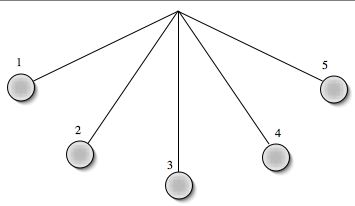
The least amount of potential energy is at
a
b
c
d

The most potential energy is at
a
b
c
d
What is the formula for Gravitational Potential Energy?
PE = mgh
KE = 1/2mv2
W = Fd
P = W/t
What is the formula for Kinetic Energy?
PE = mgh
KE = 1/2mv2
W = Fd
P = W/t
What is the KE of a football which has a mass of 0.8 kg and is kicked at a velocity of 10m/s?
80 J
3.2 J
160 J
40 J

What is the kinetic energy of a zorb and human with a total mass of 90Kg rolling at 10m/s?
3,700J
900J
4,500J
6,500J
A crate with a mass of 15.3 kg is pulled 9.2 m up in order to place it on top of a shelf. Calculate the GPE of the crate.
140.76 J
1.66 J
1,379.4 J
5.89 J

