
NEW
Font size
 Worksheets
MP#4 Quarterly Review
Total questions: 35
Worksheet time: 35mins
What is the study of genes and inheritance known as?
genetics
evolution
heredity
An organism's observable physical features are also called what?
genotype
phenotype
An organism's genetic code is also called what?
genotype
phenotype
You inherit a recessive allele from your mother and a dominant allele from your father. Which allele will be expressed?
The recessive allele
The dominant allele

YY
yy
Yy
The passing of genetic traits from parent to offspring.
heredity
genetics
evolution
homozygous
hetrozygous
hybrid

25%
50%
75%
dominant allele
recessive allele

_________ is the process by which species change over time.
Natural Selection
Evolution
Genetics
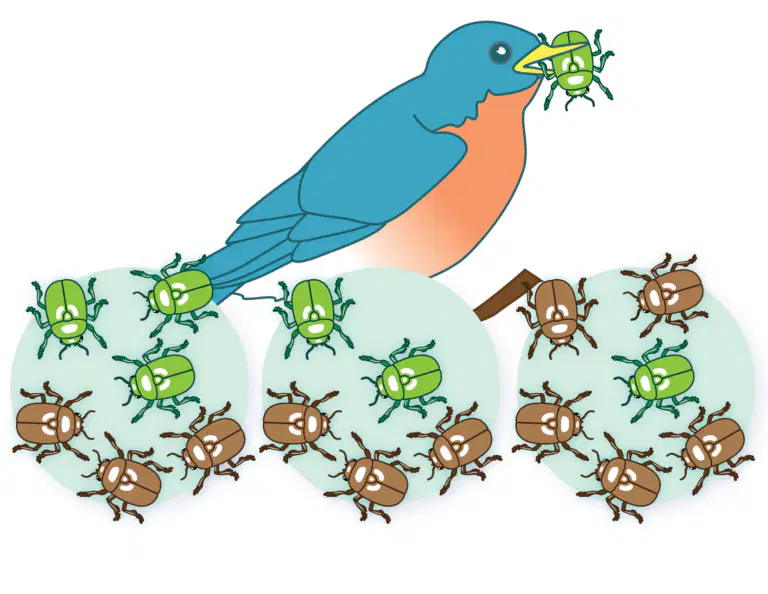
Birds are eating all the green beetles. The brown beetles are surviving and reproducing more. This is called __________.
mutations
fossil record
natural selection

If scientists find fossils of a type of mosquito on the bottom layer and find fossils of beetles towards the top layer, what can scientists infer?
Mosquitos are older fossils than beetles
Beetles are older fossils than mosquitos
Both mosquitos and Beetles must have lived at the same time.

When scientists compare fossils to see about old they are in a certian environment, this is called ____________
radioactive dating
relative dating
When an organism completely dies out, it is called __________.
extinction
endangered
threatened
The preserved remains of life from an earlier time.
embryology
fossils
DNA
Small rock particles, sand, and soil where most fossils are formed.
quartz
granite
sediment
Traits on the outside of a Punnett square.
offspring
parents
siblings
Hereditary information reveals similarities and differences in the genetic makeup of organisms.
fossils
vestigial structures
DNA
Body structures with no obvious use.
homologous structures
vestigial structures
fossils
The study of early development.
biogeography
morphology
embryology
A trait that increases an organisms chance of survival.
homologous structure
mutation
adaptation
A diagram that shows how different groups of organisms are related.
family tree
Punnett square
branching tree
Species famously associated with Charles Darwin and the Galapagos islands.
sharks
bears
finches
Traits that can be acted on by natural selection.
inherited
aquired
learned
The 'Father of Genetics'.
Charles Darwin
Gregor Mendel
Robert Hooke
When analyzing a Punnett square, each box is equal to __________%.
25
50
75
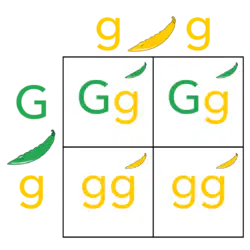
What is the probability that the offspring will be homozygous dominant?
0%
25%
50%
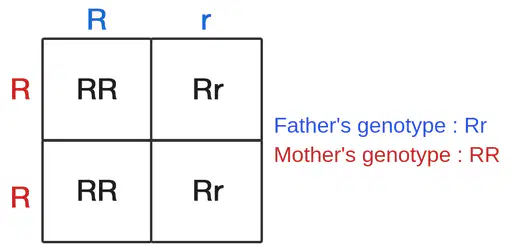
What is the probability that the offspring will have the same genotype as the father?
0%
50%
100%
Which of the genotypes is homozygous?
RR
Rr
R
Which is an example of a heterozygous genotype?
RR
Rr
rr
Biodiversity refers to __________.
the variety of species on Earth
the variety of ecosystems
the variety of endangered species
The loss of __________ has the greatest effect on an ecosystem.
producers
consumers
decomposers
The leading cause of biodiversity loss.
habitat loss
pollution
population growth
A species that is not native to a particular region.
invasive
Keystone
endangered
The acronym HIPPO refers to __________.
the amount of biodiversity in an area
the main threats to biodiversity
conservation methods

